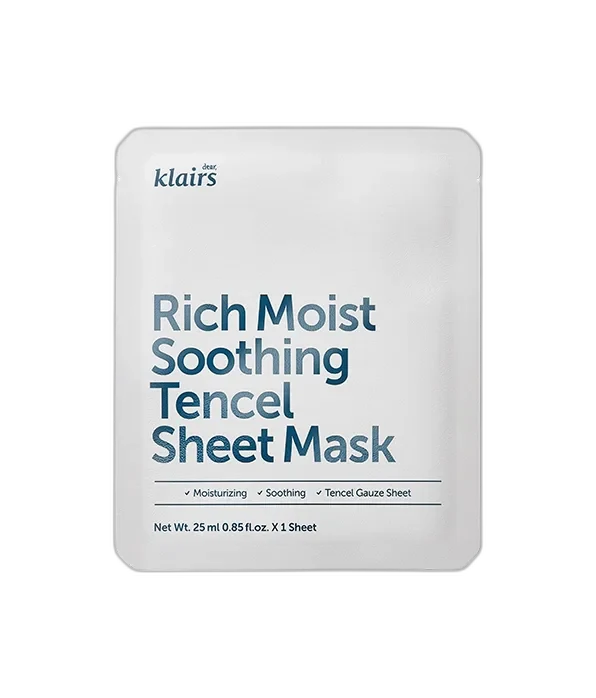
Rich Moist Soothing Tencel Sheet Mask
Five-Ceramide Sheet Mask
 Verified reviewer
Pros & cons.
- +Five ceramides (NP, NS, AP, AS, EOP) plus phytosphingosine and cholesterol for complete barrier repair
- +Completely fragrance-free and essential-oil-free
- +Dual-layered Tencel/cotton sheet provides superior adherence and essence delivery
- +Sheet format enhances ceramide penetration through occlusive contact
- +Excellent post-procedure recovery mask
- +Affordable at approximately $3 per mask
- −Single-use format creates packaging waste
- −Mask may not fit all face shapes perfectly
- −Some find the mask dries out before the recommended 20 minutes
- −Per-use cost is higher than basic hydrating sheet masks
The full review.
Sheet masks have an image problem. In the skincare hierarchy, people often dismiss them as beauty impulse buys—nice-to-have luxuries that provide a temporary glow but no lasting benefit. Many sheet masks earn this reputation. Most are just glycerin and water soaked into a cotton sheet, providing fifteen minutes of hydration theater.
Klairs’ Rich Moist Soothing Tencel Sheet Mask proves the format works. It isn’t because it’s expensive—at roughly three dollars per mask, it stays in the accessible range. It works because the essence in that Tencel sheet contains a ceramide profile noteworthy even in a thirty-dollar cream.
Five ceramides. Ceramide NP, NS, AP, AS, and EOP cover the major ceramide subclasses in the skin’s intercellular lipid matrix. This isn’t a token ceramide inclusion for label appeal. The five ceramide types, phytosphingosine, and cholesterol suggest a deliberate attempt to replicate the physiological 3:1:1 ratio of ceramides, cholesterol, and free fatty acids that research identifies as optimal for barrier repair.
The sheet mask format favors the ceramides. Ceramides are lipid-soluble molecules that need time and an occlusive environment to penetrate the stratum corneum effectively. A sheet mask creates that environment—a sealed, humid microclimate against the skin that enhances penetration. For fifteen to twenty minutes, the ceramide-rich essence stays against the skin under conditions that promote absorption.
The supporting formula is also excellent. Centella asiatica extract provides anti-inflammatory and skin-repair support. Panthenol and allantoin add calming and moisture retention. Dipotassium glycyrrhizate—a licorice-derived anti-inflammatory—adds soothing. Sodium hyaluronate provides humectant hydration. Notably, the entire formula is fragrance-free and essential-oil-free.
The Tencel sheet material is notable. Derived from sustainably sourced wood pulp, Tencel fibers hold more moisture than standard cotton and release it more evenly across the skin. The dual-layered construction creates a mask that adheres well without the sagging or sliding seen in cheaper materials.
The experience is straightforward. Unfold, apply, wait fifteen to twenty minutes, remove, and pat in the remaining essence. The immediate result is visible: plumper, calmer, more luminous skin. Hydration lasts into the next day. With regular use over weeks, the cumulative ceramide delivery builds genuine barrier strength, making skin feel more resilient and better at retaining moisture.
The mask works well as a post-procedure recovery tool. After chemical peels, microneedling, or laser treatments, the ceramide-centella-panthenol formula provides the soothing, barrier-rebuilding support compromised skin needs. The sheet format adds physical cooling and protection during application.
At three dollars per mask, the value is compelling. A ten-pack provides five weeks of twice-weekly ceramide treatments. The cost-per-use is a fraction of a ceramide serum with comparable lipid complexity. Single-use packaging is the drawback, though the biodegradable Tencel material partially addresses it.
For Klairs, this sheet mask shows their formulation philosophy at its best: proven ingredients, thoughtful assembly, no unnecessary irritants, and accessible pricing. If a three-dollar sheet mask does this, the format deserves more respect.
Ingredient analysis.
Full INCI list
Water, Butylene Glycol, Glycerin, 1,2-Hexanediol, Aloe Barbadensis Leaf Juice, Glycereth-26, Propanediol, Dipotassium Glycyrrhizate, Panthenol, Betaine, Allantoin, Cellulose, Hydroxyethyl Cellulose, Sodium Hyaluronate, Centella Asiatica Extract, Hydrogenated Lecithin, Ceramide NP, Ceramide NS, Ceramide AP, Ceramide AS, Ceramide EOP, Phytosphingosine, Cholesterol, Cetearyl Alcohol, Stearic Acid, Carbomer, Arginine, Disodium EDTA, Sodium Acetate, PVM/MA Copolymer, Polyglyceryl-10 Laurate, Glyceryl Acrylate/Acrylic Acid Copolymer, Ethylhexylglycerin
Skin match.
The science.
The Science
The five-ceramide complex mimics the main ceramide subclasses in a healthy stratum corneum. The Journal of Lipid Research shows ceramides make up about 50% of intercellular lipids, where different subclasses manage lamellar structure and barrier integrity. Multi-ceramide supplementation works better than single-ceramide approaches.
Phytosphingosine acts as a ceramide precursor and antimicrobial agent. The Archives of Dermatological Research shows it stimulates ceramide synthesis in keratinocytes and fights acne-causing bacteria.
The cholesterol inclusion is critical. Multiple studies show the physiological ratio of ceramides, cholesterol, and free fatty acids (about 3:1:1 by molar ratio) repairs the barrier better than ceramides alone. A study in the Journal of Clinical Investigation shows incomplete lipid mixtures can worsen barrier function, while the complete ratio speeds up repair.
The sheet mask creates an occlusive environment that increases lipid penetration. Research on transdermal delivery shows occlusion increases stratum corneum hydration, which swells intercellular spaces and lets lipophilic molecules like ceramides penetrate deeper than non-occluded conditions.
Dermatologist Perspective
Dermatologists recommend ceramide-containing products as a cornerstone for barrier repair. Board-certified dermatologists note this mask's five-ceramide complex with phytosphingosine and cholesterol is more complete than most consumer products. The sheet format adds a practical advantage via occlusive contact time. Dermatologists often recommend this mask type for post-procedure recovery and note the fragrance-free formula is essential for compromised skin.
Where it fits in your routine.
Apply to the face after cleansing and toning. Smooth out air bubbles. Leave on for 15-20 minutes and remove while still damp. Pat the remaining essence into the skin. Use moisturizer to seal in ceramides. Use 1-2 times weekly, or daily during barrier recovery.
At roughly $3 per mask or $25-30 for a ten-pack, this five-ceramide sheet mask offers exceptional value. Leave-on products with comparable ceramide content cost more per application. A ten-pack lasts over two months with weekly use at about $3 per session.
People with dry, dehydrated, or barrier-compromised skin seeking affordable weekly ceramide treatment. Post-procedure patients needing gentle, fragrance-free recovery. Sensitive skin types wanting a trustworthy sheet mask.
People who dislike single-use packaging waste. Those seeking instant brightening or firming effects will find this focuses on hydration and barrier repair.
Product details.
Completely unscented.
One pre-soaked sheet mask per individual foil sachet. Sold in 10-count multi-packs.
Cooling and soothing on application. The dual-layered Tencel sheet conforms well to the face. After 15-20 minutes, skin feels visibly plumped and hydrated. Remaining essence pats in without stickiness.
Single use (15-20 minute application)
All Year
The backstory.
Klairs developed this sheet mask to bring barrier-repair benefits into a format that allows extended skin contact time — something creams can't achieve. The Tencel fiber, derived from wood pulp, was chosen for its exceptional moisture retention and biocompatibility.
About Klairs
Established Brand (5–20 years)Dear, Klairs launched in 2010 in South Korea with a sensitive-skin-first philosophy and has KARA cruelty-free certification. This sheet mask improves on the brand's earlier essential-oil-containing products; it is fragrance-free and contains five ceramides at an accessible price.
Common myths.
Sheet masks are just expensive water — they can't deliver real active ingredients.
This mask's five-ceramide complex with phytosphingosine and cholesterol matches premium barrier-repair creams. The sheet creates an occlusive environment that increases lipid-based ingredient penetration.
Leaving a sheet mask on longer means better results.
Once the mask dries, it pulls moisture out of the skin. Remove it while damp; the 15-20 minute window works best for ceramide and humectant delivery.
FAQ.
How often should I use this sheet mask?
1-2 times per week for maintenance. For actively compromised skin, daily use for 3-5 days can accelerate recovery. The gentle formula is safe for frequent use.
Does this mask contain enough ceramides to work?
Five ceramide types (NP, NS, AP, AS, EOP) plus phytosphingosine and cholesterol provide the complete physiological lipid profile for barrier repair. The occlusive sheet format increases ceramide penetration.
Is this good for post-procedure recovery?
Yes — the ceramide complex, centella, allantoin, and panthenol calm post-procedure skin. The fragrance-free formula reduces irritation risk. Follow your dermatologist's specific instructions.
What is Tencel?
Tencel is a fiber from sustainably sourced wood pulp that holds more moisture than cotton and releases essence more evenly. The dual-layered construction combines cotton's absorbency with Tencel's superior comfort.
Can I reuse the leftover essence?
Yes — pat remaining essence onto your neck and chest, or store in a small container to use as a serum within 24 hours.
What the community says.
"Five ceramides in a sheet mask is exceptionally rare at this price"
"Dual-layered cotton/Tencel sheet adheres well and feels comfortable"
"Immediately calms irritated and sensitized skin"
"Generous amount of essence in the packet"
"Completely fragrance-free"
"Single-use format creates packaging waste"
"Mask fit may not suit all face shapes"
"More expensive per use than basic hydrating masks"
"Some find the mask dries out before 20 minutes"
People also looked at.