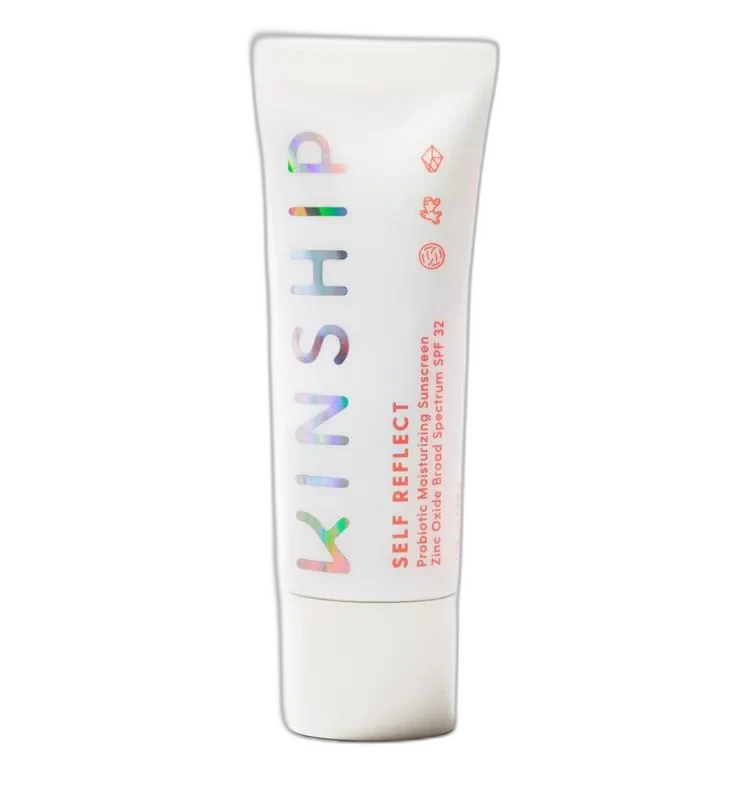
Self Reflect Probiotic Moisturizing Sunscreen SPF 32
Sensitive Skin Mineral Pick
 Verified reviewer
Pros & cons.
- +High 22.4% non-nano zinc oxide load in a single-filter formula
- +Moisturizing base works as a day cream and SPF in one step
- +Iron oxide tint cuts the cast on fair and medium tones
- +Fragrance-free and alcohol-free for reactive skin
- +Kinbiome postbiotic complex supports barrier tolerance
- +Leaping Bunny certified with recyclable tube packaging
- −Visible cast and warm mismatch on deeper skin tones
- −Only SPF 32 rather than the preferred SPF 50
- −Small 50 ml tube runs out in 6 to 8 weeks with proper dosing
- −Heavy formula can pill under some silicone primers
- −Requires double cleansing to fully remove at night
The full review.
Most mineral sunscreens for sensitive skin are built backwards. Brands target SPF 50, then cut the zinc oxide load to hit that number, using a matte finish to stop the thin formula from sliding. This burns reactive skin, looks flat on mature skin, and feels chalky by noon. Kinship took the opposite approach when it launched Self Reflect in 2021. It set the zinc concentration at 22.4% and accepted an SPF 32 label instead of 50. This unusual decision matters because the target users are not beachgoers needing maximum SPF. They are reactive, rosacea-prone, and post-procedure users in a flare-up who need a high dose of the most tolerated filter in a formula that respects their barrier.
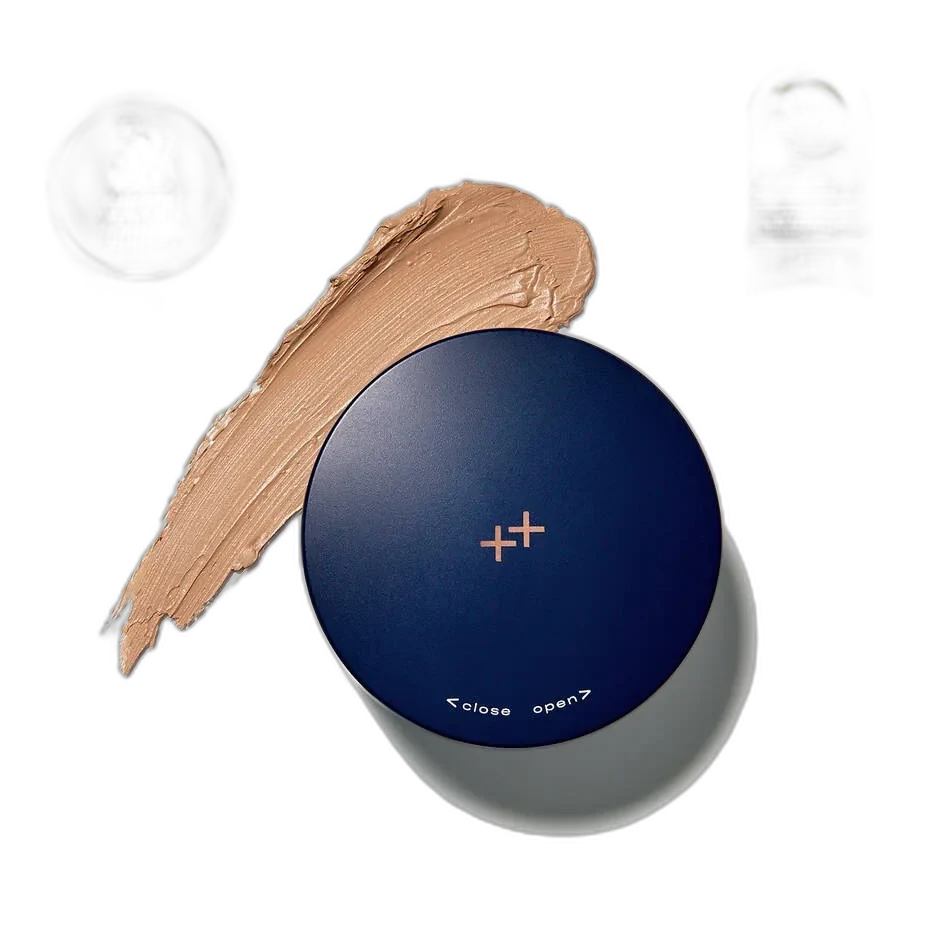
For those users, this mineral sunscreen works. The texture is thick and ivory, like a day cream, and settles into the skin after thirty seconds of patting. It leaves a soft, cushioned, slightly glowy finish that looks like healthy skin rather than a matte mask. The iron oxide tint is the key. On fair and light-medium skin tones, it cancels the warm yellow cast of 22% zinc. For rosacea and sensitive-skin users, the soft tint also blunts surface redness without a separate primer or foundation. The formula is moisturizing enough that many users with normal to dry skin can skip a day cream and layer a hydrating serum underneath, which helps offset the small tube size.
Science backs the ingredients below the zinc layer. Kinship’s Kinbiome pre-probiotic complex uses lactobacillus ferment, which has emerging data on barrier support. The licorice root extract, dipotassium glycyrrhizate, raspberry seed oil, and tocopherol provide antioxidant and anti-inflammatory support under the all-mineral filter. The preservative system is modern and conservative. The base has no added fragrance, which suits an SPF for reactive skin, and the alcohol content is nil. For a clean beauty brand only a few years old, the formulation discipline is serious.
The drawbacks stem from these formulation choices. The cast is real. On fair and medium skin tones, iron oxides hide most of it, but on deeper tones, the cream looks lighter than the skin. This is not a tinted mineral SPF for deeper tones. The SPF 32 label is lower than many dermatologists recommend for daily use, though application dose and reapplication matter more than the label. The tube lasts six to eight weeks with correct daily use, which feels short at twenty-eight dollars if you use larger SPF bottles. The zinc load also requires an oil or balm cleanser at night, as water alone does not remove it.
None of these drawbacks break the product for its target audience. If your skin flushes easily, if your dermatologist recommends a mineral-only SPF, or if you are recovering from a laser or peel and need the most tolerated filter, this product earns a place in your routine. It does not try to be everyone’s favorite sunscreen. It aims to be the right one for users frustrated by other options, and it is one of the better options in the clean beauty category.
Ingredient analysis.
Full INCI list
Active: Zinc Oxide 22.4% (non-nano). Inactive: Water (Aqua), Caprylic/Capric Triglyceride, Coconut Alkanes, Cetearyl Alcohol, Glycerin, Aloe Barbadensis Leaf Juice, Pyrus Malus (Apple) Fruit Extract, Coco-Glucoside, Lactobacillus Ferment, Rubus Idaeus (Red Raspberry) Seed Oil, Cocos Nucifera (Coconut) Liquid Endosperm, Curcuma Longa (Turmeric) Rhizomes Oil, Butyrospermum Parkii Nut Extract, Hydrolyzed Jojoba Esters, Tocopherol, Dipotassium Glycyrrhizate, Vanilla Planifolia Fruit Extract, Glycyrrhiza Glabra (Licorice) Root Extract, Butylene Glycol, Isostearic Acid, Lecithin, Polyglyceryl-3 Polyricinoleate, Polyhydroxystearic Acid, Coco-Caprylate/Caprate, Caprylyl/Capryl Glucoside, Sclerotium Gum, Cetearyl Glucoside, Ethylhexylglycerin, Xanthan Gum, Octyldodecanol, Tapioca Starch, Citric Acid, Sorbitan Oleate, Phenoxyethanol, Sodium Benzoate, Potassium Sorbate, Iron Oxides.
Skin match.
The science.
The Science
The UV protection case for this product rests squarely on non-nano zinc oxide at 22.4%. Zinc oxide is the only single sunscreen filter approved in the United States that provides broad-spectrum coverage across UVB and both UVA1 and UVA2 in a single molecule, and published work over several decades has established its photostability and its favorable irritation profile relative to most chemical filters. Clinical dermatology literature consistently identifies zinc oxide as the preferred filter for sensitive, rosacea-prone, pediatric, and post-procedure skin, and the American Academy of Dermatology specifically recommends zinc and titanium as the safest options for patients with compromised barriers. At 22% the protection is genuinely meaningful even at an SPF 32 label, and real-world performance depends far more on dose and reapplication than on the SPF number printed on the front of the tube. Published application studies have shown that most consumers apply far less than the 2 mg per square centimeter that laboratory SPF testing assumes, and under-application flattens the difference between labeled SPF numbers considerably. The supporting ingredient story has weaker but not negligible evidence. Licorice-derived glycyrrhizin and glycyrrhizinate have published anti-inflammatory activity, raspberry seed oil contains tocopherols with antioxidant activity, and lactobacillus ferment has growing literature on topical barrier support. None of these ingredients is doing the UV work, but collectively they improve the tolerance profile of a high-zinc base on reactive skin.
Dermatologist Perspective
Dermatologists frequently recommend high-concentration non-nano zinc sunscreens like this one for patients with rosacea, chronic sensitivity, post-laser recovery, and pediatric skin. Board-certified dermatologists often note that a well-formulated 20 to 25% zinc SPF is the safest choice for the most reactive cases and that the real clinical distinction is less about the labeled SPF number than about whether the patient will actually wear enough of the product every day. Self Reflect is frequently mentioned in the clean beauty recommendation set for post-procedure patients because the base is moisturizing rather than drying and the iron oxides help blend the cream into the skin. Dermatologists usually advise patients to apply a full half-teaspoon to the face and neck, reapply every two hours with outdoor exposure, and remove the product with a proper oil or balm cleanser at night.
Where it fits in your routine.
Apply this as your final morning step after cleanser, serum, and moisturizer, once skin has settled. Warm a half-teaspoon between your fingers, then pat it onto your face, ears, neck, and upper chest, avoiding the eye area. Let the formula set for one minute before applying makeup. Reapply every two hours if you have direct sun exposure or outdoor activity. Use an oil or balm cleanser at night to remove it completely, as water alone does not remove 22% zinc from the skin. Store away from direct heat.
At $28 for 50 ml, this sunscreen costs about the median price for mid-tier mineral SPFs. It costs less than the $40 to $50 tier some clean beauty brands charge for similar products. Correct daily dosing makes the per-day cost between fifty cents and a dollar, which is reasonable for a serious sensitive-skin SPF. The tube size weakens the value. Fifty milliliters is small for a face SPF, so committed users will use bottles faster than they want. A 100 ml option would improve the value. For the sensitive and rosacea-prone audience this product serves, the price reflects the formulation quality.
This works for sensitive, rosacea-prone, eczema-prone, and post-procedure skin in their twenties through sixties needing a high-zinc mineral SPF in a moisturizing base. It is a strong pick for anyone on tretinoin or active acid protocols who needs a well-tolerated daily SPF that soothes and cushions.
Deeper skin tones will see a visible mismatch and a lighter cast from the warm tint. Use this if you want the strongest SPF 50 label for beach or outdoor-sport use. Minimalists can use this larger, cheaper SPF tube for both body and face.
Product details.
This thick ivory-to-beige tinted cream spreads smoothly after warming between your fingers for a few seconds.
Faint natural scent from the botanical oils, no added fragrance.
Kinship's recyclable packaging line uses an aluminum-based tube with a screw cap. This fits the brand's sustainability positioning.
The formula has a visible tint and feels slightly cushioned when applied. It sits on the skin for one minute before settling into a soft natural finish. During the first few days, users often use less moisturizer underneath than their usual routine.
Use daily on the face and neck for 6 to 8 weeks at proper dosing; results show sooner if you apply liberally.
12 months
All Year
The backstory.
Self Reflect was launched in 2021 as Kinship's flagship SPF and was built around its in-house Kinbiome pre-probiotic complex, which the brand uses across its moisturizers. It was the product that moved Kinship from a Gen Z skincare curiosity into a credible sensitive-skin SPF option in mainstream clean-beauty retail.
About Kinship
Emerging Brand (2–5 years)Kinship launched in 2019 as a sustainability-focused clean beauty brand with Leaping Bunny certification. Self Reflect is its flagship SPF and the core of its Kinbiome pre-probiotic technology platform. The brand has growing Ulta and Anthropologie distribution but lacks independent clinical validation.
Common myths.
All mineral sunscreens leave a heavy white cast and look chalky.
Older formulations had this issue. Modern tinted mineral SPFs with iron oxides, like this one, reduce the cast on fair and medium skin tones, but darker tones still see a mismatch and may need a different product.
SPF 32 lacks enough protection for daily use.
Real-world SPF performance depends on application dose and reapplication more than the label number. Half a teaspoon of SPF 32 applied correctly outperforms a poorly applied SPF 50, though SPF 50 is the preferred target if you get the same coverage.
FAQ.
Does Kinship Self Reflect leave a white cast?
Yes, some. The 22.4% non-nano zinc causes an inevitable cast, but Kinship adds iron oxides to reduce it on fair and medium skin tones. Deeper tones still show a cast and a slightly warm mismatch.
Is this sunscreen safe during pregnancy?
Yes. Zinc oxide is the safest sunscreen filter during pregnancy and breastfeeding. This formula has no ingredients that most obstetricians flag as concerns.
Can I use it as a moisturizer and sunscreen in one step?
Yes, for many users. The base is emollient enough that normal to dry skin often uses only a hydrating serum underneath instead of a separate daytime moisturizer. Very dry or mature skin may still need a full moisturizer first.
Why is it SPF 32 when most sunscreens are SPF 50?
Kinship uses 22.4% zinc concentration instead of adding inactive ingredients to reach SPF 50. This results in a higher zinc load and a slightly lower labeled SPF number. The product provides strong real-world coverage when applied at the correct dose.
Is this sunscreen reef-safe?
Yes. It uses non-nano zinc oxide as the only active and contains no oxybenzone or octinoxate. This meets the current standard for reef-safe mineral SPF.
Will it work under makeup?
Yes, for most skin types. The tinted finish often means users need less foundation. Heavy silicone primers applied right after can cause pilling; layer slowly or use a silicone-free primer.
How do I remove it at night?
Mineral sunscreens with 22% zinc do not rinse off with water alone. Double cleansing with a gentle oil or balm cleanser and then a regular cleanser works reliably.
Community
What the community says.
"Genuinely non-irritating on sensitive and rosacea-prone skin"
"Moisturizing enough to skip a separate face cream on some days"
"Tinted formula helps soften redness"
"Clean list with no chemical filters"
"Noticeable white and yellow cast on deeper skin tones"
"Small tube runs out quickly"
"Only SPF 32 rather than SPF 50"
"Can pill under some silicone primers"
Featured in.
People also looked at.