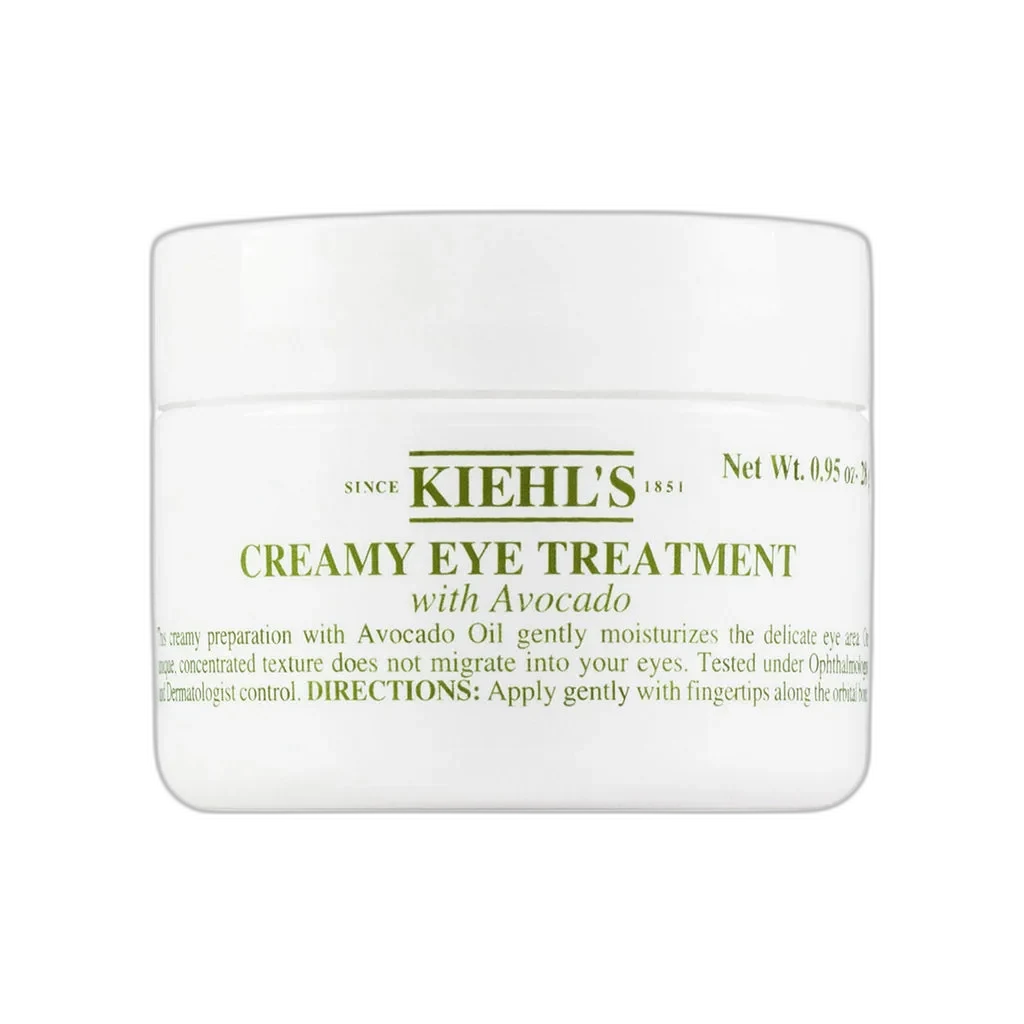
Creamy Eye Treatment with Avocado
Eye Cream Icon
 Verified reviewer
Pros & cons.
- +Over 50 years of proven safety and efficacy — one of the longest track records in eye care
- +99% naturally derived, fragrance-free, alcohol-free formula with exceptional tolerance
- +Rich shea butter and avocado oil combination provides deep, lasting hydration
- +Beta-carotene offers gentle provitamin A antioxidant benefits without retinoid irritation
- +Silicone-free and paraben-free formula suitable for the most sensitive eye areas
- +Signature green-tinted cream absorbs to invisible without affecting makeup application
- −Jar packaging is less hygienic than tubes and exposes product to air degradation
- −Too rich for oily skin types — may contribute to milia formation around the eyes
- −No targeted actives for dark circles, crow's feet, or significant anti-aging concerns
- −Thick texture requires 1-2 minutes of absorption time before concealer application
- −Does not address puffiness or volume loss beyond basic hydration
The full review.
In 1971, dedicated eye creams were a novelty. People moisturized their faces and hoped the under-eye area fared well. At the Kiehl’s Third Avenue apothecary, someone decided the thinnest, most delicate skin on the face deserved its own formula. They used avocado oil, shea butter, and a few supporting ingredients. The resulting pale green cream still sells, essentially unchanged, over fifty years later.
The longevity of Kiehl’s Creamy Eye Treatment with Avocado is its strongest credential. While this category obsesses over peptide complexes, retinol microspheres, and caffeine polymers, this cream survives through simplicity. The ingredient list shows shea butter in the second position, avocado oil in the eighth, beta-carotene for its tint, sodium and copper PCA for humectant depth, and very little else. It has no competing actives or trend-chasing additions. It just delivers moisture.
The texture defines the product immediately. It is thick and substantial—a balm you warm between your ring fingers before patting it around the orbital bone. This is not a gel cream for minimalists. This is a cream for people whose under-eye area flakes from dryness, where concealer clings to fine lines, or where lighter products evaporate by noon.
The shea butter and avocado oil combination creates a nutritive cocoon for the periorbital skin. Shea butter contains stearic and oleic acids, forming a breathable occlusive layer that prevents transepidermal water loss. The avocado oil penetrates deeper, delivering phytosterols and fatty acids to the stratum corneum. Together, they address surface dryness and deeper dehydration.
Sodium PCA—a component of the skin’s Natural Moisturizing Factor—pulls water into the skin, while copper PCA supports collagen synthesis to add subtle firming. Beta-carotene gives the cream its green-gold color and serves a functional purpose. As a provitamin A, it converts to retinol on the skin gently and gradually, avoiding the irritation direct retinoid application causes near the eyes.
Clinical testing supports the hydration claims: 94 percent of test subjects saw less puffiness, 90 percent reported smoother-looking skin, and expert grading showed an 11 percent improvement in brightness after four weeks. These measured results match the cream’s function: it hydrates deeply, making under-eye skin look plumper, brighter, and less lined.
What this cream lacks is also important. It does not contain caffeine for de-puffing, vitamin C or arbutin for dark circle pigmentation, or retinol, peptides, or growth factors for anti-aging. If you want to treat crow’s feet, pigmented dark circles, or volume loss, this cream does not address those directly. It is a moisturizer for the eye area—one of the best ever made—but it is just a moisturizer.
The fragrance-free, alcohol-free, and essential-oil-free formula suits reactive eye areas. Many products include irritating fragrances near the eye, so this cream’s clean profile is a virtue. Fifty years of use across millions of units has stress-tested this formula more than any clinical trial.
The jar packaging is the only legitimate criticism. Dipping fingers into a jar introduces bacteria and exposes the beta-carotene and oils to air, which accelerates oxidation. A tube or airless pump would be more hygienic and preserve the product better. However, for a 50-year-old formula, the jar is iconic; changing it might be sacrilege.
At $40 for 0.5 oz, the price is mid-range for a prestige eye cream. Because you need very little per application, a jar lasts 3-4 months. The 0.95 oz size at $62 offers better value. Given the 99 percent naturally derived formula, the fragrance-free commitment, and the five-decade track record, the price is fair. You pay for a proven formula, not trendy actives.
For dry, dehydrated, or tired under-eye skin, this remains the cream to beat. It is not the most innovative, active-packed, or Instagram-worthy. It simply does what an eye cream must do—hydrate the thinnest skin on your face—with a gentleness and generosity that fifty years of imitators have not improved.
Ingredient analysis.
Full INCI list
Aqua/Water, Butyrospermum Parkii Butter/Shea Butter, Butylene Glycol, Tridecyl Stearate, PEG-30 Dipolyhydroxystearate, Isodecyl Salicylate, Tridecyl Trimellitate, Persea Gratissima Oil/Avocado Oil, Isocetyl Stearoyl Stearate, Propylene Glycol, Dipentaerythrityl Hexacaprylate/Hexacaprate, Sorbitan Sesquioleate, Magnesium Sulfate, Hydrogenated Castor Oil, Sodium PCA, Phenoxyethanol, Chlorphenesin, Hydrogenated Jojoba Oil, P-Anisic Acid, Tocopheryl Acetate, Isopropyl Palmitate, Disodium EDTA, Copper PCA, Helianthus Annuus Seed Oil/Sunflower Seed Oil, CI 40800, Beta-Carotene, Citric Acid
Skin match.
The science.
The Science
This eye cream uses a nourishment-first strategy based on lipid science. Avocado oil (Persea gratissima) penetrates the stratum corneum into the epidermis because it contains oleic acid (approximately 60%), palmitoleic acid, linoleic acid, and phytosterols like beta-sitosterol. A 2019 review in the International Journal of Molecular Sciences shows avocado oil enhances wound healing, reduces inflammation, and improves collagen synthesis in human skin models.
Shea butter (Butyrospermum parkii) acts as the formula's occlusive backbone. Research in the Journal of Oleo Science (2010) shows shea butter contains anti-inflammatory cinnamic acid esters and triterpenes that support dermal regeneration. As the second ingredient after water, Shea butter makes up a large portion of the formula's weight.
Sodium PCA is a natural part of the skin's Natural Moisturizing Factor (NMF)—the hygroscopic molecules that maintain stratum corneum hydration. Clinical studies show exogenous sodium PCA improves skin hydration capacity. Copper PCA has two functions: copper ions support superoxide dismutase (SOD) activity for antioxidant defense and participate in lysyl oxidase-mediated collagen cross-linking to firm the skin.
Beta-carotene is a provitamin A that the skin enzymatically converts to retinal. This conversion is self-regulating; the skin converts only what it needs, which lowers irritation risk compared to direct retinoid application. This makes beta-carotene suitable for the periorbital area, where direct retinoids often cause dryness, peeling, and discomfort.
The PEG-30 dipolyhydroxystearate emulsifier creates a water-in-oil emulsion. This structure uses a continuous oil phase to provide better occlusion than oil-in-water emulsions, which helps prevent the transepidermal water loss common in thin periorbital skin.
Dermatologist Perspective
The periorbital area is 40% thinner than the rest of the face, has fewer oil glands, and is more prone to irritation and dehydration. Board-certified dermatologists often recommend this eye cream for intensive under-eye hydration without the irritation risk of active ingredients. The fragrance-free, alcohol-free formula is safe for post-procedure eye care and for patients with periorbital eczema or contact dermatitis. Dermatologists note that while this cream hydrates well, patients treating pigmented dark circles, crow's feet, or periorbital volume loss need complementary products with targeted actives like retinol, vitamin C, or peptides.
Where it fits in your routine.
Use a tiny amount (grain-of-rice size) with your ring finger. This finger has the least strength and prevents too much pressure. Dot the cream along the orbital bone under each eye and on the outer corners. Gently pat—do not rub or drag—until absorbed. Use morning and evening after serums but before moisturizer. In the morning, wait 1-2 minutes for full absorption before applying concealer or makeup. If you use retinol products at night, apply this cream over them as an occlusive seal.
At $40 for 0.5 oz, this eye cream is mid-range prestige eye care. The per-application cost is low; one grain-of-rice-sized amount per eye makes the jar last 3-4 months. The 0.95 oz size at $62 offers better value at approximately $65 per ounce, compared to $80 per ounce for the smaller jar. The pricing is fair for a fragrance-free, 99% naturally derived formula with a 50-year track record. This eye cream does not charge for peptide technology or patented complexes. Instead, you pay for well-sourced natural ingredients, a proven water-in-oil emulsion system, and a formula that has hydrated millions of under-eye areas since the early 1970s.
This is for anyone with dry, dehydrated, or sensitive under-eye skin seeking deep hydration and gentle nourishment. It works well for people who react to fragranced eye creams, those in dry climates or harsh winters, and anyone needing a reliable daily eye moisturizer with an impeccable safety record.
Oily skin types prone to milia around the eyes may find the thick formula too heavy. Those focusing on dark circle pigmentation, crow's feet, or significant anti-aging need targeted actives. Anyone who prefers lightweight gel-cream textures that absorb instantly.
Product details.
No added fragrance. It is essentially unscented, with a faint, neutral cream scent that is virtually undetectable.
Classic Kiehl's jar uses a screw-top lid. This opaque container protects beta-carotene from light degradation. It comes in 0.5 oz and 0.95 oz sizes. The iconic jar format exposes the product to air and bacteria during each use.
The cream feels thick and substantial on first application — this is a serious moisturizing treatment, not a featherweight gel. The green-tinted cream blends to invisible as it absorbs. It causes zero stinging, tingling, or irritation. The under-eye area feels plumped and smooth immediately. Wait 1-2 minutes for full absorption before applying concealer. ***
3-4 months with twice-daily use of the 0.5 oz size ***
12 months ***
All Year ***
The backstory.
Created in Kiehl's New York apothecary in the early 1970s when the concept of a dedicated eye cream was still novel, this treatment was inspired by the richness of avocado oil — a fruit that was gaining popularity in American wellness culture. Over five decades later, it remains one of the brand's top-selling products worldwide, its formula essentially unchanged. The distinctive green cream has become as recognizable as the brand itself.
About Kiehl's
Legacy Brand (20+ years)Kiehl's started in 1851 as a New York City apothecary. The brand has used pharmaceutical expertise to formulate skincare for over 170 years. L'Oréal acquired Kiehl's in 2000, and the brand keeps its apothecary heritage through dermatologist-recommended formulations and clinical testing.
Common myths.
Eye creams are just expensive moisturizers; the eye area does not require a separate product.
Moisturization principles are similar, but periorbital skin is 40% thinner than the rest of the face and lacks oil glands. This formula uses a water-in-oil emulsion system designed for that thinner skin — heavier facial moisturizers cause milia, while lighter ones lack adequate hydration for the eye area.
The green color shows this cream has artificial dyes that irritate eyes.
The green-yellow tint comes from beta-carotene (CI 40800), a natural carotenoid in carrots, sweet potatoes, and avocados. This provitamin A antioxidant provides functional skin benefits rather than acting as a cosmetic dye.
FAQ.
Is Kiehl's Avocado Eye Cream good for dark circles?
This eye cream targets dryness, fine dehydration lines, and hydration—not dark circles. Well-hydrated under-eye skin looks brighter (clinical testing showed 11% improvement in brightness at 4 weeks), but the formula lacks vitamin C, vitamin K, or caffeine to treat pigmented dark circles. For dark circles, use this as a hydrating base and layer a targeted treatment underneath.
Can I use Kiehl's Avocado Eye Cream under makeup?
Yes, but wait 1-2 minutes for the thick formula to absorb before applying concealer or foundation. Use a small amount — a tiny dab per eye works. If the formula feels too thick for daytime, use a lighter eye cream in the AM and use this thicker formula for your nighttime routine to use its occlusive properties overnight.
Is Kiehl's Avocado Eye Cream safe for sensitive skin?
Yes — this is one of the gentlest eye creams available. The 99% naturally derived formula is fragrance-free, alcohol-free, essential-oil-free, and paraben-free. It has no known sensitizers or irritants. Sensitive-skin consumers have used the formula for over 50 years with an excellent tolerance record.
Why is the Kiehl's Avocado Eye Cream green?
The green-yellow tint comes from beta-carotene, a plant-derived natural provitamin A carotenoid. This same compound colors carrots orange and avocados green. In this formula, beta-carotene acts as a natural colorant and a functional antioxidant that protects delicate under-eye skin from free radical damage.
How long does a jar of Kiehl's Avocado Eye Cream last?
The 0.5 oz jar lasts 3-4 months if used twice daily. Each eye needs only a grain of rice per application. The 0.95 oz size at $62 has better per-ounce value for long-term users and lasts 6-8 months.
Community
What the community says.
"Incredibly hydrating without feeling greasy under makeup"
"Gentle enough for the most sensitive eye areas"
"Distinctive avocado-green color feels luxurious"
"Smooths fine dry lines noticeably upon application"
"No stinging or irritation even on very delicate skin"
"Too rich for oily skin types — can cause milia around the eyes"
"Does not address dark circles or deep wrinkles as active ingredients are minimal"
"Jar packaging is less hygienic than a tube or pump"
"Some users find the texture too thick for morning use under concealer"
Featured in.
People also looked at.