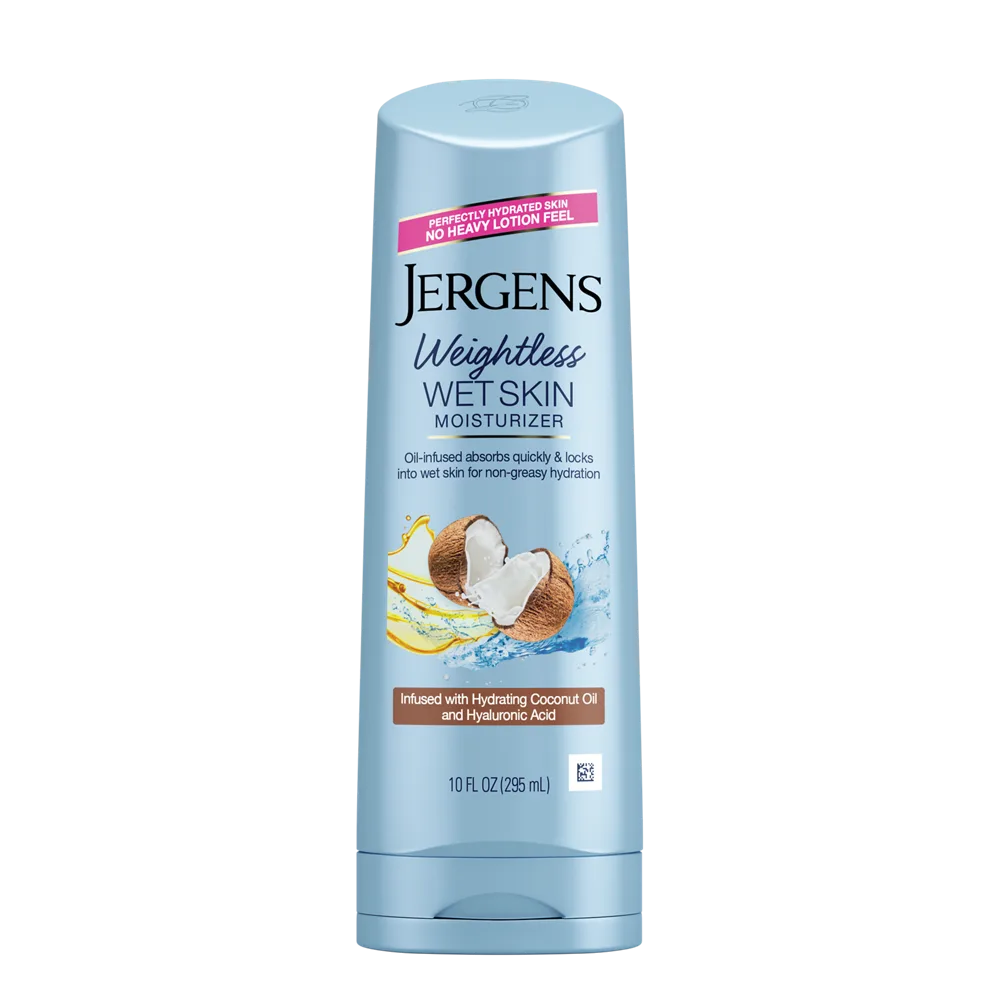
Wet Skin Moisturizer with Coconut Oil
Shower Shortcut Moisturizer
 Verified reviewer
Pros & cons.
- +In-shower application is genuinely convenient and saves time over traditional body lotions
- +Leverages sound dermatological principle of moisturizing on damp skin
- +Copolymer delivery system disperses product evenly across wet skin
- +Updated formula adds hyaluronic acid for improved humectant action
- +Pleasant coconut scent that fades quickly and does not linger on clothing
- +Silicone-free formula for those who prefer to avoid silicones on body skin
- −Contains both methylparaben and ethylparaben unlike the reformulated Ultra Healing
- −Coconut oil comedogenic rating of 4 can trigger body acne on back and chest
- −Basic ingredient composition beyond the clever delivery mechanism
- −Not moisturizing enough for severe dryness or eczema without layering
- −Higher per-ounce cost than standard Jergens body lotions for a simpler formula
The full review.
The best skincare product is the one you use. Dermatologists have said this for decades, often recommending patients apply body moisturizer to damp skin for maximum hydration. Most people shower, towel off, get dressed, and then forget to moisturize—leaving the body lotion on the bathroom shelf. Jergens solved this in 2015 with a specific product.
The Wet Skin Moisturizer with Coconut Oil uses a smart concept. Instead of asking people to stand around wet and cold to lotion up, this product works while you are still in the shower with your skin warm and damp. Application takes thirty seconds. You pat dry, get dressed, and move on. For those struggling with a consistent moisturizing habit, this workflow adjustment prevents dry, ashy skin.
The formula uses a copolymer delivery system—ethylene/propylene/styrene copolymer and butylene/ethylene/styrene copolymer—that activates on wet skin. These synthetic wax-like polymers help oil-based ingredients disperse evenly across damp skin instead of beading up or sliding off. It is effective cosmetic engineering, even if it sounds less glamorous than a ceramide complex or a peptide cocktail.
Coconut oil is the hero ingredient; its medium-chain fatty acids provide emollient conditioning. Glycerin is second on the INCI list and acts as the primary humectant. It has an advantage here because the skin already has the water it needs to draw from. Mineral oil adds an occlusive layer to trap ingredients. The updated formula adds hyaluronic acid and sodium hyaluronate, providing multi-weight humectant support to the original, simpler formula.
The texture is thinner than a traditional body lotion. It feels almost watery on wet skin by design. It blends with shower water to create a slippery, spreadable film that covers the body in seconds. The coconut scent is pleasant and tropical but not aggressive. It fades by the time you finish dressing.
The formula is clever in delivery but basic in composition. Coconut oil, glycerin, and mineral oil are effective but standard emollients and occlusives. The hyaluronic acid is near the bottom of the INCI list, suggesting a low concentration. You pay for the convenience of the delivery system and the copolymer technology, not a breakthrough formulation.
The formula contains parabens. While Jergens reformulated Ultra Healing lotion to remove methylparaben and ethylparaben, the Wet Skin Moisturizer still contains both. This is a dealbreaker for consumers who avoid parabens. The European Commission considers parabens safe at cosmetic concentrations, and dermatological consensus agrees, but the presence of parabens in a 2015-launched product that has seen other reformulations is an oversight.
The fragrance is another factor. It lacks individual allergen disclosure, unlike the EU-compliant Ultra Healing formula, making it harder to assess irritation risks. If you have fragrance sensitivities, avoid this product.
Coconut oil has a comedogenic rating of 4 out of 5. This matters for those prone to body acne on the back, chest, and shoulders. Most body skin on the arms and legs tolerates coconut oil, but if you have bacne or chest breakouts, use caution or apply only below the waist.
The convenience is transformative for some. The Jergens brand claims the product delivers twice the moisturization in half the time compared to traditional body lotion application. Whether controlled testing proves this is debatable, but the dermatological principle is sound: applying moisturizer to damp skin improves hydration because the product traps water already on the skin surface.
At roughly nine dollars for ten fluid ounces, the price is reasonable, though the per-ounce cost is higher than standard Jergens body lotions. You pay a modest premium for the in-shower technology. One bottle lasts two to three months with daily use, making it economical.
Jergens Wet Skin Moisturizer does not win awards for ingredient innovation. It solves the gap between knowing you should moisturize and actually doing it using affordable, accessible, and science-based methods. For the person who owns three body lotions but uses none, this product may work.
Ingredient analysis.
Full INCI list
Water, Glycerin, Mineral Oil, Ethylhexyl Isononanoate, Ethylene/Propylene/Styrene Copolymer, Acrylates/C10-30 Alkyl Acrylate Crosspolymer, Ceteareth-20, Butylene/Ethylene/Styrene Copolymer, Fragrance, Magnesium Aluminum Silicate, Sodium Hydroxide, Cocos Nucifera (Coconut) Oil, Hyaluronic Acid, Sodium Hyaluronate, Methylparaben, Phenoxyethanol, Ethylparaben
Skin match.
The science.
The Science
The Jergens Wet Skin Moisturizer uses a dermatological principle validated by clinical research: applying emollients to damp skin improves hydration. A study in the Journal of the American Academy of Dermatology shows that applying moisturizer within three minutes of bathing, while skin is damp, improves stratum corneum hydration more than applying to dry skin. The moisturizer traps water on the skin surface, allowing occlusive and humectant ingredients to work with that water instead of only drawing moisture from the atmosphere or deeper skin layers.
The copolymer system in this formula — ethylene/propylene/styrene copolymer and butylene/ethylene/styrene copolymer — acts as a water-activated dispersal technology. Cosmetic chemistry uses these synthetic wax-like polymers to create oil-in-water systems that spread easily on wet surfaces and form a flexible occlusive film as water evaporates. This helps coconut oil and mineral oil emollients distribute uniformly instead of pooling in droplets on wet skin.
Coconut oil (Cocos Nucifera Oil) has documented emollient and skin-conditioning properties. Research in Dermatitis (2014) showed virgin coconut oil improved skin hydration and increased surface lipid levels. However, its high lauric acid content gives it a comedogenic rating of 4, which can occlude follicles on acne-prone skin. This risk is typically manageable when applying a body moisturizer to arms and legs.
The updated formula adds hyaluronic acid and sodium hyaluronate for multi-molecular-weight humectant support, though lack of concentration data makes this contribution hard to quantify. Their position at the bottom of the INCI list suggests modest concentrations.
References
- Effect of olive oil, coconut oil, and mineral oil on skin hydration and surface lipids — Dermatitis (2014)
Dermatologist Perspective
Dermatologists recommend moisturizing on damp skin to manage dry skin, so the Jergens Wet Skin concept aligns with clinical practice. Board-certified dermatologists often advise patients — especially those with eczema or chronically dry skin — to apply emollients within three minutes of bathing while the stratum corneum is still hydrated. The product's occlusive ingredients (mineral oil, coconut oil) trap this moisture. However, dermatologists would note that the fragrance and parabens in this formula make it unsuitable for patients with contact dermatitis or fragrance sensitivities, and the coconut oil content requires caution for those with body acne.
Guidance
Where it fits in your routine.
Turn off the water after showering and apply directly to wet skin while still in the shower. Use a dime-sized amount per arm and a quarter-sized amount per leg, spreading it evenly. Do not rinse. Step out and pat dry gently with a towel; do not rub. The formula locks in moisture as excess water evaporates. For extra-dry areas, apply a thicker body cream after patting dry.
At about $8.99 for 10 fluid ounces, the Wet Skin Moisturizer costs slightly more per ounce than Jergens' standard body lotions. This price reflects the copolymer delivery technology and the addition of coconut oil plus hyaluronic acid. Daily use lasts 2-3 months, keeping the monthly cost under $5 — a reasonable price for a daily body moisturizer. The 15 oz pump bottle offers better per-ounce value for consistent users. Many users find the small premium worth the convenience.
People who skip body moisturizer because post-shower application feels slow or inconvenient. It works for busy routines where five extra minutes of lotioning is unrealistic. It suits dry to normal body skin needing daily hydration without a heavy, greasy lotion.
People with fragrance sensitivities, paraben concerns, or body acne on the back and chest should skip this. If you have severe dryness or eczema, this formula lacks enough moisture alone — use a thicker, fragrance-free emollient instead.
Product details.
This lightweight, semi-translucent oil-infused lotion is thinner than a typical body lotion. It blends with water on wet skin to create a slippery, easy-to-spread consistency that absorbs when you pat the skin dry.
Light, sweet coconut fragrance smells tropical and clean without overpowering. It fades after toweling off, leaving a subtle coconut hint on the skin.
Clear translucent plastic squeeze bottle has a flip-top cap and blue/white label with coconut imagery. The 15 oz size includes a pump dispenser. This functional drugstore packaging works for shower use.
The product feels watery and thin on wet skin during first use, as intended. Once patted dry, skin feels softer and shows a subtle glow immediately. The coconut scent is pleasant but fades fast. No adjustment period is needed.
Apply the 10 oz bottle daily after showers for 2-3 months. Use dime-to-quarter-sized amounts per body area.
12 months
All Year
The backstory.
Launched in 2015, Jergens Wet Skin Moisturizer introduced the concept of in-shower body moisturizing to the mass market. The idea was to solve the problem that most people skip body lotion because they find post-shower application inconvenient or time-consuming. By moving the moisturizing step inside the shower, Jergens targeted the gap between good intentions and actual daily use.
About Jergens
Legacy Brand (20+ years)The Andrew Jergens Company started in 1882 and belongs to Kao Corporation. Jergens has over 140 years in personal care. It is one of America's most established body lotion brands, but consumers develop its products instead of dermatologists.
Common myths.
Applying moisturizer to wet skin is marketing; it works no better than applying to dry skin.
Dermatologists recommend applying moisturizer to damp skin, especially for eczema management. Wet skin is more permeable. Trapping existing water with an occlusive layer increases hydration more than applying the same product to bone-dry skin.
Coconut oil is too comedogenic to use on the body.
Coconut oil has a comedogenic rating of 4 (on a 0-5 scale) and causes breakouts on the face and chest. Most body skin is more resilient. Back and shoulder acne sufferers should be cautious, but most people's legs, arms, and feet tolerate coconut oil well.
FAQ.
Is Jergens Wet Skin Moisturizer good for eczema?
Applying this to wet skin follows dermatologist advice for eczema (moisturize on damp skin), but this formula has fragrance and parabens that irritate eczema-prone skin. If you have eczema, use fragrance-free, paraben-free alternatives made for eczema.
Does Jergens Wet Skin Moisturizer leave skin greasy?
Most users report a non-greasy finish if they use recommended amounts and pat dry gently. Over-applying leaves an oily residue. Use small amounts — dime-sized per arm, quarter-sized per leg — and pat instead of rub when toweling off.
Can Jergens Wet Skin Moisturizer cause body acne?
The coconut oil in this formula has a comedogenic rating of 4 out of 5. This can clog pores on acne-prone body areas like the back and chest. If you get body breakouts, apply this to arms and legs and avoid the chest, back, and shoulders.
Is Jergens Wet Skin Moisturizer paraben-free?
No. Unlike Jergens' reformulated Ultra Healing lotion, the Wet Skin Moisturizer with Coconut Oil still contains both methylparaben and ethylparaben as preservatives. If avoiding parabens is important to you, check the ingredients on the specific product you are purchasing.
Community
What the community says.
"Leaves skin soft and silky without heavy greasy residue"
"Extremely convenient in-shower application saves time"
"Pleasant coconut scent that is not overpowering"
"Absorbs quickly on wet skin with minimal effort"
"Affordable and widely available at drugstores"
"Some users find it greasy or sticky despite non-greasy claims"
"Not moisturizing enough for very dry or eczema-prone skin"
"Contains both methylparaben and ethylparaben"
"Coconut oil can cause body breakouts on acne-prone individuals"
"Formula may have changed since original 2015 launch"