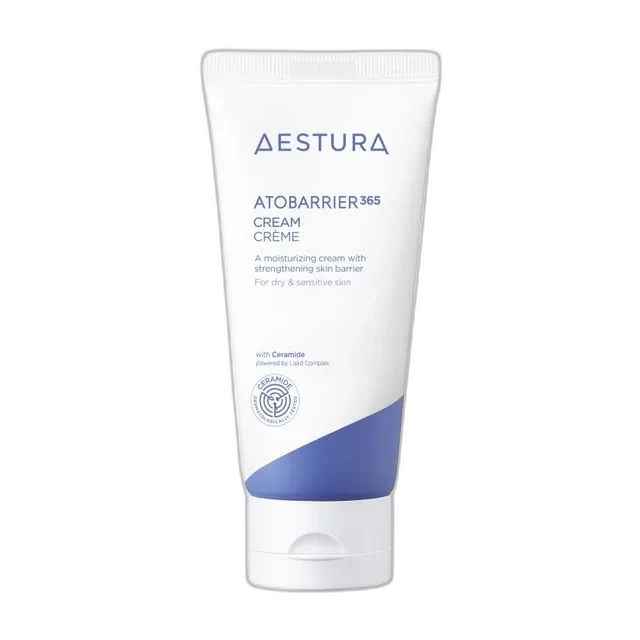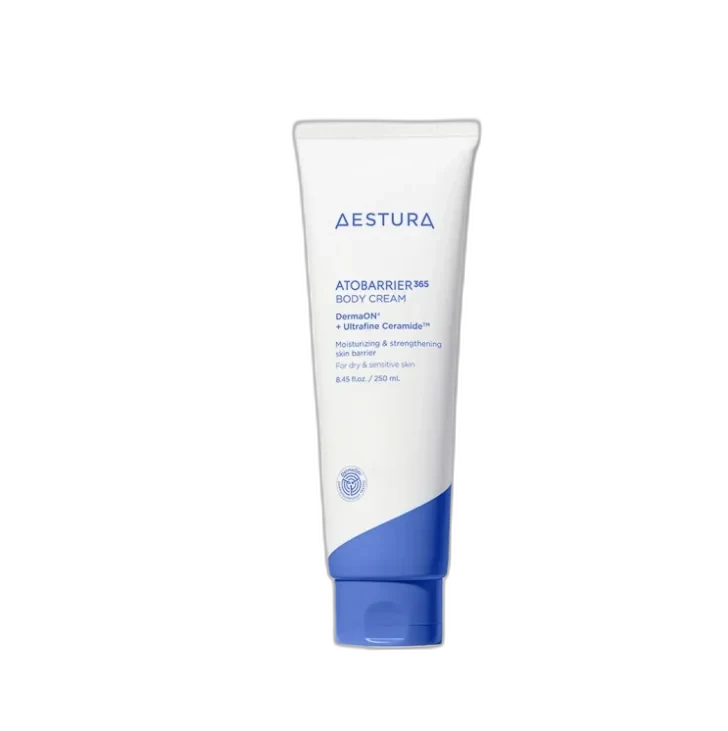
Atobarrier 365 Body Cream
Korean Derm-Clinic Staple
 Verified reviewer
Pros & cons.
- +Ceramide NP plus ceramide-mimetic for layered barrier repair
- +Fragrance-free and suitable for sensitive or atopic skin
- +Clinically validated by a dermatologist-developed Korean brand
- +Reasonable price for 300ml of ceramide-heavy body cream
- +Non-greasy fast-absorbing finish despite the rich formulation
- +Effective for eczema, keratosis pilaris, and winter dryness
- −Jar-style packaging is less hygienic than a pump
- −Contains some silicone for spreadability (not a true dealbreaker)
- −International availability can be inconsistent
- −Not vegan-certified even though cruelty-free
- −May need an overnight ointment layer for severe flare areas
The full review.
Skincare has a strange asymmetry. Face-care has grown more sophisticated over fifteen years, making ceramide stacks, amino acid humectants, and barrier-mimetic lipids baseline expectations. Body-care mostly stays stuck in 1995 with petrolatum, mineral oil, heavy fragrance, and marketing claims. Some exceptions exist, usually from dermatologist-developed brands that apply face-grade formulation logic to body products. Aestura’s Atobarrier 365 Body Cream shows this approach. It earns shelf space in Korean dermatology clinics while Western buyers buy scented drugstore lotions.
The brand matters. Aestura is part of Amorepacific and has developed barrier-repair products for sensitive and atopic-prone skin since 2004. The Atobarrier line built the brand’s reputation in Korean dermatological practice. The 365 reformulation advances the ceramide technology and adds a clinical focus on repeatability and measurable transepidermal water loss reduction. This context makes this fragrance-free, plain-looking product more interesting than its packaging suggests. You buy into a line refined over more than a decade of clinical use.
The formula uses smart layering. Ceramide NP performs structural barrier-repair. Aestura pairs it with hydroxypropyl bispalmitamide MEA, a ceramide-mimetic that extends barrier support beyond what one ceramide form does alone. A multi-humectant stack—glycerin, butylene glycol, betaine—sits around those repair lipids to bind water into the stratum corneum. Panthenol adds barrier recovery support, and evening primrose oil brings gamma-linolenic acid to the essential fatty acid layer. Acetyl glucosamine supports the skin’s own hyaluronic acid synthesis. The emollient architecture uses esters and fatty alcohols instead of heavy petrolatum, so the cream feels thick but not greasy upon application.
The skin experience matches a serious body cream. It squeezes out thick but spreadable, melts into dry areas without a heavy film, and reaches a soft, fast-absorbing finish within sixty seconds. There is no scent—only a faint clean lotion note from raw ingredients—and no tingling, warming, or stickiness. For shins, elbows, and forearms, daily use shows results quickly; by day three, most users see rough patches smooth and tightness from winter-heated indoor air fade. By two weeks, skin on chronically dry areas feels measurably more resilient.
Limitations are minor. The jar-style packaging is less hygienic than a pump because you dip fingers into the product daily. The cream contains a modest amount of methyl trimethicone; this silicone aids spreadability and finish rather than acting as a filler. While the price for 300ml of ceramide-heavy body cream is reasonable, international availability outside of Korea and select importer sites varies as the brand enters English-speaking markets.
Value is a strength. At around $28 for 300ml of ceramide-forward, fragrance-free, derm-developed body cream, the per-ounce price beats most barrier-repair body care in US drugstores. You can pay twice as much for prestige brands with less clinical backing, or half as much for drugstore lotions that are mostly water and fragrance. Aestura hits a sweet spot where ingredient quality justifies the price without luxury markup.
About Honest Beauty
Established Brand (5-20 years)
Who should buy this?
Anyone with dry, eczema-prone, or keratosis-pilaris-prone body skin who wants a serious fragrance-free moisturizer with clinical backing. Sensitive-skin users will value the absence of perfume and essential oils. People rebuilding a compromised body barrier after sun damage, harsh winters, or chronic dryness will see improvement within two weeks. As a general daily body moisturizer, this is a thoughtfully built product that does its job without drama.
Formula
Ingredient analysis.
Full INCI list
Water, Butylene Glycol, Glycerin, Diisostearyl Malate, Dicaprylyl Ether, Hydrogenated Poly(C6-14 Olefin), Betaine, Cetyl Ethylhexanoate, Methyl Trimethicone, C14-22 Alcohols, Cetearyl Alcohol, Glyceryl Stearate Citrate, 1,2-Hexanediol, Stearic Acid, Glyceryl Polymethacrylate, Panthenol, Hydroxyethyl Acrylate/Sodium Acryloyldimethyl Taurate Copolymer, Ammonium Acryloyldimethyltaurate/VP Copolymer, Glyceryl Stearate, Palmitic Acid, Arachidyl Alcohol, C12-20 Alkyl Glucoside, Acetyl Glucosamine, Behenyl Alcohol, Arachidyl Glucoside, Ethylhexylglycerin, Ceramide NP, Disodium EDTA, Hydrogenated Lecithin, Sorbitan Isostearate, Dipropylene Glycol, Thymol Trimethoxycinnamate, Gluconolactone, Glucose, Tocopherol, Oenothera Biennis (Evening Primrose) Oil, Hydroxypropyl Bispalmitamide MEA (Ceramide-Like), Mannitol, Copernicia Cerifera (Carnauba) Wax Extract, Acrylates/Ammonium Methacrylate Copolymer, Silica, Arachidic Acid, Caesalpinia Sappan Stem Powder
Skin match.
The science.
The Science
Aestura's ceramide strategy has strong clinical backing in Korean dermatology. Internal studies for the Atobarrier line show measurable reductions in transepidermal water loss and improved barrier resilience. The formula uses ceramide NP plus a ceramide-mimetic (hydroxypropyl bispalmitamide MEA), following the principle that one ceramide alone cannot fully reconstitute the stratum corneum's complex lipid matrix. Substantial, consistent evidence supports ceramide-containing moisturizers for atopic dermatitis and barrier-compromised skin; multiple dermatological reviews list ceramide supplementation as an effective non-prescription method for managing mild-to-moderate barrier dysfunction. The mechanism for evening primrose oil is supported, as linoleic and gamma-linolenic acids contribute to ceramide biosynthesis in the stratum corneum. Panthenol's role in barrier recovery is well-characterized in dermatology literature, and its concentration here supports claims of restoration after dryness or irritation. The multi-humectant approach (glycerin, butylene glycol, betaine) follows the dermatological view that layered humectants outperform single-ingredient strategies. The formulation architecture tracks with peer-reviewed literature.
Dermatologist Perspective
Dermatologists often recommend ceramide-containing body moisturizers as first-line care for atopic dermatitis, chronic dry skin, and post-inflammatory barrier dysfunction. Board-certified dermatologists note that dermatologist-developed brands with clinical validation — like Aestura's Atobarrier line — often beat generic drugstore options for patients whose skin failed simpler moisturizers. For patients with active eczema flares, doctors commonly advise this type of product alongside prescription anti-inflammatory treatment rather than as a standalone therapy. Dermatologists typically emphasize fragrance-free formulations for sensitive-skin patients, making this cream a fit for clinical recommendation.
Where it fits in your routine.
Apply liberally to damp skin right after showering to lock in water and maximize the ceramide-humectant system's effectiveness. Use morning and night, or more often on dry areas like shins, elbows, and forearms. For severely compromised areas, layer a petrolatum-based ointment on top at bedtime for more overnight occlusion. Use clean hands when dipping into the jar to minimize contamination.
At around $28 for 300ml, this cream offers high value. This dermatologist-developed Korean formulation uses ceramide technology that matches or exceeds expensive prestige options. Western prestige brands sell comparable ceramide-forward body creams for $50-80 in similar or smaller sizes, often with more fragrance and less clinical backing. Availability outside of Korea is the main catch; using an importer adds shipping and a small premium. Even with those costs, the value is favorable. This is one of the best-priced options for body barrier repair on the market.
This fragrance-free ceramide body cream has clinical backing. It works for dry, eczema-prone, atopic, or keratosis-pilaris-prone body skin. It also suits sensitive-skin users who need body moisturizers that do not trigger fragrance reactions.
Oily-skinned body-care buyers needing only light hydration can use a cheaper lotion. Those with a strict vegan preference should note the formulation isn't vegan-certified. Buyers in markets with limited Aestura availability may face inconvenient shipping and import costs.
Product details.
Thick but spreadable cream that melts into body skin without a heavy film
Fragrance-free with only a faint clean lotion note
300ml jar with wide mouth for easy access
The first application feels thick but not heavy. Dry patches on elbows and shins absorb the cream visibly within about a minute. It has no tingling, warming, or stickiness. By the third day of consistent use, rough areas smooth out and the skin stops feeling tight between applications.
2-3 months with daily full-body use
12 months
All Year
The backstory.
Aestura is the dermatologist-developed skincare brand under Amorepacific, founded in 2004 specifically to produce barrier-repair products for sensitive and atopic-prone skin. The Atobarrier 365 line was a reformulation push around 2021 to bring the brand's clinical credibility to a broader international market, with the body cream aimed at customers who wanted face-grade barrier repair for below-the-neck use.
About Aestura
Established Brand (5–20 years)Aestura is a Korean skincare brand owned by Amorepacific. Founded in 2004, dermatologists developed Aestura to focus on barrier-repair products. Korean dermatology clinics widely prescribe Aestura, and the Atobarrier line has a strong reputation backed by clinical studies on its ceramide technology.
FAQ.
Can I use it on my face?
You can use it on facial skin without harm, but the formula has a heavier weight for body use. For the same ceramide technology on your face, Aestura's Atobarrier 365 facial cream is a better match.
Is it thick enough for severe winter dryness?
Yes. The ceramide-plus-essential-fatty-acid stack and thick emollient base treat winter-level dryness well. For extreme conditions, layer a petrolatum-based ointment on the driest spots overnight.
Does it help with keratosis pilaris?
It helps with the barrier dysfunction that contributes to KP, but it won't replace a dedicated urea or lactic acid treatment for the characteristic bumps. The two products pair well — use this as your daily base moisturizer and an exfoliating lotion 2-3 times a week on affected areas.
Is it vegan?
Not strictly. The formula lacks many common animal-derived ingredients but includes some that fail vegan certification standards, though it is cruelty-free.
How long does one jar last?
Apply daily to the full body for roughly 2-3 months, or longer if you use it spot-style on dry areas like elbows and knees.
What the community says.
"genuinely helps eczema-prone body skin"
"fragrance-free"
"non-greasy for how rich it is"
"availability outside Korea can be inconsistent"
"jar-style packaging"
"takes a minute to absorb on very dry skin"