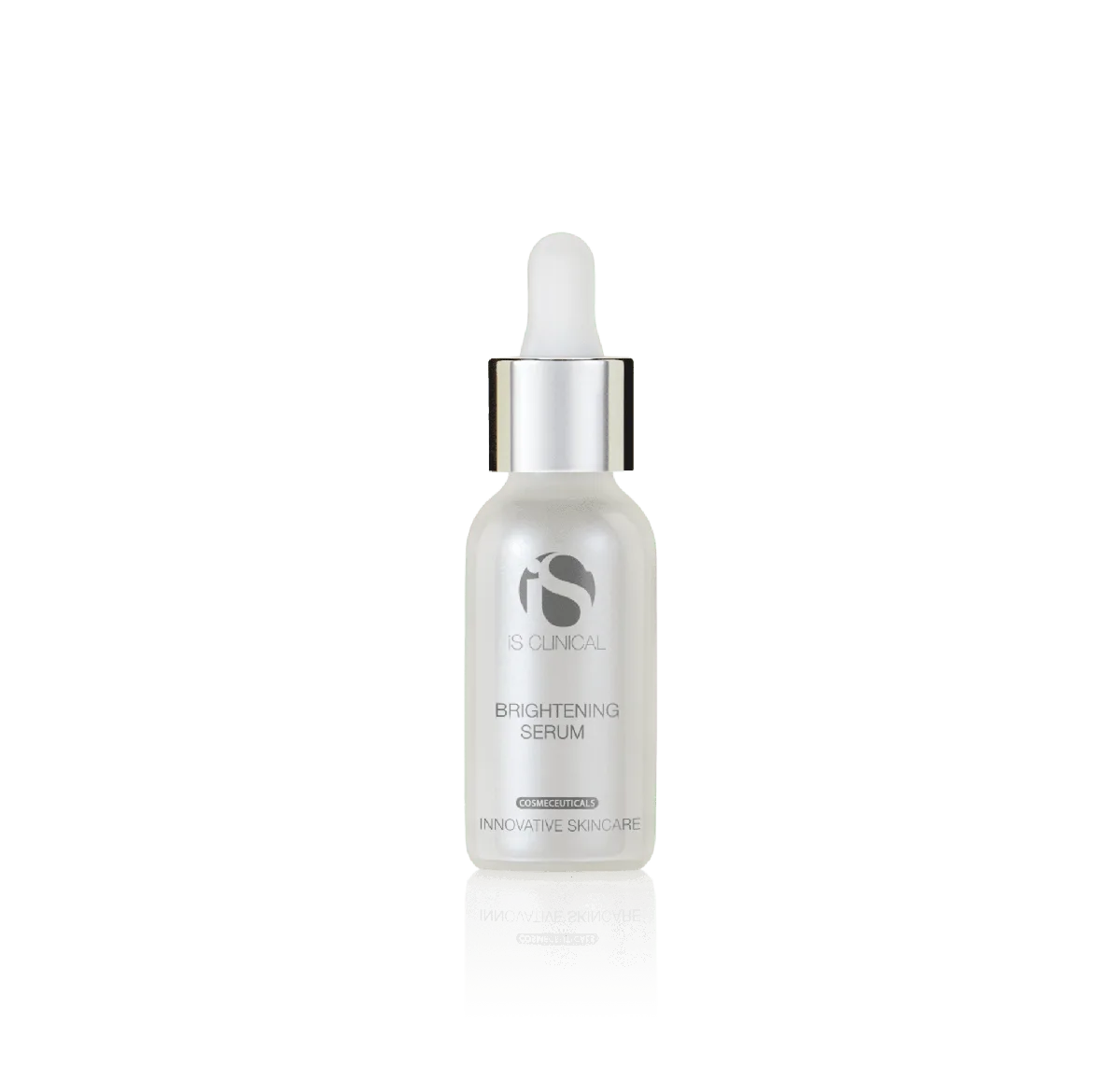
White Lightening Serum
Hydroquinone-Free Brightener
 Verified reviewer
Pros & cons.
- +Multi-pathway brightening attacks hyperpigmentation through three distinct mechanisms simultaneously
- +Hydroquinone-free formula safe for extended use and all skin tones including melanin-rich skin
- +Clinical data supports 75% pigmentation reduction at 12 weeks of consistent use
- +Norwegian kelp extract provides unique melanin-transfer inhibition not found in most brightening serums
- +Lightweight, fast-absorbing texture with no residue — easy to incorporate into any routine
- +Also refines pore appearance through willow bark BHA action
- −At $152 per ounce, expensive for a thirteen-ingredient formula
- −Contains denatured alcohol which can be drying and controversial for sensitized skin
- −Combined AHA/BHA exfoliation increases photosensitivity — strict sunscreen use is mandatory
- −Results require 12 weeks of consistent daily use for full pigmentation improvement
- −Not ideal for sensitive or rosacea-prone skin due to multiple exfoliating acids and menthol
The full review.
The name change tells a story. What was once the White Lightening Serum is now the Brightening Serum, a rebrand that reflects both evolving language norms and a more accurate description of what this product actually does. It does not lighten your skin. It normalizes melanin production in areas where it has gone into overdrive — the dark spots, the patches of sun damage, the post-inflammatory hyperpigmentation that refuses to fade on its own. The distinction matters, and iS Clinical’s decision to rename was both culturally aware and scientifically honest.
The formula’s core strategy is multi-pathway pigmentation correction, and this is where it genuinely distinguishes itself. Most brightening serums rely on a single mechanism: tyrosinase inhibition (vitamin C, arbutin), exfoliation (AHAs), or antioxidant protection. This serum uses all three simultaneously. Alpha-arbutin blocks tyrosinase, the enzyme that initiates melanin synthesis. Norwegian kelp (Ascophyllum nodosum) inhibits the transfer of melanin granules from melanocytes to surrounding keratinocytes — a completely different step in the pigmentation pathway. And the botanical AHAs from sugar cane and bilberry accelerate the shedding of already-pigmented surface cells.
The result is a three-pronged attack on hyperpigmentation: less melanin gets produced, less melanin reaches the visible skin surface, and existing pigmented cells are exfoliated away faster. The clinical claim — 75% reduction in pigmentation intensity at 12 weeks — is ambitious, but the multi-mechanism approach makes it plausible in a way that single-pathway serums cannot match.
The addition of willow bark extract provides a natural BHA component that penetrates into pores, contributing to the pore-refining effect that users frequently praise. It is a secondary benefit that broadens this product beyond pure brightening into general skin-quality improvement.
On the skin, this is one of the lightest serums in the iS Clinical range. Nearly water-like in consistency, it absorbs in seconds with zero residue. A brief cooling from the menthol comes and goes. The experience is unremarkable in the best sense — you apply it, it vanishes, you move on to your moisturizer. The exfoliating acids are present but not aggressive; there is no burning, no peeling, no dramatic adjustment period for most skin types.
However, the formula does contain denatured alcohol — listed fourth, which suggests a meaningful concentration. For a product designed for evening use on skin that may already be dealing with sensitivity from hyperpigmentation triggers, the alcohol is a debatable choice. It likely serves as a penetration enhancer and texturizer, and the glycerin helps offset the drying potential, but it remains the formula’s most divisive ingredient.
Results follow a gradual curve. The first two weeks bring an exfoliation-driven brightness — surface cells turn over faster, and skin looks cleaner and more vibrant. By week four to six, the alpha-arbutin and kelp extract begin showing their effects as dark spots start to fade. The twelve-week mark is where the formula earns its clinical data: significant, visible reduction in hyperpigmentation for consistent daily users.
The price — $152 for one ounce — is significant, especially considering the relatively simple thirteen-ingredient formula. A 0.5 oz size at $90 provides a trial option, but the per-ounce cost is actually higher. For targeted application to specific dark spots rather than full-face use, a bottle lasts longer and the value improves.
For patients who have exhausted hydroquinone cycles or want to avoid hydroquinone entirely, this serum offers a credible clinical alternative. The multi-pathway approach is not just marketing differentiation — it is a genuine strategic advantage for addressing pigmentation that is notoriously resistant to single-mechanism treatments. Whether the premium price is justified depends on how much you value avoiding hydroquinone while still getting clinical-grade results.
Ingredient analysis.
Full INCI list
Butylene Glycol, Water/Aqua/Eau, Glycerin, Alcohol Denat., Ascophyllum Nodosum Extract, Saccharum Officinarum (Sugar Cane) Extract, Vaccinium Myrtillus Fruit/Leaf Extract, Alpha-Arbutin, Glyceryl Polyacrylate, Polyporus Umbellatus (Mushroom) Extract, Salix Alba (Willow) Bark Extract, Menthol, Phenoxyethanol
Skin match.
The science.
The Science
The multi-pathway approach of this serum is grounded in the biology of melanogenesis. Alpha-arbutin, the primary brightening active, inhibits tyrosinase activity — the rate-limiting enzyme in melanin synthesis. A study published in the Journal of Cosmetic Dermatology demonstrated that alpha-arbutin showed dose-dependent tyrosinase inhibition with a more favorable safety profile than hydroquinone, making it suitable for long-term use across all skin phototypes.
Ascophyllum nodosum (Norwegian kelp) extract addresses a later step in pigmentation: melanin transfer. After melanin is synthesized in melanocytes, it must be packaged into melanosomes and transferred to surrounding keratinocytes to become visible. Research has identified fucoidan and phlorotannins in brown algae as inhibitors of this transfer process, effectively reducing visible pigmentation even when melanin production continues.
The botanical AHAs from Saccharum officinarum (glycolic acid) and Vaccinium myrtillus (lactic, citric, and malic acids) accelerate the desquamation of pigmented corneocytes — the final step in the pigmentation cycle. By increasing cell turnover, these exfoliants ensure that pigmented cells are shed faster than they accumulate, creating a visible lightening effect independent of the melanogenesis inhibition.
Salix alba bark extract contributes salicin, a natural precursor to salicylic acid that provides BHA-type exfoliation. Its ability to penetrate into the pilosebaceous unit complements the surface-level AHA exfoliation, contributing to the pore-refining effects noted by users.
References
- The effect of alpha-arbutin on melanogenesis: mechanisms and clinical significance — Journal of Cosmetic Dermatology (2017)
Dermatologist Perspective
Board-certified dermatologists frequently recommend this serum for patients who have completed hydroquinone cycles and need a maintenance brightening product, or for those who prefer to avoid hydroquinone entirely. Dermatologists note that the multi-pathway approach — targeting melanin synthesis, transfer, and surface accumulation simultaneously — provides a more comprehensive strategy than single-mechanism alternatives. The formula is particularly valued for melanin-rich skin tones, where hydroquinone carries a risk of paradoxical darkening (ochronosis) with prolonged use. This serum's alpha-arbutin-based approach avoids that risk while still delivering clinically meaningful pigmentation reduction.
Where it fits in your routine.
Apply 3-4 drops to clean, dry skin at night. Dab and smooth evenly over the face and neck, or apply to specific hyperpigmentation areas for concentrated treatment. Follow with a hydrating moisturizer. Use SPF 30+ the next morning because the AHAs and BHA in this formula increase photosensitivity. For best results, use consistently for at least 12 weeks.
At $152 for 1 fl oz, this serum costs more than most clinical skincare. A 0.5 fl oz option costs $90, which increases the per-ounce price. Value depends on how you use it: full-face application makes the monthly cost high. Targeted application to specific dark spots makes the bottle last longer. This multi-pathway formulation replaces separate tyrosinase inhibitor, AHA exfoliant, and melanin-transfer blocker products. For patients with stubborn hyperpigmentation who find single-mechanism products insufficient, the clinical approach justifies the cost.
This works for people with stubborn hyperpigmentation, melasma, sun damage, or post-inflammatory dark spots who want a hydroquinone-free clinical-grade treatment. It is ideal for melanin-rich skin tones seeking a safe, long-term brightening solution.
The combined AHA/BHA exfoliation and denatured alcohol may overwhelm sensitive, rosacea-prone, or eczema-affected skin. This product also lacks value for those on a strict budget seeking basic brightening; effective alpha-arbutin serums cost less.
Product details.
This water-like serum is very lightweight and absorbs almost instantly. It leaves no sticky or tacky residue.
No added fragrance. You feel a subtle menthol coolness that dissipates quickly.
Frosted glass bottle with dropper cap. Opaque packaging protects the light-sensitive actives. ***
Menthol provides a brief cooling sensation, then the formula absorbs rapidly. The exfoliants cause no significant tingling. The alcohol content makes skin feel slightly tighter initially. Use every other night to assess tolerance. ***
2-3 months with nightly application of 3-4 drops to face and neck ***
12 months ***
All Year ***
The backstory.
Originally launched as the White Lightening Serum, this product was later rebranded to Brightening Serum. The formula was developed as iS Clinical's hydroquinone-free answer to clinical pigmentation treatment — designed for patients who needed effective brightening but wanted to avoid the side effects and usage restrictions associated with hydroquinone. Its multi-pathway approach reflected the brand's biochemistry-first philosophy of attacking a problem from multiple angles rather than relying on a single active.
About iS Clinical
Established Brand (5–20 years)iS Clinical was founded in 2002 by biochemists Bryan Johns and Alec Call under the Innovative Skincare umbrella. The brand is widely used in dermatology offices and medical spas, with multiple peer-reviewed clinical studies supporting its formulations.
FAQ.
How long does it take to see results from iS Clinical Brightening Serum?
Exfoliating botanicals show initial brightness improvement within 1-2 weeks. Dark spots fade noticeably at 4-6 weeks. Clinical studies show a 75% reduction in pigmentation intensity after 12 weeks of consistent daily use. Results depend on pigmentation severity and depth.
Can I use this serum with retinol?
Yes, but separate them. Use the Brightening Serum in the evening and retinol on alternate evenings, or use them at different times (one AM, one PM). Layering the AHAs/BHA in this serum with retinol causes combined exfoliation that can overwhelm the skin.
Is iS Clinical White Lightening Serum safe for dark skin tones?
Yes — alpha-arbutin has a favorable safety profile across all skin tones, unlike hydroquinone. It targets overactive melanin production in hyperpigmented areas without the risk of paradoxical darkening (ochronosis) from improper hydroquinone use. This makes alpha-arbutin suitable for melanin-rich skin types.
Why was this product renamed from White Lightening to Brightening Serum?
iS Clinical rebranded the product to show it evens skin tone and reduces dark spots instead of implying overall skin lightening. The formula is the same; the name change only adds precision and inclusive language.
What the community says.
"Visibly lighter dark spots within a few weeks"
"Lightweight texture absorbs instantly"
"Effective hydroquinone-free alternative"
"Smoother skin texture and refined pores"
"Contains denatured alcohol which can be drying"
"Expensive for the size"
"Can cause irritation on sensitive skin from combined AHA/BHA action"
"Results take several weeks of consistent use"
Featured in.
People also looked at.