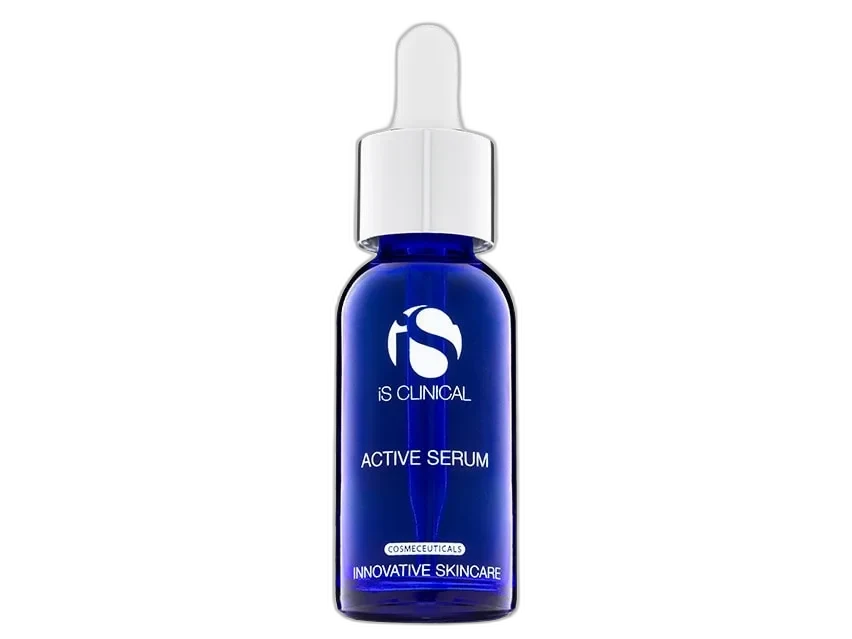
Active Serum
Cult-Classic Multitasker
 Verified reviewer
Pros & cons.
- +Genuinely minimalist 12-ingredient formula where every ingredient serves a specific purpose
- +Three-acid botanical blend exfoliates at surface, pore, and intercellular levels simultaneously
- +Dual brightening system (arbutin plus mushroom extract) targets pigmentation through two pathways
- +Lightweight water-like texture absorbs instantly with zero residue or greasiness
- +Addresses acne, hyperpigmentation, texture, and aging in a single product step
- +Concentrated formula means only a few drops per use, stretching the bottle 2-3 months
- +Over 20 years of professional endorsement provides genuine confidence in efficacy
- −At $155 for 1 oz, the price is a significant barrier for many consumers
- −Contains denatured alcohol which can be drying and irritating for some skin types
- −Menthol and acid combination causes noticeable tingling that may be uncomfortable
- −Not suitable for dry, sensitive, or barrier-compromised skin types
- −Initial purging period can last 1-2 weeks and may worsen appearance temporarily
- −Not safe for use during pregnancy due to salicylic acid content
The full review.
There is a reason Shani Darden — the Los Angeles facialist whose client list reads like an awards ceremony guest list — keeps iS Clinical Active Serum on her treatment cart. It is not because it is glamorous. The frosted glass bottle is understated, the ingredient list fits on a Post-it note, and the texture is about as exciting as water. The reason is simpler: it works, and it works on an almost unfair number of skin concerns at once.
The formula is a masterclass in editorial restraint. Twelve ingredients. That is it. In an industry that routinely stuffs 40 or 50 ingredients into a serum and calls it “advanced,” the Active Serum makes its argument through subtraction. Every single ingredient has a clear job: three botanical acid sources for exfoliation, two pigment-targeting agents for brightening, glycerin for hydration, and the minimum infrastructure needed to deliver them. Nothing is decorative.
The three-acid approach is the foundation. Sugar cane extract provides glycolic acid at 8% — high enough for meaningful surface exfoliation but delivered through a botanical matrix that may buffer some of the raw harshness of synthetic glycolic. Willow bark extract contributes salicylic acid at 2%, penetrating into pores where glycolic acid cannot reach, dissolving the sebum and dead cell plugs that form blackheads and inflammatory acne. Bilberry extract adds lactic acid at 2%, the gentlest member of the trio, contributing mild exfoliation with humectant properties that partially offset the drying potential of the stronger acids.
The result is a three-depth exfoliation strategy: glycolic works the surface, salicylic works the pores, and lactic works the spaces between. Most acid products choose one pathway. This one uses all three.
Layered onto the exfoliation base are two distinct brightening agents. Arbutin, a natural tyrosinase inhibitor, slows melanin production at the source. Polyporus umbellatus mushroom extract adds a secondary brightening pathway with additional sebum-regulating properties. The pairing is clever — the acid trio removes existing pigmented dead cells while arbutin and mushroom extract prevent new hyperpigmentation from forming. It is offense and defense simultaneously.
The texture is deliberately unremarkable. It feels like slightly thickened water, absorbs within seconds, and leaves absolutely no residue. For oily and combination skin types, this weightlessness is a gift — you can layer a hydrating serum and moisturizer on top without any pilling or heaviness. It disappears into the skin as if it was never there.
What it does not disappear without is a sensation. The tingling is real and, for first-time users, potentially alarming. The acid complex announces its presence with a prickle that typically lasts two to three minutes before subsiding. This is the price of admission, and it is why starting with every-other-night application is important. Some users also experience a purging period — a week or two where existing congestion surfaces as the accelerated cell turnover pushes buried breakouts to the surface. The purge is temporary, but it requires the kind of trust that 20 years of professional endorsement has earned this product.
The inclusion of denatured alcohol and menthol will raise flags for ingredient purists. The alcohol serves as a penetration enhancer and preservative, while the menthol adds a cooling component that partially masks the acid sting. Both are present at relatively low concentrations, but for dry or compromised skin, they add unnecessary irritation potential. This serum was formulated for resilient, oily, and combination skin — and it knows its audience.
Results tend to follow a predictable timeline. Smoother texture and a brightened tone become apparent within the first two weeks. Active breakouts respond quickly, often clearing within days once the purging phase passes. Hyperpigmentation fading is the slowest benefit, requiring three to four weeks for visible improvement and eight to twelve weeks for significant change. The cumulative effect after sustained use is skin that looks noticeably clearer, more even, and younger — the kind of results that make people ask what you changed.
The price — $155 for one ounce — is unquestionably steep. The defense, which is legitimate, is that only a few drops cover the entire face, making a bottle last two to three months. A half-ounce trial size at $96 exists for those unwilling to commit sight unseen. Whether the price is justified depends on how many separate products this one replaces: if it eliminates the need for a separate acne treatment, exfoliant, and brightening serum, the math starts to work.
The Active Serum is not for everyone, and it does not pretend to be. It is too strong for sensitive skin, too drying for already-dry skin, and too acidic for compromised barriers. But for the oily, combination, and normal skin types dealing with the unholy trinity of acne, pigmentation, and early aging, it remains one of the most efficient serums ever formulated. Twenty years of dermatologist recommendations and a permanent spot on Shani Darden’s cart are not accidents.
Formula
Ingredient analysis.
Full INCI list
Water/Aqua/Eau, Glycerin, Butylene Glycol, Alcohol Denat., Saccharum Officinarum (Sugarcane) Extract, Vaccinium Myrtillus Fruit/Leaf Extract, Triethanolamine, Salix Alba (Willow) Bark Extract, Glyceryl Polyacrylate, Arbutin, Polyporus Umbellatus (Mushroom) Extract, Menthol, Phenoxyethanol
Skin match.
The science.
The Science
This serum uses a tri-acid exfoliation strategy with three chemical mechanisms. Glycolic acid, sourced from sugar cane at 8%, is the smallest alpha-hydroxy acid (AHA) molecule and penetrates the stratum corneum well. Research in Dermatologic Surgery (1997) shows that regular use of 5-10% glycolic acid increases epidermal thickness and collagen density. The botanical delivery matrix may buffer the formula compared to pure synthetic glycolic acid, even though the active molecule is identical.
Salicylic acid from willow bark at 2% provides the BHA component. As a lipophilic molecule, salicylic acid dissolves in sebum and enters the pilosebaceous unit — the pore-and-oil-gland complex — to disrupt the microcomedone formation that starts acne lesions. A 2015 systematic review in Clinical, Cosmetic and Investigational Dermatology confirmed salicylic acid treats acne vulgaris via comedolytic and anti-inflammatory mechanisms.
Arbutin competitively inhibits tyrosinase, the rate-limiting enzyme in melanogenesis. A study in the Journal of Pharmacology and Experimental Therapeutics (1995) shows arbutin reduces melanin synthesis in a dose-dependent manner without causing cytotoxicity to melanocytes. On freshly exfoliated skin with a partially reduced stratum corneum barrier, arbutin penetration and bioavailability increase — a pharmacological advantage of combining exfoliation with pigment-targeting actives in one formulation.
Research suggests Polyporus umbellatus (zhu ling mushroom) has melanin-inhibiting and sebum-regulating properties. While the evidence for this extract is smaller than for arbutin or glycolic acid, it adds a brightening mechanism through a different molecular pathway.
Dermatologist Perspective
Board-certified dermatologists and plastic surgeons often recommend iS Clinical Active Serum as a first-line treatment for combination skin — specifically for adult acne, early aging signs, or post-inflammatory hyperpigmentation. Dermatologists note that these botanical acid concentrations (8% glycolic, 2% salicylic, 2% lactic) provide clinical exfoliation and may offer better tolerability than equivalent synthetic acid concentrations. Dermatologists favor the minimalist ingredient list and fewer potential sensitizers. However, dermatologists caution that denatured alcohol and menthol make this unsuitable for patients with rosacea, eczema, or compromised barriers, and recommend starting at two to three times per week.
Where it fits in your routine.
Apply 4-5 drops to clean, dry skin at night. Spread it evenly over the face, but avoid the immediate eye area and open wounds. A tingling sensation lasts 2-3 minutes; this is normal. Follow with a hydrating serum or moisturizer to replenish moisture. Use every-other-night for the first 2 weeks, then move to nightly as tolerated. Always apply broad-spectrum SPF 30+ the next morning because acids increase photosensitivity. Do not use with other acid products, retinoids, or benzoyl peroxide in the same routine.
At $155 for 1 oz, the Active Serum requires careful thought before you buy. The concentrated formula reduces stinging; 3-4 drops per use makes a bottle last 2-3 months, costing about $50-75 monthly. A 0.5 oz trial size at $96 provides a lower-commitment option. The value comes from consolidation: if this one serum replaces an acne treatment, chemical exfoliant, and brightening serum, the net cost stays low. For its target skin types (oily/combination with acne, pigmentation, and texture issues), it provides multi-concern efficacy that few competitors match at any price point.
This serum works for oily and combination skin with acne, post-inflammatory hyperpigmentation, rough texture, and early aging signs—especially for those wanting to treat multiple concerns without a multi-step routine. It also works for anyone with breakouts that leave dark marks, because the acid-plus-arbutin combination treats both the cause and the aftermath.
Dry, sensitive, and barrier-compromised skin types should avoid this serum. The acid complex and denatured alcohol cause irritation and dryness. Pregnant and breastfeeding individuals should skip it because of the salicylic acid. Those with rosacea or eczema must consult a dermatologist before use.
Product details.
Thin, lightweight liquid serum that absorbs almost instantly. It is non-greasy and leaves no residue.
Minimal — a slight medicinal/herbal note fades fast. No added fragrance.
Frosted glass bottle with dropper in iS Clinical's clean white branding. It comes in 0.5 oz and 1 oz sizes.
Expect a tingling or mild stinging sensation when you first apply it. The acid complex causes this, and it usually stops within 2-3 minutes. Some users experience brief purging during the first 1-2 weeks as existing congestion surfaces. Apply every other night first, then increase frequency. Results show quickly after the adjustment period ends.
2-3 months with nightly use (a few drops per application)
12 months
All Year
The backstory.
The Active Serum has been iS Clinical's best-selling product since the brand's earliest years, and it built the company's reputation in the dermatology and plastic surgery community. Biochemist Bryan Johns formulated it with the philosophy that botanical acid sources could deliver clinical-grade exfoliation with better tolerability than synthetic alternatives. Celebrity facialist Shani Darden popularized it further by making it a cornerstone of her treatment protocols, turning it from a professional insider product into a mainstream cult favorite.
About iS Clinical
Established Brand (5–20 years)iS Clinical was co-founded in 2002 by biochemist Bryan Johns and Alec Call. The brand is rooted in pharmaceutical-grade formulation and is distributed through dermatologists, plastic surgeons, and medical spas in over 125 countries. Its products are frequently recommended by skin professionals and backed by clinical testing.
Common myths.
Botanical acid extracts are weaker than synthetic acids and lack efficacy.
8% sugar cane extract delivers glycolic acid at a clinically meaningful concentration. This botanical source provides the same active molecule and plant compounds that buffer irritation. This three-acid approach achieves multi-level exfoliation that rivals or exceeds many synthetic single-acid products.
Acne products do not work for anti-aging; they have different purposes.
This serum uses the same mechanisms for both: exfoliation increases cell turnover (anti-aging), clears pore congestion (anti-acne), and removes pigmented dead cells (brightening). The arbutin provides more melanin inhibition. This is a multi-concern product, not a marketing stretch.
What the community says.
"Dramatically clears breakouts within days"
"Visible improvement in skin texture and brightness"
"Minimalist ingredient list inspires confidence"
"Effective multi-tasker for acne and aging simultaneously"
"Works where other products have failed"
"Expensive at $155 for 1 oz"
"Initial tingling and purging period can be alarming"
"Contains denatured alcohol which concerns some users"
"Too strong for sensitive or dry skin types"
"Menthol tingle not for everyone"
People also looked at.