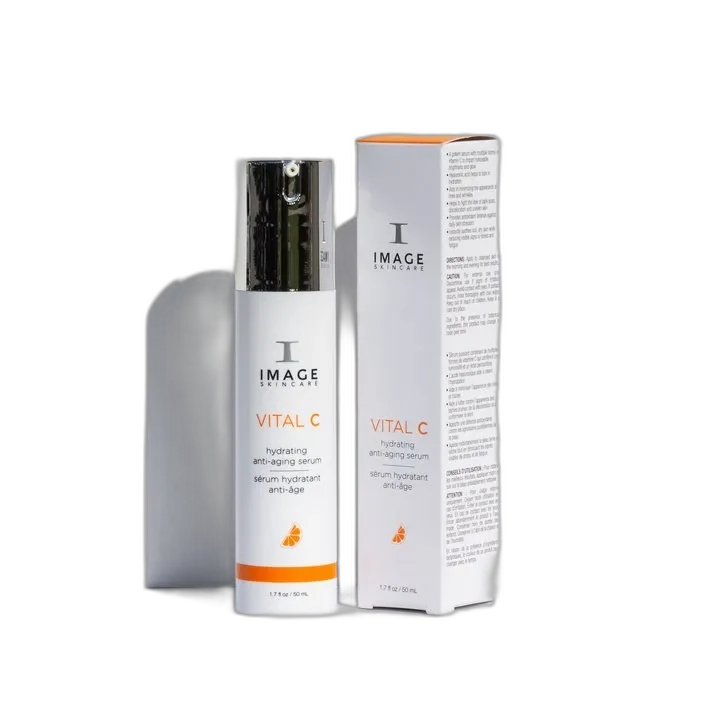
Vital C Hydrating Anti-Aging Serum
Spa Professional Favorite
 Verified reviewer
Pros & cons.
- +Four-form vitamin C complex provides multi-layer antioxidant protection across water and lipid phases
- +Dual peptide system (Matrixyl and Argireline) adds meaningful anti-aging benefits beyond basic brightening
- +Silky lightweight texture absorbs quickly without sticky or greasy residue
- +Gentle enough for sensitive and rosacea-prone skin types unlike many vitamin C serums
- +Centella asiatica and licorice root derivatives provide active soothing and anti-inflammatory support
- +Airless pump packaging helps protect vitamin C from oxidation and extends product life
- +Immediate hydration boost and visible glow from the very first application
- −At $91 for 1.7 oz, the price-to-size ratio is steep compared to many effective alternatives
- −Contains citrus peel oil which may irritate those with fragrance or essential oil sensitivities
- −Vitamin C derivatives are generally considered less potent than pure L-ascorbic acid
- −Concentrations of active ingredients are not disclosed on packaging
- −May feel too emollient for oily skin types who prefer water-weight serums
The full review.
Janna Ronert was tired of watching her clients wince. As an aesthetician in the early 2000s dealing with her own rosacea, she understood firsthand the frustrating paradox of vitamin C skincare: the ingredient your skin desperately needs for brightening and collagen support is often the same one that leaves sensitive skin burning and red. The Vital C Hydrating Anti-Aging Serum was her answer — a formula designed to deliver vitamin C’s benefits through a back door, using stabilized derivatives that could sneak past the skin’s defenses without triggering the alarms.
The approach is genuinely clever. Rather than loading up on pure L-ascorbic acid at a low pH (the gold standard for penetration but a nightmare for reactive skin), this serum deploys four distinct vitamin C forms across both the aqueous and lipid phases. Magnesium ascorbyl phosphate handles the water-soluble heavy lifting, while tetrahexyldecyl ascorbate works within the skin’s lipid layers. Ascorbic acid and ascorbyl palmitate round out the quartet. The theory — and there is decent research supporting it — is that multiple delivery pathways provide more consistent antioxidant coverage than a single high-concentration blast.
The texture is one of those pleasant surprises that makes you understand why spa professionals adopted this serum so enthusiastically. It lands somewhere between a traditional serum and a very light emulsion — silky enough to spread effortlessly but with just enough body to feel like it is actually depositing something meaningful onto the skin. It absorbs in under a minute without that tacky residue that plagues many vitamin C products, leaving skin feeling hydrated and lightly dewy rather than greasy.
Then there is the scent. The mandarin orange peel oil gives the serum a fresh citrus aroma that is genuinely pleasant in the moment of application, though it fades quickly. This is where some purists will raise an eyebrow — citrus essential oils in a product marketed to sensitive skin is a choice. The concentration appears minimal, and Image Skincare maintains it falls well below irritation thresholds, but those with confirmed fragrance sensitivities should be aware it is present.
Beyond the vitamin C complex, the formula has some smart supporting players. Sodium hyaluronate sits high in the ingredient list, providing immediate hydration that plumps the skin and creates a receptive environment for the actives. The dual peptide system — Matrixyl (palmitoyl pentapeptide-4) and Argireline (acetyl hexapeptide-8) — adds genuine anti-aging functionality. Matrixyl signals collagen production while Argireline works on expression line relaxation, creating a multi-pathway approach that you do not typically find in a vitamin C serum at this level.
Centella asiatica extract and dual licorice root derivatives (stearyl glycyrrhetinate and dipotassium glycyrrhizate) handle the soothing duties, which is particularly thoughtful given the target audience. The antioxidant bench goes deep too — grape seed extract, green tea, olive leaf, and vitamin E create layers of free radical protection that extend beyond what the vitamin C alone provides.
In terms of real-world performance, this serum delivers reliably on its hydration and brightening promises. The immediate glow is noticeable from application one, and after two to three weeks of consistent use, skin tone begins to even out with a luminosity that reads as healthy rather than artificially dewy. Fine lines soften gradually over the six-to-eight-week mark, though the effect is subtle rather than dramatic — this is a maintenance serum, not a corrective treatment.
Honesty requires acknowledging the limitations. The vitamin C derivatives used here, while gentler, are generally considered less potent than pure L-ascorbic acid at equivalent concentrations. Research on magnesium ascorbyl phosphate shows meaningful brightening effects, but the evidence base is smaller than what exists for L-ascorbic acid. You are trading peak efficacy for tolerability, which is a worthwhile trade for sensitive skin but worth understanding if you are choosing between this and a pure ascorbic acid formula.
The price positions this firmly in the professional skincare tier. At $91 for 1.7 ounces, you are paying a meaningful premium over drugstore vitamin C serums and even some prestige competitors. A 3.4-ounce deluxe size offers better per-unit value for committed users. The airless pump packaging is a genuine plus — vitamin C in any form degrades with air exposure, and the pump system helps preserve potency throughout the bottle’s life.
For dry, normal, and sensitive skin types looking for a vitamin C serum that will not punish them for using it, the Vital C Hydrating Anti-Aging Serum delivers on a promise that too many products in this category fail to keep. It is gentle without being ineffective, sophisticated without being overwrought, and backed by two decades of spa professionals reaching for it as their go-to recommendation for clients who have given up on vitamin C entirely.
Ingredient analysis.
Full INCI list
Aqua, Sodium Hyaluronate, Magnesium Ascorbyl Phosphate, Imperata Cylindrica (Root) Extract, Linoleic Acid, Phospholipids, Caprylic/Capric Triglyceride, Glycine Soja (Soybean) Sterols, Glyceryl Stearate, Palmitoyl Pentapeptide-4, Acetyl Hexapeptide-8, Citrus Nobilis Peel Oil, Centella Asiatica Extract, Tetrahexyldecyl Ascorbate, Palmitoyl Oligopeptide, Darutoside, Stearyl Glycyrrhetinate, Vitis Vinifera (Grape) Seed Extract, Camellia Sinensis Leaf Extract, Corallina Officinalis Extract, Panthenol, Ascorbyl Palmitate, Ascorbic Acid, Prunus Amygdalus Dulcis (Sweet Almond) Oil, Linoleamidopropyl Pg-Dimonium Chloride Phosphate, Tocopherol, Simmondsia Chinensis (Jojoba) Seed Oil, Squalane, Tocopheryl Acetate, Yeast Polysaccharides, Olea Europaea (Olive) Leaf Extract, Citric Acid, Dipotassium Glycyrrhizate, Spiraea Ulmaria Flower Extract, Phyllanthus Emblica Fruit Extract, Disodium EDTA, Magnesium Aluminum Silicate, Glucosamine Hcl, Algae Extract, Saccharomyces Cerevisiae Extract, Aloe Barbadensis Leaf Juice Powder, Polysorbate 20, Xanthan Gum, Leucine, Valine, Tyrosine, Arginine, Lysine
Skin match.
The science.
The Science
This formula uses a multi-form vitamin C delivery system. Magnesium ascorbyl phosphate (MAP), the main vitamin C derivative, inhibits melanin and stimulates collagen. A 1996 study in the Journal of the American Academy of Dermatology shows 10% MAP significantly lightened hyperpigmentation in most subjects after three months. Recent research in Drug Delivery (2022) shows MAP in vesicular carriers reduces melanin clinically within one month of treatment.
Tetrahexyldecyl ascorbate (THDA), the oil-soluble vitamin C in this serum, penetrates the lipid-rich stratum corneum. Research in the International Journal of Molecular Sciences (2021) finds that while THDA degrades under oxidative stress in the skin, stabilized THDA effectively stimulates collagen production and suppresses MMP-1 and MMP-7 expression—the enzymes that break down collagen.
The peptide component adds a second anti-aging mechanism. Palmitoyl pentapeptide-4 (Matrixyl) stimulates collagen I, III, and IV synthesis in fibroblast cultures, according to the International Journal of Cosmetic Science (2005); a clinical study showed visible reduction in wrinkle depth after four months of use. Acetyl hexapeptide-8 (Argireline) uses a different pathway. Research in the International Journal of Cosmetic Science (2002) shows it reduces periorbital wrinkle depth by up to 30% over 30 days by modulating SNARE complex formation.
The soothing complex also works. Centella asiatica's triterpene compounds—madecassoside and asiaticoside—have anti-inflammatory and wound-healing properties. The dual licorice root approach uses stearyl glycyrrhetinate and dipotassium glycyrrhizate to inhibit prostaglandin synthesis, while green tea (EGCG) and grape seed extract (OPCs) provide extra photoprotective antioxidant coverage.
References
- Inhibitory effect of magnesium L-ascorbyl-2-phosphate (VC-PMG) on melanogenesis in vitro and in vivo — Journal of the American Academy of Dermatology (1996)
- Magnesium ascorbyl phosphate vesicular carriers for topical delivery: preparation, in-vitro and ex-vivo evaluation, factorial optimization and clinical assessment in melasma patients — Drug Delivery (2022)
- Tetrahexyldecyl Ascorbate (THDC) Degrades Rapidly under Oxidative Stress but Can Be Stabilized by Acetyl Zingerone to Enhance Collagen Production and Antioxidant Effects — International Journal of Molecular Sciences (2021)
Dermatologist Perspective
Dermatologists often recommend stabilized vitamin C derivatives to patients who cannot tolerate pure L-ascorbic acid, and this serum fits that pattern. Board-certified dermatologists note that combining magnesium ascorbyl phosphate with tetrahexyldecyl ascorbate provides complementary hydrophilic and lipophilic antioxidant coverage. This is often more practical for sensitive or rosacea-prone patients than high-concentration ascorbic acid products. Dermatologists view the inclusion of peptides like Matrixyl and Argireline as an additive anti-aging strategy, but they note peptide concentrations in cosmetics may be lower than those in clinical studies. Dermatologists and aestheticians commonly recommend this serum as a gateway vitamin C product for patients who previously experienced irritation with aggressive formulations.
Where it fits in your routine.
Apply 3-4 pumps to clean, damp skin morning and evening. Press the Vital C serum into the face and neck using upward motions; do not drag or rub. Wait 30-60 seconds for absorption before layering other products. In the morning, use moisturizer and broad-spectrum SPF 30 or higher. In the evening, apply before moisturizer or night cream. If using retinol, apply the Vital C serum first and let it absorb fully before applying retinol. Store in a cool, dark place to keep vitamin C potency.
At $91 for 1.7 fl oz, this serum costs more than drugstore or mass-market options, but less than luxury brands. The multi-form vitamin C complex, dual peptide system, and extensive botanical support justify the higher price over single-ingredient vitamin C serums. A 3.4 oz deluxe size exists and offers better per-ounce value for regular users. For sensitive skin types who cannot tolerate other vitamin C products, the gentle efficacy here provides better long-term value than cheaper alternatives that sit unused. However, undisclosed ingredient concentrations make direct value comparisons difficult.
This serum works for dry, normal, or sensitive skin seeking vitamin C benefits without irritation—especially those who failed with pure L-ascorbic acid formulas. It also suits rosacea-prone individuals who want antioxidant protection and gentle brightening.
Oily skin types may find the emollient texture too thick. Those seeking maximum-potency vitamin C correction for deep hyperpigmentation or significant photodamage should use a high-concentration L-ascorbic acid serum. Budget-conscious shoppers can find effective vitamin C derivatives at lower prices.
Product details.
This lightweight, silky serum has a slightly creamy consistency. It absorbs quickly and leaves no sticky or greasy residue.
Natural mandarin orange peel oil gives a fresh citrus aroma. It is noticeable when applied but fades within minutes.
An airless pump bottle uses Image Skincare's signature teal and white Vital C branding to protect the vitamin C from oxidation.
The hyaluronic acid provides an immediate dewy glow and plumped feel. The citrus scent is noticeable but pleasant. Most users experience no tingling or irritation. Some mild brightening shows within the first few days and improves over weeks.
2-3 months with twice-daily face and neck application
12 months
All Year
The backstory.
The Vital C line was one of Image Skincare's founding ranges, born from founder Janna Ronert's frustration with professional-grade vitamin C products that were either too harsh for sensitive skin or too unstable to deliver results. By formulating with stabilized vitamin C derivatives instead of pure ascorbic acid alone, the serum carved a niche in the spa and medspa market as a brightening treatment that even rosacea-prone clients could tolerate.
About Image Skincare
Established Brand (5–20 years)Image Skincare was founded in 2003 by aesthetician Janna Ronert and has grown into one of the largest professional skincare brands globally, sold through spas and physician offices. The brand partners with chemists and dermatologists but its clinical validation comes primarily from in-house studies rather than peer-reviewed independent research.
Common myths.
Effective vitamin C skincare requires pure L-ascorbic acid; derivatives do not work.
This serum uses magnesium ascorbyl phosphate and tetrahexyldecyl ascorbate. Independent research supports both for skin-brightening and antioxidant activity. These derivatives offer better stability and less irritation, which matters for a formula designed for sensitive skin compatibility.
Vitamin C serums do not contain citrus oils because citrus oils cause photosensitivity.
This formula uses mandarin orange peel oil as a low-concentration fragrance component. Citrus oils contain furanocoumarins that cause phototoxicity at high concentrations, but these trace amounts stay below the photosensitization threshold. They may still affect people with citrus allergies.
FAQ.
Can I use Image Skincare Vital C serum with retinol?
Yes, but use them at different times of day for best results. Apply the Vital C serum in the morning under sunscreen for antioxidant protection, and use your retinol product in the evening. The serum's hyaluronic acid and centella asiatica provide a hydrating, soothing base that buffers retinol irritation if you layer them in the PM.
Is Image Skincare Vital C serum good for sensitive skin?
This serum targets sensitive skin. It uses stabilized vitamin C derivatives (magnesium ascorbyl phosphate and tetrahexyldecyl ascorbate) instead of pure L-ascorbic acid to reduce stinging or irritation. The centella asiatica and licorice root extracts soothe the skin. However, the citrus peel oil may irritate those with fragrance sensitivity.
How long does it take to see results from Image Skincare Vital C serum?
Most users see immediate hydration and a subtle glow after one application. Visible brightening and more even skin tone show within 2-3 weeks. For significant improvements in fine lines and hyperpigmentation, use the serum consistently for 6-8 weeks.
Does Image Skincare Vital C serum contain real vitamin C?
Yes — it contains four forms of vitamin C: magnesium ascorbyl phosphate, tetrahexyldecyl ascorbate, ascorbic acid, and ascorbyl palmitate. These forms provide immediate and sustained antioxidant activity in the skin's water and lipid layers. This offers broader protection than a single-form vitamin C serum.
Should I use Image Skincare Vital C serum in the morning or at night?
Both work well. In the morning, the vitamin C provides antioxidant protection against UV and pollution damage — just follow with SPF. At night, the vitamin C supports skin repair while the peptides work on collagen synthesis during the skin's natural recovery period. Many users apply it twice daily for maximum benefits.
Is Image Skincare Vital C serum worth the price?
At $91 for 1.7 oz, this vitamin C serum costs more than most. The multi-form vitamin C complex, dual peptide system, and antioxidant-rich botanicals justify the price, especially for sensitive skin types who struggle with pure ascorbic acid formulas. A 3.4 oz size offers better per-ounce value.
What the community says.
"Immediate hydration and glow"
"Silky lightweight texture that absorbs quickly"
"Pleasant citrus scent"
"Gentle enough for sensitive skin"
"Visibly brighter skin within weeks"
"High price point for the size"
"Citrus oil may irritate very sensitive skin"
"Some users find the scent too strong"
"Results take several weeks to become significant"
People also looked at.