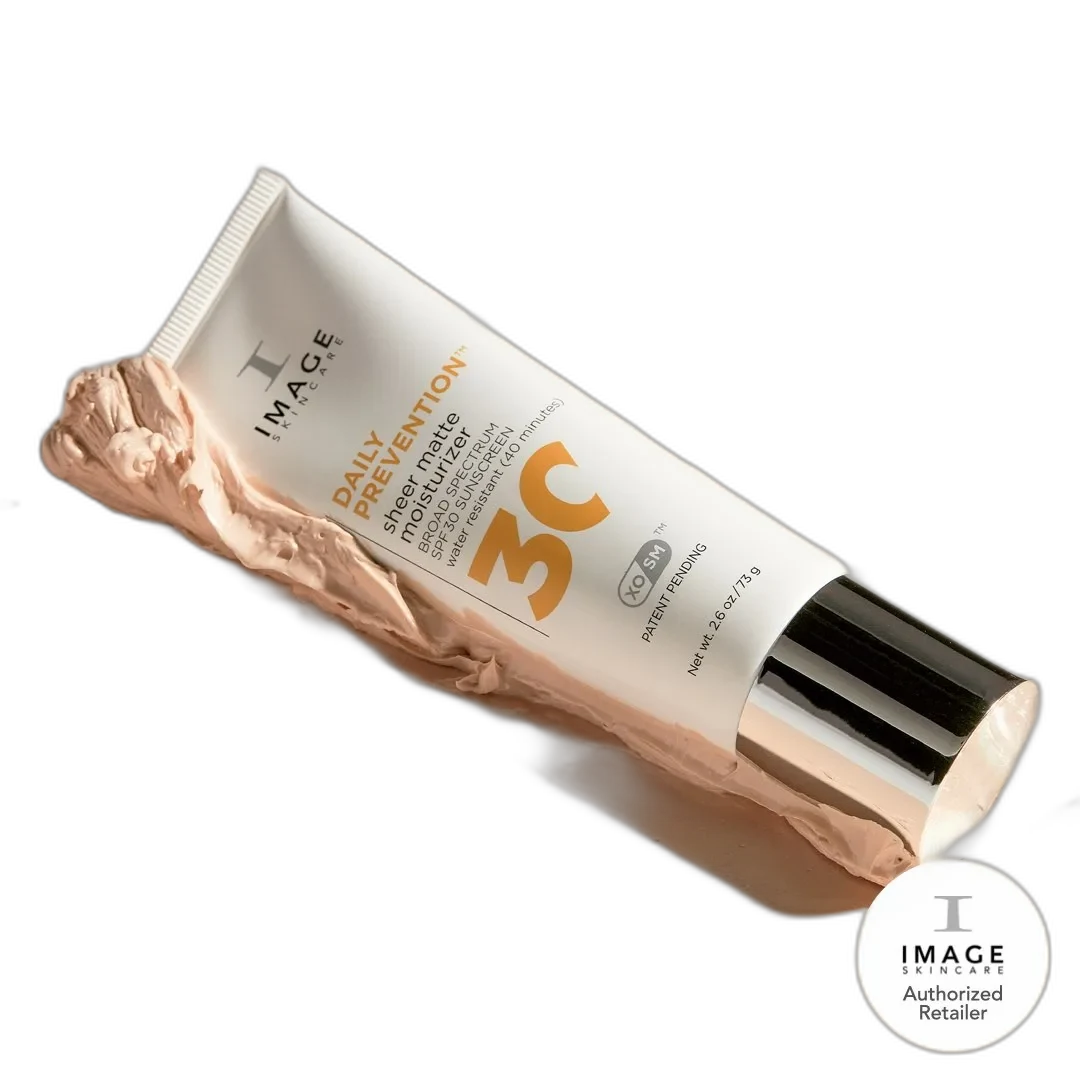
Prevention+ Daily Matte Moisturizer SPF 32
Oil-Control SPF Pick
 Verified reviewer
Pros & cons.
- +Genuinely effective matte finish that controls oil for 4-5 hours on oily skin
- +Hybrid mineral-chemical SPF allows for lighter texture than pure mineral formulas
- +Oil-free silicone base works beautifully as a makeup primer
- +High placement of stable vitamin C derivative suggests meaningful antioxidant concentration
- +Ergothioneine adds emerging blue-light and environmental protection
- +Generous 3.2 oz size provides 3-4 months of daily use
- −Contains octinoxate — not reef-safe and a concern for pregnancy
- −Product is discontinued with limited remaining stock
- −Not truly matte at full recommended sunscreen application amounts
- −White beading can appear in the afternoon as the formula breaks down
- −Strong scent that irritates some users' eyes
- −Not suitable for dry or dehydrated skin types
The full review.
About Image Skincare
The single greatest barrier to consistent sunscreen use among oily-skinned people is not awareness. Everyone knows they should wear sunscreen. The barrier is that most sunscreens make oily skin look like it has been laminated. By 10 AM, you are a glazed donut with SPF protection. By noon, you are considering blotting papers for the fourth time. By 2 PM, you have silently accepted your fate. This is the problem Image Skincare set out to solve with the Prevention+ Daily Matte Moisturizer SPF 32, and for the most part, they succeeded — which makes its discontinuation particularly frustrating.
Formula
The formula’s central trick is its hybrid UV system. Rather than relying solely on zinc oxide — which requires higher concentrations that inevitably thicken the formula — Image Skincare split the protective duties between zinc oxide at 9% (for UVA coverage) and octinoxate at 7.5% (for UVB coverage). This division of labor allows the zinc oxide to stay at a concentration low enough to avoid white cast and heaviness, while the octinoxate handles the UVB-absorbing work in a way that dissolves invisibly into the silicone base. The result is a formula that feels and applies like a lightweight primer, not a sunscreen.
The silicone vehicle is the other half of the matte equation. Cyclopentasiloxane and dimethicone form the base, with additional specialty silicones (caprylyl methicone, cetearyl dimethicone) creating an oil-absorbing matrix that sops up excess sebum as your skin produces it throughout the day. For oily skin types, this is genuinely effective for about four to five hours — you get a noticeably less shiny face compared to using a typical moisturizer or no product at all. The finish is not completely matte in the Instagram-filter sense, particularly if you apply the full recommended amount of sunscreen (which you should), but it is a significant improvement over non-matte SPF products.
The supporting ingredients elevate this beyond a basic matte sunscreen. Tetrahexyldecyl ascorbate — a stable, oil-soluble vitamin C — appears remarkably high in the inactive ingredient list, suggesting a substantial concentration. This is not a token antioxidant addition; it is a functional inclusion that provides free radical protection and potential brightening benefits alongside the UV filtration. Ergothioneine, a mushroom-derived antioxidant from Image Skincare’s Digital Aging Defense technology, adds emerging-science environmental protection. Panthenol provides gentle soothing, and sodium hyaluronate adds lightweight hydration without compromising the oil-free claim.
The apple stem cell extract (Malus Domestica Fruit Cell Culture Extract) is the formula’s most marketing-forward ingredient. Derived from a rare Swiss apple variety and protected by PhytoCellTec technology, it has some in vitro data suggesting it can protect skin stem cells from UV damage. Whether this translates to meaningful real-world benefits at the concentrations used in cosmetic formulations is debated, but it does not detract from the formula and adds an interesting ingredient story.
Let me address the octinoxate in the room. This chemical UV filter is controversial for two reasons: environmental concerns (it is banned in Hawaii and some marine protected areas due to coral reef toxicity) and health concerns (it has shown weak estrogenic activity in some studies, leading some healthcare providers to recommend avoiding it during pregnancy). These are legitimate considerations that each user should weigh based on their own values and circumstances. From a purely efficacy standpoint, octinoxate is a proven, FDA-approved UVB filter that enables the cosmetic elegance this product delivers.
Performance
Performance through the day varies by skin type and application amount. For genuinely oily skin, the matte effect holds reasonably well for four to five hours before a light sheen appears — manageable with a single blotting. For combination skin, you may get even longer matte wear on the cheeks and forehead. Under makeup, the formula performs admirably as a primer — the silicone base provides the slip and smoothing that foundation sits on beautifully.
Common Complaints
Some users report an issue with white beading in the afternoon — small white particles that appear on the skin surface as the product breaks down through sebum production and movement. This is a known limitation of some silicone-based sunscreen formulas and is not unique to this product, but it is worth noting.
Price
At $50 for 3.2 ounces, the per-ounce cost sits in the professional skincare range — reasonable for what the formula contains, but challenging to justify as a repurchase given that the product is discontinued. Image Skincare is transitioning the Prevention+ line to a new DAILY PREVENTION range, which suggests updated formulations are available or forthcoming. For users who have been loyal to this specific product, the discontinuation means finding either remaining stock or adapting to whatever replaces it.
Summary
The Prevention+ Daily Matte Moisturizer SPF 32 solved a real problem for a specific audience. Oily-skinned people who had cycled through sunscreens, hating every one for the grease and the shine, found something that worked. The combination of hybrid SPF for lightweight protection, silicone for oil absorption, and genuinely useful antioxidants made this more than the sum of its parts. That it is being discontinued is a loss — though hopefully Image Skincare carries the same formulation intelligence into whatever comes next.
Ingredient analysis.
Full INCI list
Active: Zinc Oxide 9%, Octinoxate 7.5%. Inactive: Aqua, Cyclopentasiloxane, Tetrahexyldecyl Ascorbate, Isodecyl Neopentanoate, Erythritol, Lecithin, Arabidopsis Thaliana Extract, Dimethicone, Butyrospermum Parkii Butter, Malus Domestica Fruit Cell Culture Extract, Cetyl PEG/PPG-10/1 Dimethicone, Dimethicone/PEG-10/15 Crosspolymer, Sodium Acryloyldimethyltaurate/Methacrylamidolauric Acid Copolymer, Caprylyl Methicone, Polyglyceryl-3 Polydimethylsiloxyethyl Dimethicone, Phenoxyethanol, Cetearyl Dimethicone, Polyisobutene, Triethoxysilylethyl Polydimethylsiloxyethyl Hexyl Dimethicone, Xanthan Gum, Ethylhexylglycerin, Panthenol, Polysorbate 20, Disodium EDTA, Sodium Hyaluronate, PEG-8/Smdi Copolymer, Tocopheryl Acetate, Potassium Sorbate, Homarine HCl, Micrococcus Lysate, Plankton Extract, Ergothioneine
Skin match.
The science.
The Science
The hybrid UV protection system in this formula combines two well-established UV filters with complementary mechanisms. Zinc oxide at 9% provides broad-spectrum protection primarily covering the UVA range (320-400nm), while octinoxate at 7.5% absorbs strongly in the UVB range (280-320nm). This combination achieves an SPF 32 rating — roughly equivalent to blocking about 97% of UVB radiation — while maintaining a cosmetically elegant texture that would be difficult to achieve with zinc oxide alone at the concentrations needed for the same SPF.
Tetrahexyldecyl ascorbate, the vitamin C derivative positioned high in this formula, has demonstrated photoprotective properties beyond simple antioxidant activity. Research has shown that topical vitamin C can reduce UV-induced erythema and provide modest additional photoprotection when used alongside conventional sunscreen filters. Its oil-soluble nature integrates well into the silicone-based vehicle and provides stability advantages over water-soluble L-ascorbic acid.
The Malus Domestica Fruit Cell Culture Extract (PhytoCellTec apple stem cells) has limited but intriguing preclinical data. An in vitro study by Mibelle Biochemistry demonstrated that the extract could protect umbilical cord stem cells from UV-induced damage and extend the replicative lifespan of human fibroblasts. However, translating in vitro stem cell protection to meaningful in vivo cosmetic outcomes at the concentrations used in commercial formulations remains unproven.
Regarding octinoxate safety: a study published in Environmental Health Perspectives (Kunisue et al., 2010) detected octinoxate in human breast milk samples, confirming systemic absorption. While the clinical significance of this absorption remains debated, it has led some regulatory bodies and healthcare providers to recommend mineral-only sunscreens for pregnant and nursing women.
Dermatologist Perspective
Dermatologists recognize that sunscreen compliance is often lower among oily-skinned patients specifically because of cosmetic inelegance issues, making matte-finish SPF products clinically valuable for this population. Board-certified dermatologists note that the hybrid mineral-chemical approach is a reasonable trade-off for patients who will not consistently use a pure mineral sunscreen due to texture and white cast concerns — inconsistent use of a less-preferred sunscreen provides worse protection than consistent use of a cosmetically acceptable one. The vitamin C and ergothioneine additions are aligned with current dermatological thinking on comprehensive photoprotection. However, dermatologists who recommend avoiding chemical UV filters — particularly for pregnant patients or those with concerns about endocrine disruption — would direct patients to pure mineral alternatives instead.
Where it fits in your routine.
Apply a generous amount (nickel-sized for the face) as the final step in your morning routine. The oil-free formula is designed to work without a separate moisturizer underneath for oily and combination skin — adding moisturizer may compromise the matte effect. Allow 1-2 minutes for the formula to set before applying makeup or powder. Reapply every 2 hours during extended sun exposure. For best matte results, avoid applying over heavy serums or creams.
At $50 for 3.2 oz, the price is reasonable for professional-tier products and offers good volume. The per-ounce cost competes with other professional SPF moisturizers, and daily use lasts 3-4 months, providing acceptable value. The ingredient list — stable vitamin C, apple stem cells, ergothioneine — adds value beyond basic matte SPF products. However, the discontinued status changes the value proposition: buying a product you cannot repurchase creates a compliance gap when it runs out. If you find remaining stock, it is a good product at a fair price. For those building a long-term routine, the discontinuation is a dealbreaker.
Oily and combination skin types who want a sunscreen that stays non-greasy by midday. Anyone seeking a single product that works as a moisturizer, sunscreen, and makeup primer. Professional skincare clients who need an oil-controlling SPF for an esthetician-guided regimen.
Dry or dehydrated skin types get little moisture from this oil-free, silicone-based formula. Pregnant users or those planning pregnancy should discuss the octinoxate content with a healthcare provider. Users concerned about reef safety should choose mineral-only alternatives. This product is discontinued for anyone seeking a long-term routine staple.
Product details.
This lightweight, silicone-based cream spreads easily and sets to a semi-matte finish. The hybrid mineral-chemical SPF system makes the formula thinner and more elegant than pure mineral SPF products.
The scent is noticeable; some users like it, but others call it strong. It is not fragrance-free.
3.2 oz tube uses Image Skincare's Prevention line branding. The large size provides enough volume for daily use.
The lotion applies smoothly with slight silicone slip and dries to a matte finish within 1-2 minutes. It has less white cast than the hydrating SPF 30 sibling. The scent is immediate. Some users report the matte finish is less pronounced when applying the full recommended amount of sunscreen, but it still controls oil better than non-matte formulas.
3-4 months with once-daily face application
12 months
spring summer
The backstory.
The Prevention+ Daily Matte Moisturizer was Image Skincare's answer to the most common complaint from oily-skinned patients in esthetician offices: every sunscreen makes me look greasy by noon. By using a hybrid mineral-chemical SPF system instead of high-percentage zinc oxide alone, the brand could formulate a thinner, matte-finish product without sacrificing broad-spectrum coverage. The product has since been discontinued as Image Skincare transitions the Prevention line, though stock remains available through various retailers.
About Image Skincare
Established Brand (5–20 years)Image Skincare was founded in 2003 by aesthetician Janna Ronert and board-certified plastic surgeon Dr. Marc Ronert. The brand is the #1 professional skincare brand in the global spa and salon category, with formulations developed under medical direction.
Common myths.
Oil-free sunscreens lack enough hydration for daily use.
This formula uses silicone-based emollients (dimethicone, cyclopentasiloxane) and sodium hyaluronate to hydrate without oil. This provides enough moisture for oily and combination skin. Adding oil-based moisturizers can increase the shine this product aims to solve.
Matte sunscreens can't offer serious sun protection.
The SPF rating does not depend on the finish. Zinc oxide and octinoxate actives provide this product's SPF 32, not its texture. The silicone vehicle creates the matte finish, not a reduction in UV filters.
FAQ.
Is Image Skincare Prevention+ Matte Moisturizer SPF 32 discontinued?
Yes — Image Skincare is transitioning the Prevention+ line to the updated DAILY PREVENTION range. Retailers still have remaining stock, but availability is decreasing. The DAILY PREVENTION collection offers newer formulations that work for similar purposes.
Is this sunscreen truly oil-free?
Yes — the formula uses silicone-based emollients (dimethicone, cyclopentasiloxane) instead of oils for slip and moisture. It contains shea butter, which is a butter rather than an oil, but the formula meets cosmetic industry standards for oil-free products. For oily skin, this provides hydration without adding midday shine.
Does this work as a primer under makeup?
Yes — the silicone-heavy base creates a smooth canvas for liquid and powder foundations. Multiple users report it works as a moisturizer, sunscreen, and primer. Wait 1-2 minutes for the product to set before applying makeup for best results.
Why does this contain octinoxate?
Octinoxate is a chemical UVB filter. It makes formulas thinner and more cosmetically elegant than pure mineral sunscreens. It pairs with zinc oxide (which covers UVA) to create a hybrid broad-spectrum system. This combination creates the lightweight matte finish; using only zinc oxide to reach the same SPF requires a higher concentration that ruins the texture. Note: octinoxate is not reef-safe and is banned in some marine environments.
Is this safe during pregnancy?
Zinc oxide is pregnancy-safe. Octinoxate is a chemical UV filter that some healthcare providers recommend avoiding during pregnancy because of potential endocrine disruption concerns. Consult your OB-GYN — many recommend switching to pure mineral sunscreens during pregnancy and breastfeeding.
What the community says.
"Non-greasy matte finish that controls oil throughout the day"
"Works well as a makeup base for oily skin types"
"Doesn't cause breakouts despite daily use"
"Breathable feel without heavy coating sensation"
"Not truly matte when applied at correct sunscreen amounts"
"White beading can appear in the afternoon on some skin types"
"Strong scent that stings eyes for some users"
"Product is discontinued — limited remaining availability"
People also looked at.