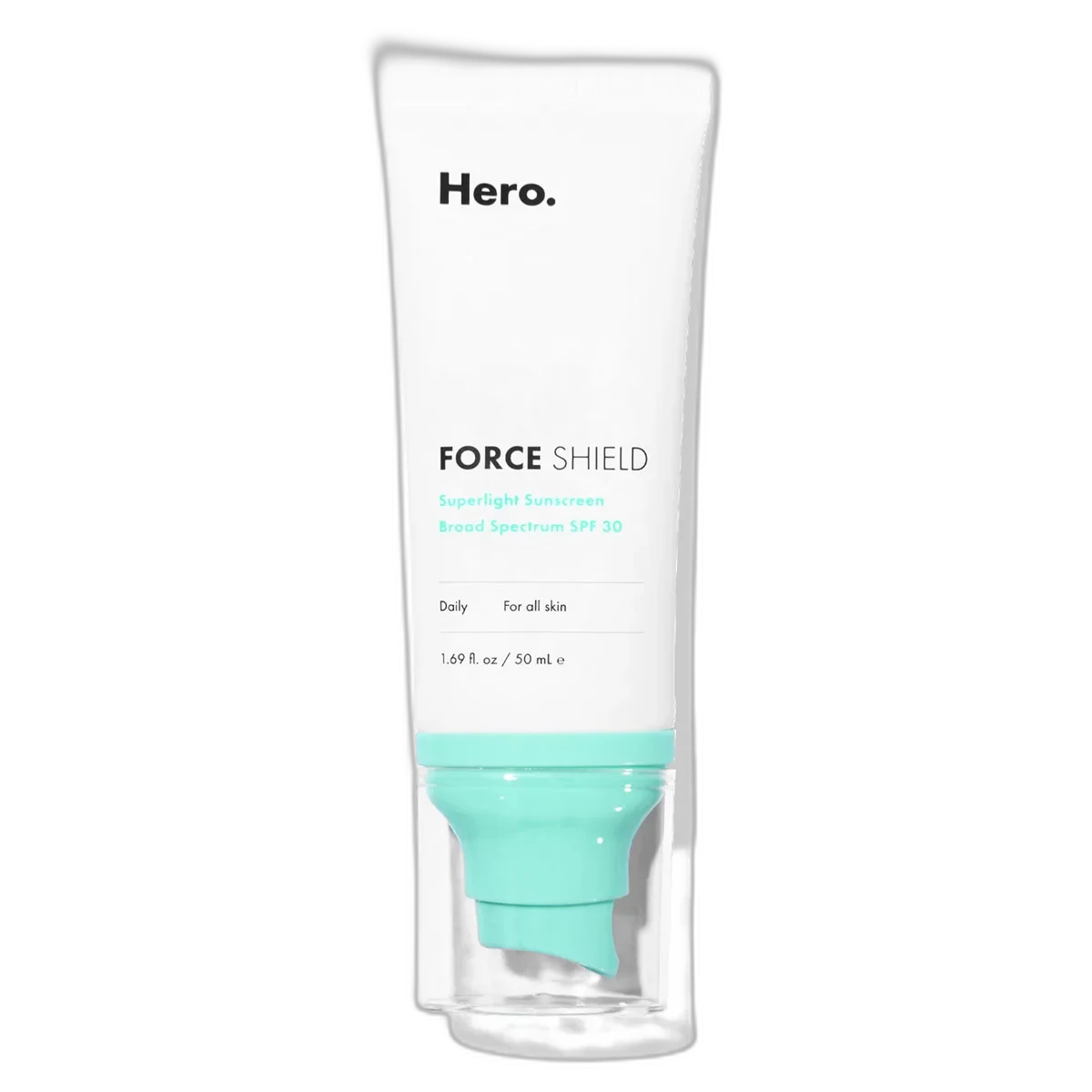
Force Shield Superfine Sunscreen SPF 30
Acne-Proof Daily SPF
 Verified reviewer
Pros & cons.
- +Ultra-lightweight gel-cream texture that feels weightless — possibly the lightest mineral SPF available
- +Genuinely non-comedogenic with zero common acne-triggering ingredients
- +Ectoin provides cellular-level environmental stress protection beyond UV blocking
- +Green tint subtly neutralizes redness from acne and scars without visible color
- +Matte finish controls shine on oily skin for several hours
- +Impressive botanical and antioxidant complex elevates this beyond basic sun protection
- +Fragrance-free, silicone-free, paraben-free — no compromise on ingredient safety
- −Small 50ml tube lasts only 4-6 weeks — annual cost adds up for daily use
- −Not moisturizing enough for dry skin — needs a moisturizer underneath
- −May appear slightly ashy on very deep skin tones
- −SPF 30 rather than 50 — adequate for daily use but not maximum protection
- −Brand is still building its sunscreen track record despite strong acne expertise
The full review.
There’s a specific sunscreen anxiety that acne-prone people know intimately. You understand intellectually that UV protection prevents dark spots and scarring. You’ve read the dermatologist recommendations. You know you should wear SPF daily. And yet every morning, you stand at the bathroom mirror weighing that knowledge against the near-certainty that this new sunscreen — like the last five — will cause a fresh round of breakouts by Thursday. Hero Cosmetics built a $630 million brand by understanding this exact skin anxiety with pimple patches. The Force Shield Superlight is their argument that they can solve it at the sunscreen level too.
The texture is the first thing that sells you. This is not a thick mineral paste. This is not a heavy cream that sits on top of your face like frosting. This is, genuinely, one of the lightest-weight mineral sunscreens currently available in the US market. It comes out as a slightly tinted gel-cream, spreads with virtually no resistance, and vanishes into skin within seconds. If you closed your eyes and someone applied this, you might not be able to identify the moment it happened. That’s how light it is.
The technology behind this texture is worth understanding. Traditional mineral sunscreens feel heavy because zinc oxide particles are suspended in thick, occlusive bases. Hero uses bio-based alkanes (C13-15 and C15-19) — hydrocarbon emollients derived from sustainable sources that have a dry, volatile feel similar to silicones but without actually being silicones. This gives the formula its disappearing act on skin while keeping the zinc oxide evenly distributed for consistent UV protection.
The sheer green tint is cleverly executed. Based on color theory — green neutralizes red on the color wheel — the pigments provide a subtle optical correction that makes redness from active acne, old scars, and general inflammation less visible. It’s not a color corrector that you’d notice as green on your face; it’s more like a very gentle filter that takes the edge off redness. For people whose morning mirror reflects a constellation of red spots back at them, this small visual improvement matters more than its subtlety might suggest.
The ingredient deck reads like a greatest hits of acne-friendly and skin-protective actives. Ectoin appears early in the INCI list — unusually high placement for this ingredient, suggesting a meaningful concentration. This extremolyte protects cells from UV-induced damage at a molecular level, supplementing the zinc oxide’s physical blocking with internal cellular defense. Green tea (Camellia sinensis) provides EGCG catechins — among the most potent botanical antioxidants with documented anti-sebum activity. Bisabolol calms inflammation. A dual probiotic system (Lactobacillus ferment lysate and Saccharomyces lysate) supports the skin’s microbiome.
Then there’s the broader botanical complex, which is genuinely ambitious for a sunscreen: purple sweet potato, raspberry seed oil, turmeric, neem, holy basil, red algae, moringa, rice hull, eggplant, and ivy gourd extracts. This reads like an Ayurvedic pharmacy crossed with a modern antioxidant laboratory. Whether these botanicals, at their likely concentrations in a sunscreen formula, deliver measurable skin benefits is debatable — but they certainly don’t do harm, and the overall antioxidant load of the formula is substantially higher than a basic mineral sunscreen.
The matte finish is the key differentiator from the Superbeam variant. Where Superbeam goes dewy and luminous with pearl and apricot pigments, the Superlight sets to a true matte that controls shine for several hours. For oily skin — the skin type most likely to be acne-prone — this is exactly the right call. By midday, you might notice a slight natural glow returning as sebum works through, but it doesn’t turn into the slip-and-slide greasy mess that many sunscreens create on oily skin.
What’s left out of this formula tells a story as clear as what’s included. No fragrance. No silicones. No parabens. No sulfates. No comedogenic oils. No chemical UV filters. No niacinamide (interestingly — the Superbeam includes it, but the Superlight doesn’t). The philosophy is aggressively minimalist in terms of potential irritants while being maximalist in terms of protective and beneficial botanicals. It’s an unusual and effective combination.
The practical limitation remains size and cost. At 50ml for $19.99, with adequate daily application consuming roughly a quarter teaspoon per use, you’re looking at a four-to-six-week supply per tube. Annually, that’s roughly $170-260 depending on how liberally you apply. For someone who’s tried and abandoned multiple sunscreens that caused breakouts, this cost might be a bargain — the sunscreen you actually wear provides infinitely more protection than the expensive one collecting dust in your drawer.
A 10ml mini is available for trial, which is a smart move for a product that asks you to trust it with your most breakout-prone real estate. Start there if you’re skeptical. Apply it for two weeks. If your skin doesn’t revolt — and the odds are very much in your favor — the full-size bottle becomes an obvious purchase.
Hero Cosmetics understood something fundamental: acne-prone people don’t need another product that ‘also works for acne.’ They need products built from the ground up by people who understand that acne isn’t just a skin condition — it’s a daily source of anxiety, frustration, and product disappointment. The Force Shield Superlight is the rare sunscreen that takes that understanding seriously enough to design every ingredient decision around it. The result is a mineral SPF that doesn’t just avoid causing problems — it actively makes the morning routine feel like progress rather than compromise.
Ingredient analysis.
Full INCI list
Active Ingredient: Zinc Oxide. Inactive Ingredients: Water, Caprylic/Capric Triglyceride, C13-15 Alkane, Propanediol, C15-19 Alkane, Bis-Diglyceryl Polyacyladipate-2, Butyloctyl Salicylate, Ectoin, Alteromonas (Abyssine) Ferment Extract, Harungana Madagascariensis Extract, Ipomoea Batatas (Purple Sweet Potato) Root Extract, Rubus Idaeus (Raspberry) Seed Oil, Camellia Sinensis (Green Tea) Leaf Extract, Corallina Officinalis (Red Algae) Extract, Curcuma Longa (Turmeric) Leaf Extract, Melia Azadirachta (Neem) Flower Extract, Melia Azadirachta (Neem) Leaf Extract, Moringa Oleifera Seed Oil, Ocimum Sanctum (Holy Basil) Leaf Extract, Oryza Sativa (Rice) Hull Extract, Solanum Melongena (Eggplant) Fruit Extract, Coccinia Indica (Ivy Gourd) Fruit Extract, Tocopherol, Bisabolol, Amber Powder, Coco-Glucoside, Glucose, Glycerin, Xanthan Gum, 1,2-Hexanediol, Caprylhydroxamic Acid, Arachidyl Alcohol, Arachidyl Glucoside, Hydroxyacetophenone, Polyacrylate Crosspolymer-6, Behenyl Alcohol, Cetearyl Alcohol, Isostearic Acid, Lecithin, Polyglycerin-3, Polyglyceryl-3 Lactate/Laurate, Polyglyceryl-3 Polyricinoleate, Polyhydroxystearic Acid, Silica, T-Butyl Alcohol, Sodium Benzoate, Sodium Citrate, Sodium Dilauramidoglutamide Lysine, Sodium Phytate, Citric Acid, Inositol, Lactobacillus Ferment Lysate, Saccharomyces Lysate, Butylene Glycol, Caprylyl Glycol
Skin match.
The science.
The Science
Zinc oxide is one of two FDA-approved mineral UV filters. It provides broad-spectrum protection across UVA1, UVA2, and UVB wavelengths. Its photostability is a major advantage; unlike many chemical filters that degrade under UV exposure, zinc oxide stays consistent during wear. A 2019 JAMA study on systemic absorption of sunscreen ingredients found chemical UV filters entered the bloodstream above FDA safety thresholds, while mineral filters like zinc oxide stayed on the skin surface.
Ectoin (1,4,5,6-tetrahydro-2-methyl-4-pyrimidinecarboxylic acid) is an amino acid derivative from extremophilic bacteria. Research in the Journal of Investigative Dermatology (2004) shows ectoin protects skin cells from UVA-induced mitochondrial damage and apoptosis. Recent studies show it stabilizes cell membranes against thermal and oxidative stress, adding protection that complements physical UV filtering.
Camellia sinensis (green tea) leaf extract is a heavily studied botanical antioxidant. A 2016 study in Complementary Therapies in Medicine found topical green tea extract reduced sebum production and acne lesion counts in participants with mild to moderate acne over eight weeks. Its EGCG catechins show anti-inflammatory, antimicrobial, and antioxidant activities for acne-prone skin.
The dual probiotic system (Lactobacillus ferment lysate and Saccharomyces lysate) uses emerging microbiome science. A 2019 review in Dermatology and Therapy documented that topical probiotics and their metabolites strengthen the skin barrier, modulate inflammatory responses, and support cutaneous microbiome diversity—all beneficial for acne-prone skin where microbial imbalance contributes to breakouts.
References
- Effect of Sunscreen Application Under Maximal Use Conditions on Plasma Concentration of Sunscreen Active Ingredients — JAMA (2019)
- UV-induced cell damage is reduced by ectoin — Journal of Investigative Dermatology (2004)
Dermatologist Perspective
Dermatologists emphasize that acne-prone patients need daily sunscreen to prevent post-inflammatory hyperpigmentation and scarring. Board-certified dermatologists would approve of this formula: zinc oxide has anti-inflammatory properties, the formula lacks comedogenic ingredients, and it includes clinically-relevant actives like ectoin and green tea extract. The silicone-free, fragrance-free formulation solves the two main reasons patients with acne stop using sunscreen. Dermatologists would note the matte finish suits oily skin types and SPF 30 meets the AAD's minimum daily recommendation. For patients with dry skin needing more hydration, dermatologists recommend layering a moisturizer underneath.
Where it fits in your routine.
Apply a nickel-sized amount to your face and neck after moisturizer as the final morning step. Blend evenly with fingertips using gentle, sweeping motions. The green tint blends in seamlessly; the initial color is normal. Let it set for 1-2 minutes before applying makeup. Reapply every two hours during extended sun exposure. One morning application provides adequate protection for daily indoor or office use.
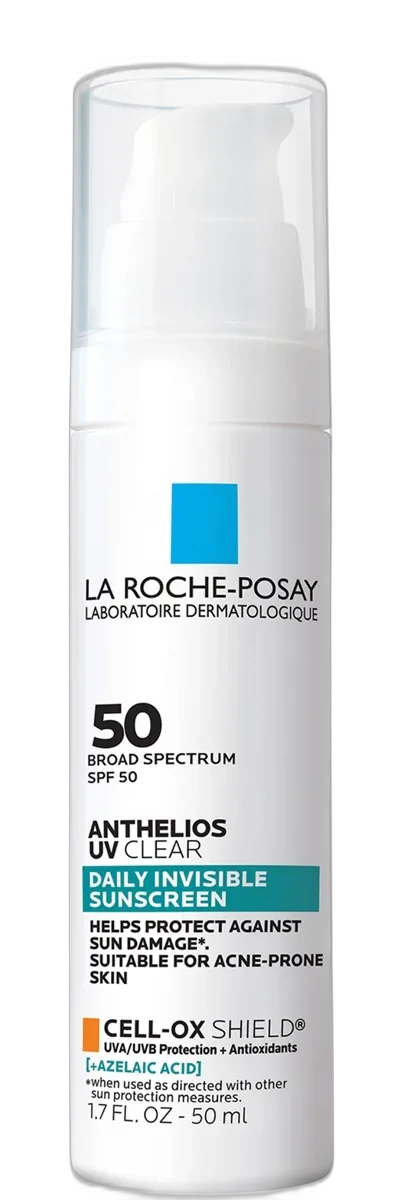
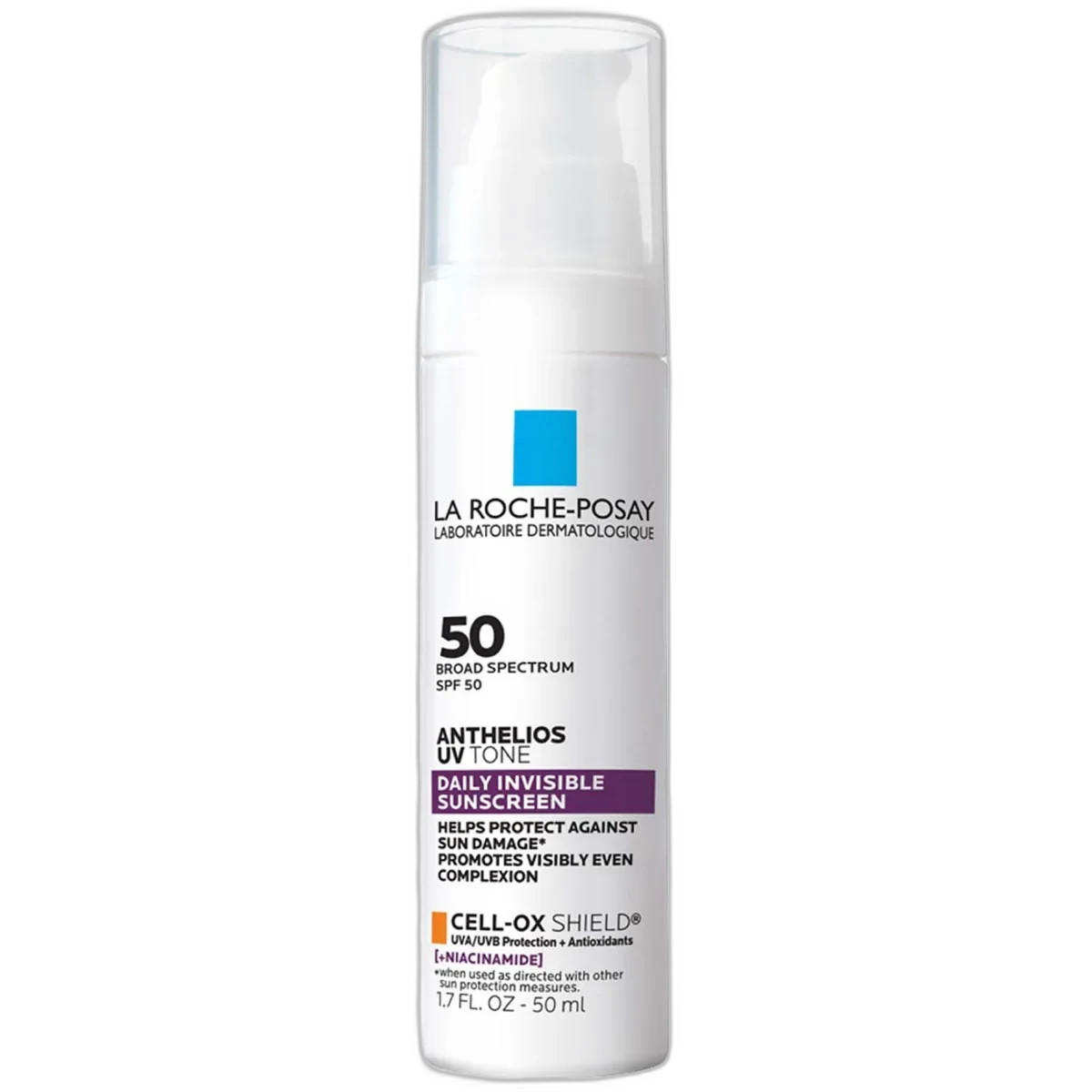
At $19.99 for 50ml ($11.80/oz), this is a mid-range specialty mineral sunscreen. The ingredient quality — ectoin, green tea, dual probiotics, extensive botanicals — beats most sunscreens at this price. Comparable acne-friendly mineral sunscreens from EltaMD ($41/1.7oz) and La Roche-Posay ($35/1.7oz) cost much more. A 10ml mini ($5.99) lets you trial it first. The annual cost of daily use ($170-260) is high, but for users who wasted money on sunscreens that caused breakouts, a product that works saves money and frustration.
This works for oily, combination, or acne-prone skin that struggles with breakout-inducing daily sunscreens. It provides a matte, weightless finish and subtle redness correction. It suits people who want daily sunscreen but abandon products that feel heavy or trigger acne.
Dry skin types needing substantial moisturization can layer a hydrating moisturizer underneath or use the dewier Superbeam variant. Those wanting maximum SPF protection (50+) for extended outdoor exposure need a different product. The Superbeam provides the luminous, glowy finish you prefer.
Product details.
Ultra-lightweight gel-cream that feels like water on application. It absorbs instantly without heavy, sticky, or greasy residue. It is likely the lightest-feeling mineral sunscreen on the market.
Completely fragrance-free — has no detectable scent, even during application.
Sleek tube with pump dispenser uses Hero Cosmetics' clean white and green branding. The 50ml size is compact and portable. A 10ml mini size is also available for trial.
This sunscreen disappears into skin almost immediately. The gel-cream texture glides on with zero resistance and sets to a matte, slightly blurred finish within seconds. A sheer green tint neutralizes redness without a visible color cast. It has no white cast, no stinging, and no heaviness. It feels like wearing nothing.
4-6 weeks with daily face application
12 months
All Year
The backstory.
Hero Cosmetics spent years hearing from Mighty Patch users that they struggled to find a daily sunscreen that didn't cause more breakouts. The Force Shield Superlight was their direct answer — engineered from the ground up for the exact skin type they knew best. The formulation team started with what NOT to include (fragrance, silicones, comedogenic oils, common acne triggers) and built outward from there, resulting in a product that acne-prone users describe as the first sunscreen they've actually wanted to wear every day.
About Hero Cosmetics
Emerging Brand (2–5 years)Hero Cosmetics was founded in 2017 by Ju Rhyu and gained fame through the Mighty Patch hydrocolloid acne patch — the #1 selling acne patch in the US. Acquired by Church & Dwight for $630 million in 2022, the brand expanded into daily skincare with a focus on acne-prone and sensitive skin. The Force Shield Superlight was their first sunscreen launch.
Common myths.
Mineral sunscreens are too thick and heavy for oily, acne-prone skin.
This sunscreen has a gel-cream texture lighter than most serums. Modern formulation technology—using bio-based emollients (C13-15 alkane, C15-19 alkane) and advanced polymer systems—delivers mineral zinc oxide in textures that feel weightless on skin.
Sunscreen that doesn't sting provides no real protection.
Chemical UV filters, alcohol, or fragrance cause sunscreen stinging, not the protection. This sunscreen uses zinc oxide for full broad-spectrum protection via physical UV reflection and lacks the irritating ingredients that cause sensory reactions.
FAQ.
Is the Hero Cosmetics Superlight Sunscreen truly non-comedogenic?
Yes — the formula excludes common pore-clogging ingredients. It has no silicones, no coconut oil derivatives, no isopropyl palmitate, and no heavy waxes that cause comedonal acne. The bio-based emollients and mineral zinc oxide base are among the least comedogenic sunscreen ingredients available.
What does the green tint do?
The sheer green tint uses color theory to neutralize surface redness. Green sits opposite red on the color wheel, so a subtle green overlay hides redness from acne, rosacea, or post-inflammatory erythema. The tint is sheer and leaves no visible green color on skin.
How does this compare to the Superbeam variant?
Both are mineral SPF 30 sunscreens from Hero Cosmetics. The Superlight (this product) uses a sheer green tint to correct redness and leaves a matte finish — best for oily skin. The Superbeam uses warm apricot and pearl pigments for a dewy, luminous finish — better for normal to dry skin wanting a glowy effect. Both share similar ingredient philosophies.
Can I skip moisturizer and just use this sunscreen?
The Superlight provides enough hydration for oily or combination skin to use as a lightweight morning moisturizer. It uses glycerin and propanediol for hydration. Dry skin types need a dedicated moisturizer underneath because the matte finish lacks heavy moisture.
Does this sunscreen work well under makeup?
Very well — the matte, silicone-free finish creates a smooth canvas for foundation and concealer. It lacks the slipperiness of silicone-based primers or sunscreens. No pilling occurs. Let the sunscreen set for 1-2 minutes before applying makeup.
Community
What the community says.
"Genuinely weightless — doesn't feel like wearing sunscreen at all"
"No breakouts even on very acne-prone skin"
"Green tint subtly blurs redness and acne scars"
"Matte finish controls shine throughout the day"
"Fragrance-free with no chemical smell"
"Small 50ml tube doesn't last long enough for daily use"
"Not moisturizing enough for dry skin types"
"Can look slightly ashy on very deep skin tones"
"SPF 30 — some prefer higher SPF"
"Pricey per ounce compared to drugstore options"
People also looked at.