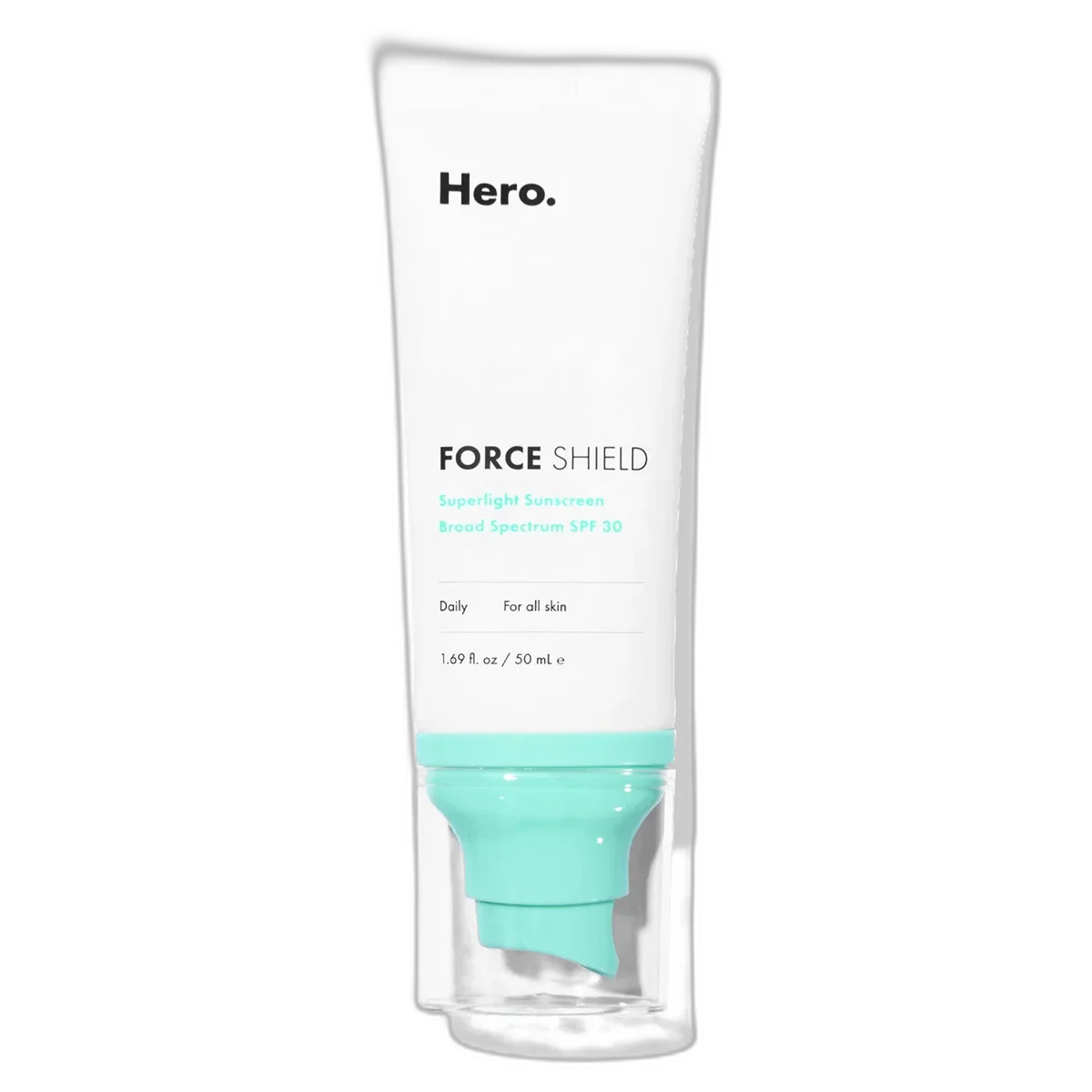
Force Shield Superbeam Sunscreen SPF 30
Acne-Friendly Glow Screen
 Verified reviewer
Pros & cons.
- +Genuinely acne-friendly formula — non-comedogenic, fragrance-free, silicone-free
- +Beautiful luminous finish eliminates the white cast problem of mineral sunscreens
- +Niacinamide provides active oil regulation and pore-refining benefits
- +Ectoin adds cutting-edge environmental stress protection beyond UV blocking
- +Zinc oxide's anti-inflammatory properties actively help rather than aggravate acne
- +Reef-safe mineral-only UV protection
- +Lightweight enough to layer under makeup without pilling
- −Small 50ml tube lasts only 4-6 weeks — recurring cost adds up quickly
- −Dewy finish may be too glowy for very oily skin types
- −Warm apricot tint may not suit all skin tones, particularly very deep tones
- −SPF 30 — some users prefer SPF 50 for maximum daily protection
- −Brand is relatively new to the sunscreen category compared to established SPF brands
The full review.
Hero Cosmetics has an improbable origin story. In 2017, founder Ju Rhyu launched one product — a hydrocolloid acne patch — on Amazon for $12.99. By 2022, the brand was valued at $630 million and acquired by Church & Dwight, the consumer goods giant behind OxiClean and Arm & Hammer. Mighty Patch became the number-one selling acne patch in America. A brand built on sticking things to pimples now has the resources to tackle daily skincare. The Force Shield Superbeam Sunscreen SPF 30 shows they belong in the moisturizer-and-SPF conversation, not just the spot treatment aisle.
The premise is specific: acne-prone skin needs sun protection, but most sunscreens clog pores, feel greasy, or contain ingredients that trigger breakouts. Hero’s answer is a 100% mineral formula using zinc oxide and ingredients that actively help acne-prone skin.
About Hero Cosmetics
Zinc oxide is the sole UV filter. Beyond UV-blocking, zinc oxide has anti-inflammatory and mild antibacterial properties — it is the same compound used in diaper rash creams to calm irritated skin. For acne-prone users, the sunscreen works to reduce inflammation rather than sitting inertly on an already aggravated complexion.
Reality
The formula includes niacinamide, a vitamin B3 derivative used for oil regulation and pore minimization. This makes the sunscreen a subtle treatment product — with consistent daily use, niacinamide can help reduce sebum production and improve skin texture. This is smart formulation for a product acne-prone users apply every morning.
Ectoin adds another layer of protection. This natural extremolyte — produced by bacteria in extreme environments — helps protect skin cells from environmental stressors like UV damage, pollution, and blue light. Research shows this cosmetic ingredient can reduce UV-induced DNA damage and maintain cell hydration under stress.
Texture
The texture distinguishes this sunscreen from most mineral SPF products. It is light, fluid, and silky — unlike the thick, chalky zinc oxide pastes that make people avoid mineral sunscreen. Warm apricot and pearl pigments provide a natural, luminous tint that adapts to the skin, eliminates the white cast, and adds a subtle glow. On skin, it looks like a light tinted moisturizer with a dewy finish.
Best for
The ‘dewy’ descriptor splits the audience. For normal, dry, or combination skin that likes a hydrated, luminous look, the Superbeam finish looks healthy and fresh. For oily skin, the glow may look like shine by midday. Hero offers the Superlight variant with green pigments and a matte finish for this reason, which suggests they anticipated the concern.
Works for
What is absent from the formula matters. No fragrance. No silicones. No parabens. No sulfates. No comedogenic ingredients typically found in sunscreens. Sea buckthorn oil, propanediol, and caprylic/capric triglyceride handle emollient duties instead of the dimethicone and cyclomethicone that dominate most sunscreen textures. This is a commitment to acne-friendly formulation.
The bisabolol (chamomile-derived) provides anti-inflammatory calming, and the Lactobacillus ferment contributes gentle preservation and potential microbiome-supporting benefits. Terminalia ferdinandiana (Kakadu plum) extract adds antioxidant power from a high natural source of ascorbic acid.
Common Complaints
The main limitation is practical: 50ml for $19.99 is a small tube for daily use. If you apply the recommended amount (roughly a quarter teaspoon for face and neck), this bottle lasts about four to six weeks. At roughly $12 per ounce, it is not cheap — though it is competitive with tinted mineral sunscreens from brands like Ilia and Supergoop that run similar or higher per ounce.
Hero Cosmetics approached sunscreen with a specific question: what do acne-prone people need from SPF? Their answer — a mineral filter, no common acne triggers, oil-regulating actives, and a wearable finish — is well-executed. The Superbeam does not try to suit all skin types. It is a sunscreen for someone with acne-prone skin to look forward to applying. On that brief, it delivers.
Ingredient analysis.
Full INCI list
Active Ingredient: Zinc Oxide. Inactive Ingredients: Water (Aqua), Caprylic/Capric Triglyceride, Propanediol, C13-15 Alkane, C15-19 Alkane, Butyloctyl Salicylate, Bis-Diglyceryl Polyacyladipate-2, Octyldodecanol, Cetearyl Alcohol, Polyacrylate Crosspolymer-6, Hippophae Rhamnoides Oil, Betaine, Mica, Musa Sapientum (Banana) Leaf/Trunk Extract, Silica, Coco-Glucoside, Arachidyl Alcohol, Xanthan Gum, Polyhydroxystearic Acid, Polyglyceryl-3 Polyricinoleate, Isostearic Acid, Lecithin, Polyglyceryl-3 Lactate/Laurate, Polyglycerin-3, Bisabolol, Tocopherol, Behenyl Alcohol, Caprylhydroxamic Acid, Sodium Dilauramidoglutamide Lysine, Citric Acid, Arachidyl Glucoside, Ectoin, Niacinamide, Maltodextrin, Sodium Citrate, Sodium Phytate, Terminalia Ferdinandiana Fruit Extract, Lactobacillus Ferment, Tin Oxide, Glucose, Leuconostoc/Radish Root Ferment Filtrate, Yellow Iron Oxide, Red Iron Oxide, Titanium Dioxide
Skin match.
The science.
The Science
Zinc oxide is one of two FDA-approved mineral UV filters and provides broad-spectrum protection across UVA and UVB ranges. Unlike many chemical UV filters, zinc oxide is photostable; it does not degrade under UV exposure and maintains consistent protection. A 2019 JAMA study shows chemical UV filters absorb systemically at levels above FDA safety thresholds, while mineral filters like zinc oxide stay on the skin surface. This makes them the preferred choice for safety-conscious consumers.
Niacinamide's benefits for acne-prone skin are well-documented. A 2006 study in the International Journal of Dermatology compared 4% niacinamide gel to 1% clindamycin gel for acne treatment and found comparable efficacy in reducing inflammatory acne lesions. Niacinamide works by reducing sebum production, providing anti-inflammatory activity via NF-kB pathway inhibition, and strengthening the skin barrier through increased ceramide synthesis.
Ectoin (1,4,5,6-tetrahydro-2-methyl-4-pyrimidinecarboxylic acid) is a compatible solute produced by extremophilic microorganisms. Research in the Journal of Investigative Dermatology (2004) shows ectoin protects against UV-induced cell damage by stabilizing cell membranes and proteins. Recent studies show it also protects against blue light and pollution-induced oxidative stress.
The iron oxide pigments do more than provide a cosmetic tint. A 2012 study in Photodermatology, Photoimmunology & Photomedicine shows iron oxides protect against visible light and blue light—wavelengths zinc oxide alone does not fully address. This visible light protection is clinically significant for individuals with melasma or post-inflammatory hyperpigmentation.
References
- Effect of Sunscreen Application Under Maximal Use Conditions on Plasma Concentration of Sunscreen Active Ingredients — JAMA (2019)
- A randomized, double-blind comparison of niacinamide vs clindamycin in the treatment of acne vulgaris — International Journal of Dermatology (2006)
Dermatologist Perspective
Dermatologists say daily sunscreen is non-negotiable for acne-prone skin because UV exposure worsens post-inflammatory hyperpigmentation and can prolong acne scarring. Board-certified dermatologists would value this formula's design: zinc oxide's anti-inflammatory properties, niacinamide for oil control, and the absence of common acne triggers (fragrance, silicones, comedogenic oils). The iron oxide pigments provide visible light protection, which is important for melasma and pigmentation-prone skin. Dermatologists note that SPF 30 meets daily protection requirements per AAD guidelines, though reapplication every two hours during extended sun exposure remains essential.
Where it fits in your routine.
Apply a nickel-sized amount liberally to your face and neck. Use this as the final step of your morning skincare routine, after moisturizer and before makeup. Blend with gentle, sweeping motions; the tint adapts to your skin tone as you blend. Let it set for 1-2 minutes before applying makeup. Reapply every two hours during extended sun exposure. One morning application provides adequate protection for daily indoor/commuting use.
At $19.99 for 50ml ($11.80/oz), this tinted mineral sunscreen for acne-prone skin sits in the mid-range. Hero Cosmetics is competitive against Ilia ($48/1.7oz) and EltaMD ($41/1.7oz). But the small tube requires monthly repurchases — about $240-260 annually for daily use. The ingredient list (niacinamide, ectoin, Kakadu plum, sea buckthorn) and the smooth texture justify the price for this category, though budget-conscious consumers may prefer a larger-format mineral sunscreen from a brand like CeraVe.
This works for acne-prone or sensitive skin users who struggle to find a sunscreen that doesn't trigger breakouts. It is ideal for those wanting a luminous, skin-perfecting finish from their SPF step. It suits anyone avoiding daily sunscreen because previous options felt heavy, looked chalky, or caused acne.
Users with very oily skin who want a matte finish should use the Superlight variant. The 50ml size is small for daily use on a tight budget. This SPF 30 lacks the SPF 50+ protection needed for long outdoor exposure.
Product details.
This lightweight, fluid lotion has a silky, slightly luminous quality from the pearl and apricot pigments. It blends smoothly and lacks the thick, pasty texture of many mineral sunscreens.
No added fragrance — raw ingredients leave a neutral, barely perceptible scent.
A sleek tube uses a pump dispenser and Hero Cosmetics' clean white and green branding. The 50ml size is compact and travel-friendly.
The warm apricot tint blends into skin without a white mineral cast, leaving a subtle luminous glow. It feels lightweight and comfortable, similar to a tinted moisturizer. It does not sting, feel heavy, or pill. Use it alone or under makeup.
4-6 weeks with daily face application
12 months
All Year
The backstory.
Hero Cosmetics built its empire on a single product — the Mighty Patch hydrocolloid acne sticker. After being acquired by Church & Dwight for $630 million, the brand expanded beyond patches into daily skincare. The Force Shield sunscreen line represents their philosophy that acne-prone skin deserves products designed specifically for its needs, not just products that avoid causing problems. The Superbeam variant adds a luminous, skin-perfecting dimension to their mineral SPF foundation.
About Hero Cosmetics
Emerging Brand (2–5 years)Ju Rhyu founded Hero Cosmetics in 2017. The brand gained fame with Mighty Patch hydrocolloid acne patches, the #1 selling acne patch in the US. Church & Dwight acquired the brand for $630 million in 2022. Beyond acne patches, the Force Shield sunscreen line expands into daily skincare for acne-prone and sensitive skin types.
Common myths.
Acne-prone skin types should avoid sunscreen because it clogs pores.
UV exposure worsens acne scars and post-inflammatory hyperpigmentation. This sunscreen uses zinc oxide, which has anti-inflammatory and antibacterial properties, is non-comedogenic, and contains niacinamide to regulate oil. It helps acne-prone skin instead of aggravating it.
Mineral sunscreens always leave a white cast.
This formula uses iron oxides and apricot pigments for a warm, skin-like tint that stops white cast. Modern mineral sunscreen formulation has improved—micronized zinc oxide and cosmetic pigments provide natural-looking protection.
FAQ.
Will this sunscreen cause breakouts?
This formula targets acne-prone skin. It is non-comedogenic, fragrance-free, and silicone-free, and uses niacinamide to regulate oil production. Zinc oxide is the sole UV filter and has anti-inflammatory properties that calm acne. No product guarantees zero breakouts, but this sunscreen removes most common acne triggers.
Does the Superbeam sunscreen work on all skin tones?
Light-diffusing pearl pigments and iron oxides create a warm apricot tint that blends across skin tones instead of using one opaque shade. The luminous glow effect shows best on light to medium skin tones. Very deep skin tones should test the tint to ensure it does not look ashy.
What's the difference between Superbeam and Superlight?
Both are mineral SPF 30 sunscreens from Hero Cosmetics. Superbeam has warm apricot and pearl pigments for a dewy, glowy finish. Superlight has green color-correcting pigments for a matte, shine-free finish. Choose Superbeam for dry or normal skin wanting radiance; choose Superlight for oily skin wanting oil control.
Is this reef safe?
Yes — this formula uses only zinc oxide as its UV filter, which does not damage coral reefs. It lacks oxybenzone and octinoxate, the two chemical sunscreen ingredients most commonly restricted in reef-safe legislation.
Can I wear makeup over this sunscreen?
Yes — the silicone-free formula layers under most foundations and concealers without pilling. Let the sunscreen set for 1-2 minutes before applying makeup. Some users use the Superbeam's dewy glow as a light tinted base and skip foundation.
What the community says.
"Beautiful dewy glow without looking greasy"
"No white cast — tint adapts to skin tone"
"Doesn't clog pores or trigger breakouts"
"Fragrance-free and gentle on sensitive skin"
"Lightweight and comfortable to wear all day"
"Small 50ml size doesn't last long with daily use"
"Dewy finish may be too glowy for oily skin"
"The tint may not suit all skin tones"
"SPF 30 — some prefer SPF 50 for stronger protection"
Featured in.
People also looked at.