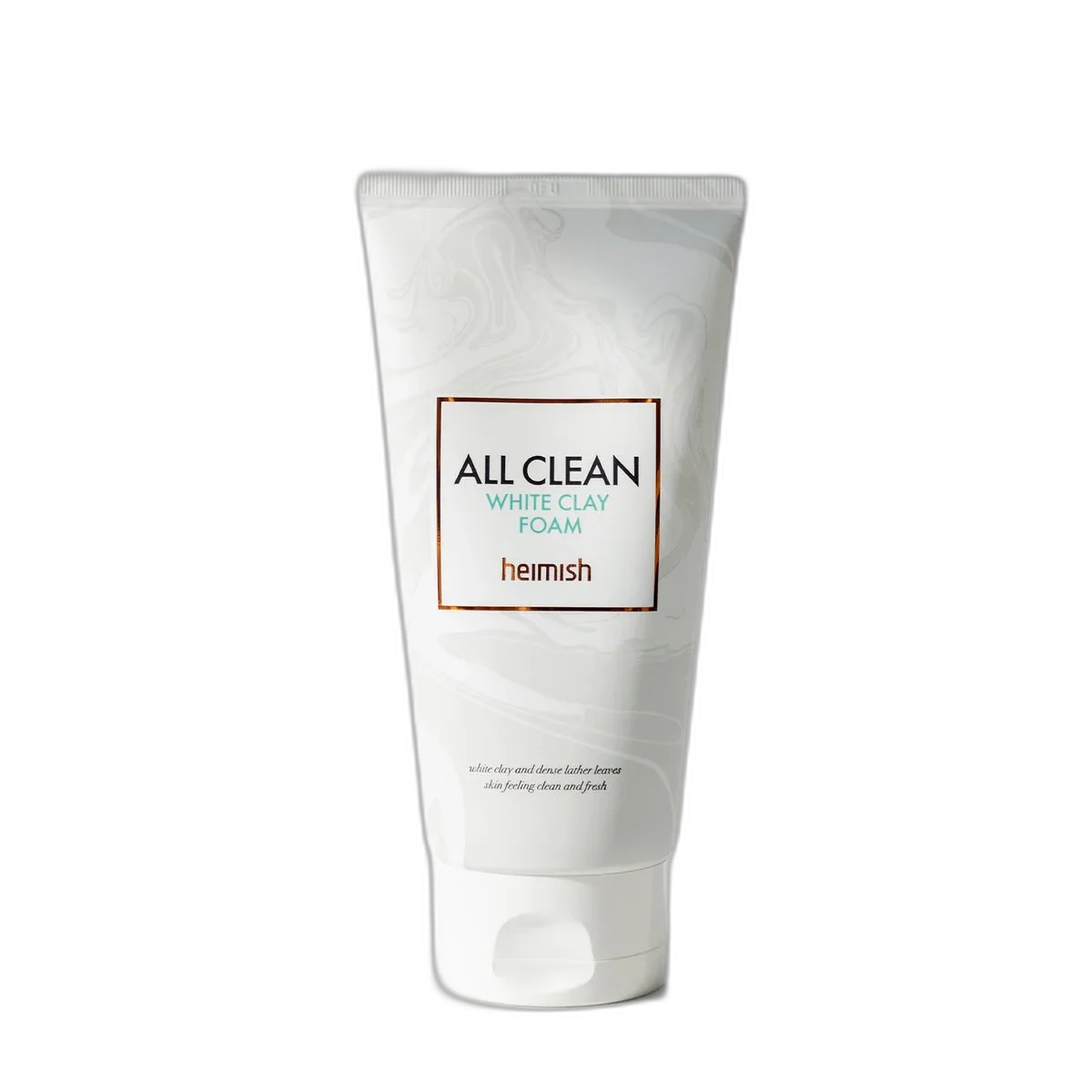
All Clean White Clay Foam
Oily Skin Deep Cleanser
 Verified reviewer
Pros & cons.
- +Dual-clay system (kaolin plus bentonite) provides graduated deep cleansing for congested pores
- +Triple hyaluronic acid complex helps counterbalance the drying effect of clay ingredients
- +Rich, creamy lather feels luxurious and substantive during use
- +Effectively mattifies oily T-zones and improves skin texture with regular weekly use
- +Excellent value at approximately twelve dollars for a tube lasting months
- +Paraben-free and sulfate-free formulation
- −Fifteen essential oils plus added fragrance create excessive irritation potential for reactive skin
- −Coconut oil is highly comedogenic — questionable choice for a pore-focused product
- −Too drying for daily use — must be limited to 2-3 times weekly for most skin types
- −Not suitable for dry or sensitive skin under any usage frequency
- −Contains menthol which can irritate and cause stinging on compromised skin
The full review.
The fundamental problem with clay cleansers has never been their efficacy. Clays absorb oil. They have done so for thousands of years. The problem has always been the aftermath — that tight, parched, almost papery feeling that makes you wonder if your skin has just aged a decade in thirty seconds. Heimish’s All Clean White Clay Foam represents an interesting attempt to solve this paradox, and it gets about seventy percent of the way there.
The dual-clay system is the formula’s best idea. Kaolin — the white clay of the product’s name — is a mild, fine-particle clay that absorbs oil gently and sits in the formula as a surface refiner. Bentonite is the heavy lifter: a swelling clay with stronger adsorption capacity that reaches into pores to pull out deeper congestion. Using both together creates a graduated effect — bentonite handles the deep work while kaolin smooths and clarifies the surface. It is a more sophisticated approach than dumping a single clay into a surfactant base and calling it a day.
To counteract the inevitable drying, Heimish included three forms of hyaluronic acid: standard hyaluronic acid, hydrolyzed hyaluronic acid (smaller molecular weight for better penetration), and sodium hyaluronate. In a leave-on product, this triple approach would be genuinely meaningful. In a rinse-off cleanser, much of it washes away — but enough remains during the washing process to provide a hydration buffer that makes the post-rinse experience noticeably less punishing than most clay cleansers. Your skin still feels cleaner and tighter after use, but it does not feel like it has been sandblasted.
The lather is dense and creamy with a slight gritty quality from the clay particles. It feels substantial on the face — this is not a whisper of foam but a serious cleansing experience. You can feel the product working, which may be psychologically satisfying for oily skin types who want tactile confirmation that their pores are being addressed.
And then we need to talk about the fragrance situation. Heimish has included fifteen individual essential oils in this formula — orange, lavender, geranium, grapefruit, tea tree, eucalyptus, bergamot, menthol, nutmeg, frankincense, juniper, and more. On top of that, there is a separate “Fragrance” ingredient, meaning the formula contains both natural essential oils and synthetic fragrance compounds. For a cleanser marketed toward congested, oily, potentially acne-prone skin — skin that is often simultaneously reactive — this is a lot of potential irritants in one tube.
The scent itself is beautiful, reminiscent of the All Clean Balm’s signature herbal-citrus profile but with sharper eucalyptus and menthol notes that give it a cooling, invigorating quality. If your skin tolerates essential oils without issue, the sensory experience is genuinely pleasant. But for the substantial population of oily-skinned people whose oiliness coexists with sensitivity or inflammatory acne, this fragrance load is a legitimate concern.
The coconut oil inclusion is another eyebrow-raiser. Coconut oil is highly comedogenic — rated 4 out of 5 on the comedogenicity scale — and while its presence in a rinse-off product is less concerning than in a leave-on, it seems like an odd choice for a product specifically designed for oily, pore-conscious skin. In practice, most users report no issues, but it is worth noting.
Used as directed — two to three times per week rather than daily — the White Clay Foam delivers on its promise. Pores appear cleaner, the T-zone feels less congested, and skin texture improves gradually over consistent use. Daily use will almost certainly over-strip the skin and trigger the rebound oil production that clay cleansers are supposed to prevent, so restraint is key.
At approximately twelve dollars for 150 grams, the value is strong — particularly given the inclusion of triple hyaluronic acid and the thoughtful dual-clay system. A pea-sized amount produces enough lather for the full face, so the tube stretches well when used at the recommended frequency.
The Heimish All Clean White Clay Foam occupies an interesting middle ground. Its clay technology and hydration strategy are genuinely well-conceived, but the fragrance and essential oil load feels at odds with the skin types most likely to reach for a deep-cleansing clay product. If Heimish ever releases a fragrance-free version with the same clay and hyaluronic acid system, it would be an easy recommendation. As it stands, it is a very good deep cleanser wrapped in more fragrance than its target audience might want.
Formula
Ingredient analysis.
Full INCI list
Water, Glycerin, Stearic Acid, Myristic Acid, PEG-32, Potassium Hydroxide, Lauric Acid, Bentonite, Potassium Cocoate, Butylene Glycol, Cocamidopropyl Betaine, Potassium Cocoyl Glycinate, Glyceryl Stearate, PEG-100 Stearate, Kaolin, Citrus Aurantium Dulcis (Orange) Peel Oil, Lavandula Angustifolia (Lavender) Oil, Amyris Balsamifera Bark Oil, Pelargonium Graveolens Flower Oil, Cocos Nucifera (Coconut) Oil, Citrus Paradisi (Grapefruit) Peel Oil, Litsea Cubeba Fruit Oil, Eucalyptus Globulus Leaf Oil, Melaleuca Alternifolia (Tea Tree) Leaf Oil, Mentha Arvensis Leaf Oil, Boswellia Carterii Oil, Citrus Aurantium Bergamia (Bergamot) Fruit Oil, Juniperus Mexicana Oil, Myristica Fragrans (Nutmeg) Kernel Oil, Tagetes Minuta Flower Oil, Jasminum Officinale (Jasmine) Flower/Leaf Extract, Nelumbo Nucifera Flower Extract, Freesia Refracta Extract, Iris Versicolor Extract, Leontopodium Alpinum Flower/Leaf Extract, Lilium Candidum Bulb Extract, Narcissus Pseudo-Narcissus Flower Extract, Rose Extract, PEG-75, Polyquaternium-7, Hyaluronic Acid, Hydrolyzed Hyaluronic Acid, Sodium Hyaluronate, Ethylhexylglycerin, Hydrolyzed Silk, Disodium EDTA, Sodium Benzoate, Phenoxyethanol, Fragrance
Skin match.
The science.
The Science
The dual-clay system in this cleanser leverages two distinct mineral mechanisms. Kaolin (hydrated aluminum silicate) has a relatively low cation exchange capacity, meaning it absorbs oil gently without dramatically depleting the skin's lipid content. Bentonite (hydrated sodium calcium aluminum magnesium silicate hydroxide) has a much higher cation exchange capacity and swelling ability — it can absorb 4-5 times its weight in water and oil. A study in the International Journal of Pharmaceutics (2014) demonstrated that bentonite's adsorption capacity makes it effective for removing excess sebum and particulate impurities from skin, supporting its use in deep-cleansing formulations.
The triple hyaluronic acid system (hyaluronic acid, hydrolyzed hyaluronic acid, and sodium hyaluronate) provides molecular weight diversity. Standard hyaluronic acid (molecular weight ~1,000-1,400 kDa) sits on the skin surface as a humectant. Hydrolyzed hyaluronic acid (~50-100 kDa) can penetrate into the upper stratum corneum. Sodium hyaluronate, the salt form, has enhanced water-binding capacity. Research published in the Journal of Clinical and Aesthetic Dermatology (2012) confirmed that multi-molecular-weight hyaluronic acid preparations provide superior hydration compared to single-weight formulations. In this cleanser, the triple system mitigates transepidermal water loss during the clay cleansing process.
Melaleuca alternifolia (tea tree) oil within the essential oil blend offers documented antimicrobial properties against Cutibacterium acnes, the bacterium implicated in inflammatory acne. A randomized controlled trial published in the Medical Journal of Australia (1990) found that 5% tea tree oil was as effective as 5% benzoyl peroxide for treating mild to moderate acne, albeit with slower onset. The concentration in this cleanser is likely well below therapeutic levels, but it contributes a secondary cleansing mechanism beyond the physical oil absorption of the clays.
References
- Bentonite clay as an adsorbent for skin cleansing applications — International Journal of Pharmaceutics (2014)
- A randomized, controlled trial of tea tree oil for acne — Medical Journal of Australia (1990)
Dermatologist Perspective
Dermatologists recognize clay-based cleansers as useful tools for managing sebaceous activity in oily skin types. Board-certified dermatologists often recommend clay masks and cleansers as adjunctive treatments for patients with excess sebum production and comedonal acne. However, dermatologists consistently caution against daily use of clay cleansers, noting that over-cleansing disrupts the skin barrier and can paradoxically increase oil production. The extensive essential oil content in this particular formula would give many dermatologists pause — particularly for patients with inflammatory acne, where fragrance compounds can exacerbate irritation and potentially worsen breakouts.
Where it fits in your routine.
Use 2-3 times per week, not daily. Squeeze a pea-sized amount onto wet hands and lather into a creamy foam. Apply to a damp face and massage gently for 30-60 seconds, focusing on the T-zone and congested areas. Avoid the eye area. Rinse thoroughly with lukewarm water and follow immediately with a hydrating toner to replace moisture lost to the clays.
At about 2 for 150g, this cleanser provides high value for a dual-clay formula with triple hyaluronic acid. Using it 2-3 times per week makes the tube last two to three months, so the monthly cost is negligible. The formulation quality justifies the price, but the brand has an established rather than legacy heritage, so you rely on ingredient quality instead of decades of clinical validation.
Oily and combination skin types use this weekly deep-cleansing treatment to manage pore congestion, excess sebum, and surface dullness. It works best for those who tolerate essential oils and want a fragranced cleansing experience.
Dry skin, sensitive or reactive skin, rosacea, or a compromised skin barrier users, and those avoiding fragrance or essential oils in their skincare. The clay and fragrance combination makes this a poor fit for easily irritated skin.
Product details.
Thick, creamy white paste that makes a dense foam when lathered. The clay makes it feel slightly gritty and substantial compared to typical foam cleansers.
An herbal-citrus essential oil blend similar to the All Clean Balm, but with menthol-eucalyptus notes. The "Fragrance" ingredient adds complexity to the essential oils.
White squeeze tube with a flip-top cap matches the All Clean line aesthetic. The design is simple and practical.
The thick white cream lathers into a dense foam. The clay creates a slight tightening sensation on the face during the 30-60 second wash. After rinsing, skin feels cleaner and mattified — on dry skin, this may feel "too clean".
2-3 months with use 2-3 times per week
12 months
spring summer
The backstory.
Heimish designed the White Clay Foam as the deep-cleansing complement to their Green Foam — where the Green Foam is gentle daily maintenance, the White Clay Foam is the weekly deep clean for oilier skin types. The "white clay" branding references kaolin, which is sourced from various global deposits and has been used in cosmetic cleansing for centuries.
About Heimish
Established Brand (5–20 years)Cosmetic industry professionals founded Heimish in 2016 in Seoul. The All Clean White Clay Foam adds a deep-cleansing option for oily and combination skin to the brand's cleansing lineup. Heimish has a solid K-beauty reputation because its product range has consistent formulation quality.
FAQ.
How often should you use Heimish All Clean White Clay Foam?
Most skin types work best with 2-3 uses per week. The dual-clay formula (bentonite and kaolin) cleanses deeply, but daily use strips oil and harms the moisture barrier. This affects combination skin, where cheeks are often drier than the T-zone.
Is Heimish White Clay Foam good for acne?
The clays absorb excess sebum and the tea tree oil provides antimicrobial benefits to help manage acne. But the formula contains coconut oil and multiple essential oils that are comedogenic or irritating for inflamed acne-prone skin. Patch test first and use sparingly if your acne is inflammatory.
Can you use Heimish White Clay Foam as a daily cleanser?
The potent clay combination makes daily use unsuitable. Overusing clay cleansers strips natural oils and triggers rebound sebum production. Use this for 2-3 weekly deep-cleansing sessions. Use a gentler daily cleanser like the Heimish All Clean Green Foam on other days.
What is the difference between Heimish Green Foam and White Clay Foam?
The Green Foam is a gentle, pH 5.5, fragrance-free daily cleanser using amino acid surfactants. It works for all skin types, including sensitive skin. The White Clay Foam is a deeper-cleansing formula with bentonite and kaolin clays, essential oils, and added fragrance. It works as a weekly treatment cleanser for oily and combination skin.
Does Heimish White Clay Foam contain fragrance?
Yes — the formula has fifteen individual essential oils and an additional "Fragrance" ingredient. This makes it unsuitable for people sensitive to fragranced products. The scent is herbal-citrus with menthol notes.
What the community says.
"Effectively removes excess oil and leaves pores feeling clean"
"Rich creamy lather that feels luxurious"
"Pleasant herbal-citrus scent similar to the All Clean Balm"
"Skin feels smoother after use"
"Good deep cleanser for weekly use"
"Too drying for daily use on most skin types"
"Multiple essential oils irritate sensitive skin"
"Contains coconut oil which can be comedogenic"
"Not suitable for dry skin at all"
"Added fragrance on top of essential oils feels excessive"
People also looked at.