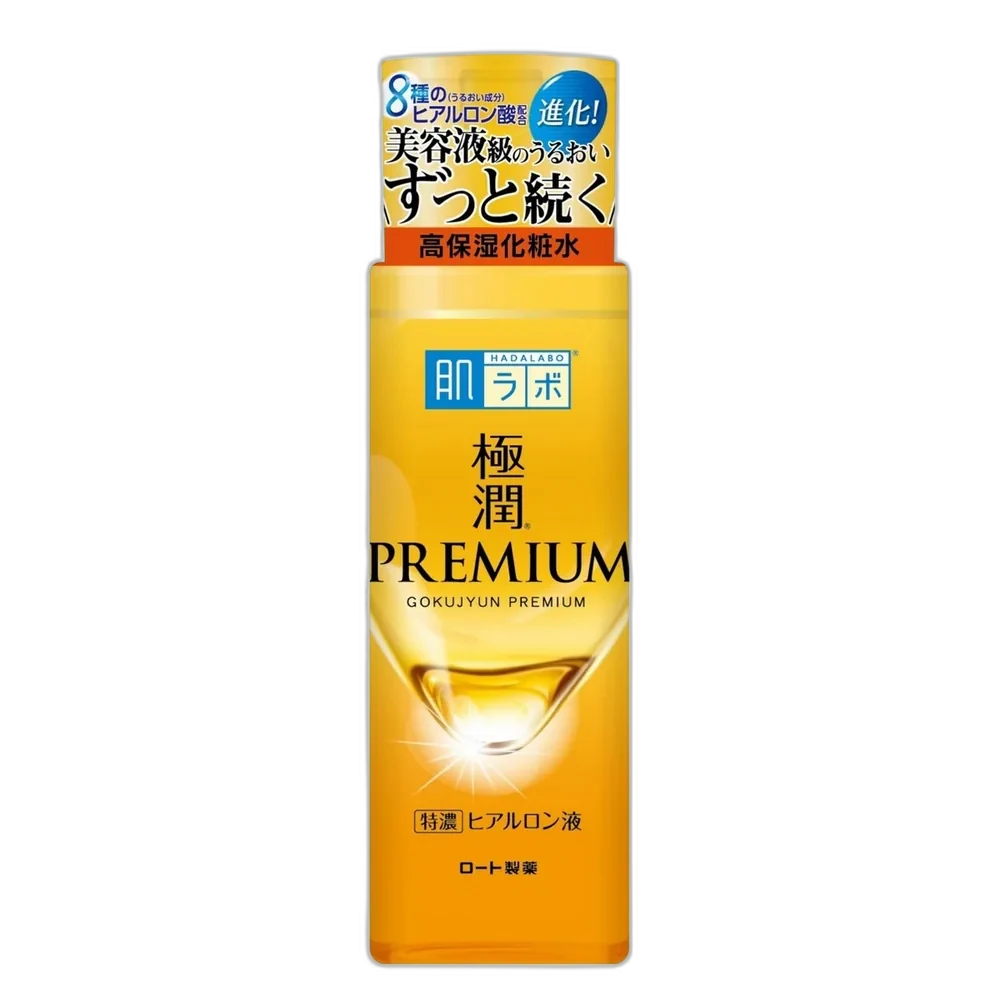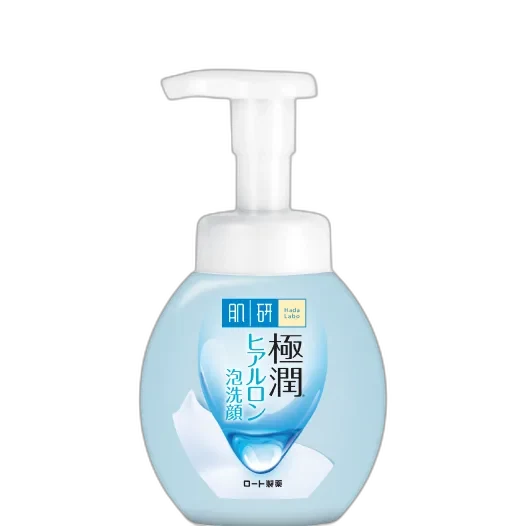
Gokujyun Foaming Face Wash
J-Beauty Cult Classic
 Verified reviewer
Pros & cons.
- +Innovative dual-HA system deposits moisture on skin even as surfactants rinse away
- +Amino acid-based surfactants provide genuinely gentle cleansing without sulfates
- +Pre-foamed pump dispenses satisfying, dense foam requiring no manual lathering
- +Completely fragrance-free with a minimal 14-ingredient formula
- +Outstanding value at approximately $15 for 2-3 months of twice-daily use
- +pH-balanced at approximately 5.5 to respect the skin's acid mantle
- +Fungal acne safe formula free from oils and common Malassezia triggers
- −Contains methylparaben which some consumers prefer to avoid
- −Cannot remove waterproof sunscreen or heavy makeup without oil cleansing first
- −Pump mechanism occasionally malfunctions or dispenses uneven foam
- −Very basic formula with no additional treatment benefits beyond cleansing
- −Availability can be inconsistent outside of Asian beauty retailers
The full review.
The central paradox of foaming cleansers has always been this: the foam that makes you feel clean is produced by surfactants that remove not just dirt and oil, but also the moisture your skin needs. For years, the skincare community’s answer was simple — avoid foaming cleansers entirely. Use cream cleansers, oil cleansers, micellar waters. Anything but foam.
Rohto Pharmaceutical’s Hada Labo brand looked at that problem differently. Instead of eliminating foam, they engineered a way to make foaming actually deposit moisture on the skin. The result is the Gokujyun Foaming Face Wash, and it has quietly become one of the most respected cleansers in the Asian beauty world — not through marketing spectacle, but through a fourteen-ingredient formula that simply works.
The key innovation is the dual hyaluronic acid system. Hydroxypropyltrimonium Hyaluronate is a cationic — positively charged — form of HA that bonds to the negatively charged skin surface. When you rinse, the surfactants wash away, but this HA clings on. Sodium Acetylated Hyaluronate is a modified HA with an acetyl group that enhances adhesion and moisture retention beyond standard hyaluronic acid. Together, they create a rinse-resistant hydration layer that stays on your face after you have washed it. This is not a marketing claim retrofitted onto a standard formula. This is genuine formulation engineering from a pharmaceutical company.
The surfactant system is equally considered. TEA-Cocoyl Alaninate — an amino acid-based surfactant derived from alanine — provides the primary cleansing action. Sodium Cocoamphoacetate, an amphoteric surfactant, adds gentle secondary cleansing. Disodium Cocoyl Glutamate, another amino acid surfactant, rounds out the system. There are no sulfates anywhere in the formula. The pH sits around 5.5, matching the skin’s natural acid mantle. This is as physiologically respectful as a foaming cleanser can be.
The foam itself deserves mention because it is part of the experience that has earned this product its cult following. The pump dispenses a pre-formed, dense, pillowy foam — you do not need to work it up in your hands. It sits on the skin like a cloud, soft and yielding, and you massage it across your face for thirty to sixty seconds before rinsing. The tactile pleasure of this is real and repeatable, morning and evening, and it matters because it makes people actually enjoy washing their face rather than treating it as a chore to rush through.
After rinsing, the difference from a standard foaming cleanser is immediately apparent. There is no tightness. No dryness. No desperate reaching for toner to undo the damage. Skin feels clean — genuinely clean, not stripped clean — and soft. The dual HA system has done its quiet work, and your skin is in a better state for whatever comes next in your routine.
The ingredient list is remarkably short — fourteen ingredients total. For comparison, many luxury cleansers contain thirty to forty ingredients. This brevity is not a limitation; it is a deliberate philosophy. Hada Labo’s founding principle is that skincare should include only what the skin needs, nothing it does not. No fragrance. No colorants. No mineral oil. No alcohol. The formula is about as clean as a functional cleanser can be.
The one ingredient that draws occasional criticism is methylparaben, used as a preservative. It is worth noting that methylparaben is among the most extensively studied preservatives in cosmetics and is considered safe at standard concentrations by every major regulatory body. In a water-based foam formula dispensed through a pump, effective preservation is genuinely important — bacterial contamination in a poorly preserved cleanser is a far more serious safety concern than methylparaben at trace concentrations.
As a second cleanser in a double-cleansing routine, this product excels. It sweeps away residual traces of oil cleanser, sunscreen, and makeup without aggressive surfactant action. As a standalone morning cleanser, it is gentle enough for daily use even on sensitive or barrier-compromised skin. The one thing it will not do is dissolve waterproof sunscreen or heavy makeup on its own — for that, you need an oil-based first cleanse.
At approximately fifteen dollars for 160mL, the value proposition is outstanding. The bottle lasts two to three months with twice-daily use, and refill pouches are available in Japan for even better per-unit economics. This is a product that costs less than a single cocktail and outperforms cleansers costing three to five times as much.
There is something deeply satisfying about a product that rejects the premise that good skincare must be complicated or expensive. The Gokujyun Foaming Face Wash is pharmaceutical-grade simplicity: a short ingredient list, clever hyaluronic acid engineering, gentle surfactants, and nothing else. It does not promise to transform your skin. It promises to clean it without doing harm, and to leave a little hydration behind as a parting gift. It delivers on both counts, every single wash.
Formula
Ingredient analysis.
Full INCI list · pH 5.5
Water, PEG-8, Butylene Glycol, Polyglyceryl-10 Laurate, TEA-Cocoyl Alaninate, Sodium Cocoamphoacetate, Glycerin, Disodium Cocoyl Glutamate, Hydroxypropyltrimonium Hyaluronate, Methylparaben, Sodium Acetylated Hyaluronate, Sodium Cocoyl Glutamate, Starch Hydroxypropyltrimonium Chloride, Succinic Acid
Skin match.
The science.
The Science
The dual hyaluronic acid system uses smart formulation chemistry. Hydroxypropyltrimonium Hyaluronate is a cationic hyaluronic acid derivative. Its positive charge creates an electrostatic attraction to the negatively charged skin surface, so it resists rinsing. Research in the International Journal of Biological Macromolecules confirms cationic HA derivatives have higher skin substantivity (adhesion) than standard sodium hyaluronate. This makes them useful in rinse-off products with limited contact time.
Studies in the Journal of Cosmetic Dermatology show Sodium Acetylated Hyaluronate retains more moisture than conventional hyaluronic acid. The acetyl modification increases lipophilicity, which improves skin penetration and adherence to the stratum corneum.
Dermatological research supports the amino acid surfactant system. A comparative study in Skin Research and Technology shows amino acid-based surfactants (including cocoyl alaninate derivatives) cause less irritation and lower transepidermal water loss than sodium lauryl sulfate at equivalent cleansing concentrations. The amphoteric surfactant sodium cocoamphoacetate is also a documented mild cleansing agent, often used in baby care products.
The approximately pH 5.5 formulation follows research in the Journal of Clinical and Aesthetic Dermatology. That research recommends slightly acidic cleansers to maintain the skin's acid mantle, which supports antimicrobial defense and barrier function.
Dermatologist Perspective
Dermatologists recommend gentle, pH-balanced cleansers for all skin types, and this product meets those criteria. Board-certified dermatologists note that amino acid-based surfactants are among the mildest options, cleansing effectively with minimal disruption to the skin barrier. The dual hyaluronic acid system is a clever strategy for a rinse-off product, as standard humectants would wash away. Dermatologists frequently recommend this type of cleanser for patients with eczema, rosacea, or compromised barriers. Its fragrance-free, sulfate-free profile works for even the most reactive skin types.
Where it fits in your routine.
Wet your face with lukewarm water. Dispense 2-3 presses of foam into your palm. Massage the foam onto your face in circular motions for 30-60 seconds, avoiding the eye area. Rinse with lukewarm water and pat dry. Use as a second cleanser after an oil-based cleanser in the evening, or as a standalone cleanser in the morning.
At about $15 for 160mL, this is a top-value gentle cleanser. The 160mL pump bottle lasts 2-3 months using it twice daily, making each wash cost $0.08-0.12. A 100mL size costs less. Refill pouches in Japan lower the per-unit cost more. The dual hyaluronic acid technology and amino acid surfactant system are features usually found in $25-45 cleansers. Pharmaceutical-scale manufacturing and J-beauty efficiency provide luxury formulation quality at a fraction of the expected price.
This cleanser works for anyone seeking a gentle, effective daily option that protects skin hydration. It suits sensitive skin, compromised barriers, double-cleansing enthusiasts, and people moving away from harsh sulfate-based cleansers. Minimalists wanting a short, transparent ingredient list will like it.
Use this as a second cleanse if you need one step to remove heavy makeup and waterproof sunscreen. It suits anyone who avoids all parabens. It works for those who prefer cream or oil cleanser textures over foam.
Product details.
The pump dispenses a thick, pillowy foam. You do not lather it manually. It feels soft and cushiony on the skin.
Completely fragrance-free — no scent at all
A plastic pump bottle dispenses pre-foamed cleanser directly into your hand. This hygienic, convenient design minimizes product waste. Refill pouches are available in Japan.
The first pump releases a dense, fine foam that feels different from lathered cleansers. Massage onto the face for 30-60 seconds and rinse. Skin feels clean, soft, and not tight — even before applying toner or moisturizer.
2-3 months with twice-daily use
12 months
All Year
The backstory.
Hada Labo translates roughly to 'skin laboratory,' and this cleanser embodies the brand's pharmaceutical-meets-simplicity ethos. Developed by Rohto Pharmaceutical — a company with over 120 years of experience — the Gokujyun line was designed around the premise that hyaluronic acid should be in every step of a skincare routine, including cleansing. The foaming wash has been a staple in Japanese bathrooms since the mid-2000s.
About Hada Labo
Established Brand (5–20 years)Rohto Pharmaceutical, a Japanese pharmaceutical company founded in 1899, created Hada Labo in 2004. The Gokujyun line is Japan's best-selling hyaluronic acid skincare range, using Rohto's pharmaceutical heritage to drive formulation science.
Common myths.
Foaming cleansers are always harsh and stripping.
Amino acid-based and amphoteric surfactants (TEA-Cocoyl Alaninate and Sodium Cocoamphoacetate) produce this foam. These are gentler than sulfate-based foaming agents. The pH is approximately 5.5, matching the skin's natural acid mantle. The dual hyaluronic acid system deposits moisture during cleansing.
You need to spend a lot on a good gentle cleanser.
At roughly $15 for 160mL, this fragrance-free, sulfate-free cleanser uses dual hyaluronic acid technology. This well-formulated product shows effective gentle cleansing costs less than luxury brands. The pharmaceutical-grade formulation rivals cleansers costing three to four times as much.
FAQ.
Can this cleanser remove makeup and sunscreen?
This water-based foaming cleanser works best as the second step in a double-cleansing routine. It removes residual makeup and sunscreen after an oil cleanser, but it does not fully dissolve waterproof sunscreen or heavy makeup alone.
Does this product contain sulfates?
No. The cleansing agents are amino acid-derived surfactants (TEA-Cocoyl Alaninate, Sodium Cocoamphoacetate, Disodium Cocoyl Glutamate). These are gentler than sodium lauryl sulfate or sodium laureth sulfate.
Why does this cleanser contain methylparaben?
Methylparaben acts as a preservative to protect the water-based formula from microbial contamination. While parabens cause consumer concern, Methylparaben is one of the most studied preservatives in cosmetics. The FDA and EU Scientific Committee consider Methylparaben safe at the concentrations used in skincare.
Is the Hada Labo Gokujyun Foaming Face Wash fungal acne safe?
Yes — this cleanser lacks the oils, fatty acids, and esters that feed Malassezia yeast. The short ingredient list avoids common fungal acne triggers. This makes it a popular choice in the fungal acne-safe skincare community.
How is this different from other Hada Labo cleansers?
The Gokujyun Foaming Face Wash uses a pump to dispense pre-formed foam and has the dual HA system (cationic and acetylated hyaluronic acid). Other Hada Labo cleansers use tube-based cream-to-foam formulas or use different active ingredients like arbutin for brightening.
What the community says.
"Incredibly gentle — doesn't leave skin tight or dry"
"Dense, satisfying foam from the pump dispenser"
"Affordable and long-lasting"
"Simple, no-nonsense ingredient list"
"Works well as part of a double-cleansing routine"
"Contains methylparaben which some consumers avoid"
"Pump mechanism can occasionally malfunction"
"May not remove heavy makeup or sunscreen alone"
"Very basic formula without additional treatment benefits"