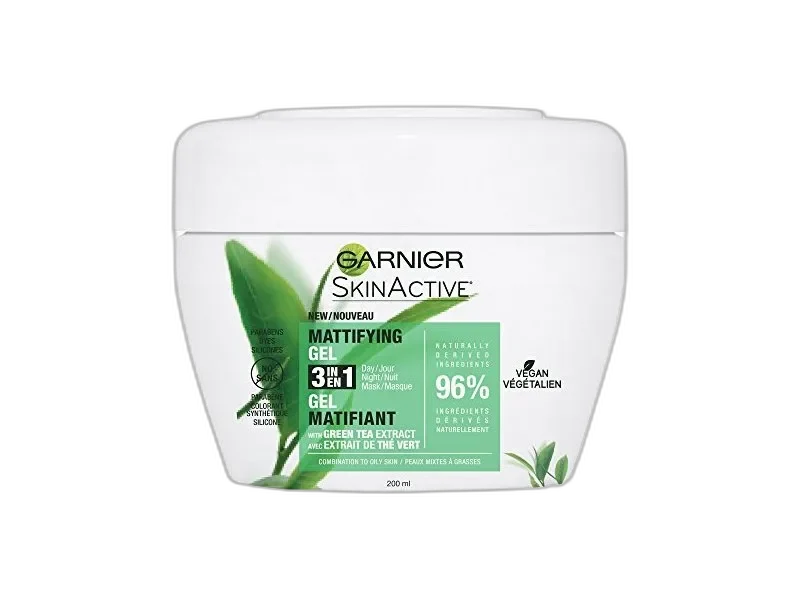
3-in-1 Face Moisturizer with Green Tea SPF 15
Drugstore 3-in-1 Basic
 Verified reviewer
Pros & cons.
- +Affordable and widely available at drugstores
- +Lightweight texture absorbs quickly without white cast
- +Combines moisturizer and basic SPF in one convenient step
- +Glycerin-forward formula delivers acceptable surface hydration
- +Works on all skin tones with no chalky residue
- +Pleasant green tea scent masks chemical sunscreen notes
- −SPF 15 falls below current dermatology recommendations for daily UV defense
- −Contains fragrance, a common sensitizer
- −Contains octinoxate, restricted in Hawaii and not pregnancy-preferred
- −Green tea extract level is marketing-positioned, not treatment-level
- −Not suitable for sensitive, reactive, or melasma-prone skin
The full review.
3-in-1 SPF moisturizers exist as a trade-off between convenience and efficacy. The premise is simple: instead of applying moisturizer, antioxidant serum, and sunscreen separately, one product does all three at a drugstore price. In reality, combining these functions usually compromises performance, and this Garnier entry shows that pattern clearly.
The moisturizer works well. Glycerin is high on the ingredient list, dimethicone provides a smooth finish, and the lightweight white lotion absorbs quickly without grease. As a basic $14 drugstore daytime moisturizer without UV or antioxidant functions, it would be perfectly reasonable. The finish layers under makeup without pilling, the scent is pleasant, and users with normal or combination skin get enough hydration for a typical workday without dryness by lunch.
The 3-in-1 claim is more complex regarding the SPF and antioxidant portions. The sunscreen system uses standard chemical filters: ethylhexyl methoxycinnamate (octinoxate) as the primary UVB filter, octocrylene as a photostabilizer, and avobenzone as the UVA filter. This combination is competent, but the product only claims SPF 15, which conflicts with current sun-protection standards. The American Academy of Dermatology recommends broad-spectrum SPF 30 or higher for daily use; SPF 15 reflects older advice. SPF 15 blocks about 93% of UVB rays, while SPF 30 blocks about 97%. This difference changes cumulative UV damage over years of daily exposure. If this is your only daytime sun protection while outdoors, you are under-protected by modern standards.
The antioxidant portion shows where marketing meets reality. Camellia sinensis (green tea) leaf extract is real and well-studied for polyphenol content, providing meaningful antioxidant activity when used at high concentrations. Here, it sits deep enough in the ingredient list that the amount is modest. This product is not an antioxidant treatment. The green tea is a marketing differentiator and a small bonus, not a replacement for a vitamin C serum or a dedicated antioxidant step.
Some ingredient choices are dated. The formula contains fragrance, which is a documented contact sensitizer for reactive skin. It contains methylparaben, which the FDA deems safe but many modern formulations avoid due to consumer preference. It contains octinoxate, which is restricted in Hawaii and some coastal regions due to reef impact, has shown potential endocrine activity in animal studies, and is on most dermatologists’ avoid list during pregnancy. Individually, these do not disqualify the product, but together they reflect an older formulation philosophy.
This product serves a specific audience: people on a tight skincare budget, those who will not do a multi-step routine and would otherwise use no SPF, or those needing a convenient, travel-friendly single product for brief use. For these users, any SPF is better than none, and this provides acceptable moisture and baseline UV protection at an accessible price. It also works for users in low-UV environments, such as dim winters, indoor-heavy lifestyles, or climates with mostly incidental sun exposure.
Who it doesn’t work for
It does not work for almost everyone else. Anyone prioritizing skin health should use SPF 30+ broad spectrum daily; dedicated products (a proper sunscreen and a separate moisturizer) almost always outperform compromise formulations. Sensitive and reactive skin should avoid the fragrance and octinoxate. Melasma-prone users should choose a higher-SPF broad-spectrum option with strong UVA coverage. Users who are pregnant should opt for a mineral sunscreen. Users with active acne or fungal concerns will likely find the formula unsuitable.
Formula
The value equation is the final factor. At around $14, the price is fair for what it is. One bottle lasts roughly two to three months with daily face use. Buying a separate drugstore moisturizer and SPF costs more total money but provides better performance on both fronts. The 3-in-1 premium is time saved, not money saved. As a drugstore convenience product, it is defensible. Against current dermatology best practices for daily UV defense, it falls short of the standard for sun protection.
Ingredient analysis.
Full INCI list
Water, Ethylhexyl Methoxycinnamate, Glycerin, Dicaprylyl Carbonate, Octocrylene, Dimethicone, Butyl Methoxydibenzoylmethane, Cetearyl Alcohol, Glyceryl Stearate, PEG-100 Stearate, Camellia Sinensis (Green Tea) Leaf Extract, Tocopheryl Acetate, Glycine Soja (Soybean) Oil, Phenoxyethanol, Disodium EDTA, Xanthan Gum, Fragrance, Carbomer, Triethanolamine, Methylparaben
Skin match.
The science.
The Science
The chemical sunscreen system here — octinoxate, octocrylene, and avobenzone — is well-characterized in photoprotection literature. Octocrylene specifically plays a stabilizing role for avobenzone, which degrades rapidly under UV exposure in the absence of a photostabilizer. SPF 15 blocks approximately 93% of UVB rays compared to 97% for SPF 30, a difference that compounds over years of cumulative daily exposure. Current American Academy of Dermatology guidance recommends SPF 30 or higher for daily use based on this accumulated evidence, making SPF 15 a functional but below-standard choice for serious sun defense. Camellia sinensis (green tea) polyphenols — particularly epigallocatechin gallate (EGCG) — have meaningful antioxidant activity in published research, including reduction of UV-induced oxidative stress markers in keratinocyte cultures and ex vivo skin models. However, clinical benefits from topical green tea have been demonstrated primarily at concentrations above 2%, and formulations positioning green tea as a marketing ingredient rather than an active typically deliver far less. Glycerin is one of the most thoroughly studied humectants in cosmetic chemistry and provides reliable hydration at the concentrations used here. Dimethicone's role as a smooth-finish emollient and water-loss barrier is similarly well-established. The formulation reflects standard drugstore chemical sunscreen practice rather than any novel delivery approach, and the overall performance should be understood as baseline rather than advanced.
Dermatologist Perspective
Dermatologists generally advise daily broad-spectrum SPF 30 or higher as the current standard for meaningful sun protection. A product at SPF 15 is typically considered insufficient for outdoor activity and is more commonly framed as baseline protection against incidental exposure. Board-certified dermatologists also frequently note that fragrance and octinoxate are ingredients to approach cautiously for sensitive skin and during pregnancy. For patients specifically treating melasma or hyperpigmentation, dermatologists commonly recommend higher-SPF mineral or hybrid sunscreens with strong UVA coverage rather than drugstore 3-in-1 formulations.
Where it fits in your routine.
Apply each morning as the final step over serum or on cleansed skin. Use a quarter-teaspoon for the face and neck to hit the SPF 15 label claim; most users under-apply sunscreen and reduce effective protection. If you have sun exposure beyond brief outdoor moments or walking to your car, layer a dedicated broad-spectrum SPF 30+ sunscreen on top. Reapply every two hours if you stay outdoors. Do not use this instead of a dedicated sunscreen for outdoor activities.
At approximately $14 for 2.5 fl oz, the per-ounce price is fair for drugstore tier, and a bottle lasts about two to three months with daily face use. The real value question is not cost but function — you're paying for convenience, and the trade-off is a SPF level below current recommendations and a formula that's not friendly to sensitive or pregnancy users. If you would genuinely not use a separate moisturizer and sunscreen otherwise, the convenience is worth the modest price. If you would use separate products, a dedicated drugstore SPF 30+ sunscreen and a basic moisturizer will cost only a little more and deliver meaningfully better performance on both fronts.
Budget-conscious users wanting a single-step morning moisturizer with basic UV protection, people who otherwise wear no SPF, and normal to combination skin users in low-UV environments. It also works for short-term travel convenience.
This is for anyone using SPF 30+ daily, sensitive or reactive skin that cannot tolerate fragrance, pregnancy users, melasma-prone skin, and users wanting antioxidant benefits beyond a marketing sprinkle.
Product details.
This lightweight white lotion absorbs fast and leaves a smooth, slightly silicone-cushioned finish.
Light green tea and fresh botanical fragrance — pleasant but present.
Plastic tube with a flip-cap, standard drugstore format.
Absorbs fast without a white cast. It leaves skin soft and mildly hydrated. The scent is noticeable at first but fades within minutes. No purging occurs.
About 2-3 months with daily morning face application.
12 months
All Year
The backstory.
Garnier's SkinActive line was built to bring L'Oréal-backed formulations to the drugstore price tier, and this 3-in-1 SPF moisturizer is one of its core daytime products. It's aimed at users who want a simple morning step without juggling separate moisturizer and sunscreen.
About Garnier SkinActive
Legacy Brand (20+ years)Garnier started in France in 1904 and joined L'Oréal Group in 1965. The SkinActive line uses L'Oréal's research infrastructure, but Garnier's drugstore positioning means formulations prioritize cost-optimization over premium ingredients.
Common myths.
SPF 15 is enough daily sun protection.
Dermatology guidance recommends SPF 30 or higher for daily use. SPF 15 provides meaningful but limited UVA/UVB coverage; use it as a baseline for incidental exposure, not outdoor activity.
Green tea extract in a moisturizer provides antioxidant benefits.
Green tea polyphenols have antioxidant activity, but the low concentrations used in most moisturizers yield minor effects. Treat this as a small bonus rather than an active treatment.
FAQ.
Is SPF 15 enough for daily use?
SPF 15 offers baseline protection for incidental sun exposure—driving, walking to work, or brief outdoor moments—but current dermatology guidance recommends SPF 30 or higher for meaningful daily UV defense. If you spend time outdoors, layer a dedicated broad-spectrum SPF over this product or choose a higher-SPF alternative.
Is this safe during pregnancy?
Use caution. The formula contains octinoxate (ethylhexyl methoxycinnamate), which shows potential endocrine effects in animal studies. Some dermatologists recommend avoiding octinoxate (ethylhexyl methoxycinnamate) during pregnancy. Mineral sunscreens with zinc oxide are the typical pregnancy-safe preference.
Can I use this on sensitive skin?
This is likely not the best choice. The formula contains fragrance, methylparaben, and chemical sunscreen filters that can trigger reactions in sensitive users. A fragrance-free mineral sunscreen works better.
Does it leave a white cast?
No — this is a purely chemical sunscreen system. It lacks zinc oxide or titanium dioxide, so it absorbs into all skin tones without ashy or chalky residue.
Is it reef-safe?
No. The formula uses octinoxate and octocrylene, which Hawaii and some coastal regions restrict because they impact reefs. If reef safety matters to you, choose a mineral sunscreen alternative.
How does it compare to a dedicated sunscreen plus moisturizer?
A dedicated moisturizer and a dedicated SPF 30+ sunscreen almost always outperform a 3-in-1. This product offers convenience for low-maintenance routines, not superior protection or hydration.
Community
What the community says.
"Affordable convenience for a combined moisturizer and SPF"
"Light texture absorbs quickly"
"Pleasant green tea scent"
"Good option for low-maintenance routines"
"SPF 15 is lower than most users need for daily outdoor protection"
"Contains fragrance and methylparaben"
"Octinoxate is restricted in Hawaii and some reef-safe regions"
"Not recommended for sensitive or melasma-prone skin"
People also looked at.