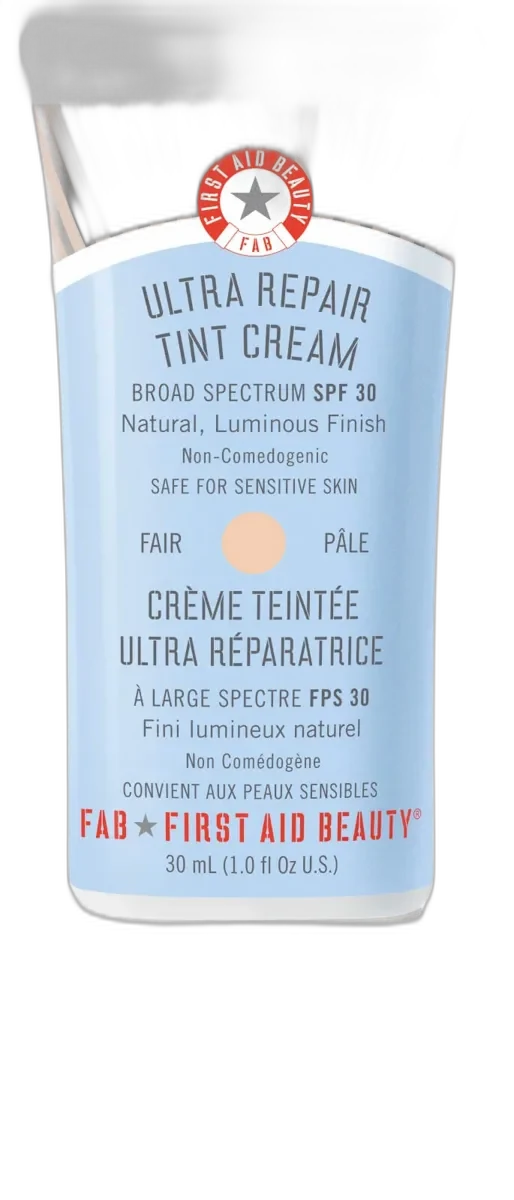
Ultra Repair Tinted Moisturizer SPF 30
Sensitive Skin SPF Tint
 Verified reviewer
Pros & cons.
- +Whipped mousse texture blends effortlessly into natural, skin-like coverage
- +Colloidal oatmeal and allantoin provide genuine soothing beneath the tinted SPF layer
- +Luminous satin finish with micro-pearls gives a healthy, radiant glow on dry and normal skin
- +Licorice root and feverfew extracts deliver real anti-inflammatory and brightening skincare benefits
- +PETA cruelty-free, vegan, and Clean at Sephora certified
- +Combines moisturizer, SPF 30, and light coverage in a single morning step
- −Chemical sunscreen filters caused stinging and contact dermatitis in some sensitive-skin users
- −Contains mandarin orange peel oil and limonene — not fragrance-free despite sensitive-skin branding
- −Product separation and oil oozing reported by multiple buyers
- −10-shade range is limited by modern tinted moisturizer standards
- −$28 for 30ml is a premium price for a product with mixed user reviews
- −Now discontinued — limited or no availability at major retailers
The full review.
First Aid Beauty fills a specific niche: the brand people use for angry, reactive, or over-treated skin when other products fail. The Ultra Repair Cream uses colloidal oatmeal and a eucalyptus-free formula, making it a staple for anyone searching for a “moisturizer that does not burn my face.” When FAB launched a tinted moisturizer in 2019, users expected that same gentle approach with added coverage.
The result tried to be two things at once and compromised on both. The Ultra Repair Tinted Moisturizer SPF 30 contains colloidal oatmeal, allantoin, licorice root extract, feverfew extract, and white tea extract—the soothing, anti-inflammatory ingredients FAB’s audience expects. It also contains avobenzone at three percent, octinoxate at 7.5 percent, octisalate at five percent, and octocrylene at 7.5 percent. These four chemical sunscreen filters absorb UV effectively but are common causes of contact irritation and dermatitis in sensitive-skin populations.
This is the product’s fundamental tension. Chemical sunscreen filters are transparent, avoiding the white cast mineral filters like zinc oxide and titanium dioxide leave on deeper skin tones. However, these filters also cause the most stinging, burning, and irritation for the skin types FAB targets. This formulation choice prioritizes cosmetic elegance over ingredient gentleness; for a sensitive-skin brand, customers notice that trade-off.
Texture
The texture is lovely. This whipped mousse-like cream feels fluffy and shears out into natural, skin-like coverage that does not look or feel like makeup. Micro-pearls add subtle luminosity to mimic well-hydrated skin. It blends easily with fingers alone—no brush, sponge, or primer is necessary. As a cosmetic experience, the application is pleasant and the immediate result is attractive.
Works for
The coverage is light to medium, buildable without cakeyness, and looks most natural during the first few hours of wear. The satin-to-luminous finish flatters dry and normal skin, providing a healthy radiance that cheaper tinted moisturizers rarely match. On oily skin, this luminosity becomes greasiness by midday.
Best for
Skincare ingredients work beneath the coverage. Colloidal oatmeal—an FDA-recognized skin protectant—provides anti-inflammatory relief to counteract some irritation from the chemical filters. Sodium hyaluronate delivers humectant hydration. Licorice root extract contributes brightening through glabridin’s tyrosinase inhibition. These are not afterthoughts; they show a sincere attempt to maintain the Ultra Repair lineage.
Scent
The fragrance undermines the sensitive-skin positioning. This product contains Citrus Nobilis (Mandarin Orange) Peel Oil and limonene, adding a light citrus scent. While pleasant to most, it is an odd inclusion for a brand marketing to people who react to everything. The core Ultra Repair Cream is fragrance-free, but this tinted version is not. For some loyal FAB customers, this felt like a betrayal of trust that no amount of colloidal oatmeal could fix.
Best for
The ten-shade range was ambitious for a 2019 tinted moisturizer but feels limited now. The range spans Ivory to Deep with various undertone options, but gaps in the medium-to-deep range and the imprecision of sheer tinted products mean some users will find a match while others will not.
Common Complaints
Stability issues also affected the product. Multiple users reported product separation—oil visibly separating from the cream phase—even in new tubes. While kneading the tube before use can sometimes resolve this, it suggests a formulation stability challenge that may have led to its discontinuation.
Packaging
At twenty-eight dollars for thirty milliliters, the value was moderate. It is a reasonable price for a prestige tinted moisturizer with SPF, but hard to justify when the product divided FAB’s customer base over whether it truly served sensitive skin.
Not ideal for
FAB quietly discontinued the Ultra Repair Tinted Moisturizer SPF 30 around 2024-2025, shifting focus to non-tinted SPF moisturizers. The ambition was correct—sensitive-skin consumers deserve tinted SPF options with skincare benefits. The execution failed because chemical sunscreen filters and sensitive skin are often adversaries, and adding fragrance to a sensitive-skin product sends a mixed message.
For those mourning its loss, the formula’s strengths—the whipped texture, soothing oatmeal base, and luminous finish—set a template. FAB or another sensitive-skin brand may eventually revisit this with mineral filters and a truly fragrance-free formulation. That product will be what this tinted moisturizer intended to be.
Ingredient analysis.
Full INCI list
Active Ingredients: Avobenzone 3%, Octinoxate 7.5%, Octisalate 5%, Octocrylene 7.5%. Inactive Ingredients: Water/Aqua/Eau, Cyclopentasiloxane, Dimethicone, Cetearyl Alcohol, Cetearyl Glucoside, Potassium Cetyl Phosphate, Polyglyceryl-4 Isostearate, Dimethicone Crosspolymer, Tocopheryl Acetate, Glycerin, Cetyl PEG/PPG-10/1 Dimethicone, Cetyl Dimethicone, Polysorbate 60, Butylene Glycol, Hexyl Laurate, Colloidal Oatmeal, Phenoxyethanol, Sodium Dehydroacetate, Sodium Hyaluronate, Camellia Sinensis (White Tea) Leaf Extract, Carbomer, Tribehenin, Limonene, Tetrasodium EDTA, Aminomethyl Propanol, Citrus Nobilis (Mandarin Orange) Peel Oil, Allantoin, Sodium Ascorbate, Glycyrrhiza Glabra (Licorice) Root Extract, Chrysanthemum Parthenium (Feverfew) Extract. May Contain: CI 77891 (Titanium Dioxide), CI 77492, CI 77499, CI 77491 (Iron Oxides), Mica.
Skin match.
The science.
The Science
This product's sunscreen system uses four complementary organic UV filters. Avobenzone (butyl methoxydibenzoylmethane) at 3% absorbs peak UVA1 wavelengths (340-400nm), which penetrate deepest into the dermis and drive photoaging. Because avobenzone is photolabile and degrades under UV exposure, the formula includes octocrylene (7.5%) as a photostabilizer. Sayre et al. (2005) in Photochemistry and Photobiology showed that octocrylene extends avobenzone's photostability, maintaining UVA protection during long exposure.
Octinoxate (ethylhexyl methoxycinnamate) at 7.5% and octisalate (ethylhexyl salicylate) at 5% provide UVB protection (290-320nm range) against wavelengths that cause sunburn and DNA damage. This four-filter system meets the broad-spectrum requirements for SPF 30.
Colloidal oatmeal acts as an FDA-recognized skin protectant via avenanthramides—polyphenolic alkaloids that inhibit NF-kB activation and reduce pro-inflammatory cytokine release. Sur et al. (2008) in Archives of Dermatological Research showed that avenanthramides from oat significantly reduce contact hypersensitivity and neurogenic inflammation. In this tinted moisturizer, the colloidal oatmeal offsets potential irritation from the chemical UV filters.
Licorice root extract (Glycyrrhiza glabra) contains glabridin, which inhibits tyrosinase activity and melanin synthesis. Yokota et al. (1998) in the Journal of Investigative Dermatology showed that topical glabridin reduces UVB-induced pigmentation without cytotoxicity. Combined with the iron oxide pigments in the tint (which also provide some visible-light and blue-light protection), the licorice root offers cosmetic and functional brightening.
References
- Avenanthramides from oats exhibit anti-inflammatory and anti-itch activity — Archives of Dermatological Research (2008)
Dermatologist Perspective
Dermatologists face a trade-off when formulating tinted SPF for sensitive skin: chemical filters offer better cosmetic elegance but higher irritation risk, while mineral filters offer better tolerability but create a white cast on deeper skin tones. Board-certified dermatologists note that the colloidal oatmeal in this formula mitigates chemical filter irritation, but they generally recommend mineral-based tinted sunscreens for patients with confirmed chemical filter sensitivity. Most dermatologists would find the mandarin orange peel oil in a sensitive-skin product concerning, as they prefer fragrance-free formulations for reactive skin. Dermatologists also remind patients that applying a full 1/4 teaspoon of product to the face is necessary to reach the labeled SPF 30—an amount that may provide more coverage than desired with a tinted product.
Where it fits in your routine.
Apply a nickel-sized amount to clean fingertips. Dot onto the forehead, cheeks, nose, and chin, then blend outward using fingertips, a damp beauty blender, or a foundation brush. Apply generously for SPF 30 protection; most people under-apply tinted moisturizers. Wait 15 minutes before sun exposure so chemical filters activate. Build thin layers for more coverage in specific areas. Reapply every 2 hours during prolonged sun exposure. Use double cleansing in the evening to remove it thoroughly.
At $28 for 30ml, this product priced similarly to other prestige tinted moisturizers (Laura Mercier, bareMinerals), but mixed reception and discontinuation suggest the market did not validate the price-to-performance ratio. The skincare ingredients work well, and the SPF 30 protection saves a step by removing the need for a separate sunscreen. However, stability issues, a limited shade range, and the tension between chemical SPF and sensitive-skin positioning reduced its appeal. Since it is discontinued, buy any remaining inventory knowing expiration dates and potential separation issues exist.
Dry to normal skin types want a lightweight, luminous tinted moisturizer that provides skincare benefits and SPF protection in one step. Users who like FAB's Ultra Repair soothing philosophy can use it in a tinted format. Clean beauty enthusiasts value the PETA cruelty-free and vegan certifications. Note: availability is limited because it is discontinued.
People with confirmed sensitivity to chemical sunscreen filters will likely find the four-filter system irritating. Oily skin types needing a matte finish will find this too luminous and greasy. Mandarin orange peel oil means this is not fragrance-free. Users need a wide shade range for precise matching. This product is not always available at major retailers.
Product details.
This whipped, fluffy mousse-like cream feels lightweight and blends easily. It is thicker than typical tinted moisturizers but sheers out when you blend it.
Mandarin orange peel oil gives it a light citrus scent. It is noticeable but not overpowering. Limonene is a fragrance component. The product is not fragrance-free, despite FAB's sensitive-skin positioning.
Squeeze tube uses First Aid Beauty's signature white packaging and red accents. It holds 30ml/ 1 oz.
The mousse texture is fluffy and light. It blends easily with fingertips into sheer-to-light coverage that evens skin tone without masking natural skin texture. The luminous finish gives a healthy glow instead of a matte or powdery look. Sensitive skin may feel slight warming or tingling from the chemical sunscreen filters during the first few minutes, which typically subsides. Dry skin types get an immediate hydration boost.
6-8 weeks with daily use of a nickel-sized amount
12 months
All Year
The backstory.
First Aid Beauty launched this tinted moisturizer in 2019 as an extension of their bestselling Ultra Repair line, aiming to give sensitive-skin consumers a makeup-meets-skincare option they could trust. The Ultra Repair Cream — FAB's hero product — had built a devoted following for its colloidal oatmeal-based soothing formula, and the tinted moisturizer was designed to bring that same philosophy to a product with light coverage and SPF protection. The product was discontinued around 2024-2025, with FAB shifting focus to non-tinted SPF moisturizers.
About First Aid Beauty
Established Brand (5–20 years)First Aid Beauty launched in 2009 in New York, focusing on clean beauty and sensitive skin solutions. Procter & Gamble acquired the brand in 2018. FAB is PETA-certified cruelty-free and belongs to Sephora's Clean at Sephora program. Note: This specific product was likely discontinued around 2024-2025.
Common myths.
Tinted moisturizers with SPF offer the same sun protection as dedicated sunscreens.
The SPF 30 rating is accurate, but you must apply a nickel-sized amount to the face, just like a standalone sunscreen. Most people apply less tinted moisturizer than sunscreen, so the actual protection is often SPF 10-15. Use a dedicated sunscreen underneath or on top for significant sun exposure.
Chemical sunscreens are unsafe or toxic.
The FDA classifies avobenzone, octinoxate, octisalate, and octocrylene as generally recognized as safe and effective (GRASE) for sunscreen use, but they want more safety data for some chemical filters. Sensitive-skin users mainly worry about contact irritation. Chemical filters cause stinging, burning, or contact dermatitis in reactive people, which caused discomfort for some users in FAB's sensitive-skin demographic.
FAQ.
Is the First Aid Beauty Ultra Repair Tinted Moisturizer discontinued?
Yes — as of approximately 2024-2025, this product is discontinued. First Aid Beauty does not sell it on the First Aid Beauty official website or at major retailers like Sephora. FAB now offers the non-tinted Ultra Repair Face Moisturizer with Sunscreen SPF 30 as an alternative. You can find remaining inventory on secondary markets.
Is the FAB Tinted Moisturizer good for sensitive skin?
Despite FAB's sensitive-skin brand identity, this product contains four chemical sunscreen filters (avobenzone, octinoxate, octisalate, octocrylene) that can cause stinging or contact dermatitis in reactive skin. It also contains mandarin orange peel oil and limonene. The colloidal oatmeal and allantoin do provide soothing benefits, but truly sensitive-skin users should patch test carefully before committing.
How many shades does the FAB Tinted Moisturizer come in?
Ten shades run from Ivory (extra pale with pink undertones) to Deep (deepest skin tones), with pink, neutral, and olive undertone options. The range is modest by current standards; finding an exact match may require testing multiple shades.
Is the SPF in the FAB Tinted Moisturizer chemical or mineral?
The SPF protection is entirely chemical (organic). The four active sunscreen ingredients — avobenzone, octinoxate, octisalate, and octocrylene — are all chemical UV filters. Titanium dioxide is present in the formula but only as a colorant for the tint, not as an active sunscreen ingredient.
Can I use the FAB Tinted Moisturizer as my only sunscreen?
The SPF 30 rating protects against brief, incidental sun exposure if you apply a nickel-sized amount. For intense sun, beach days, or prolonged outdoor exposure, layer a dedicated sunscreen underneath or use a higher-SPF product. Most people apply less tinted moisturizer than the amount needed for full rated protection.
What the community says.
"Lightweight, natural-looking coverage that evens skin tone without looking cakey"
"Whipped mousse texture blends easily with fingers — no brush or sponge needed"
"Colloidal oatmeal and allantoin provide genuine soothing for sensitive dry skin"
"Luminous satin finish with micro-pearls gives a healthy, radiant glow"
"Combines moisturizer, SPF, and light coverage in one step"
"Product separation and oil oozing reported even in freshly purchased tubes"
"Chemical sunscreen filters caused contact dermatitis in some sensitive-skin users"
"Can pill when layered over certain skincare products"
"Mandarin orange peel oil is an odd choice for a sensitive-skin brand — not truly fragrance-free"
"10-shade range is too limited for a modern tinted moisturizer"
"$28 for 30ml is expensive given the limited shade range and mixed reviews"
People also looked at.