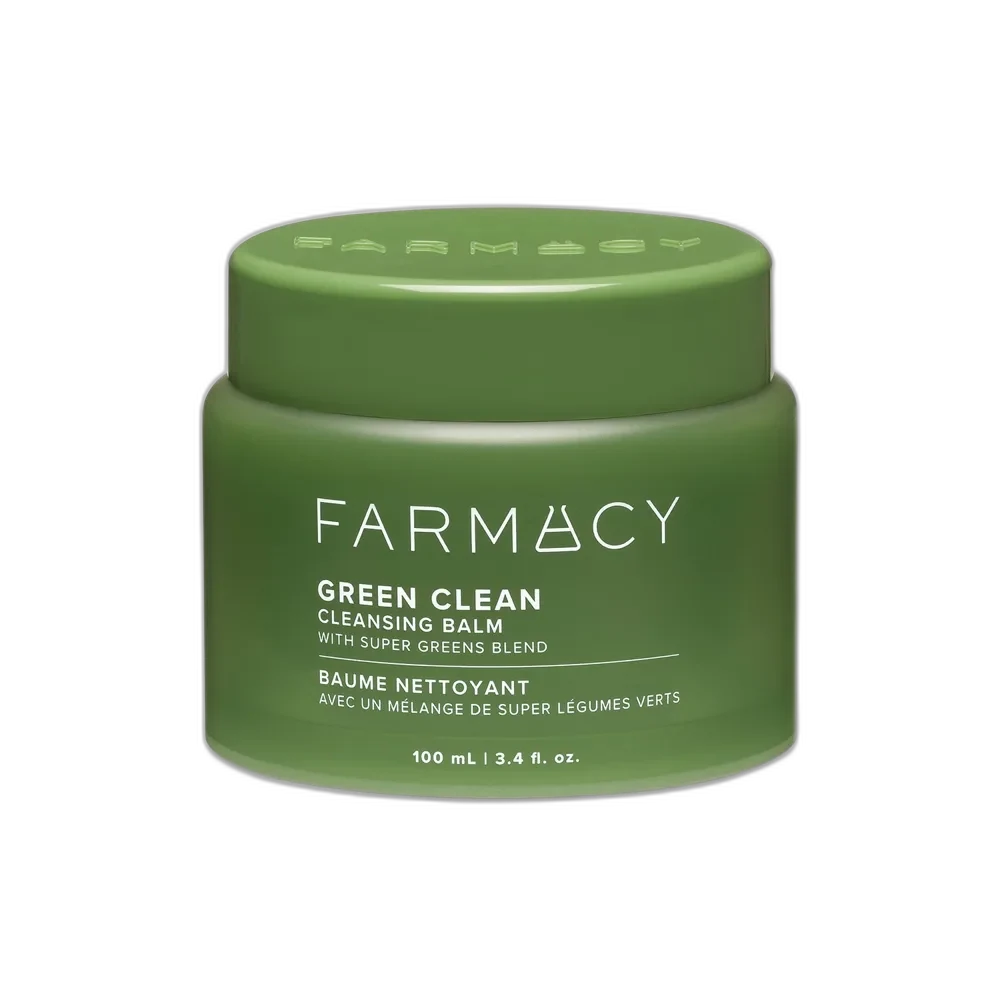
Green Clean Makeup Meltaway Cleansing Balm
Category-Defining Cleansing Balm
 Verified reviewer
Pros & cons.
- +Removes 99%+ of all makeup including waterproof formulas in a single cleanse
- +Unique sorbet texture melts faster and lighter than traditional dense balms
- +Leaves skin soft and hydrated rather than stripped or tight
- +Decade of bestseller status with 75,000+ reviews validates real-world performance
- +Four sizes available from $10 travel to $68 value — excellent flexibility
- +Fragrance-free version available for sensitive and allergy-prone skin
- +Vegan, cruelty-free, silicone-free with 100% post-consumer recycled packaging
- −Original version contains phototoxic citrus oils and ylang ylang fragrance allergens
- −Polyethylene (microplastic) is used for the sorbet texture — environmental concern
- −Essential oils can cause eye stinging and blurred vision during eye makeup removal
- −9-month PAO is shorter than many competitors — use promptly after opening
- −Not suitable for fungal-acne-prone skin due to multiple Malassezia triggers
The full review.
In 2015, David Chung launched Farmacy with a single product and a thesis: that clean beauty could be effective, that farm-sourced ingredients could compete with synthetic formulations, and that a cleansing balm could do the job of a dedicated makeup remover, a first cleanser, and a mini facial in one step. Green Clean was that product. A decade, one Procter & Gamble acquisition, and over 75,000 reviews later, it is still the product that defines both the brand and, arguably, the modern cleansing balm category.
The texture is the hook. Most cleansing balms are dense, waxy affairs that require body heat and patience to liquefy. Green Clean is a sorbet — lighter, bouncier, more immediately responsive. You scoop it and it begins softening before it hits your skin. Within seconds of contact, it transforms into a transparent oil that slides across the face with frictionless ease, dissolving makeup, sunscreen, and sebum as it goes. Add water and it shifts again, this time into a milky emulsion that rinses completely clean. This three-phase transformation — sorbet to oil to milk — is the sensory experience that turned first-time users into lifelong purchasers.
Performance in makeup removal is the product’s core credential, and it is virtually unchallenged. Clinical testing shows removal of over 99% of long-wear makeup and SPF. In practice, this means sixty seconds of gentle massage dissolves everything: waterproof mascara, twenty-four-hour foundation, mineral sunscreen, the whole armored routine of modern cosmetics. You do not need a separate eye makeup remover. You do not need cotton pads or micellar water. The balm handles it all, and it handles it gently — no tugging, no friction burns, no residue.
The ingredient approach combines oil-based dissolution with enzymatic and botanical mechanisms. Sunflower seed oil and caprylic/capric triglyceride do the heavy lifting — dissolving oil-soluble impurities through molecular similarity. Papaya fruit extract adds papain enzymes that break down dead protein on the skin surface. Moringa seed extract contributes purifying peptides that bind to pollution particles. Turmeric, echinacea, and ginger provide anti-inflammatory and antioxidant support during the cleansing process. The formula is more botanically complex than most cleansing balms, which tend to rely on oils and emulsifiers alone.
The scent is where Green Clean becomes a choose-your-own-adventure product. The original version is fragranced with lime, bergamot, orange peel, ylang ylang, and ginger essential oils — a bright, citrus-forward blend that smells like a high-end spa. For many users, this scent is a highlight: the aromatic experience transforms a mundane cleansing step into something enjoyable. For others — particularly those with fragrance sensitivities, rosacea, or allergy-prone skin — these essential oils are a dealbreaker. Bergamot and lime contain phototoxic furanocoumarins. Ylang ylang has a significant sensitization profile. In a product designed for facial use, these are not trivial concerns. Farmacy addresses this head-on by offering a fragrance-free version with identical cleansing performance and the same botanical base, minus the essential oils. If you have any history of fragrance reactions, start with that version.
The other honest concern is polyethylene in the ingredient list. This is a microplastic — a synthetic polymer that gives the balm its distinctive sorbet texture but raises environmental questions about microplastic pollution in waterways. It does not affect skin health or cleansing performance, but for consumers who extend their clean beauty principles to environmental impact, it is a valid consideration.
Post-cleanse skin feels genuinely different from most cleanser aftermaths. There is no tightness, no stripping, no that-squeaky-clean-feeling-that-actually-means-your-barrier-is-compromised sensation. Instead, skin feels soft, hydrated, and comfortable — a result of the sunflower oil’s linoleic acid depositing a light nourishing layer and the glycerin contributing humectant moisture. You still want to double-cleanse with a gentle gel or foam cleanser afterward (especially before applying retinol or acids), but the first cleanse leaves skin in a notably better state than harsher alternatives.
Value is competitive for the category. At $39 for 100ml, Green Clean sits below luxury cleansing balms and above drugstore options. The four available sizes — from $10 travel to $68 super — provide flexibility. The 200ml offers the best per-unit value and lasts approximately five to six months with nightly use. For a product that eliminates the need for separate makeup removers and delivers a spa-like experience nightly, the cost-per-use is reasonable.
Ten years is an eternity in beauty. Products come and go. Trends cycle. Brands launch, hype, decline, and disappear. Green Clean has outlasted all of it — not through reformulation or repositioning, but through the basic, repeatable experience of melting away a day’s worth of makeup in sixty seconds and leaving skin that feels genuinely cared for. That is not hype. That is a decade of evidence.
Ingredient analysis.
Full INCI list
Cetyl Ethylhexanoate, Caprylic/Capric Triglyceride, PEG-20 Glyceryl Triisostearate, PEG-10 Isostearate, Polyethylene, Phenoxyethanol, Sorbitan Sesquioleate, Citrus Aurantifolia (Lime) Oil, Citrus Aurantium Bergamia (Bergamot) Fruit Oil, Melia Azadirachta Leaf Extract, Melia Azadirachta Flower Extract, Amino Esters-1, Citrus Aurantium Dulcis (Orange) Peel Oil, Amber Powder, Cananga Odorata Flower Oil, Coccinia Indica Fruit Extract, Solanum Melongena (Eggplant) Fruit Extract, Curcuma Longa (Turmeric) Root Extract, Ocimum Sanctum Leaf Extract, Corallina Officinalis Extract, Moringa Oleifera Seed Oil, Zingiber Officinale (Ginger) Root Oil, Helianthus Annuus (Sunflower) Seed Oil, Water/Aqua/Eau, Glycerin, Butylene Glycol, Echinacea Purpurea Root Extract, Carica Papaya (Papaya) Fruit Extract, Moringa Pterygosperma Seed Extract, Disodium Phosphate, Citric Acid
Skin match.
The science.
The Science
Oil-based cleansing works on the fundamental chemistry principle that 'like dissolves like' — nonpolar oils in the balm bind to the nonpolar sebum, makeup pigments, and sunscreen filters on the skin surface. Sunflower seed oil's high linoleic acid content (approximately 65-70% of its fatty acid profile) is significant because linoleic acid is a component of human sebum that decreases in acne-prone skin. A study published in the Journal of Clinical and Aesthetic Dermatology (2010) demonstrated that topical linoleic acid application reduced comedone size by approximately 25% over one month — suggesting that the choice of sunflower oil over oleic-acid-dominant oils may offer a slight advantage for acne-prone users.
The PEG-based emulsification system (PEG-20 glyceryl triisostearate and PEG-10 isostearate) allows the oil phase to mix with water and rinse completely. This is the mechanism that distinguishes modern cleansing balms from simple oil cleansers — the emulsifiers ensure that dissolved impurities do not redeposit on the skin during rinsing. The completeness of emulsification determines whether a cleansing balm leaves behind pore-clogging residue or not, and clinical testing confirming 99%+ removal suggests the emulsification system here is highly effective.
Papain, the protease enzyme in papaya fruit extract, cleaves peptide bonds in dead stratum corneum proteins through a mechanism entirely independent of oil-based dissolution. This enzymatic action operates at the protein level rather than the lipid level, providing a complementary cleansing dimension. While the brief contact time of a cleansing balm limits papain's exfoliating effect compared to leave-on treatments, it contributes to the thorough cleansing profile.
The phototoxicity concern with citrus essential oils is well-documented. Bergamot oil contains bergapten (5-methoxypsoralen), a furanocoumarin that intercalates with DNA upon UV exposure and can cause photodermatitis. While the concentrations in a rinse-off product are lower risk than in leave-on formulations, the International Fragrance Association (IFRA) restricts bergaptene content in cosmetic products, and users should be aware of the photosensitivity potential — particularly relevant as this is an evening-use product with overnight residual exposure.
References
- Linoleic acid and the pathogenesis of acne — British Journal of Dermatology (1998)
Dermatologist Perspective
Dermatologists widely recommend oil-based cleansing as the first step in a double-cleanse routine for patients who wear makeup or sunscreen daily. Board-certified dermatologists note that the emulsifying cleansing balm format is generally well-tolerated and effective, with Green Clean's clinical data supporting its thoroughness. However, dermatologists raise concerns about the phototoxic citrus essential oils and the high allergen load from ylang ylang in the original version — recommending the fragrance-free version for patients with rosacea, eczema, contact dermatitis, or any history of fragrance sensitivity. The PEG emulsifiers, while generally safe, may be drying for patients with severely compromised barriers. Dermatologists emphasize that a second water-based cleanser should follow to ensure complete removal of all emulsifier residue before applying treatment products.
Where it fits in your routine.
Use dry fingers to scoop a quarter-sized amount from the jar. Apply to dry skin; water prevents the oil from binding with makeup. Massage in circular motions for 60 seconds over the entire face and eye area (keep eyes closed). Add a small amount of lukewarm water and massage to emulsify until the balm turns into a milky lather. Rinse thoroughly with lukewarm water. Follow with a gentle gel or foam cleanser for a complete double cleanse. Use nightly as the first cleansing step.
At $39 for 100ml, Green Clean has a competitive price for a prestige cleansing balm. The four-size range offers flexibility: the $10 mini works for travel or trial, while the $68 200ml provides the best value at $0.34/ml and lasts about 5-6 months with nightly use. At the standard size, nightly use costs about $13-20 per month — similar to or less than many competing balms. Green Clean replaces separate makeup removers and micellar water, which can consolidate costs. The 9-month PAO is shorter than some competitors, so buy the supersized jar only if you use it consistently.
Use this if you wear makeup, sunscreen, or both daily and want one product that melts it all away without tugging, stripping, or irritating. It works for combination and normal skin types who want a spa-like cleansing ritual. The fragrance-free version works for more people, including those with mild sensitivity.
People with fragrance allergies, rosacea, or contact dermatitis should avoid the original version — use the fragrance-free alternative instead. Skip this if you have fungal acne, because the formula contains multiple Malassezia triggers. Choose alternatives if polyethylene (microplastics) conflicts with your environmental values.
Product details.
This sorbet-like balm has a bouncy, scoopable consistency. It melts into a transparent oil when it hits skin warmth, then emulsifies into a milky lather with water. It rinses completely clean.
Fresh citrus-floral blend from lime, bergamot, orange peel, ylang ylang, and ginger essential oils. Bright and invigorating. A fragrance-free version is available.
The jar uses 100% post-consumer recycled plastic and a screw-top lid. Four sizes (12ml, 30ml, 100ml, 200ml) offer travel flexibility and value sizing.
The sorbet texture distinguishes this from other cleansing balms; it is lighter, bouncier, and less waxy than traditional balms. It melts on contact and dissolves makeup within seconds of massage. Emulsification with water creates a milky rinse that leaves zero residue. Skin feels clean and comfortable, not stripped.
2-3 months with nightly use using about a quarter-sized amount
9 months
All Year
The backstory.
Green Clean was Farmacy's debut product — the product that launched the brand in 2015 and defined its 'farm-to-face' identity. David Chung developed it to challenge the status quo in cleansing: most cleansing balms at the time were either premium luxury products with mineral oil bases or K-beauty imports. Green Clean offered a plant-based, clean-formulated alternative at an accessible price point. It became Sephora's bestselling cleanser and an Allure Best of Beauty winner, establishing Farmacy's credibility before the brand expanded into serums, masks, and treatments.
About Farmacy
Established Brand (5–20 years)David Chung founded Farmacy in 2015, launching with Green Clean. The balm won an Allure Best of Beauty award and became Sephora's bestselling cleanser, building the brand's reputation before Procter & Gamble acquired it in 2021. Ten years of market success makes this one of the most battle-tested cleansing balms available.
Common myths.
Cleansing balms leave an oily residue that clogs pores.
Green Clean's PEG-based emulsifier system mixes with water and rinses clean. Clinical testing shows it removes over 99% of makeup and impurities. Emulsification is the mechanism: adding water turns the oil into a milky lather that washes away without residue.
You don't need a second cleanser after a cleansing balm.
Green Clean removes most makeup and sunscreen, but dermatologists still recommend a gentle second cleanser (double cleansing) to clear all emulsifier residue and remaining impurities. This step matters before you apply treatment actives like retinol or acids.
FAQ.
Does the Farmacy Green Clean remove waterproof mascara?
Yes — clinical testing shows it removes over 99% of makeup, including waterproof mascara. Massage the balm over closed eyes for 30-60 seconds, then emulsify with water and rinse. Do not press the product directly into open eyes; some users report the essential oils cause stinging.
Is the Farmacy Green Clean safe for sensitive skin?
The original version contains lime, bergamot, orange, and ylang ylang essential oils, which are potential allergens and phototoxic compounds. For sensitive skin, Farmacy offers a fragrance-free version with the same cleansing performance but without the essential oil blend. Always patch test if you have reactive skin.
Does the Farmacy Green Clean contain microplastics?
Yes — polyethylene is in the ingredient list. It modifies the texture to give the balm its sorbet-like consistency. This is a valid environmental concern, but the ingredient is cosmetically inert and does not affect skin health.
Do I need to double cleanse after using the Farmacy Green Clean?
Dermatologists recommend a gentle water-based cleanser next, especially after heavy makeup or sunscreen, or before applying treatment products like retinol or acids. On light makeup or no-makeup days, Green Clean works as a standalone cleanser.
Which size of the Farmacy Green Clean offers the best value?
The 200ml size costs $68 and offers the best value at $0.34/ml, versus $0.39/ml for the 100ml and $0.60/ml for the 30ml. Nightly use makes the 200ml last about 5-6 months and saves $10 over buying two standard-size jars.
What's the difference between the regular and fragrance-free Green Clean?
The fragrance-free version removes the citrus and ylang ylang essential oils — the main source of allergens and phototoxic compounds. The cleansing performance, texture, and supporting ingredients remain the same. It is the better choice for anyone with sensitive, reactive, or allergy-prone skin.
Community
What the community says.
"Removes 99%+ of all makeup including waterproof mascara in one cleanse"
"Unique sorbet texture melts instantly and transforms into a milky lather"
"Leaves skin feeling clean, soft, and hydrated — never stripped or tight"
"Works effectively on heavy sunscreen and long-wear foundation"
"Cult classic status backed by a decade of consistent performance"
"Citrus essential oils can cause eye irritation — some report blurred vision and stinging"
"Contains polyethylene (microplastic) as a texture ingredient — environmental concern"
"Fragrant version has multiple phototoxic citrus oils and allergens"
"Can be used up quickly with daily use — higher cost over time"
"Occasional batch-to-batch scent inconsistency"
Featured in.
People also looked at.