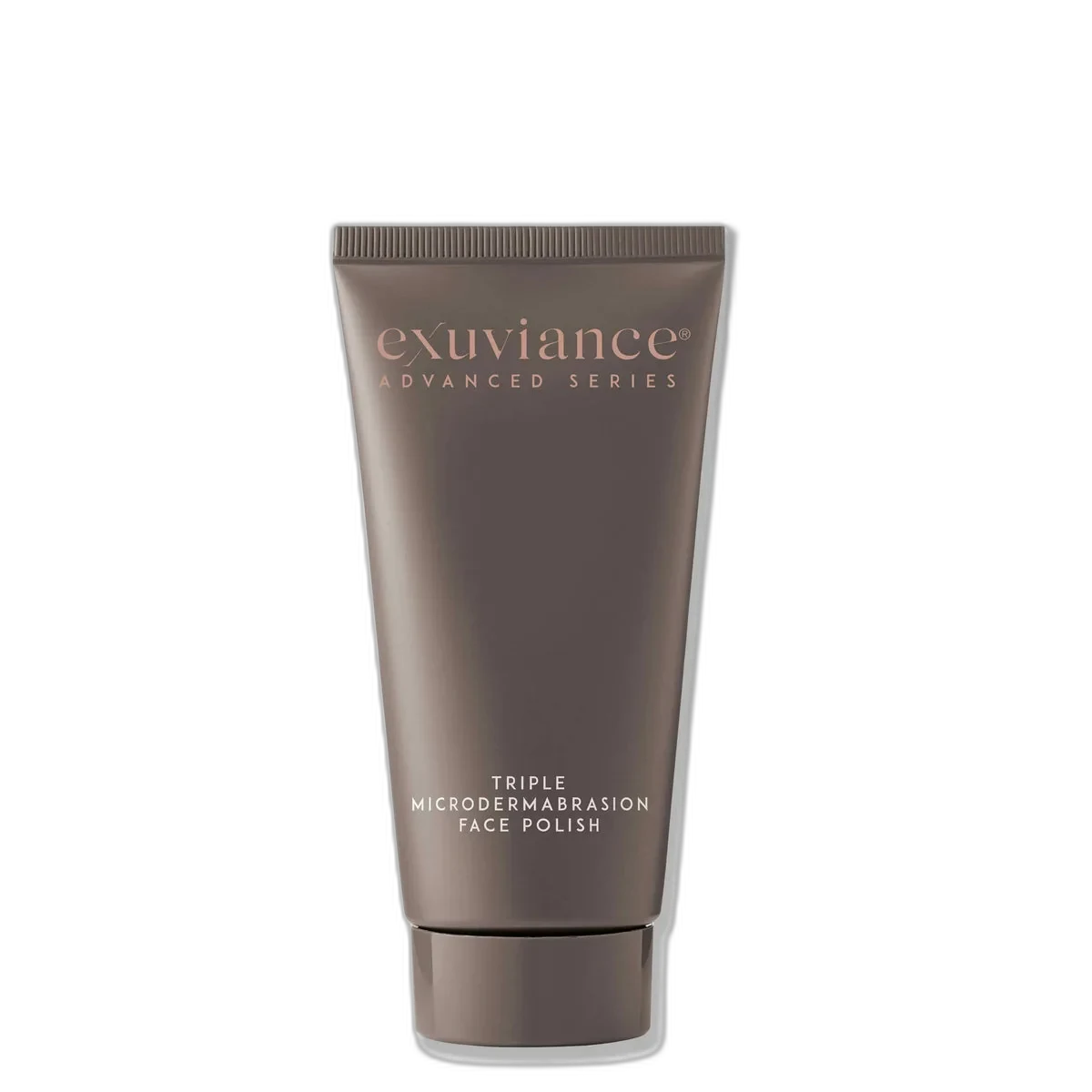
Triple Microdermabrasion Face Polish
Triple-Action Resurfacing Treatment
 Verified reviewer
Pros & cons.
- +Three distinct exfoliation mechanisms target different aspects of skin renewal simultaneously
- +Professional-grade alumina crystals match the quality of in-office microdermabrasion equipment
- +Immediate visible brightness and smoothness after a single treatment session
- +Lactobionic acid adds antioxidant protection to freshly exfoliated vulnerable skin
- +10% glycolic acid provides meaningful chemical exfoliation between physical treatments
- +Fine uniform crystal particles avoid the micro-tear risks of irregular scrub particles
- +Tube lasts 3-4 months making the per-treatment cost reasonable for a professional-grade product
- −Contains fragrance and artificial dyes in a product applied to freshly exfoliated skin
- −Combining physical and chemical exfoliation is too aggressive for sensitive skin types
- −Premium price of $78 for 2.6 ounces may deter those accustomed to drugstore exfoliants
- −Temporary redness and stinging are common and may last up to an hour post-treatment
- −Not pregnancy-safe due to the 10% glycolic acid concentration
The full review.
The skincare world has spent the last decade relitigating the great exfoliation debate. Physical scrubs fell out of favor as chemical acids rose to dominance, and anyone who admitted to using a facial scrub risked being lectured about micro-tears by strangers on the internet. Into this cultural moment, Exuviance — a brand with more AHA credibility than arguably any other — released a product that combines physical scrub, chemical acid, and enzymatic digestion in a single formula. It was either supremely confident or deliberately provocative. Probably both.
The Triple Microdermabrasion Face Polish operates on the principle that different exfoliation mechanisms address different aspects of skin renewal, and deploying them simultaneously creates a result that none could achieve alone. The alumina crystals — the same professional-grade aluminum oxide used in clinical microdermabrasion machines — physically buff the outermost layer of dead skin cells. The 10% glycolic acid dissolves the intercellular bonds that hold those dead cells in place. And papain, a proteolytic enzyme derived from papaya, selectively digests the keratin protein that makes up that dead layer. Three mechanisms, three targets, one treatment.
On wet skin, the product feels like a rich, slightly gritty cream. The crystals are noticeably fine and uniform — worlds apart from the crushed walnut shell catastrophes that gave physical exfoliation its bad reputation. You massage in gentle circles for about thirty seconds, then leave the product on for up to two minutes while the glycolic acid and enzyme continue working after you stop rubbing. This is where the formula gets clever: the physical exfoliation happens during the massage, but the chemical and enzymatic components keep the treatment active even when your hands are still.
The tingling starts within about thirty seconds and builds steadily during the treatment window. At 10% glycolic acid, this is not a subtle product. When you rinse — and rinsing thoroughly is non-negotiable — the skin underneath feels genuinely transformed. Smoother, softer, and with a visible brightness that is not imagined or optimistic. This is the kind of immediate result that earns a product repeat purchases.
With consistent use two to three times per week, the cumulative benefits become more interesting than the immediate glow. Pores appear refined, texture becomes more uniform, and the dull, congested look that builds up between professional treatments recedes noticeably. The lactobionic acid quietly working alongside the glycolic adds PHA-level antioxidant protection to freshly exfoliated skin, which is a characteristically NeoStrata touch — this brand never formulates a single-note product when it can harmonize three or four mechanisms.
The limitations are real and worth addressing honestly. First, the fragrance. For a brand with such deep dermatological credentials, the inclusion of fragrance in a product designed to strip away the skin’s protective outer layer is a perplexing choice. Freshly exfoliated skin is more permeable and more vulnerable to sensitizers, and fragrance is the most common cosmetic allergen. The artificial dyes — Yellow 5 and Red 4 — add visual appeal to the product in the tube but offer zero benefit to the skin and carry a small sensitization risk. These ingredients feel like marketing decisions that the R&D team would not have chosen.
Second, the irritation potential. Combining physical abrasion with 10% glycolic acid is inherently aggressive. For normal, resilient skin that tolerates exfoliation well, this is a feature — it delivers results that gentler products cannot match. For sensitive, thin, or reactive skin, it is a recipe for redness, stinging, and potentially compromised barrier function. The product works best for people whose skin can take a workout and recover quickly, which meaningfully limits its audience.
At $78 for 2.6 ounces, the pricing positions this as a premium treatment rather than an everyday scrub. Used two to three times weekly, a tube lasts roughly three to four months, which makes the per-month cost more reasonable than the sticker price suggests. The formulation pedigree — alumina crystals from NeoStrata’s professional microdermabrasion heritage, glycolic acid from the brand that pioneered AHA dermatology — adds genuine value that cannot be replicated by a drugstore scrub at any price.
The product delivers on its triple-mechanism promise with results that justify the science behind it. If your skin can handle the intensity, this is one of the most effective at-home resurfacing treatments available. If your skin tends toward sensitivity, the same NeoStrata family offers gentler PHA-only options that would serve you better.
Ingredient analysis.
Full INCI list
Water, Glycolic Acid, Alumina, Glycerin, Hydrogenated Polydecene, Isononyl Isononanoate, C12-15 Alkyl Benzoate, Glyceryl Stearate, Ammonium Hydroxide, Arginine, Butylene Glycol, Stearyl Alcohol, Polyacrylate-1 Crosspolymer, PEG-100 Stearate, Lactobionic Acid, Papain, Cetyl Alcohol, Hydroxypropyl Starch Phosphate, PEG-75 Stearate, Dehydroxanthan Gum, Ceteth-20, Steareth-20, Carbomer, Caprylyl Glycol, Algin, Phenoxyethanol, Chlorphenesin, Fragrance, Yellow 5, Red 4.
Skin match.
The science.
The Science
This formula uses a triple-mechanism approach via three well-studied exfoliation pathways. Glycolic acid, the smallest alpha hydroxy acid (76 Da), disrupts calcium-dependent desmosomal attachments between corneocytes in the stratum corneum. At 10% concentration, Van Scott and Yu's research in the Journal of the American Academy of Dermatology shows it accelerates cell turnover and improves skin texture and pigmentation.
Alumina (aluminum oxide) crystals exfoliate mechanically. Unlike irregular natural particles, professional-grade alumina has uniform 100-150 micron diameters for controlled, predictable abrasion. A systematic review in Dermatologic Surgery (2001) shows alumina crystal microdermabrasion improves fine lines, mild scarring, and dyschromia by removing the stratum corneum without reaching the dermal layer.
Papain, a cysteine protease enzyme from Carica papaya, provides the third pathway by selectively cleaving peptide bonds in keratin protein. This enzymatic action depends on pH and works best in the mildly acidic environment from the glycolic acid, showing formulation synergy. Research in the International Journal of Dermatology shows papain removes devitalized tissue while leaving viable cells intact.
Lactobionic acid adds a fourth, subtler mechanism. As a polyhydroxy acid with chelating properties, it binds transition metal ions that catalyze oxidative damage on freshly exfoliated skin. This antioxidant function protects the skin during the vulnerable post-treatment window when physical and chemical exfoliation compromise the barrier.
References
- Dermatologic surgery and procedures: microdermabrasion — Dermatologic Surgery (2001)
Dermatologist Perspective
Board-certified dermatologists view combination physical-chemical exfoliants with measured enthusiasm; the efficacy is clear, but irritation potential requires careful patient selection. Dermatologists recommending this product usually suggest it for patients with normal to oily skin who tolerate AHA products and physical exfoliation separately. The professional-grade alumina crystals are a distinguishing feature, replicating the controlled abrasion of in-office microdermabrasion at a lower cost. Dermatologists advise starting with once-weekly use for one minute before increasing frequency.
Guidance
Where it fits in your routine.
Apply a thin, even layer to clean, wet skin. Avoid the eye area and broken or irritated skin. Massage in circular motions for about 30 seconds; do not press hard. Leave the product on for up to 2 minutes so the glycolic acid and papaya enzyme work. First-time users should use it for 1 minute. Rinse well with warm water and pat dry. Follow immediately with a hydrating serum and moisturizer. Use 2-3 times weekly, with at least one day between treatments. Apply broad-spectrum SPF 30+ every morning.
At $78 for 2.6 ounces, this premium exfoliant sits between drugstore scrubs and professional in-office treatments. Use it 2-3 times weekly and the tube lasts about 3-4 months. This makes the monthly cost roughly $20-26 — much less than a single professional microdermabrasion session, which costs $75-200. The professional-grade alumina crystals, 10% glycolic acid, and NeoStrata's PHA technology justify the higher price than single-mechanism exfoliants, though the fragrance and dye inclusions undercut the clinical positioning at this price point.
People with normal, combination, or oily skin who want professional-level resurfacing at home and tolerate physical and chemical exfoliation without long irritation. It works for dullness, rough texture, enlarged pores, and early signs of aging.
This works for sensitive, rosacea-prone, or barrier-compromised skin. The triple-mechanism approach is intense. Do not combine these if you react to physical scrubs or glycolic acid. Avoid use during pregnancy because of the glycolic acid concentration, and skip if fragrance in exfoliants is a concern.
Product details.
A light, slightly sweet fragrance — noticeable but not overpowering
Squeeze tube with a flip cap. The opaque tube protects the glycolic acid from light degradation.
The alumina crystals feel gritty on first use. The glycolic acid causes a mild tingling that increases during the 1-2 minute treatment. Skin looks pink to slightly red right after rinsing, but this usually fades within 30-60 minutes. First-time users should use the treatment for 1 minute.
3-4 months with 2-3 times weekly use
12 months
fall winter
The backstory.
This product was born from NeoStrata's observation that professional microdermabrasion and chemical peels address different aspects of skin renewal. Rather than asking patients to choose between them, they engineered a product that combines the physical resurfacing of alumina crystals with their proprietary acid expertise and enzymatic digestion, delivering a three-pronged attack on dullness in a single tube.
About Exuviance
Legacy Brand (20+ years)Exuviance is a consumer line from NeoStrata Company, founded in 1988 by dermatologists Dr. Eugene Van Scott and Dr. Ruey Yu — the researchers who pioneered the use of Alpha Hydroxy Acids in dermatology. The brand was acquired by Johnson & Johnson in 2016 and its formulations are rooted in decades of published AHA and PHA research.
Common myths.
Physical scrubs cause micro-tears and damage skin.
Micro-tears mostly come from irregular, jagged particles like crushed walnut shells. The alumina crystals in this formula are uniform, professional-grade spherical particles for controlled exfoliation — the same material used safely in clinical microdermabrasion for decades.
You should never combine physical and chemical exfoliation.
Combining exfoliation methods with correct concentrations works better than using one alone. This formula uses specific glycolic acid concentrations and crystal density to work together without over-exfoliating, but it is too intense for sensitive skin types.
FAQ.
How often should I use the Exuviance Triple Microdermabrasion Face Polish?
Apply 2-3 times per week to clean, wet skin. If you are new to physical-chemical exfoliants, start once weekly and increase use as your skin builds tolerance. Always follow with moisturizer and apply SPF the next morning.
Can I use this with retinol in my routine?
Yes, but not on the same evening. Skip retinol and other active treatments on nights you use the Triple Microdermabrasion Polish. Use retinol on non-exfoliation evenings to prevent irritation and barrier disruption.
What are the alumina crystals and are they safe?
Alumina (aluminum oxide) crystals are the same professional-grade material in dermatology office microdermabrasion machines. These uniform, fine particles provide controlled skin resurfacing. They differ from the crushed nut shells or irregular particles in many drugstore scrubs.
Is this product safe for acne-prone skin?
Use with caution. The glycolic acid and physical exfoliation clear congested pores, but this combination is too aggressive for active acne and worsens breakouts. If you have active acne, a gentler single-mechanism chemical exfoliant works better.
Why does my skin turn red after using this product?
Temporary pinkness or mild redness after use is normal. Physical friction from the crystals and chemical stimulation from the glycolic acid increase blood flow to the skin surface. This usually subsides within 30-60 minutes. If redness lasts more than a few hours, reduce the treatment time or frequency.
What the community says.
"Leaves skin immediately soft and glowing after use"
"Fine crystals are effective but surprisingly gentle"
"Noticeably smaller-looking pores with regular use"
"Combines three exfoliation methods in one convenient step"
"Visible brightness boost described as a glow effect"
"Premium price for the amount of product received"
"Contains fragrance and artificial dyes"
"Can cause temporary redness and burning sensation"
"Some users experienced breakouts after use"
"Physical crystals may be too aggressive for thinner or sensitive skin"
People also looked at.