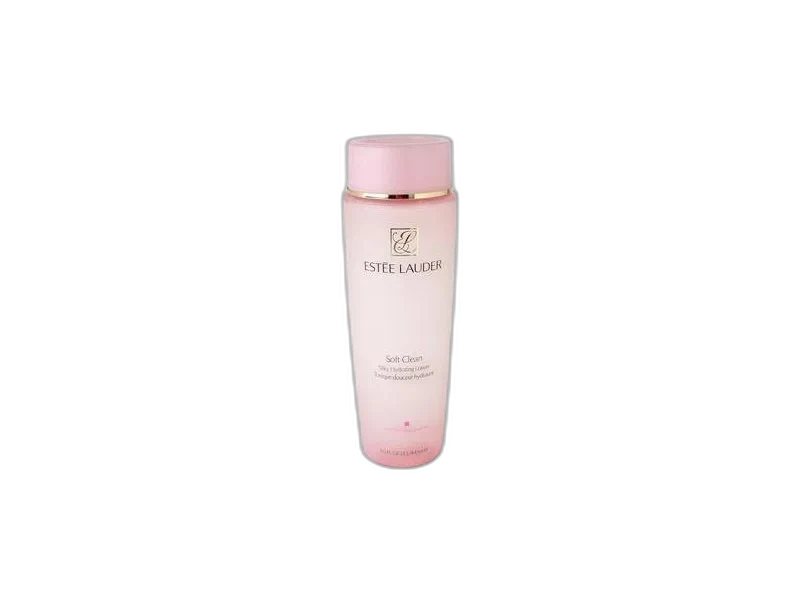
Soft Clean Silky Hydrating Lotion
Everyday Hydration Hero
 Verified reviewer
Pros & cons.
- +Barrier-supportive cholesterol, phospholipids, and linoleic acid go beyond basic humectant toners
- +Generous 400 mL bottle provides 4-6 months of daily use at excellent value
- +Multi-layer humectant system (HA, glycerin, sodium PCA, trehalose, urea) delivers thorough hydration
- +Silky, fast-absorbing texture layers beautifully without pilling or residue
- +Squalane and petrolatum add unexpected emollient quality that prevents post-cleansing tightness
- +Works as an excellent prep step that enhances absorption of subsequent products
- −Contains fragrance that limits recommendation for fragrance-sensitive users
- −Silicone-based texture may feel unfamiliar to those expecting traditional toner feel
- −The emollient ingredients (petrolatum, squalane) may be too rich for very oily skin types
- −Functional plastic packaging doesn't reflect the ingredient quality inside
- −Product naming may be confusing with the updated Infusion version on market
The full review.
Soft Clean Silky Hydrating Lotion occupies a unique spot in a portfolio led by Advanced Night Repair and the ultra-luxury Re-Nutriv collection. It is the reliable foundation that improves other products. Like most useful tools, it receives less attention than it deserves.
The product sits in a category Western skincare often undervalues: the hydrating treatment lotion. Korean and Japanese beauty routines have used this step—applying a watery, humectant-rich product after cleansing—for decades. Estée Lauder’s entry lacks K-beauty hype, but the formula shows the development lab studied what makes this step effective.
The ingredient list builds a hydration architecture. Humectants like sodium hyaluronate, glycerin, sodium PCA, and trehalose create a multi-molecule moisture-binding system. Each works at different skin levels: hyaluronic acid draws water to outer layers, glycerin provides steady-state hydration, and sodium PCA mimics the skin’s natural moisturizing factor. Trehalose adds stress protection, shielding skin cells from dehydration at the cellular level.
Barrier-supportive ingredients distinguish this formula. Cholesterol, phospholipids, and linoleic acid usually appear in rich creams and serums, not toners. Together, these three components replicate the skin’s lipid matrix—the mortar between cells that keeps moisture in and irritants out. Including them means barrier repair starts at the first step, before serums and moisturizers touch your face. Most consumers won’t see this on the label, but they will feel it on their skin.
Squalane and petrolatum round out the emollient profile. Most toners in this category are purely water-based, making their presence here unusual. They add a subtle occlusive quality to seal in humectants without a heavy or greasy feel. The bis-PEG-18 methyl ether dimethyl silane (a water-dispersible silicone) provides the silky slip in the product name, ensuring smooth application.
Dipotassium glycyrrhizate from licorice root and edelweiss extract (Leontopodium alpinum) provide anti-inflammatory and antioxidant properties. These aren’t transformative in a rinse-through product, but they add calming support to the hydrating and barrier-repair mission. Caffeine provides mild tightening, and urea—an effective natural humectant—is an excellent inclusion.
Texture
The texture is silky. It is a lightweight, liquid, slightly milky formula that glides across the skin and absorbs within seconds. It leaves no sticky residue, no film, and requires no waiting time before the next product. This makes it ideal for layering; you can apply two or three layers for extra hydration on dry days without pilling or discomfort.
Scent
The fragrance is a light floral typical of Estée Lauder skincare. It is noticeable, and its inclusion in a product for freshly cleansed, potentially vulnerable skin is the formula’s main drawback. Fragrance-sensitive users must patch test; this is why the toner lacks a universal recommendation.
Packaging
The 400 mL bottle is the product’s unsung hero. At approximately $46, the volume lasts four to six months of twice-daily use, making the daily cost well under fifty cents. This is good value for a prestige brand toner with these ingredients. The packaging is functional: a clear plastic bottle with a screw cap.
Common Praise
The lotion’s impact is cumulative. You won’t see a dramatic first-application result, but after one week of consistent use, skin feels plumper, more resilient, and less reactive. Post-cleansing tightness essentially disappears. Subsequent products absorb better and perform more effectively on hydrated skin.
Works for
Estée Lauder also released an updated version—the Soft Clean Infusion Hydrating Essence Treatment Lotion—which adds amino acids and waterlily extract. You may find either version depending on your market. Both share the same hydrating philosophy.
Soft Clean Silky Hydrating Lotion does its job without fanfare. It hydrates, supports the barrier, and preps skin for subsequent steps at a sensible price in a bottle that lasts months. In a market obsessed with hero ingredients, this product quietly makes skin work better.
Ingredient analysis.
Full INCI list
Water/Aqua/Eau, Bis-PEG-18 Methyl Ether Dimethyl Silane, Polysorbate 20, Leontopodium Alpinum Extract, Passiflora Incarnata Flower Extract, Lythrum Salicaria Extract, Triticum Vulgare (Wheat) Germ Extract, Hordeum Vulgare (Barley) Extract/Extrait D'Orge, Sucrose, Caffeine, Cholesterol, Dipotassium Glycyrrhizate, Sodium Hyaluronate, Phospholipids, Ethylhexylglycerin, Sodium PCA, Trehalose, Linoleic Acid, Urea, Glycerin, Butylene Glycol, Petrolatum, Squalane, Polyphosphorylcholine Glycol Acrylate, Polyquaternium-51, Acrylates/C10-30 Alkyl Acrylate Crosspolymer, Tromethamine, Fragrance (Parfum), Disodium EDTA, Phenoxyethanol
Skin match.
The science.
The Science
The formula hydrates using multiple humectant classes at different levels. Sodium hyaluronate, the main ingredient, holds 1000 times its weight in water and has extensive clinical evidence for improving skin hydration and reducing transepidermal water loss (TEWL). A 2019 systematic review in the Journal of Clinical and Aesthetic Dermatology confirmed that topical hyaluronic acid significantly improves skin hydration across multiple studies.
Cholesterol, phospholipids, and linoleic acid support barrier repair. These three components make up the skin's intercellular lipid matrix. Research in the Journal of Investigative Dermatology shows the optimal molar ratio of ceramides, cholesterol, and free fatty acids for barrier repair is approximately 1:1:1. This formula lacks ceramides, but the cholesterol-phospholipid-linoleic acid combination provides two-thirds of that equation to support barrier integrity.
Trehalose is a notable inclusion. This disaccharide exists naturally in organisms that survive extreme dehydration, such as tardigrades and resurrection plants. It protects cellular membranes and proteins from dehydration-induced damage. A study in Cell Stress and Chaperones shows trehalose stabilizes lipid bilayers under desiccation stress, protecting skin beyond simple humectancy.
Urea works through a dual mechanism, even at low concentrations in this formula. It is a component of the skin's natural moisturizing factor (NMF) and has mild keratolytic properties that improve skin texture. At concentrations below 10%, urea functions primarily as a humectant rather than an exfoliant.
Polyquaternium-51 (lipidure) is a biomimetic polymer that mimics cell membrane phospholipids to provide exceptional water retention. Published research shows it retains moisture up to three times more effectively than hyaluronic acid per weight, making it a potent supporting humectant.
References
- Hyaluronic acid: A key molecule in skin aging — Journal of Clinical and Aesthetic Dermatology (2019)
Dermatologist Perspective
Dermatologists view hydrating toners as a valuable step for maintaining skin barrier health, especially after cleansing. The cholesterol, phospholipids, and linoleic acid align with dermatological principles of barrier repair; these lipids are components of the intercellular matrix that maintains skin integrity. Board-certified dermatologists note that applying humectants to slightly damp skin, such as with a toner, optimizes moisture-binding efficiency. This formula suits patients with dry or dehydrated skin, or those using drying active treatments like retinoids or chemical exfoliants. The fragrance is the main dermatological concern, as it limits recommendations for patients with contact sensitivity or compromised barriers.
Where it fits in your routine.
Pour a quarter-sized amount into your palm immediately after cleansing while skin is still slightly damp. Press it gently into face and neck instead of rubbing. For extra hydration, apply 2-3 layers and let each absorb for a few seconds before the next. You can use a cotton pad for a traditional toning experience, but pressing with palms wastes less product. Follow with serum and moisturizer. Use morning and evening.
At about $46 for 400 mL, this toner offers high value for prestige beauty. The cost per use (about $0.15-0.25 per application) is competitive with drugstore and luxury toners. The ingredient quality — specifically the barrier-supportive lipids and multi-humectant system — justifies a higher price. The large bottle size suits the liberal application hydrating toners require. No larger sizes exist, but the bottle lasts 4-6 months and reduces repurchase frequency.
This toner works for dry, dehydrated, or normal skin needing daily hydration beyond simple moisture. It helps users on active treatments (retinol, AHAs, BHAs) that compromise the skin barrier or anyone with post-cleansing tightness. It is a Western alternative for fans of the Asian beauty layering approach.
Use this if you have very oily skin and want oil-free, mattifying toners. Skip this if fragrance is a known trigger. The scent is mild, but any fragrance in a leave-on product on freshly cleansed skin risks irritation for sensitized individuals.
Product details.
Lightweight, silky liquid with a subtle milky quality. It has a water-like viscosity but feels slippery and hydrating on the skin. It absorbs quickly without residue.
Light floral fragrance typical of the Estée Lauder skincare line.
Clear plastic bottle with a screw cap. The 400 mL size is functional and practical, but the presentation is not luxurious.
The lotion feels silky and slippery when applied — unlike alcohol-based toners. Skin feels soft and plumped immediately. It does not sting or tingle. The hydrating effect shows after the first use, especially after cleansing.
4-6 months with twice-daily use
12 months
All Year
The backstory.
The Soft Clean line represents Estée Lauder's approach to gentle, hydration-first skincare. While the brand is better known for its treatment serums (Advanced Night Repair) and luxury lines (Re-Nutriv), the Soft Clean Silky Hydrating Lotion has quietly built a loyal following among customers who want a reliable, well-formulated hydrating toner without the complexity of a multi-step Asian beauty routine.
About Estée Lauder
Legacy Brand (20+ years)Estée Lauder launched in 1946 and is a top global prestige beauty company. The Soft Clean line is a long-standing part of the brand's skincare range, providing hydrating and cleansing products for everyday use.
Common myths.
Toners are unnecessary and add an extra step to skincare routines.
Hydrating toners like this one work — they restore moisture to the skin right after cleansing (when the skin barrier is most vulnerable) and help subsequent products absorb better. The barrier-supportive lipids in this formula (cholesterol, phospholipids) do more than hydrate.
Silicone-based ingredients in toners clog pores and block product absorption.
The bis-PEG-18 methyl ether dimethyl silane in this formula is a water-dispersible silicone. It improves texture and spreadability without creating an occlusive film. It is non-comedogenic and does not interfere with the penetration of subsequent products.
FAQ.
Is the Estée Lauder Soft Clean Silky Hydrating Lotion a toner or a moisturizer?
This is a hydrating treatment lotion, similar to a Western hydrating toner. Apply it after cleansing and before serums and moisturizer. The water-based formula uses humectants and barrier-supportive lipids to prep and hydrate the skin instead of replacing a moisturizer.
Can I use the Soft Clean Hydrating Lotion with retinol?
Yes — this lotion works well to prep skin before retinol application. The sodium hyaluronate, cholesterol, and squalane hydrate and buffer the skin to reduce retinol irritation. Apply this lotion first, let it absorb, then apply your retinol treatment.
Is this lotion good for oily skin?
The formula contains petrolatum and squalane. These emollients add weight that oily skin types do not need. The lightweight texture absorbs well, but very oily skin prefers an oil-free hydrating toner with a purely water-based humectant system.
How long does the 400 mL bottle last?
Apply a moderate amount (about a tablespoon per application) twice daily to make the bottle last 4-6 months. Use the multi-layer application method (2-3 layers) for 2-3 months of use.
Is this the same as the Soft Clean Infusion Hydrating Essence Treatment Lotion?
The Soft Clean Infusion is a reformulated version that replaces or updates the original Silky Hydrating Lotion in many markets. The Infusion version adds amino acids and waterlily extract and updates some ingredients. Check the packaging to confirm which version you are buying.
What the community says.
"Generous 400 mL bottle provides excellent value and lasts months"
"Leaves skin feeling soft, plump, and hydrated without greasiness"
"Works well under serums and moisturizers as a hydrating base"
"Silky texture absorbs quickly and preps skin beautifully"
"Noticeably reduces post-cleansing tightness and dryness"
"Fragrance can cause irritation for sensitive skin types"
"The silicone-based texture may feel unusual compared to traditional toners"
"Some users find the hydration too light for very dry climates"
"Packaging could be more travel-friendly at 400 mL"