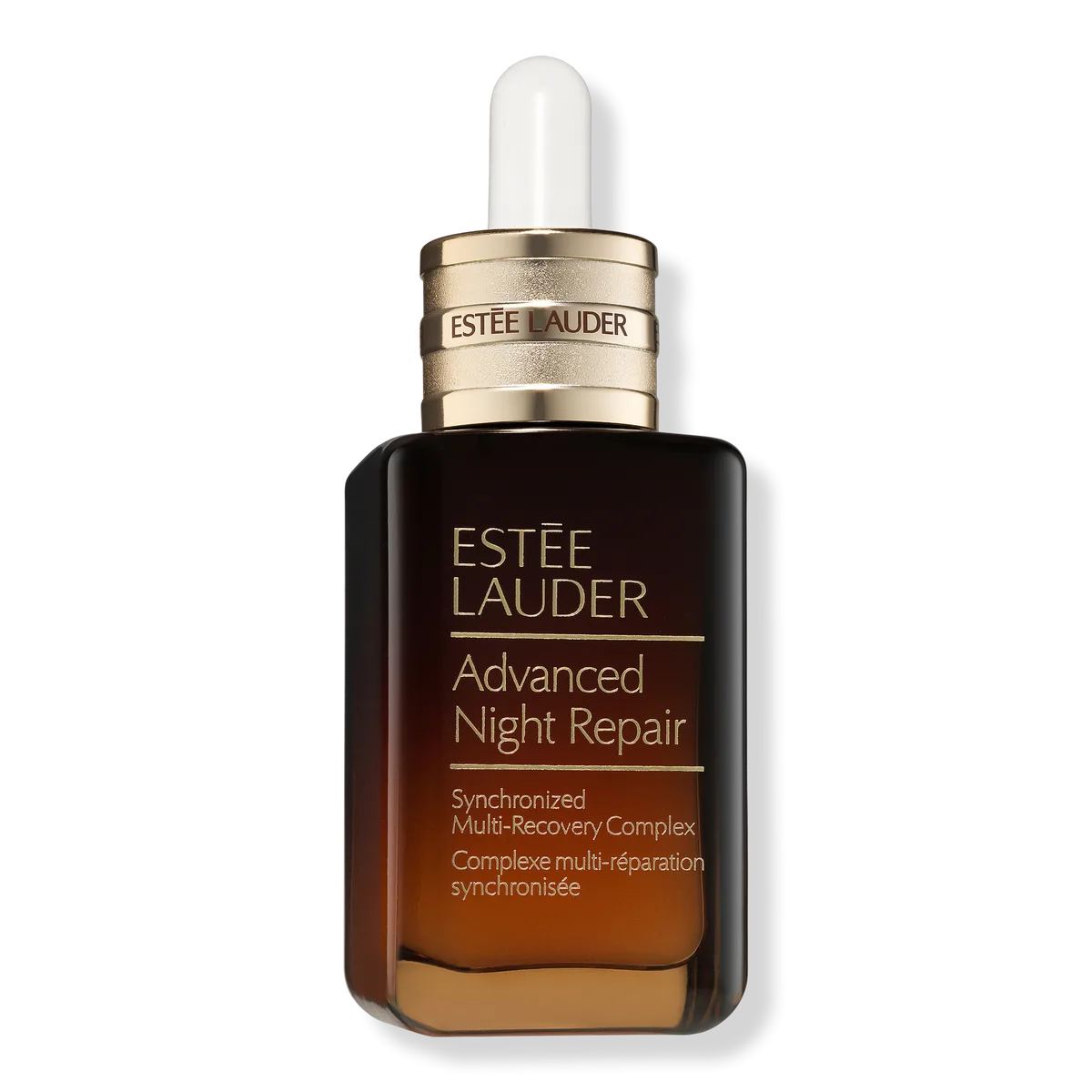
Advanced Night Repair Synchronized Multi-Recovery Complex
The Original Night Serum
 Verified reviewer
Pros & cons.
- +Bifida Ferment Lysate at an estimated 5-7% provides meaningful barrier-reinforcing activity
- +Oil-free lightweight texture absorbs in seconds and layers under absolutely anything
- +Suitable for virtually all skin types including sensitive and oily skin
- +Over 40 years of iterative refinement and real-world consumer validation
- +Dual probiotic ferment approach supports both barrier repair and microbiome health
- +Available in multiple sizes from 7 mL travel to 115 mL value size
- −Premium pricing at $125 for ingredients available in serums at a fraction of the cost
- −Proprietary Tripeptide-32 lacks independent peer-reviewed clinical validation
- −Contains unnecessary synthetic dyes Red 4 and Yellow 5
- −Results are gradual and subtle which may feel anticlimactic at this price point
- −Not cruelty-free — a significant consideration for ethically-minded consumers
- −Chamomile extract may trigger reactions in those with Asteraceae plant allergies
The full review.
There is a photograph from 1982 of the original Advanced Night Repair on a department store counter, looking almost exactly like the bottle sitting on my bathroom shelf right now. Same brown glass. Same gold cap. Same dropper. Same promise. In the intervening four decades, the beauty industry has undergone roughly seventeen revolutions — retinol became mainstream, hyaluronic acid went from obscure to obvious, Korean skincare rewrote the rules, and TikTok turned teenagers into ingredient analysts. Through all of it, the Little Brown Bottle has remained, reformulated only four times, selling an estimated 22 bottles per minute worldwide, a quiet monument to the idea that some products survive not because they are the best but because they were the first to get it right enough.
The current formulation, the Synchronized Multi-Recovery Complex launched in 2020 and updated in 2022, is the most sophisticated version yet. Bifida Ferment Lysate sits second on the ingredient list at an estimated 5-7% — a genuinely meaningful concentration of the probiotic ferment that has become the formula’s scientific identity since 2009. The evidence supporting it is legitimate: a 2023 study in the Journal of Cosmetic Dermatology confirmed that BFL upregulates the genes responsible for building the skin barrier’s structural proteins (filaggrin, loricrin, involucrin) while simultaneously suppressing inflammatory cytokines. In plain language, it helps skin build a stronger barrier and calms the inflammation that weakens it. A second ferment, Lactobacillus, adds microbiome-supporting depth. Hyaluronic acid provides immediate plumping hydration. Squalane delivers lightweight emolliency without greasiness.
The texture is one of ANR’s most enduring strengths. This is an oil-free serum that absorbs within sixty seconds, leaving no residue, no film, no tackiness — just skin that feels immediately smoother and slightly plumper. It layers under absolutely anything: retinol, vitamin C, heavy night cream, lightweight gel moisturizer, sunscreen. This universal compatibility is not flashy, but it is remarkably rare. Many serums fight with the products applied over them. ANR cooperates with everything. For someone building a multi-step routine, that cooperative nature is worth more than any single active ingredient.
Results arrive on a timeline that rewards patience and punishes impulse. The first thing you notice, usually within the first week, is better hydration — skin looks less crepey, more luminous, particularly in the morning. By week two or three, the tone begins to even out in subtle ways: not the dramatic brightening of a vitamin C serum, but a general calming and smoothing of the complexion. Fine lines soften over the first month, particularly the dehydration lines that are really just thirsty skin revealing its texture. By six to eight weeks, the cumulative barrier-strengthening effects become apparent: skin that used to react to new products tolerates them more easily, seasonal dryness is less severe, and the overall resilience of the complexion has quietly improved.
None of this is dramatic. None of it will make you gasp in the mirror. And therein lies both ANR’s greatest strength and its most significant marketing challenge. This is a maintenance serum, not a transformation serum. It does not have the visible exfoliating power of retinol, the immediate brightening of vitamin C, or the rapid hydration of a hyaluronic acid bomb. What it has is forty years of iterative refinement aimed at supporting the skin’s own repair processes — and the results look less like a before-and-after photograph and more like the slow, undramatic improvement of a house that is well-maintained.
Now for the uncomfortable question: is all of this worth $125? The ingredient list, while solid, does not contain anything that justifies a luxury price tag based on raw materials alone. Bifida Ferment Lysate, hyaluronic acid, squalane, and caffeine are available in serums at a quarter of the price. The proprietary Tripeptide-32 is the formula’s claim to uniqueness — a peptide designed to activate circadian clock genes. A 2025 study in the Journal of Investigative Dermatology showed in vitro increases in elastin (230%) and collagen (113%), but this is Estée Lauder-funded research, and independent replication has not been published. You are being asked to trust a company’s word about its own ingredient, which is either a reasonable bet on a brand with forty years of skin in the game or a very expensive act of faith.
The formula also carries unnecessary baggage. Red 4 and Yellow 5 — synthetic dyes that serve no skincare function — persist in a 2022 reformulation that was supposedly modernized. BHT remains as a preservative. Chamomile extract, a known Asteraceae allergen, sits in a product marketed for sensitive skin. These are small things, but in a $125 serum from a company that employs some of the best formulators in the industry, they feel like choices made for aesthetics or tradition rather than for the person applying the product.
What ANR ultimately sells is not just a serum but a pact with consistency. It will not excite you the way a new acid or retinoid might. It will not transform your skin overnight. What it will do, reliably and boringly, is support your skin’s barrier, keep it hydrated, and create the conditions under which everything else in your routine works better. For the person who wants one dependable serum and does not want to think about it for the next twenty years, ANR is the answer. For the ingredient-curious consumer who reads INCI lists and calculates cost-per-active, the Little Brown Bottle may be the most famous example of paying for the name on the label.
Ingredient analysis.
Full INCI list
Water/Aqua/Eau, Bifida Ferment Lysate, PEG-8, Propanediol, Bis-PEG-18 Methyl Ether Dimethyl Silane, Methyl Gluceth-20, Glycereth-26, PEG-75, Butylene Glycol, Adansonia Digitata Seed Extract, Tripeptide-32, Sodium Hyaluronate, Yeast Extract/Faex/Extrait De Levure, Lactobacillus Ferment, Cola Acuminata (Kola) Seed Extract, Anthemis Nobilis (Chamomile) Flower Extract, Hydrolyzed Algin, Pantethine, Caffeine, Lecithin, Sodium RNA, Bisabolol, Squalane, Glycerin, Oleth-3 Phosphate, Caprylyl Glycol, Oleth-3, Oleth-5, Choleth-24, Hydrogenated Lecithin, Jojoba Wax PEG-120 Esters, Ceteth-24, Tocopheryl Acetate, Carbomer, Triethanolamine, Tetrasodium EDTA, BHT, Xanthan Gum, Potassium Sorbate, Disodium EDTA, Phenoxyethanol, Red 4 (CI 14700), Yellow 5 (CI 19140)
Skin match.
The science.
The Science
Bifida Ferment Lysate is the formula's evidence base, listed second at an estimated 5-7%. A 2023 study in the Journal of Cosmetic Dermatology (Wang et al.) shows BFL upregulates key barrier genes — filaggrin (FLG), loricrin (LOR), involucrin (IVL), transglutaminase 1 (TGM1), and aquaporin 3 (AQP3) — and reduces pro-inflammatory cytokines IL-8 and TNF-alpha by up to 35% with strong dose-dependent antioxidant activity. A 2009 study in Experimental Dermatology (Gueniche et al.) previously showed that topical application of bifidobacterium lysate at 10% significantly improved reactive and sensitive skin conditions after 29 days.
Sodium hyaluronate's hydrating efficacy is well-documented. A 2022 review in Dermatologic Therapy confirms topical HA formulations with different molecular weights significantly improve skin hydration, elasticity, and wrinkle depth within 30-60 days.
Tripeptide-32 (Chronolux Power Signal Technology) is the formula's proprietary centerpiece. A 2025 study in the Journal of Investigative Dermatology examined a complex containing this peptide and found in vitro increases in elastin production by over 230%, fibrillin by over 60%, collagen by 113%, and fibronectin by 80%. The peptide targets circadian clock genes CLOCK and PER1 in keratinocytes to optimize the skin's natural repair timing. However, Estée Lauder's own laboratories conducted this research, and no independent replication has been published. The circadian biology of skin repair is well-established in the literature — whether a topical peptide translates that biology into clinical efficacy remains an open question.
The dual-ferment approach — combining Bifida Ferment Lysate with Lactobacillus Ferment — provides a broader spectrum of microbial metabolites than either ferment alone, matching dermatological interest in microbiome-supportive skincare. This combination targets both barrier function and microbial balance, two interconnected aspects of skin health.
References
- The pivotal role of Bifida Ferment Lysate on reinforcing the skin barrier function and maintaining homeostasis of skin defenses in vitro — Journal of Cosmetic Dermatology (2023)
- Bifidobacterium longum lysate, a new ingredient for reactive skin — Experimental Dermatology (2009)
- Benefits of topical hyaluronic acid for skin quality and signs of skin aging: From literature review to clinical evidence — Dermatologic Therapy (2022)
- Potent complex optimized with tripeptide-32 to increase key proteins and address periorbital skin lifting — Journal of Investigative Dermatology (2025)
Dermatologist Perspective
Board-certified dermatologists have recommended Advanced Night Repair for decades as a reliable maintenance serum — for consistent barrier support and hydration rather than dramatic transformation. Dermatologists note the bifida ferment lysate approach aligns with current barrier biology, and the oil-free, fragrance-free (no synthetic fragrance) formulation is broadly tolerable. However, dermatologists prioritizing evidence-based ingredients often note the serum lacks potent proven actives like retinoids, vitamin C, or niacinamide — ingredients with deeper independent evidence bases — and suggest the price reflects brand positioning more than ingredient novelty.
Where it fits in your routine.
Press 2-3 drops into clean palms and gently press onto face and neck after cleansing and toning, but before moisturizer. Use it morning and evening — the oil-free formula layers under sunscreen and makeup. Pat into skin instead of rubbing. Wait 30-60 seconds for absorption before applying the next product. It works with almost all other skincare actives, including retinol and vitamin C.
At $125 for 50 mL ($74 per ounce), ANR is premium but not the most expensive prestige beauty serum. Multiple sizes provide flexibility: the 30 mL at approximately $80 is a cheaper entry point, while the 100 mL has better per-ounce value. Using 2-3 drops nightly lasts 2-4 months, making the monthly cost $31-63. The ingredient profile — bifida ferment, hyaluronic acid, squalane — exists in $20-40 serums from brands like COSRX (Snail Mucin with ferment) or The Ordinary. Beyond the actives, you pay for the proprietary Tripeptide-32, forty years of reformulation expertise, and the psychological comfort of using the most-sold serum in prestige beauty.
Anyone seeking a reliable, universally compatible maintenance serum that supports skin barrier function and hydration across all skin types. Ideal for those who value proven consistency over ingredient novelty, and for consumers building multi-product routines who need a serum that cooperates with everything else in the lineup.
Budget-conscious consumers find similar actives for less, while those wanting dramatic visible results may prefer retinol or vitamin C. This also suits strictly cruelty-free shoppers and ingredient purists who avoid unnecessary dyes and PEG compounds.
Product details.
Thin, slightly viscous liquid serum with a silky slip. Thicker than water but lighter than most serums — described by many as a lightweight, almost watery-oil texture. Absorbs within 30-60 seconds to a smooth, non-tacky finish.
The chamomile extract has a very faint botanical scent that dissipates immediately. It is effectively unscented in daily use.
The iconic 'Little Brown Bottle' uses a dark brown plastic bottle with a gold-tone cap and precision dropper applicator. The brown tint protects light-sensitive ingredients from degradation. It comes in sizes from 7 mL travel mini to 115 mL. This design is one of the most recognizable in prestige beauty.
The first drop from the brown bottle feels like a quiet promise. The serum spreads easily, absorbs within a minute, and leaves skin feeling smoother and more hydrated immediately — no dramatic tingling or visible transformation, just a subtle texture shift. By morning, skin looks noticeably plumper. Results compound slowly instead of arriving all at once; this feels anticlimactic at the price point, but this is how well-formulated barrier repair works.
2-4 months with nightly use of 2-3 drops on the face; up to 5-6 months with conservative use
24 months
All Year
The backstory.
Advanced Night Repair began in 1982 when Estée Lauder's research team discovered that skin's repair processes accelerate at night. It was the first serum to market the concept of nighttime recovery, predating the entire 'night serum' category that now fills every beauty aisle. The product has been reformulated only four times — in 1991, 2009, 2013, and 2020 — making each update a major industry event. In 2020, a bottle was sent to the International Space Station, cementing its status as perhaps the most iconic serum in prestige beauty.
About Estée Lauder
Legacy Brand (20+ years)Estée Lauder launched in 1946 and is a top global prestige beauty company. The Advanced Night Repair serum debuted in 1982 as the first nighttime skin repair product and has undergone only four reformulations in over 40 years. The brand has patents on the current formulation through 2033 and sells 22 bottles globally every minute.
Common myths.
Advanced Night Repair should only be used at night
The formula works well morning and evening, despite its name. The 'Night Repair' branding reflects peak skin repair times, not usage limits. This oil-free, fast-absorbing formula layers well under sunscreen and makeup during the day.
The 'Little Brown Bottle' formula has never changed
The formula has changed four times since 1982. The current 2020 Multi-Recovery Complex differs from the original by adding Bifida Ferment Lysate (2009), Tripeptide-32, and Lactobacillus Ferment, then removing parabens and retinyl palmitate in the 2022 update. The core philosophy persists, even if the ingredient list changed.
FAQ.
Can I use Advanced Night Repair in the morning?
Yes — despite the name, this serum is oil-free, lightweight, and layers well under sunscreen and makeup. The 'Night Repair' branding marks when skin's natural repair processes peak, not a usage restriction. Many users apply it morning and evening for continuous barrier support and hydration.
What does Advanced Night Repair actually do?
The serum supports skin barrier function using Bifida Ferment Lysate (a probiotic ferment that upregulates barrier genes and reduces inflammation), provides humectant hydration with hyaluronic acid, and uses proprietary Tripeptide-32 to synchronize the skin's circadian repair cycle. This results in smoother, more hydrated, and more even-toned skin, though results are gradual rather than dramatic.
Has the Advanced Night Repair formula changed?
Yes — the serum has undergone four reformulations since its 1982 launch: in 1991, 2009, 2013, and 2020. The current 'Synchronized Multi-Recovery Complex' version includes dual probiotic ferments and proprietary Chronolux peptide technology. A 2022 update removed parabens and retinyl palmitate. Each reformulation builds on the core philosophy incrementally instead of reinventing it.
Is Advanced Night Repair good for oily skin?
Yes — the formula is oil-free, lightweight, and absorbs fast without greasy residue. Estée Lauder markets it for all skin types, and non-comedogenic testing confirms this. Oily skin types may find it is one of the few prestige serums that does not increase shine or cause congestion.
Does Advanced Night Repair contain retinol?
No. The current 2022 formulation lacks retinol, retinoids, or retinyl palmitate (which older versions had). The serum uses probiotic ferments for barrier repair and Tripeptide-32 for circadian rhythm optimization instead of retinoid-based cell turnover.
What the community says.
"Absorbs quickly with no greasy or sticky residue"
"Skin looks visibly more hydrated and plump in the morning"
"Lightweight oil-free texture layers seamlessly under everything"
"Noticeable improvement in fine lines within the first month"
"Skin tone appears more even and radiant with consistent use"
"Gentle enough for sensitive skin with no fragrance irritation"
"Expensive at $125 for an ingredient list some find underwhelming compared to newer serums"
"Initial texture feels somewhat gloopy or sticky before absorbing"
"Results are gradual and subtle — not the dramatic transformation the price suggests"
"Contains unnecessary synthetic dyes Red 4 and Yellow 5"
"Not cruelty-free which is a dealbreaker for ethically-minded consumers"
People also looked at.