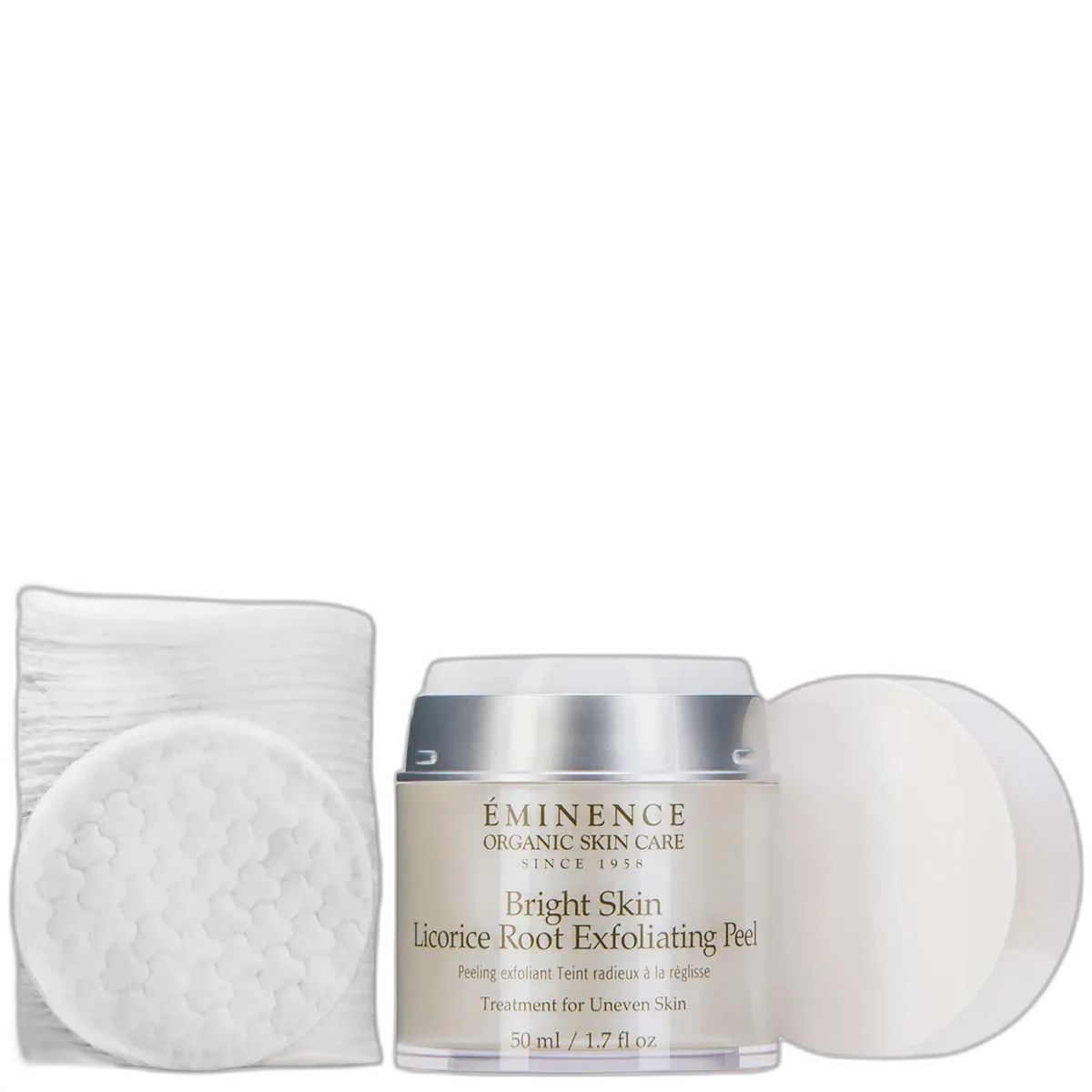
Bright Skin Licorice Root Exfoliating Peel
Licorice Brightening Treat
 Verified reviewer
Pros & cons.
- +Lactic acid and licorice root combination addresses both exfoliation and pigment formation
- +Licorice root extract at meaningful concentration, not just a label inclusion
- +Bisabolol and panthenol buffer the acid for better tolerability
- +Genuine visible results on surface hyperpigmentation over 4-8 weeks
- +Convenient pre-soaked pad format for consistent dosing
- +Pregnancy-safe, vegan, and cruelty-free formulation
- +One of the better-engineered at-home peels in the organic category
- −Strong licorice and added fragrance rule it out for sensitive skin
- −Priced at $1.38 per use, high compared to non-spa alternatives
- −Not strong enough to single-handedly resolve deep melasma
- −Can sting on first uses before skin acclimates
- −Conflicts with retinoids and other strong actives on same day
The full review.
Licorice root extract occupies a strange niche in skincare. It is one of the best-studied botanicals for hyperpigmentation; its active compound, glabridin, inhibits tyrosinase and slows melanin production at the cellular level. Dermatological literature has cited it for decades as a gentler alternative to hydroquinone for surface-level discoloration. Yet, most brightening serums list licorice root at the end of the INCI list at concentrations too low to work. Eminence’s Bright Skin collection is one of the few lines that uses licorice root effectively, and this exfoliating peel proves it. It is a rare Eminence product where botanical positioning matches actual ingredient efficacy.
The formulation uses two coordinated actives. Lactic acid, a well-studied alpha hydroxy acid, handles exfoliation by loosening surface cells and accelerating turnover to brighten skin. Licorice root extract handles pigment by slowing the tyrosinase enzyme that produces new melanin. Using an exfoliant without a tyrosinase inhibitor removes the top layer while new dark spots form underneath. Using a tyrosinase inhibitor without exfoliation slows new pigment but leaves existing dullness. This peel does both at once, working better than most at-home peel pads that rely only on glycolic acid.
The supporting ingredients are thoughtful. Bisabolol and panthenol buffer the lactic acid to reduce the stinging and reactivity common in acid peels. Black mulberry extract and pomegranate extract add antioxidant and mild brightening support. Glycerin and aloe provide a hydrating water phase so the pads do not feel harsh. The pH sits between 3.5-4.0, which is low enough for the lactic acid to work but buffered for most users. For an at-home peel, this is well-engineered.
On skin, the experience is standard. The first application causes a tingling sensation that lasts two to five minutes before subsiding. Skin feels smoother the next morning; the acid’s mechanical loosening of dead cells creates a clean, refined feel. With consistent use over 2-4 weeks, surface hyperpigmentation fades visibly. Post-acne marks lighten, sun damage softens, and dullness lifts. These cumulative improvements are real, unlike many $70 brightening products.
This peel does not resolve deep pigmentation. Melasma is stubborn and usually requires a combination of prescription tretinoin, hydroquinone, and professional treatments to fade. This peel supports that regimen but will not fix melasma alone. If you have deep discoloration from pregnancy or hormones, see a dermatologist and use this as a supporting tool. For surface sun damage and post-inflammatory acne marks, results are more predictable.
The fragrance is strong and dominated by licorice. Some users like the distinctive, medicinal, spa-like smell. Others find it overwhelming. The formula also contains added parfum, making this a fragrance-forward product unsuitable for rosacea, eczema, or fragrance-sensitive skin. Avoid this entirely if your skin barrier is compromised; layering lactic acid over a stressed barrier increases reactivity.
This is a weekly-to-biweekly treatment, not a daily product. Use it 2-3 times per week in the evening after cleansing. Wait for the tingling to stop, then apply a hydrating serum and moisturizer. Do not layer it with retinoids or vitamin C on the same day, as the combined acidity increases irritation without better results. Always wear daily sunscreen, as any acid exfoliant increases photosensitivity. These are standard rules for AHA-based peels.
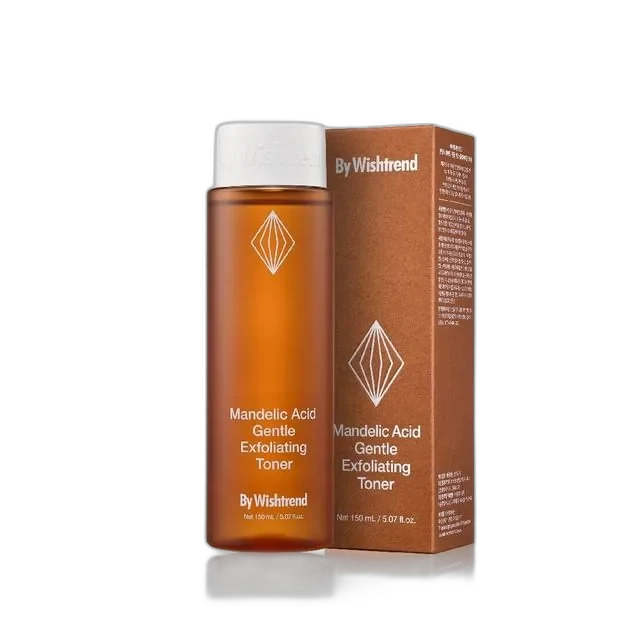
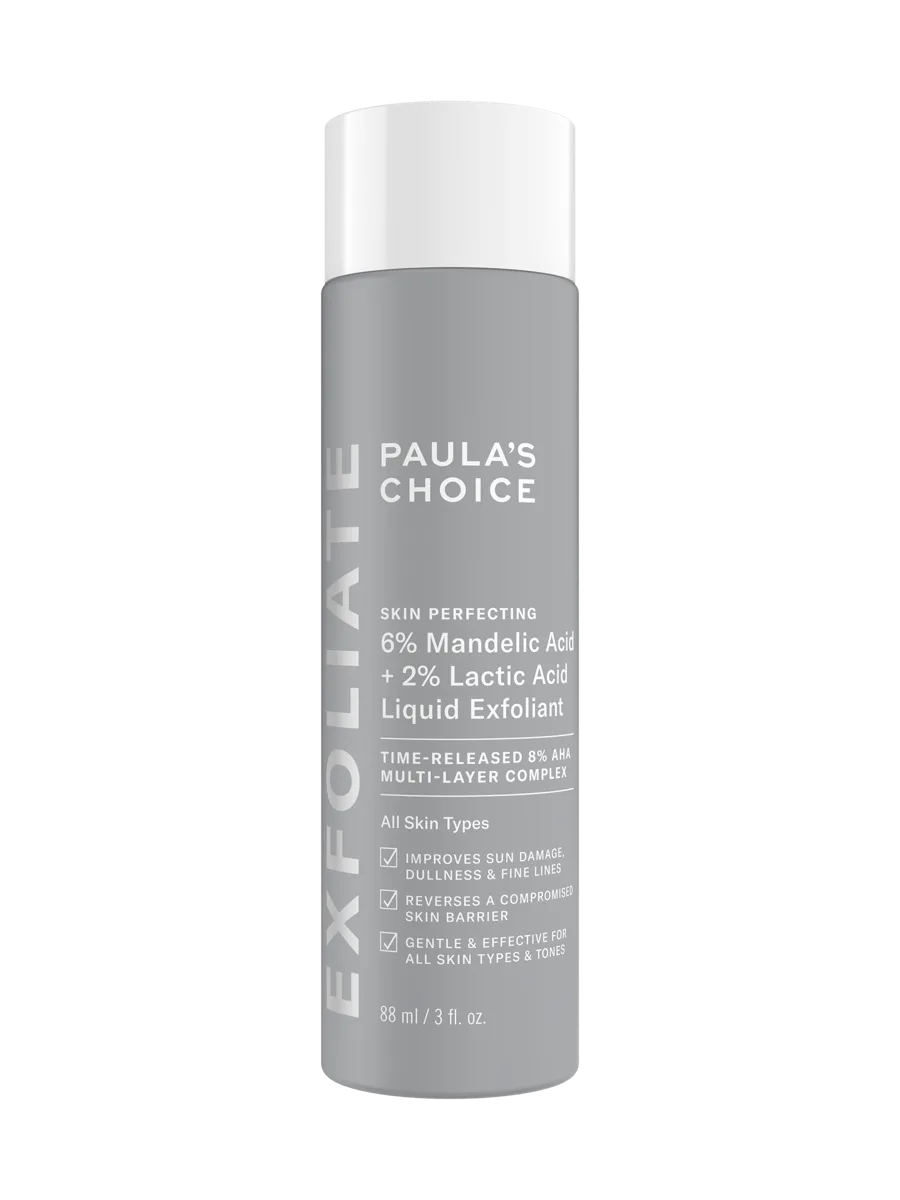
The price reflects spa-channel math. At $69 for 50 pads, you pay about $1.38 per use. This is high for at-home peels, where The Inkey List, Paula’s Choice, and CosRx offer options in the $15-30 range. Those alternatives may not contain meaningful concentrations of licorice root, which differentiates the Eminence version, but the premium is real. If you value the Bright Skin collection’s approach and spa-channel positioning, the price is defensible. If you want the best value per active, cheaper lactic acid treatments exist, though they rarely pair the acid with a legitimate tyrosinase inhibitor.
This is the Eminence product I recommend to most people. Unlike some aesthetically-driven items in the lineup, this has a clear mechanism of action, an evidence-backed active combination, and real results. If you want to try Eminence to address surface hyperpigmentation, start here.
Formula
Ingredient analysis.
Full INCI list · pH 3.5-4.0
Aqua (Water), Lactic Acid, Glycerin, Betaine, Sodium Hydroxide, Glycyrrhiza Glabra (Licorice) Root Extract, Gardenia Florida Fruit Extract, Citrus Aurantium Dulcis (Orange) Peel Extract, Morus Nigra (Black Mulberry) Fruit Extract, Punica Granatum (Pomegranate) Extract, Ascophyllum Nodosum Extract, Aloe Barbadensis Leaf Juice, Carthamus Tinctorius (Safflower) Seed Oil, Tocopherol, Panthenol, Bisabolol, Citric Acid, Ethylhexylglycerin, Phenethyl Alcohol, Parfum (Fragrance)
Skin match.
The science.
The Science
This peel works through two mechanisms supported by dermatological literature. Lactic acid is a highly studied alpha hydroxy acid in topical cosmetics. Research in journals like the Journal of Cosmetic Dermatology shows it affects cell turnover, barrier function, and hyperpigmentation reduction at clinical concentrations and pH ranges. Its larger molecular size than glycolic acid causes slower, gentler penetration, making it easier to tolerate on sensitive or dehydrated skin. Licorice root extract, specifically its glabridin component, inhibits tyrosinase—the enzyme that converts tyrosine to melanin. Pigmentation disorder literature supports its use as a gentler alternative to hydroquinone for surface hyperpigmentation. Combining lactic acid exfoliation with glabridin-driven pigment inhibition targets surface-level discoloration from sun damage and post-inflammatory marks by addressing both visible accumulation and underlying synthesis. Bisabolol, from chamomile, provides anti-inflammatory support to mitigate acid-related irritation. Panthenol supports barrier recovery via pantothenic acid conversion. Black mulberry and pomegranate extracts add antioxidant benefits and show preliminary evidence for mild brightening, though evidence levels are lower than for lactic acid or licorice root. The formula avoids extra strong actives; layering vitamin C or retinoids would increase irritation without adding efficacy. This formulation restraint is a design strength.
Dermatologist Perspective
Dermatologists generally support at-home lactic acid peels for hyperpigmentation treatment plans, especially for patients who cannot tolerate stronger glycolic acid formulations or need a gentler approach for sensitive skin. Board-certified dermatologists note that licorice root extract adds value over pure AHA products because glabridin is a well-studied botanical tyrosinase inhibitor. Dermatologists commonly recommend this type of product for patients with post-inflammatory hyperpigmentation from acne, surface sun damage, and early melasma, though they typically supplement with prescription-strength actives for stubborn pigmentation. Dermatologists often flag the fragrance and botanical profile for reactive-skin patients, who may need a simpler lactic acid alternative.
Where it fits in your routine.
Apply 2-3 times per week in the evening after cleansing. Wipe one pad gently across the face, avoiding the eye area and lips. Do not rinse. Wait 2-5 minutes for any tingling to stop, then apply a hydrating serum and moisturizer. Always use broad-spectrum sunscreen the next morning. If your skin is acid-naive, start with once-weekly application and build up gradually. Do not layer on the same day as retinoids, vitamin C, or other strong exfoliants.
At $69 for 50 pads, each use costs about $1.38. This price is high for at-home peels. The Ordinary, Paula's Choice, and CosRx sell lactic acid products for $15-40, but most lack a meaningful licorice root concentration. The higher price reflects spa-channel positioning and a coordinated brightening approach. Cheaper alternatives offer better value per active; however, the value is more defensible for buyers wanting the licorice root plus lactic acid combination in one product. No larger sizes exist to lower the per-unit price.
Normal, combination, and oily skin with surface hyperpigmentation, dullness, post-acne marks, or early sun damage. Users seeking one-step exfoliation and brightening. Eminence fans wanting the brand's most evidence-backed product.
Fragrance and lactic acid make this unsuitable for sensitive, rosacea-prone, eczema-prone, or barrier-compromised skin. People with deep melasma should ask a dermatologist for prescription-strength options. Buyers seeking the best value per active can find cheaper lactic acid alternatives.
Product details.
Soaked peel pads feel wet and slightly slippery; they have a textured side and a smooth side.
Strong licorice-forward botanical scent with citrus undertones
Jar with 50 pre-soaked peel pads — clean beauty aesthetic
Expect a noticeable tingle within seconds of application — this is the lactic acid working. The tingle lasts 2-5 minutes and then subsides. Skin feels smoother immediately after removal, and brightness shows visibly after 3-4 uses over the first two weeks.
About 2-3 months with use 2-3 times per week
12 months
All Year
The backstory.
Launched in 2019 as part of Eminence's Bright Skin collection, which the brand developed as its dedicated approach to hyperpigmentation. The collection was designed to be a complete brightening routine, with this peel positioned as the treatment step that accelerates the results of the other products in the line.
About Eminence Organic Skin Care
Eminence Organic Skin Care started in Hungary in 1958. The brand has a strong spa-channel reputation for botanical and organic formulations. The Bright Skin collection is one of the brand's most developed lines for hyperpigmentation.
Common myths.
This peel will fade deep melasma quickly.
Lactic acid and licorice root treat surface hyperpigmentation over 2-3 months. Deeper melasma usually needs prescription tretinoin, hydroquinone, or professional treatments. This peel supports treatment but does not solve stubborn melasma alone.
FAQ.
How often should I use these peel pads?
Use 1-2 times per week, then increase to 2-3 times per week if your skin tolerates it. Using it more often increases irritation and compromises the barrier without adding benefit. Always use sunscreen the next morning.
Will these fade hyperpigmentation?
The lactic acid and licorice root combination shows visible improvement in 4-8 weeks for surface-level hyperpigmentation from sun damage or post-inflammatory marks. For deeper pigmentation like melasma, this is a helpful supporting product but not a complete solution.
Is this safe during pregnancy?
Lactic acid is generally pregnancy-safe, and topical licorice root extract is also low-risk. Talk to your provider if you have concerns, especially during the first trimester.
Can I use this with retinol?
Not on the same day. Layering acid exfoliants with retinoids increases barrier stress and irritation risk. Use the peel pads on alternate evenings from your retinol, or on retinol-free nights altogether.
How is this different from a glycolic acid peel?
Lactic acid has a larger molecule than glycolic acid. This causes slower penetration and less irritation. Lactic acid peels work better for sensitive or dehydrated skin. The licorice root extract also adds a brightening component that pure glycolic acid peels lack.
Do I need to rinse it off?
No — the formula works after wiping. The buffered pH lets the actives work without neutralization. Apply your hydrating serum or moisturizer directly on top once the tingling subsides.
What the community says.
"visibly brighter skin"
"smooth texture improvement"
"works on dark spots"
"convenient pad format"
"expensive per pad"
"strong licorice scent"
"can sting on first use"
"50 pad count runs out fast with regular use"
People also looked at.