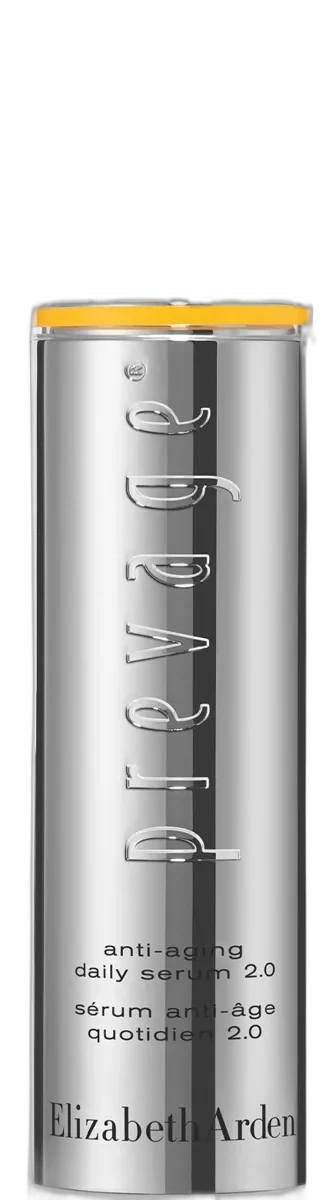
Prevage Anti-Aging Daily Serum 2.0
Idebenone Specialist
 Verified reviewer
Pros & cons.
- +Multi-pathway antioxidant network covers UV, pollution, and mitochondrial stress
- +Idebenone is genuinely well-formulated and stabilized here
- +Ferulic acid and dual vitamin E forms extend antioxidant working life
- +Ergothioneine adds modern mitochondrial protection coverage
- +Niacinamide contributes brightening and barrier support
- +Lightweight silky texture absorbs instantly under makeup and SPF
- +Tolerated by most skin types as a daily morning serum
- −Price is hard to defend on pure ingredient value
- −Visible results develop slowly — antioxidants are prevention-focused
- −Added fragrance may bother very reactive skin
- −Pump can dispense more product than needed in one press
- −No retinoid or acid for users wanting visible resurfacing
The full review.
Elizabeth Arden and Allergan launched the original Prevage in 2005. Idebenone was the main active, and marketing focused on its antioxidant capacity. This was unusual then. Vitamin C was the standard antioxidant in luxury skincare, and most anti-aging brands used L-ascorbic acid instead of a synthetic analog of coenzyme Q10. Prevage bet that idebenone—originally for medical use and shown in comparative dermatology work to have higher antioxidant capacity than CoQ10 in skin—could anchor a new anti-aging franchise. That bet mostly worked. Idebenone did not replace vitamin C as the dominant luxury serum antioxidant, but Prevage remains one of the few places to find a well-formulated idebenone product at any price.
The 2.0 reformulation, released in 2017, kept the original active and added a modern antioxidant network. Idebenone remains the headliner, alongside ferulic acid, two forms of vitamin E, ergothioneine, niacinamide, sodium hyaluronate, caffeine, and adenosine. This multi-pathway antioxidant defense matters because skin oxidative stress has multiple sources. UV, pollution, and mitochondrial respiration each generate different free radicals; a serum addressing only one leaves coverage gaps. Pairing idebenone with ferulic acid mimics the vitamin C plus E plus ferulic stabilization model used in other luxury serums—ferulic acid extends the life of the other antioxidants in the bottle and on the skin. Adding ergothioneine broadens coverage through its mitochondrial protection profile. Niacinamide adds barrier support and brightening, and it also makes this serum tolerable for most skin types as a daily morning prep.
Texture
Prevage 2.0 earns practical praise for its texture. It is a lightweight, slightly silky serum that absorbs almost instantly without residue. It has no tackiness, no white cast, and no pilling under sunscreen or foundation. The serum works well for morning use—it feels present but disappears under other products. Most users see brighter, more refreshed skin within two to three weeks. Slower benefits—fine line softening, tone improvement, and a less-tired look—appear after a couple of months of consistent use.
Antioxidant skincare works slowly. Antioxidants prevent damage; they are not retinoids or exfoliants. They do not resurface skin or fade dark spots in weeks. They stop new oxidative damage from accumulating, which slows visible aging over time. This benefit is real and supported by substantial published evidence, but you must wait several weeks to see it. For fast visible results, use a retinoid or an acid in an evening routine.
The price requires consideration. At $178 for 50ml, Prevage 2.0 is a luxury department-store serum, and the math is difficult. Functionally similar multi-pathway antioxidant serums cost $30-50 from brands focused on ingredient transparency. Even Skinceuticals C E Ferulic, the gold-standard antioxidant serum that Prevage competes with, costs less at most retailers. You pay for the idebenone provenance—Elizabeth Arden has more institutional history with this molecule than almost any other brand—plus the texture, packaging, and franchise. Longtime Prevage users who trust the brand may accept this price. For those deciding based on cost-per-benefit, it is harder to defend.
This formula contains a light floral fragrance. It is less aggressive than the lavender in other Arden products, but reactive skin should patch test first. Most will find the scent inoffensive and gone within a minute of application. Overall, this is a well-built antioxidant serum with a coherent ingredient strategy and a luxury experience. The price asks you to value the franchise as much as the chemistry. It is a recommendation for the right buyer, but an easy skip for those shopping by ingredient cost.
Ingredient analysis.
Full INCI list
Water, Glycerin, Methyl Trimethicone, Cetyl Alcohol, Hydroxyethyl Acrylate/Sodium Acryloyldimethyl Taurate Copolymer, Idebenone, Ferulic Acid, Tocopheryl Acetate, Tocopherol, Sodium Hyaluronate, Ergothioneine, Caffeine, Niacinamide, Adenosine, Marrubium Vulgare Extract, Bisabolol, Allantoin, Phenoxyethanol, Disodium EDTA, Polysorbate 60, Xanthan Gum, Fragrance
Skin match.
The science.
The Science
Idebenone is a synthetic benzoquinone analog of coenzyme Q10. Doctors originally developed it for mitochondrial dysfunction. Dermatology research shows idebenone has higher in-vitro antioxidant capacity than CoQ10, vitamin E, vitamin C, and other common topical antioxidants in specific assays. This justifies its use in this and the original Prevage formulations. Clinical evidence in human skin is less abundant than for vitamin C or retinol, so we classify idebenone as 'promising' instead of 'well-established.' Ferulic acid has stronger evidence; research shows it works as an independent antioxidant and stabilizes other antioxidants like vitamin C and vitamin E in topical formulations. Vitamin E works as an antioxidant in both ester and free forms. Ergothioneine is a natural sulfur-containing amino acid gaining dermatological interest. In-vitro work shows it protects mitochondria from oxidative damage via a pathway distinct from surface antioxidants. Niacinamide has robust evidence for supporting barrier function, regulating sebum in some contexts, inhibiting melanosome transfer, and improving fine line appearance with regular use. Pairing multiple antioxidants to target different free radical species and stabilization pathways is more effective than using a single antioxidant, according to dermatology literature. This proprietary blend's clinical performance relies on the brand's consumer testing data rather than independent peer-reviewed trials.
Dermatologist Perspective
Dermatologists often recommend antioxidant serums in morning routines to prevent UV and pollution-induced photoaging, usually citing vitamin C plus E plus ferulic acid. Idebenone is less common but dermatology literature recognizes it as a legitimate antioxidant with a distinct mechanism. Board-certified dermatologists familiar with the Prevage line note it works as a useful alternative for patients who find L-ascorbic acid serums irritating or unstable. Dermatologists emphasize that no antioxidant serum replaces sunscreen; the antioxidant acts as a backup to photoprotection. The fragrance content in this formula rarely concerns most patients but may flag for those with rosacea or very reactive skin. For aggressive anti-aging protocols, dermatologists typically pair an antioxidant serum like this in the morning with a prescription retinoid at night.
Where it fits in your routine.
Apply in the morning after cleansing and toning, before moisturizer and sunscreen. Press 2-3 drops into the face and neck using upward and outward motions. Wait 30 seconds for absorption before applying moisturizer, then sunscreen as the final step. The antioxidant network layers under SPF to amplify daytime free-radical defense, making morning use essential. Use alongside a vitamin C serum (apply C first, then Prevage) for stacked antioxidant protection, or alternate on different mornings. Avoid the immediate eye area. Pair with a retinoid in the evening for a complete prevention-plus-treatment routine.
At $178 for 50ml, Prevage 2.0 sits at the upper end of luxury department-store antioxidant serums and competes directly with Skinceuticals C E Ferulic and similar high-end options. Smaller sizes are sometimes available through Elizabeth Arden gift sets, and the larger size when offered provides moderately better per-ml value. Functionally similar multi-pathway antioxidant serums exist at $30-50 from ingredient-focused brands, which makes the value proposition challenging on pure formulation grounds. The justification for the price is the idebenone provenance — Elizabeth Arden has been working with this molecule longer than nearly any other brand — plus the silky texture, the franchise loyalty factor, and the department store experience. For longtime Prevage users, the price is a known cost. For new shoppers prioritizing ingredient cost-effectiveness, this is a hard sell against cheaper alternatives that deliver similar functional results.
This antioxidant serum works for normal, dry, or combination skin. It uses a multi-pathway active strategy and layers well under makeup and SPF. It is a good choice for users who cannot tolerate L-ascorbic acid vitamin C serums and want a different antioxidant route.
Budget-conscious shoppers get similar functional results from serums at one-quarter the price. Reactive or fragrance-sensitive skin needs a patch test or an unscented alternative.
Product details.
Lightweight, slightly silky serum that absorbs quickly without residue
Light floral fragrance
Frosted gold pump bottle
The serum is lightweight, absorbs fast, and has a faint amber tint from the idebenone. Most skin types feel no tingling or stinging, and a light floral fragrance fades within a minute. Skin feels primed for moisturizer and SPF immediately.
Approximately 3-4 months with daily morning face and neck use
12 months
All Year
The backstory.
The original Prevage launched in 2005 as a partnership between Elizabeth Arden and Allergan, making it one of the earliest mass-market idebenone products. The franchise has gone through several reformulations as the science around antioxidant networks has evolved. Version 2.0, released in 2017, added ergothioneine and niacinamide to the core idebenone-ferulic-vitamin E system to broaden the antioxidant pathway coverage.
About Elizabeth Arden
Legacy Brand (20+ years)Elizabeth Arden launched in 1910. The Prevage range, built with Allergan around the antioxidant idebenone, has been a flagship anti-aging franchise since the mid-2000s. The 2.0 reformulation uses the idebenone backbone plus newer actives, backed by extensive in-house consumer testing data.
Common myths.
Idebenone is just an expensive version of CoQ10
Idebenone is a synthetic CoQ10 analog with a different molecular profile, originally made for medical use. Published comparative work shows Idebenone has higher antioxidant capacity than CoQ10 in skin contexts, but the clinical evidence base is smaller than for vitamin C or retinol.
An antioxidant serum can replace your sunscreen
No. Antioxidants neutralize UV-generated free radicals that pass through your sunscreen. They act as a backup, not a replacement. Prevage 2.0 layers under SPF, while the sunscreen provides the primary photoprotection.
FAQ.
Is Prevage 2.0 worth the $178 price?
Value depends on your priorities. The multi-pathway antioxidant strategy works well and the formulation is stable, but similar antioxidant serums cost one-quarter to one-third as much. You pay for the idebenone provenance, the experience, and Elizabeth Arden's brand.
Can I use Prevage 2.0 with vitamin C?
Yes — they work differently but complement each other. Many users layer a vitamin C serum first and Prevage 2.0 over it, or use them on different mornings. Both use antioxidant strategies; stacking them increases free-radical defense.
Should I use it morning or night?
Use this in the morning. Antioxidants like idebenone, ferulic acid, and vitamin E neutralize free radicals from UV and pollution during the day. They work best under sunscreen.
Is it good for sensitive skin?
Most users tolerate this well because the serum lacks acids or retinoids. The actives are non-irritating, but the added fragrance flags a risk for very reactive skin. Sensitive users should patch test first.
How long until I see results?
Brightening and a refreshed look show within 2-3 weeks. Fine lines and tone improve over 8-12 weeks of consistent daily use. Antioxidants focus on prevention; they work by stopping new damage from accumulating.
Does it work under makeup?
Yes — the lightweight, silky texture absorbs fast and leaves no residue. It sits well under moisturizer, SPF, and foundation without pilling or interference.
Community
What the community says.
"Visible brightening over time"
"Lightweight texture under makeup"
"Smooth application"
"Skin looks more even"
"Very expensive"
"Fragrance is noticeable"
"Slow visible results"
"Pump can dispense too much"
Featured in.
People also looked at.