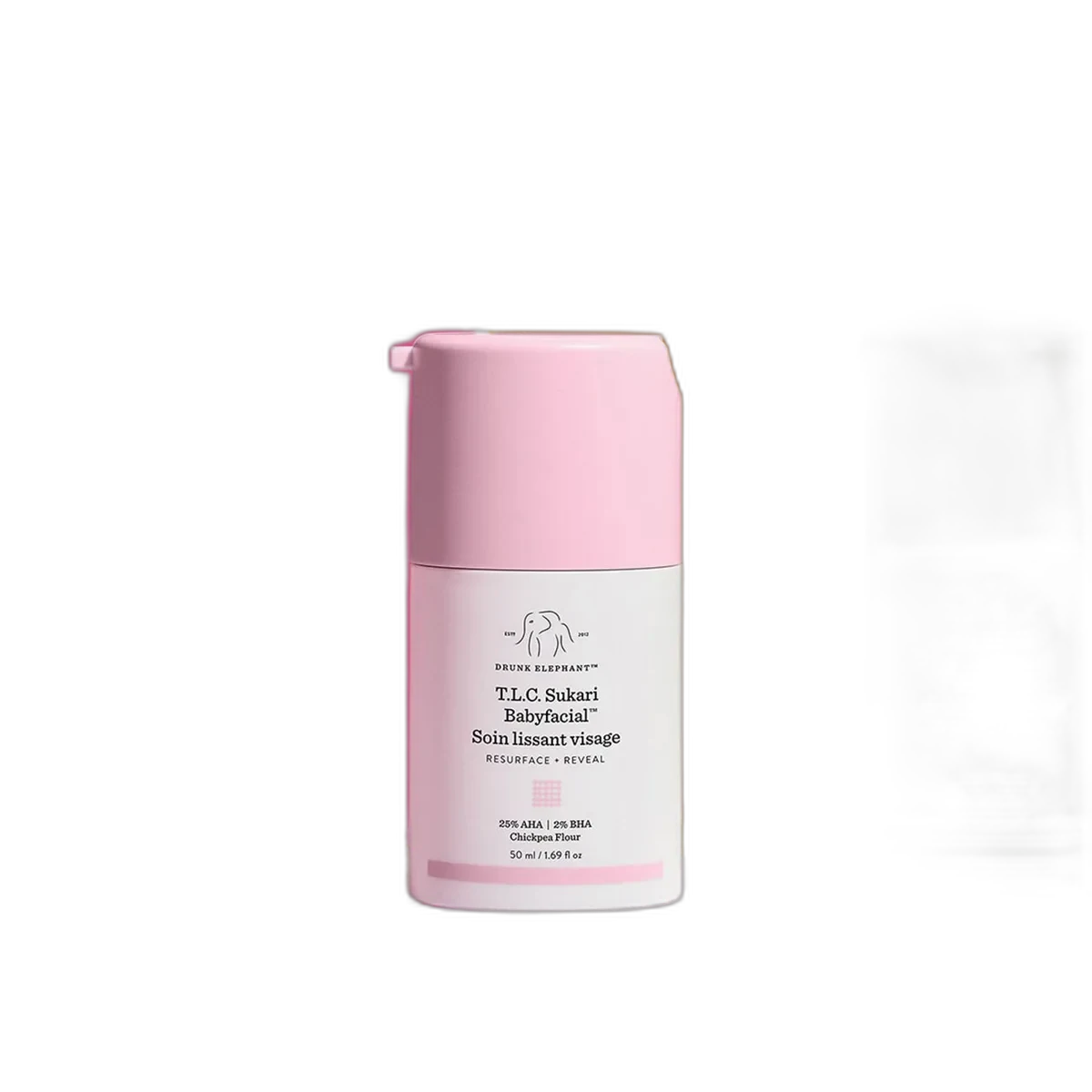
T.L.C. Sukari Babyfacial
At-Home Peel Icon
 Verified reviewer
Pros & cons.
- +25% AHA + 2% BHA delivers professional-grade resurfacing results at home
- +Triple exfoliation — chemical acids, enzymatic ferments, and chickpea physical smoothing
- +Built-in recovery ingredients (niacinamide, phytosphingosine, allantoin) begin repair during treatment
- +Immediately visible improvement in smoothness, brightness, and skin radiance
- +Effectively fades post-inflammatory hyperpigmentation and dark spots over weekly use
- +pH 3.5 balances efficacy with safety for non-professional application
- +Excellent per-treatment value at $3-5 per use over 4-6 months
- +Fragrance-free, silicone-free, and vegan formulation
- −Intense tingling and stinging during the 20-minute treatment can be uncomfortable
- −Not suitable for sensitive skin, rosacea, eczema, or compromised barriers
- −Micro-peeling and flaking for 1-2 days after treatment requires planning
- −Significantly increases sun sensitivity — demands strict daily SPF compliance
- −Cannot be combined with retinol or other exfoliants on treatment days
- −Acid beginners should acclimate with gentler products before attempting
The full review.
How to Use
The application ritual is simple and slightly ceremonial. Apply one to three pumps of the beige-tinted cream to clean, dry skin. Spread the tacky, slightly gritty paste across the face. Then wait. Tingling starts within a minute—moderate and persistent, making you hyperaware of every micro-zone on your face. It ranges from ‘interesting’ to ‘challenging’ based on your acid tolerance. First-timers should start at ten minutes and build up.
Common Praise
Rinsing reveals the results. Twenty minutes of 25% AHA and 2% BHA produces an immediately visible transformation. Skin feels smoother—the fine grit of dead cells is gone. The complexion looks brighter, more even, and almost luminous. Pores appear smaller (they are just cleaner). Dark spots look lighter by morning. The ‘babyfacial’ effect is not marketing hyperbole. It is the most dramatic single-product result in Drunk Elephant’s entire lineup.
Conflicts With
Use this treatment no more than once per week. It conflicts with retinol and other exfoliating products on the same day.
Not ideal for
Sensitive skin, rosacea, active eczema, and compromised barriers are all contraindications.
Ingredient analysis.
Full INCI list · pH 3.5
Water (Aqua), Glycolic Acid, Hydroxyethyl Acrylate/Sodium Acryloyldimethyl Taurate Copolymer, Glycerin, Sodium Hydroxide, Salicylic Acid, Aloe Barbadensis Leaf Extract, Camellia Oleifera Leaf Extract, Lactobacillus/Pumpkin Ferment Extract, Lactobacillus/Punica Granatum Fruit Ferment Extract, Opuntia Ficus-Indica Extract, Pyrus Malus (Apple) Fruit Extract, Silybum Marianum Seed Extract, Saccharomyces Cerevisiae Extract, Vitis Vinifera (Grape) Juice Extract, Camellia Sinensis Leaf Powder, Cicer Arietinum Seed Powder, Sclerocarya Birrea Seed Oil, Passiflora Edulis Seed Oil, Leuconostoc/Radish Root Ferment Filtrate, Sodium Hyaluronate Crosspolymer, Sodium PCA, Allantoin, Dipotassium Glycyrrhizate, Dextrin, Polydextrose, Sorbitan Isostearate, Amylopectin, Niacinamide, Phytosphingosine, Lactic Acid, Propanediol, Citric Acid, Titanium Dioxide, Trisodium Ethylenediamine Disuccinate, Polysorbate 60, Caprylyl Glycol, Chlorphenesin, Phenoxyethanol
Skin match.
The science.
The Science
The Babyfacial works based on decades of clinical research on alpha-hydroxy and beta-hydroxy acid exfoliation.
Glycolic acid, the main AHA in the 25% blend, has extensive research for skin resurfacing. A 2013 review by Sharad in Clinical, Cosmetic and Investigational Dermatology studied glycolic acid peels at 20-70% concentrations. It found 75% of acne patients had a good therapeutic response, melasma cases showed 91% improvement, and histological analysis showed epidermal thickening and enhanced granular layer formation (Sharad, Clin Cosmet Investig Dermatol, 2013). At 25% and pH 3.5, the Babyfacial uses a concentration near the lower end of professional peels but stays above the threshold for meaningful exfoliation.
A 2022 randomized controlled trial in the Journal of Clinical and Aesthetic Dermatology compared 50% glycolic acid (AHA) to 30% salicylic acid (BHA) for post-acne pigmentation. Glycolic acid achieved about 76% pigmentation reduction compared to 50% for salicylic acid, and 45% of glycolic acid patients saw greater than 75% improvement (Ravikumar et al., JCAD, 2022). The Babyfacial uses both AHA and BHA for complementary effects — the AHA resurfaces and the BHA clears pore-level congestion.
The FDA limits salicylic acid to a 2% maximum concentration in over-the-counter acne treatments. Its lipophilic nature lets it penetrate sebum-filled pores that water-soluble AHAs cannot reach. A 2008 split-face study in Dermatologic Surgery comparing 30% glycolic acid and 30% salicylic acid peels found both effective, though salicylic acid showed sustained effectiveness and fewer side effects.
The multi-acid approach (glycolic + tartaric + lactic + citric) can reduce the inflammation caused by high concentrations of a single acid. Different AHAs have different molecular sizes and penetration rates — glycolic (MW 76) penetrates deepest, lactic (MW 90) exfoliates the surface more gently, while tartaric and citric acids add antioxidant and metal-chelating properties to the exfoliation.
Niacinamide is pharmacologically important after exfoliation. Research shows niacinamide stimulates ceramide biosynthesis in the stratum corneum, which addresses the lipid depletion caused by acid exfoliation. Phytosphingosine acts as a ceramide precursor and an anti-inflammatory agent, starting barrier recovery during the treatment instead of relying only on post-treatment moisturization.
References
- Glycolic acid peel therapy -- a current review — Clinical, Cosmetic and Investigational Dermatology (2013)
- Efficacy of Alpha and Beta Hydroxy Acid Chemical Peels in Postacne Pigmentation — Journal of Clinical and Aesthetic Dermatology (2022)
Dermatologist Perspective
Dermatologists view the Babyfacial as one of the most effective at-home chemical exfoliation products. Board-certified dermatologists say the 25% AHA + 2% BHA combination at pH 3.5 provides meaningful exfoliation near the lower end of professional peel results. Dermatologists recommend it for patients who want to improve texture, mild hyperpigmentation, and pore appearance without the cost or downtime of in-office chemical peels. They advise against use on sensitive skin, rosacea, or compromised barriers, and stress using it once weekly with daily sunscreen. The inclusion of niacinamide and phytosphingosine is a thoughtful choice that starts barrier recovery during the treatment.
Where it fits in your routine.
Apply 1-3 pumps to clean, dry skin at night. Spread evenly over the face, but avoid the eye area and broken skin. Leave on for up to 20 minutes; first-time users should start with 10 minutes. Rinse well with lukewarm water. Follow immediately with a thick moisturizer or facial oil (Drunk Elephant recommends Virgin Marula Luxury Facial Oil). Use once per week maximum. Do not use with retinol or other exfoliating products on treatment days. Apply broad-spectrum SPF 30+ every day after treatment.
At $80 for 50 mL, the Babyfacial has a high upfront cost. The per-treatment cost is low: using 1-3 pumps weekly makes one bottle last 4-6 months, or about $3-5 per treatment. A comparable professional glycolic peel costs $50-200 per session. Over six months of weekly use, the Babyfacial provides roughly 20-24 professional-grade treatments for $80. This makes it one of the most cost-effective resurfacing products. The value is highest for consistent weekly users targeting texture, hyperpigmentation, and congestion.
Suitable for normal, combination, or oily skin types targeting dullness, rough texture, hyperpigmentation, dark spots, congestion, or visible pores. It provides professional-grade resurfacing results for less than the cost of in-office chemical peels. Skin must be acclimated to acid exfoliation first.
The 25% acid concentration is too aggressive for sensitive skin, rosacea, active eczema, or a compromised skin barrier. Acid beginners who haven't used lower-concentration AHA products should avoid it. Drunk Elephant flags the 2% salicylic acid content for pregnant or nursing women. Do not use this if you won't use daily sunscreen after treatment.
Product details.
No added fragrance or essential oils. Has a faint, acidic chemical scent typical of concentrated AHA products — barely noticeable during use.
Opaque white cylindrical airless pump bottle with Drunk Elephant's signature magenta/pink cap. The airless pump mechanism stops contamination, controls dosage, and protects the acid formula from degradation. 1-3 pumps usually covers the entire face. Finish glowysatindewy
The first application causes tingling from mild to moderate, depending on skin acid tolerance. This is normal; it shows the AHAs are active. Tingling usually stops after 5-10 minutes. New users should start with a 10-minute treatment and build to 20 minutes. Rinse and follow with a thick moisturizer — skin feels smoother and looks brighter immediately.
4-6 months with once-weekly use (1-3 pumps per treatment)
12 months
fall winter
The backstory.
The T.L.C. in the name stands for Tartaric, Lactic, and Citric — the three supporting acids alongside the dominant glycolic acid. 'Sukari' is Swahili for 'sugar,' referencing the sugar-cane origin of glycolic acid. When it launched in 2017, Babyfacial essentially created the at-home professional peel category for mainstream consumers. The name — and the promise of skin as smooth as a baby's face — made chemical exfoliation approachable for people who had never considered putting 25% acid on their skin.
About Drunk Elephant
Established Brand (5–20 years). Drunk Elephant was founded by Tiffany Masterson in 2012 and acquired by Shiseido for $845 million in 2019. The Babyfacial won Allure Best of Beauty in 2017 and has become one of the brand's most iconic and bestselling products, widely credited with popularizing at-home professional-strength chemical exfoliation.
Common myths.
If an acid product stings, it damages your skin.
Babyfacial causes tingling because AHAs dissolve desmosome bonds between dead corneocytes — this is the intended mechanism of action. At pH 3.5, the formula stays within the effective range for glycolic acid activity without causing chemical burns. If stinging turns to pain, burning, or lasts after rinsing, shorten or stop the treatment.
You can use chemical peels as often as you want for faster results.
Over-exfoliation destroys the skin barrier. This causes increased sensitivity, redness, and worse texture. Babyfacial works for once-weekly use maximum. The niacinamide and phytosphingosine help repair between treatments, but the skin needs a full week to rebuild the stratum corneum layers that the 25% AHA dissolves.
FAQ.
How often should you use the Babyfacial?
Use this maximum once per week. The 25% AHA and 2% BHA concentration is potent; frequent use risks over-exfoliation, barrier damage, and increased sensitivity. Wait 5-7 days between treatments. On treatment days, skip all other exfoliating products (retinol, other AHAs/BHAs, vitamin C at high concentrations).
Can beginners use the Babyfacial?
This works best for users with acid exfoliation experience. If you have never used chemical exfoliants, use a lower-concentration daily AHA (5-10% glycolic) for several weeks before using the Babyfacial. First-time Babyfacial users should start with a 10-minute treatment instead of the full 20 minutes, and always follow with a thick moisturizer.
Is the Babyfacial safe during pregnancy?
No — Drunk Elephant advises against using Babyfacial during pregnancy and nursing because it contains 2% salicylic acid (BHA). Many dermatologists consider topical 2% salicylic acid low-risk, but the brand uses a "better safe than sorry" approach.
What does TLC stand for in the product name?
TLC means Tartaric, Lactic, and Citric—the three AHAs that support the main glycolic acid. 'Sukari' is the Swahili word for 'sugar,' which refers to the sugarcane source of glycolic acid. The name references the acid blend and promises the product treats skin with care despite its potency.
Why does my skin peel after using Babyfacial?
Mild micro-peeling (fine flaking around the nose, chin, and forehead) for 1-2 days after treatment is normal. It shows the AHA dissolved dead skin cells that are now shedding. This differs from the painful, sheet-like peeling of an overly aggressive professional peel. If peeling is extensive or includes redness and irritation, reduce treatment time or frequency.
Can I use Babyfacial with retinol?
Don't use them on the same day. The 25% AHA combined with retinol causes excessive irritation and barrier damage. Use Babyfacial on a different evening than your retinol treatment — for example, Babyfacial on Sunday evening, retinol on Tuesday, Thursday, and Saturday. Give your skin at least 48 hours between the two treatments.
Is the Babyfacial worth $80?
The per-treatment cost is reasonable. Using 1-3 pumps once a week makes one bottle last 4-6 months, costing roughly $3-5 per treatment. This costs less than a professional glycolic peel. The 25% AHA + 2% BHA concentration, fermented enzyme complex, and recovery ingredients (niacinamide, phytosphingosine) deliver results that justify the cost for consistent users. ---
What the community says.
"Delivers immediate visible results — smoother, brighter, more radiant skin after first use"
"Professional-quality peel results achievable at home without a dermatologist visit"
"Visibly minimizes pore appearance and fades post-acne dark spots"
"Baby-soft skin texture the morning after use"
"A little goes a long way — one pump covers the entire face"
"Fragrance-free and silicone-free formulation"
"Hydrating for an acid product — doesn't strip skin completely"
"Intense tingling and stinging during the 20-minute treatment period"
"At $80 for a once-weekly mask, the per-use cost is high"
"Micro-peeling and flaking for 1-2 days post-treatment around nose and chin"
"Not suitable for acid beginners — can overwhelm unacclimated skin"
"Significantly increases sun sensitivity — demands diligent daily SPF"
"Some users report no noticeable difference compared to cheaper acid products"
People also looked at.