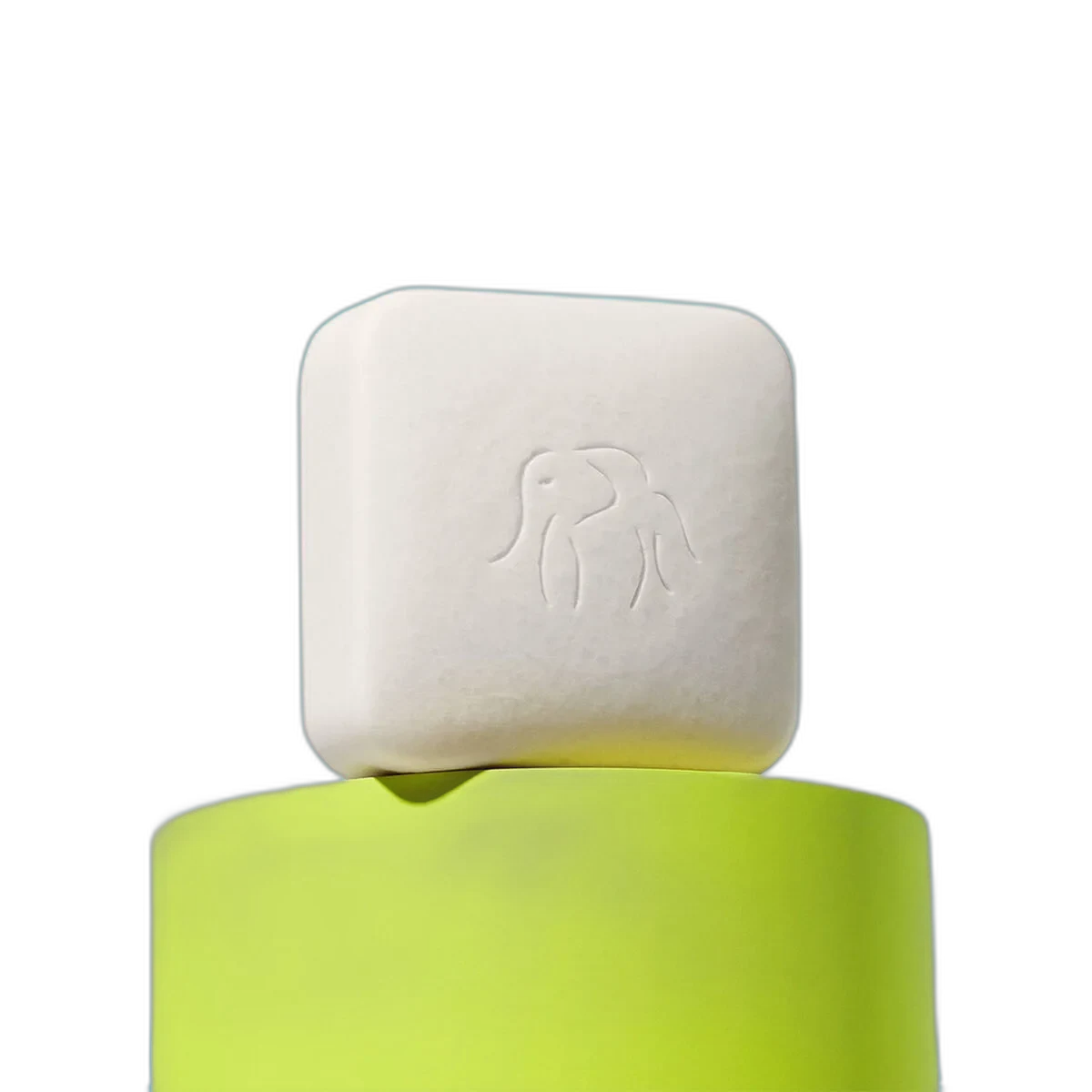
Pekee Bar
OG Cleansing Bar
 Verified reviewer
Pros & cons.
- +pH 6.5 is dramatically gentler than traditional soap bars at pH 9-10
- +Rich, creamy lather cleanses effectively without harsh foaming
- +Marula oil and honey provide conditioning and antimicrobial benefits
- +Fragrance-free with no essential oils or synthetic scent
- +TSA-friendly bar format with minimal preservative requirements
- +Rinses completely clean with no residue or film
- −Contains sodium coco-sulfate despite the brand's anti-sulfate positioning
- −At $28 for a simple 11-ingredient bar, the price-to-formulation ratio is steep
- −Can feel stripping for dry and very sensitive skin types
- −Paraffin inclusion sits awkwardly in a 'clean beauty' brand
- −Bar format requires a draining dish and raises hygiene concerns for some
- −Not effective at removing heavy or waterproof makeup without a first cleanse
The full review.
Texture
The texture is genuinely pleasant. The pure white bar lathers into a rich, creamy foam that feels more luxurious than the ingredient list would suggest. It’s not the voluminous, cloud-like lather of an SLS bar — the foam is denser, more cushioned, and rinses cleaner. Skin feels smooth and prepped afterward, without the residue that some cream cleansers leave behind.
Packaging
The bar format has both advantages and limitations. It’s naturally preservative-minimal (the current formula appears to need no synthetic preservatives), TSA-friendly, and ecologically leaner than a plastic bottle of liquid cleanser. On the other hand, it requires proper storage to avoid becoming a mushy mess, it’s less hygienic than a pump dispenser, and it can’t remove heavy makeup without a first-cleanse step.
Best for
For oily and combination skin types, the Pekee Bar performs well as a daily cleanser. It removes the day’s oil and grime effectively, and the honey’s mild antimicrobial action may benefit mild acne. For normal skin, it’s a solid, uncomplicated option.
Not ideal for
For dry or sensitive skin, however, the sodium coco-sulfate can feel stripping despite the pH balance and conditioning ingredients. If you’re dry, the Beste No. 9 Jelly Cleanser is the better Drunk Elephant option — four gentler surfactants, more glycerin, and a lower pH.
Ingredient analysis.
Full INCI list · pH 6.5
Sodium Coco-Sulfate, Disodium Lauryl Sulfosuccinate, Triticum Vulgare (Wheat) Starch, Cetearyl Alcohol, Paraffin, Sclerocarya Birrea Seed Oil, Water/Aqua/Eau, Titanium Dioxide (CI 77891), Honey/Mel/Miel, Glycerin, Vaccinium Angustifolium (Blueberry) Fruit Extract
Skin match.
The science.
The Science
The Pekee Bar's main surfactant, sodium coco-sulfate (SCS), has a unique profile in surfactant safety literature. A 2019 study comparing SLS and SCS shows SCS has about 15% lower skin irritation potential than SLS via cytotoxicity and erythema induction. However, that study also shows SCS interacts more strongly with epidermal lipids—meaning it may compromise the barrier through a mechanism different from direct irritation. Conditioning oils in a cleanser formulated at pH 6.5 partially mitigate this lipid interaction, but this explains why some users feel dryness despite the gentle pH.
The pH 6.5 formulation improves on traditional soap. Research shows alkaline cleansers (pH 9-10) disrupt the skin's acid mantle, increasing transepidermal water loss, impairing antimicrobial defense, and altering enzymatic activity in the stratum corneum. While pH 6.5 is above the skin's natural range (4.5-5.5), it causes much less barrier disruption than alkaline alternatives.
Honey's dermatological benefits are well-documented. Studies show its wound-healing and antimicrobial properties work through osmotic dehydration of bacteria, hydrogen peroxide generation, and methylglyoxal. In a wash-off cleanser, brief contact time limits therapeutic potential, but honey's humectant properties—it contains about 80% natural sugars that attract water—provide conditioning during cleansing.
Marula oil has clinical data for skincare. Komane et al. (Journal of Ethnopharmacology, 2015) confirmed its non-irritant profile and moisturizing properties; its ~69% oleic acid content helps it integrate into the skin's lipid structure. In the Pekee Bar, marula oil counterbalances the surfactant system, depositing a thin conditioning film during the rinse phase.
Research supports blueberry extract's antioxidant activity. A 2020 study in Oxidative Medicine and Cellular Longevity shows Vaccinium angustifolium extracts modulate NF-kB and Nrf2 pathways, reducing UV-induced inflammation and boosting endogenous antioxidant defenses. Even with limited contact time in a cleanser, anthocyanins can bind to skin proteins during brief exposure.
References
- Safety and efficacy of Sclerocarya birrea (A.Rich.) Hochst (Marula) oil: A clinical perspective — Journal of Ethnopharmacology (2015)
Dermatologist Perspective
Dermatologists usually prefer liquid syndet cleansers over bars for hygiene and pH reasons, but they agree the Pekee Bar's pH 6.5 formulation improves on conventional soap bars. Board-certified dermatologists note that for patients preferring bar cleansers, a syndet bar at this pH range causes much less barrier disruption than traditional soap. The honey and marula oil provide modest conditioning for a rinse-off product. Dermatologists caution that sodium coco-sulfate may still strip patients with eczema, rosacea, or severely compromised barriers, who would prefer a completely sulfate-free liquid cleanser.
Where it fits in your routine.
Wet your hands and the bar with lukewarm water. Lather the bar between your palms to create a creamy foam. Apply the lather to your face using your hands; do not rub the bar directly on facial skin to ensure controlled application. Massage for 30 seconds, then rinse thoroughly. Pat dry. Store the bar on an elevated, draining dish between uses so it does not become waterlogged. Use morning and evening.
The Pekee Bar is a premium cleansing bar at $28 for 4 oz. Its ingredient list has eleven components, including paraffin and wheat starch, which is simpler than Drunk Elephant's formulations. Using the Pekee Bar on the face only lasts 6-8 weeks, costing roughly $3.50-4.50 per week. The value comes from the pH-balanced syndet format and the brand's ingredient exclusion philosophy. The Pekee Bar works for consumers seeking a fragrance-free, lower-pH bar cleanser with conditioning oils. Those expecting Drunk Elephant's usual formulation depth will find the ingredient list underwhelming for the price.
This is for normal, combination, or oily skin types who want a fragrance-free, lower-pH bar cleanser gentler than traditional soap. It works for travelers needing TSA-friendly face cleansing without liquid restrictions, and for minimalists who prefer an eleven-ingredient formula.
Dry or eczema-prone skin types needing the gentlest surfactant system — Drunk Elephant's Beste No. 9 Jelly Cleanser is much milder. Ingredient purists who dislike sodium coco-sulfate being marketed as sulfate-free. Vegans, because the formula contains honey. Anyone who thinks the $28 price is too high for an 11-ingredient bar cleanser.
Product details.
A pure white solid bar that lathers into a thick, creamy foam when rubbed between wet hands. It lacks the voluminous foam of SLS-based bars but produces a satisfying, cushioned lather.
No added fragrance or essential oils. The honey and marula oil create a faint, barely perceptible natural scent—it is essentially unscented in practice.
Standard bar format in Drunk Elephant's signature colorful outer packaging. The bar is pure white. It sells without a dish — the brand recommends an elevated, draining surface to stop the bar from becoming waterlogged and soft.
The first use creates a thick, creamy lather that rinses clean. The bar feels thicker than typical soap, but the cleansing is straightforward—no tingling or notable sensory effects. Dry skin types may feel tightness after rinsing.
6-8 weeks with twice-daily face-only use
12 months
All Year
The backstory.
The Pekee Bar was part of Drunk Elephant's original six-product lineup when Tiffany Masterson launched the brand in 2013. Named with the brand's signature playful wordplay, it was designed as a clean-ingredient alternative to harsh facial bars and complicated multi-step cleansing routines. As one of the OG products, it represents the brand's earliest formulation philosophy — though the ingredient list reveals some ingredients (sodium coco-sulfate, paraffin) that sit awkwardly within the 'Suspicious 6'-free positioning the brand later adopted.
About Drunk Elephant
Established Brand (5–20 years)Tiffany Masterson founded Drunk Elephant in 2012. The Pekee Bar was one of the six original products in the brand's 2013 debut. Shiseido acquired the brand for $845 million in 2019. Drunk Elephant builds its reputation by avoiding the 'Suspicious 6' ingredients, but the Pekee Bar's use of sodium coco-sulfate draws scrutiny from ingredient purists.
Common myths.
Bar cleansers are harsher and more outdated than liquid cleansers.
The Pekee Bar is a syndet bar with a pH of 6.5 — much gentler than traditional soap (pH 9-10). Modern syndet bars cleanse effectively and include conditioning ingredients in a convenient, preservative-minimal format. The surfactant system and pH matter, not the physical form.
Sodium coco-sulfate differs completely from sodium lauryl sulfate.
SCS comes from whole coconut oil instead of a single fractionated fatty acid like SLS. Research shows SCS has approximately 15% lower irritation potential. However, SCS still interacts with and strips epidermal lipids. SCS is a sulfate, so its presence in a brand that markets itself as avoiding sulfates creates tension.
FAQ.
Is the Drunk Elephant Pekee Bar sulfate-free?
Not quite. Drunk Elephant claims it avoids sulfate surfactants, but the Pekee Bar contains sodium coco-sulfate (SCS), which is a sulfate. SCS comes from whole coconut oil and is about 15% gentler than SLS, but it is not sulfate-free chemically. This is a valid criticism.
Is the Pekee Bar good for acne?
It can be helpful for mild acne thanks to honey's antimicrobial properties and the clarifying surfactant system at pH 6.5. The bar effectively removes excess oil and impurities without heavily disrupting the acid mantle. However, for persistent or inflammatory acne, you'll need dedicated acne treatments — the Pekee Bar is a cleanser, not an acne treatment.
How should I store the Pekee Bar?
Store the bar on an elevated, draining dish or rack to allow air circulation. Do not leave it in a puddle of water or on the shower floor; this makes it mushy and causes it to dissolve faster. A well-drained soap dish ensures you get the full 6-8 weeks of use from each bar.
Can I use the Pekee Bar on my body?
Yes — the formula works for full-body use, but the 4 oz bar depletes faster on larger surface areas. For body cleansing, Drunk Elephant's Kamili Cream Body Cleanser targets body skin and is more conditioning.
Is the Pekee Bar vegan?
No — the Pekee Bar contains honey, which is an animal byproduct. It also contains paraffin, which while not animal-derived, is a petroleum product that some consumers in the vegan/clean beauty space avoid. For a vegan alternative from Drunk Elephant, the Beste No. 9 Jelly Cleanser is both vegan and cruelty-free.
---
What the community says.
"Rich, creamy lather feels luxurious during the wash"
"Skin feels clean and smooth without a filmy residue"
"Fragrance-free and gentle enough for daily use"
"pH 6.5 is significantly gentler than traditional soap bars"
"Convenient, travel-friendly bar format that's TSA-approved"
"Can feel stripping or drying for dry and sensitive skin types"
"Expensive at $28 for a 4 oz cleansing bar"
"Bar format raises hygiene concerns for some users"
"Not effective at removing heavy or waterproof makeup alone"
"Contains sodium coco-sulfate despite brand's anti-sulfate positioning"
"Bar becomes mushy if not stored on a draining dish"
People also looked at.