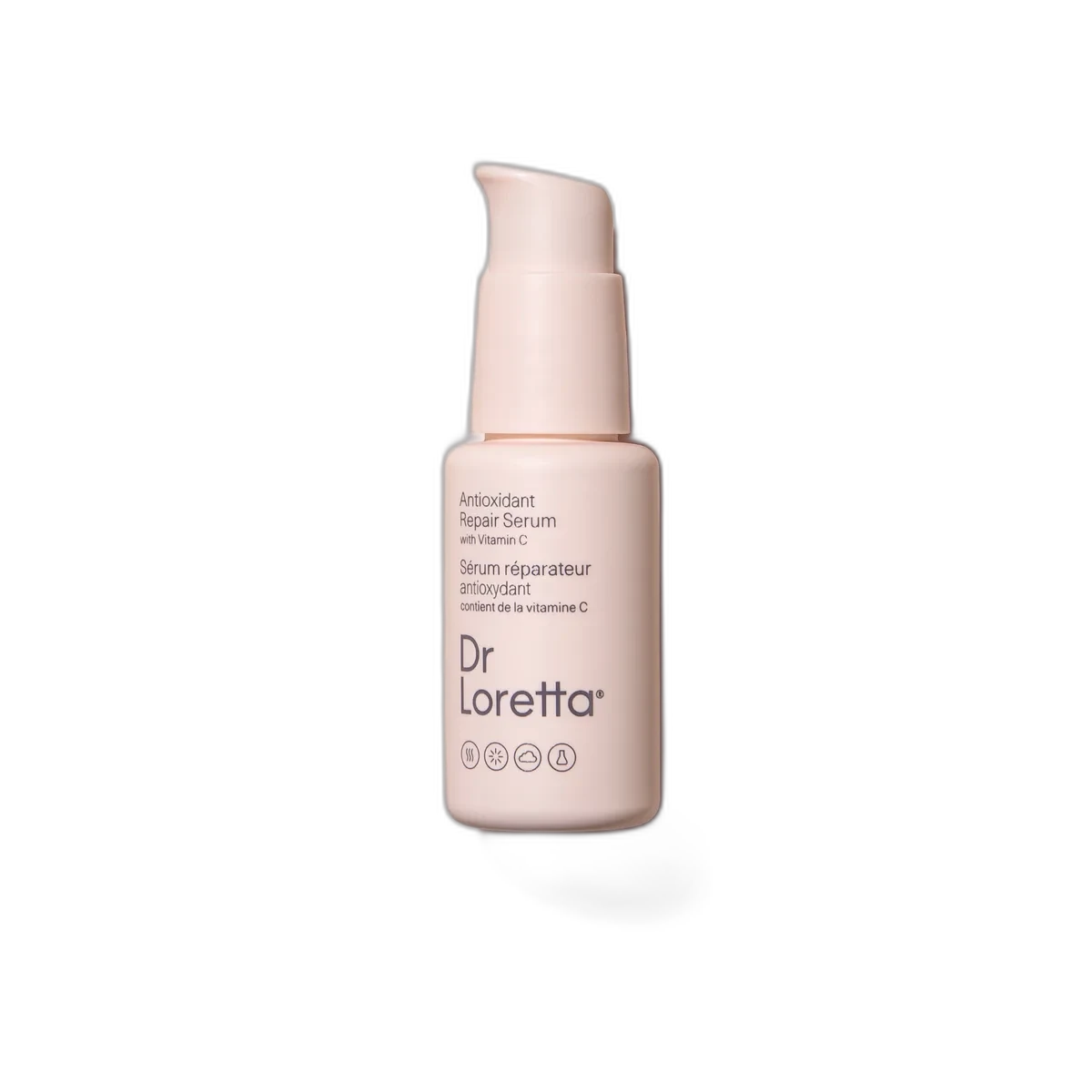
Anti-Aging Repair Serum
Gentle Vitamin C Alternative
 Verified reviewer
Pros & cons.
- +Stable vitamin C derivative that doesn't sting or require low pH
- +Silky silicone-lecithin base layers cleanly under SPF and makeup
- +Includes soothers like bisabolol and glycerin to reinforce tolerance
- +Unique lilac cell culture and brown algae antioxidant support
- +Founded by a board-certified dermatologist with four decades of practice
- +Brightens and evens tone gradually over 4-8 weeks of daily use
- −Very expensive at $110 for a 30 ml bottle
- −Contains lemon and orange peel essential oils that may irritate reactive skin
- −Labeled allergens (limonene, linalool, citral) will exclude some users
- −Effect size slightly smaller than a high-percentage L-ascorbic acid serum
- −Silicones and fatty esters make it not fungal-acne safe
The full review.
Dr. Loretta Ciraldo has spent over four decades watching what the Florida sun does to skin. She’s a Miami dermatologist with a practice full of patients who live where UV index readings routinely hit the maximum, and her clinical problem is not convincing those patients to wear antioxidant protection — it’s finding antioxidants they can actually tolerate on top of everything else the sun is already doing to their faces. The Anti-Aging Repair Serum, the anchor product of the line she launched in 2016, is her answer to that very specific problem. That context explains almost every formulation choice in the bottle.
The first choice is the form of vitamin C. Traditional L-ascorbic acid at 10-15% is the most-studied antioxidant in cosmetic dermatology and it works beautifully — if your skin can handle a formula at pH 3 that oxidizes within weeks of opening and stings on application. A lot of sun-damaged, slightly rosacea-prone, or simply thin-skinned patients cannot handle that. So Ciraldo built around tetrahexyldecyl ascorbate, a lipid-soluble vitamin C ester that doesn’t require acidic pH, doesn’t sting, doesn’t oxidize as quickly, and penetrates into the skin where it converts to active ascorbic acid. The research on this derivative is solid, even if the absolute efficacy is a notch below ideal L-ascorbic acid. For the person who’s been chased out of every vitamin C serum they’ve tried, ‘a notch below ideal’ is a dramatic upgrade over ‘zero, because I have to stop using it.’
The second choice is the supporting cast. Lilac leaf cell culture extract is the signature Dr. Loretta ingredient — it shows up across the line, it’s backed by preliminary research suggesting antioxidant and mild sebum-regulating effects, and it’s a rare example of a plant cell culture ingredient that isn’t pure marketing. Brown algae extract reinforces the environmental damage defense story. Bisabolol and glycerin buffer the formula. Hydrogenated lecithin and a dimethicone/cyclopentasiloxane base create the silky slip that makes the serum feel more like a lightweight face fluid than a typical acidic serum. It’s a sophisticated, cohesive formulation that clearly had a specific patient profile in mind throughout.
Then there are the things that are harder to square. The formula contains lemon peel oil, orange peel oil, and the resulting limonene, linalool, and citral as labeled allergens. None of these are at phototoxic concentrations, and the natural citrus scent is actually pleasant, but they absolutely do exclude a subset of the sensitive-skinned users this serum is nominally trying to help. If you’re the kind of person whose skin reacts to fragrance or to essential oils in skincare, you are not the audience for this product despite the gentler vitamin C. That’s a weird contradiction in a serum built around the thesis of ‘tolerable antioxidant protection’ and it’s the single biggest mark against the formula.
Performance lines up with expectations. Within the first week, skin looks a little less dull. By four to six weeks, most consistent users notice a measurable brightening of uneven tone and some softening of fine surface lines. By eight to twelve weeks, the combination of daily antioxidant protection and consistent SPF use starts producing the kind of gradual tone and texture improvement that’s the whole point of a vitamin C routine. It’s not dramatic — vitamin C is rarely dramatic — but it’s reliable. The lightweight silky texture layers cleanly under SPF and makeup, and there’s no pilling or finish issue to report.
The value conversation is the hard one. A hundred and ten dollars for thirty milliliters of any antioxidant serum is firmly in the luxury tier, and you can find L-ascorbic acid serums with arguably stronger immediate efficacy for a quarter of the price. The specific case for paying here is narrow but real: you’ve tried cheaper vitamin C serums, your skin didn’t tolerate them, and you want a product with credible derivatological backing that delivers the antioxidant story in a form you can actually wear every day. For that person, this earns its price. For anyone whose skin handles standard vitamin C without complaint, the math doesn’t really work.
The bottom line: a thoughtful, well-built vitamin C serum for a specific sensitive-skinned audience, undermined slightly by its own citrus oils but largely worth it for the people it’s actually designed for.
Ingredient analysis.
Full INCI list
Aqua (Water/Eau), Glycerin, Tetrahexyldecyl Ascorbate, Caprylic/Capric Triglyceride, Hydroxyethyl Acrylate/Sodium Acryloyldimethyl Taurate Copolymer, Caprylyl Glycol, Dimethicone, Hydrogenated Lecithin, Cyclopentasiloxane, Maltodextrin, Phenoxyethanol, Hexylene Glycol, Citrus Limon (Lemon) Peel Oil, Bisabolol, Tocopheryl Acetate, Citrus Aurantium Dulcis (Orange) Peel Oil, Microcrystalline Cellulose, Sodium Acrylated Copolymer, Alaria Esculenta Extract, Syringa Vulgaris (Lilac) Leaf Cell Culture Extract, Hydrogenated Polydecene, Sorbitan Isostearate, Polysorbate 60, Undaria Pinnatifida Extract, Phospholipids, Helianthus Annuus (Sunflower) Seed Oil, Polyglyceryl-10 Stearate, Cellulose Gum, Sodium Hyaluronate, Tocopherol, Limonene, Linalool, Citral
Skin match.
The science.
The Science
The science centers on tetrahexyldecyl ascorbate versus L-ascorbic acid, as this choice defines the serum. Peer-reviewed research shows tetrahexyldecyl ascorbate penetrates the stratum corneum through its lipid-soluble ester structure. It converts to ascorbic acid in skin cells to provide antioxidant activity, support collagen synthesis, and inhibit tyrosinase for a brightening effect. Unlike L-ascorbic acid, tetrahexyldecyl ascorbate does not require an acidic pH (around 3-3.5) to stay stable or penetrate. This allows for gentler, more tolerable vehicles, like this silicone-lecithin base at a near-neutral pH. Conversion from ester to active ascorbate is generally less efficient than using pure L-ascorbic acid, which modestly reduces the upper ceiling of effect. However, real-world results are often comparable because better tolerability allows consistent daily use, and consistency drives antioxidant outcomes in skin. The lilac leaf cell culture extract is the most important supporting ingredient. Research on Syringa vulgaris callus extract shows in vitro antioxidant activity and evidence of 5-alpha-reductase modulation. This explains its mild effect on sebaceous activity, which suits an anti-aging serum that does not destabilize oily skin. Alaria esculenta and Undaria pinnatifida extracts add polysaccharides and trace antioxidants, though evidence for efficacy at cosmetic concentrations is thinner. This formulation prioritizes sensitivity, trading a small amount of peak efficacy for high practical wearability.
Dermatologist Perspective
Dermatologists often recommend vitamin C derivatives like tetrahexyldecyl ascorbate to patients who find traditional L-ascorbic acid serums irritating, stinging, or damaging to the barrier function. Board-certified dermatologists note that L-ascorbic acid is the gold standard for potency, but a consistent daily antioxidant routine with a well-tolerated derivative often yields better cumulative results than an intolerable formula abandoned after a week. This formulation matches what dermatologists prescribe for aging skin in sensitive or rosacea-prone patients, though they caution that citrus essential oils require patch testing for highly reactive cases. Pairing this with SPF is non-negotiable for meaningful photodamage protection.
Where it fits in your routine.
Apply 3-4 drops to clean, dry skin every morning before moisturizer and sunscreen. Press the product into your face and neck instead of rubbing. Always use broad-spectrum SPF 30 or higher. Vitamin C serums work best with sunscreen; skipping SPF removes the main photoprotection reason to use an antioxidant. You can layer this over a hydrating toner or essence. Store the bottle away from direct sunlight. Even stable vitamin C benefits from cool, dark storage.
At $110 for 30 ml, this antioxidant serum sits in the luxury tier. Clinical brands offer stable L-ascorbic acid serums for half the price, while drugstore vitamin C derivatives cost even less. This product justifies its premium price through a specific combination of a well-studied derivative, a sensitivity-first formulation philosophy, and the clinical backing of an established dermatologist brand. The $40 smaller trial size reduces the commitment, a sensible option the brand provides. If you have already wasted money on cheaper vitamin C serums that irritated your skin, the math works. If not, start with something cheaper first.
This works for people with skin too reactive for traditional L-ascorbic acid serums, mature or photodamaged skin types needing gentle daily antioxidant protection, and fans of dermatologist-founded brands seeking a vitamin C product with a clear clinical rationale and cohesive formulation.
This works for people sensitive to citrus essential oils or fragrance allergens like limonene and linalool. It suits budget shoppers seeking stable vitamin C for under $30, and users wanting maximum potency who accept the sting of 15% L-ascorbic acid.
Product details.
Lightweight peach-tinted serum with a silky-silicone slip
Natural citrus from the lemon and orange peel oils
Glass dropper bottle
It leaves a silky finish and does not sting on application, unlike traditional vitamin C serums. Most users see slightly brighter skin and smoother makeup application within the first two weeks.
About 2-3 months with morning-only use
12 months
All Year
The backstory.
Created by Miami dermatologist Dr. Loretta Ciraldo as the anchor product of her 2016 line, based on decades of clinical work with patients dealing with environmental damage in the Florida sun but also experiencing sensitivity from aggressive antioxidant serums.
About Dr. Loretta
Established Brand (5–20 years)Dr. Loretta launched in 2016, founded by Dr. Loretta Ciraldo, a Miami-based board-certified dermatologist with over four decades of clinical practice. The line uses her research on environmental skin damage to target specific concerns with well-studied ingredients.
Common myths.
Only L-ascorbic acid 'counts' as real vitamin C
Tetrahexyldecyl ascorbate is one of few C derivatives with peer-reviewed evidence for skin penetration and conversion to active ascorbate. It is more stable and better tolerated, though the effect size is slightly lower than 15% L-ascorbic acid at ideal pH.
Citrus oils in a product mean it's phototoxic
Cold-pressed bergamot is the primary phototoxic concern. The low concentrations of standard orange and lemon peel oils used here are not phototoxic under typical use, though they can sensitize a minority of users.
FAQ.
Can I use this if I'm sensitive to traditional vitamin C serums?
Usually yes. This derivative lacks the acidic pH that makes L-ascorbic acid sting, and the formula uses bisabolol and glycerin to improve tolerance. One caveat: the citrus peel oils. Patch test first if you react to limonene or linalool.
Is it safe during pregnancy?
It has no retinoids or salicylic acid and is generally safe during pregnancy, but you can check with your OB about the citrus essential oils if you are cautious.
How long until I see results?
Most users see smoother texture within the first week, visible brightening at 4-6 weeks, and more significant fine-line and tone improvement at 8-12 weeks. Use daily and pair with SPF.
Can I use this with retinol?
Yes — use this in the morning and retinol at night. These two ingredients complement anti-aging goals but stay in separate routines to prevent irritation, especially because of the citrus oils here.
Is this worth $110?
That depends on your alternatives. If traditional vitamin C serums irritate your skin and you want a gentler antioxidant blend, the price is fair. If your skin handles standard L-ascorbic acid well, you can find comparable or stronger antioxidant activity for half the cost.
What the community says.
"Non-irritating vitamin C for sensitive types"
"Brightens without stinging"
"Layers under SPF well"
"Pleasant citrus scent"
"Very expensive"
"Small 30 ml bottle"
"Citrus oils not ideal for the most reactive skin"
"Not quite as dramatic as L-ascorbic acid"
People also looked at.