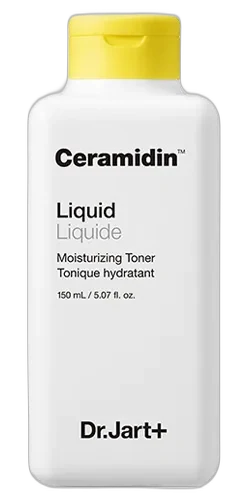
Ceramidin Liquid
K-Beauty Barrier Prep
 Verified reviewer
Pros & cons.
- +Five ceramide types delivered at the toner step for early barrier repair in the routine
- +Generous 150 mL size lasts 3-4 months and offers good per-application value
- +Centella asiatica and dipotassium glycyrrhizate provide effective anti-inflammatory support
- +Viscous texture layers beautifully without tackiness — ideal for the 7-skin method
- +Cholesterol and lecithin support proper ceramide integration into the skin barrier
- +Pairs seamlessly with the Ceramidin Cream for a comprehensive barrier-repair routine
- −Alcohol denat. as the fourth ingredient is counterintuitive in a barrier-repair product
- −Essential oils (bergamot, geranium, sage, patchouli) introduce unnecessary allergen risk
- −May be too rich or viscous for oily skin types who prefer lightweight watery toners
- −Not fungal acne safe due to certain ingredient compositions
- −Thicker consistency may pill under some sunscreens if not fully absorbed
The full review.
Ceramidin Liquid changed the K-beauty toner market. Before its 2014 launch, toners were usually astringent (alcohol-heavy, pore-tightening) or hydrating (lightweight waters with hyaluronic acid or glycerin). Delivering ceramides—barrier-repair lipids—via a toner was a new concept. Dr. Jart+ suggests that if your skin barrier is compromised, you should fix it immediately rather than waiting for step five of a routine.
The Ceramidin Liquid works by packing five ceramide types (NP, EOP, NS, AS, AP) into a viscous, gel-like liquid that absorbs easily into freshly cleansed skin. This format allows the ceramides, solubilized with cholesterol and hydrogenated lecithin, to reach the stratum corneum before occlusive serums or creams are applied. It delivers ceramides from the ground up.
The supporting ingredients are intentional. Centella asiatica extract provides the anti-inflammatory properties the Cicapair line uses for barrier support. Panthenol adds soothing and hydrating provitamin B5. Sodium hyaluronate acts as a humectant. Dipotassium glycyrrhizate, a licorice derivative, reduces redness. Betaine and glycosyl trehalose increase moisture retention. The botanical blend includes turmeric extract, fig fruit extract, and neem extracts for antioxidant and soothing effects.
The texture is thicker than water but thinner than serum. This viscous slip suits the layering technique K-beauty enthusiasts use. Two or three pats build a hydration base without tackiness that interferes with other products. It absorbs in one to two minutes, leaving skin plumper and more comfortable.
Alcohol is the fourth ingredient. In a barrier-repair product, alcohol denat. is counterintuitive. Functionally, alcohol helps solubilize the ceramides and essential oils into a stable liquid. The formula uses enough humectants and emollients to offset drying effects. However, anyone with an actively damaged barrier should note the alcohol content.
Essential oils also matter. Bergamot, geranium, sage, and patchouli oils create the Ceramidin line’s subtle herbal scent but introduce potential allergens. For a brand based on dermatological science, including alcohol and fragrant essential oils in a barrier-repair product prioritizes aesthetics over clinical rigor.
Despite this, the Ceramidin Liquid works reliably and noticeably. Use it for one week on dehydrated, over-exfoliated skin to see results: skin feels more resilient, less reactive, and tolerates previously stinging actives better. The five-ceramide complex works, and the liquid format ensures ceramides reach the skin before other products block them.
The 150 mL bottle lasts 3-4 months with twice-daily use. At $39, the per-application cost is reasonable and lower than the per-mL cost of the Ceramidin Cream. Using the Ceramidin Liquid and Ceramidin Cream together covers barrier repair during both the hydrating toner and occlusive moisturizer stages.
For normal to dry skin, the Ceramidin Liquid is an excellent standalone toner that outperforms average hydrating toners. For severely sensitized or compromised skin, the alcohol and essential oils are an unnecessary gamble. The product is 90% thoughtful science and 10% compromise—one of the best ceramide toners, but not a purist’s choice.
Formula
Texture
The texture is thicker than water but thinner than serum. This viscous slip suits the layering technique K-beauty enthusiasts use. Two or three pats build a hydration base without tackiness that interferes with other products. It absorbs in one to two minutes, leaving skin plumper and more comfortable.
Scent
Bergamot, geranium, sage, and patchouli oils create the Ceramidin line’s subtle herbal scent but introduce potential allergens.
Best for
The Ceramidin Liquid is an excellent standalone toner for normal to dry skin that offers more than the average hydrating toner.
Works for
Use it for one week on dehydrated, over-exfoliated skin to see results: skin feels more resilient, less reactive, and tolerates previously stinging actives better.
Not ideal for
The alcohol and essential oils in this product create an unnecessary gamble for severely sensitized or compromised skin.
Ingredient analysis.
Full INCI list
Water, Dipropylene Glycol, Betaine, Alcohol, Propanediol, Glycosyl Trehalose, 1,2-Hexanediol, Erythritol, Pentylene Glycol, Ceramide NP, Ceramide EOP, Ceramide NS, Ceramide AS, Ceramide AP, Centella Asiatica Extract, Ficus Carica (Fig) Fruit Extract, Melia Azadirachta Flower Extract, Melia Azadirachta Leaf Extract, Theobroma Cacao (Cocoa) Seed Extract, Ulmus Davidiana Root Extract, Amaranthus Caudatus Seed Extract, Curcuma Longa (Turmeric) Root Extract, Ocimum Sanctum Leaf Extract, Corallina Officinalis Extract, Hydrogenated Lecithin, Citrus Aurantium Bergamia (Bergamot) Fruit Oil, Pelargonium Graveolens Flower Oil, Sodium Hyaluronate, Salvia Officinalis (Sage) Oil, Pogostemon Cablin Oil, Glycerin, Hydrogenated Starch Hydrolysate, C12-14 Pareth-12, Diphenyl Dimethicone, Triethylhexanoin, Panthenol, Butylene Glycol, Acrylates/C10-30 Alkyl Acrylate Crosspolymer, Tromethamine, Polyglyceryl-10 Myristate, Sucrose Distearate, Dipotassium Glycyrrhizate, Methylpropanediol, Carbomer, Glyceryl Polymethacrylate, Disodium EDTA, Cellulose Gum, Dextrin, Glyceryl Stearate, Pyracantha Fortuneana Fruit Extract, Cholesterol, Ethylhexylglycerin
Skin match.
The science.
The Science
The Ceramidin Liquid uses the same lipid barrier science as the Ceramidin Cream, but in a lighter format. The five-ceramide complex (NP, EOP, NS, AS, AP) mimics the ceramide subclasses found in a healthy human stratum corneum. Bouwstra et al. (2001) showed in the Journal of Lipid Research that ceramide subclass composition matters for barrier function; different types affect different parts of the lamellar lipid structure that prevents water loss.
Liquid ceramide delivery involves bioavailability questions. Ceramides are lipophilic molecules; water-based products need careful formulation to keep them stable and ensure penetration. This formula uses hydrogenated lecithin as a solubilizer and carrier. Lecithin forms liposomal structures that encapsulate lipophilic actives and deliver them into the stratum corneum. Rawlings et al. (2004) reviewed topical ceramide application in the American Journal of Clinical Dermatology, noting that the vehicle and delivery system impact the efficacy of ceramide-based products.
Centella asiatica extract contains triterpenoid saponins—mainly asiaticoside, madecassoside, asiatic acid, and madecassic acid. Multiple studies show these have anti-inflammatory and collagen-stimulating properties. In this toner format, the centella extract hits the skin before heavier products, allowing more direct contact with the epidermis.
Betaine, the third ingredient, is an osmolyte—a molecule that helps cells maintain hydration under stress. Research shows betaine reduces inflammation and supports barrier function, which fits a ceramide-focused formula.
Dipotassium glycyrrhizate comes from licorice root and has documented anti-inflammatory and skin-soothing properties. A 2019 review in the Journal of Clinical Medicine confirmed that glycyrrhizin and its derivatives inhibit inflammatory pathways, complementing the ceramide-centella combination.
References
- Ceramide composition of the stratum corneum — Journal of Lipid Research (2001)
- Skin ceramides: mechanisms and clinical applications — American Journal of Clinical Dermatology (2004)
Dermatologist Perspective
Dermatologists value delivering ceramides early in a routine, and the Ceramidin Liquid's five-ceramide formula follows clinical barrier repair principles. Board-certified dermatologists often recommend ceramide-containing products for patients with eczema, retinoid-related dryness, or compromised barriers. However, dermatologists often flag alcohol and essential oils as concerns, especially for patients needing barrier repair. The product is clinically sound in concept, but the execution includes unnecessary irritant risk that a purely clinical formulation would avoid.
Where it fits in your routine.
Pour a coin-sized amount into your palms after cleansing. Press it into slightly damp skin and pat to help absorption. For extra hydration, use the layering method by repeating 2-3 times. Wait 1-2 minutes for absorption before applying serums. Use morning and evening. You can use a cotton pad for gentle wiping, but patting preserves more product.
At $39 for 150 mL, the Ceramidin Liquid offers good value among ceramide toners. The per-mL cost is much lower than the Ceramidin Cream, and one bottle lasts 3-4 months using it twice daily. The five-ceramide complex, centella asiatica, and panthenol show real formulation investment. Simpler hydrating toners cost less, but few provide a full ceramide-cholesterol-lecithin system in a toner format. The Ceramidin Liquid delivers reasonable value.
K-beauty enthusiasts with dry to normal skin can start barrier-repair routines at the toner step. It works well for users of retinoids, exfoliating acids, or other irritating actives who want a ceramide foundation before application.
This is for people with severely compromised skin barriers who must avoid alcohol, people with known essential oil sensitivities, and oily skin types who want lightweight watery toners. If you react to bergamot or geranium oil, this isn't the ceramide toner for you.
Product details.
This viscous, slightly gel-like liquid is thicker than a traditional toner but lighter than a serum. It has a slippery, milky quality that spreads easily and absorbs quickly, leaving skin feeling plump and hydrated without stickiness.
Essential oils—bergamot, geranium, sage, and patchouli—give it a subtle herbal-floral scent. The scent is noticeable when applied but fades within one or two minutes.
A sleek plastic bottle has a screw-top cap. The 150 mL size is large for a toner, and the bottle design lets you dispense small amounts for layering.
The liquid feels comforting on freshly cleansed skin immediately. It absorbs the slight tightness and dryness after washing. The consistency is thicker than expected for a 'liquid', but Korean hydrating toners often behave this way. There is no tingling or adjustment period.
3-4 months with twice-daily use, longer if using single layers
12 months
All Year
The backstory.
The Ceramidin Liquid launched alongside the Ceramidin Cream in 2014 as the prep step in Dr. Jart+'s barrier-repair routine. While the cream got most of the attention, the Liquid developed its own dedicated following among K-beauty enthusiasts who embraced the concept of delivering ceramides at the toner step — a then-novel approach that other brands have since emulated.
About Dr. Jart+
Established Brand (5–20 years)Dr. Jart+ was founded in 2004 by dermatologist Jung Sung-jae in South Korea and is now owned by Estée Lauder Companies. The Ceramidin line has been a flagship barrier-repair range for over a decade, and the brand's formulations are developed in collaboration with dermatologists.
Common myths.
Toners with alcohol are always bad for the skin barrier.
High concentrations of alcohol denat. can dry the skin, but here it sits at the fourth ingredient to solubilize the ceramides and botanical extracts. Multiple humectants (betaine, glycerin, hyaluronic acid) buffer the formula to offset the alcohol's drying effect. People with severely compromised barriers may still avoid alcohol at any concentration.
Use ceramides in your moisturizer, not your toner.
Applying ceramides during the toner step lets them penetrate the skin before heavier products form an occlusive barrier. This liquid format reaches deeper layers of the stratum corneum. Layering ceramides at multiple steps (toner + cream) provides more complete barrier support than one product alone.
FAQ.
What is the difference between Dr. Jart+ Ceramidin Liquid and Ceramidin Cream?
The Ceramidin Liquid is a lightweight hydrating toner applied as the first step after cleansing, while the Ceramidin Cream is a rich moisturizer used as the final step. Both contain five ceramides, but the Liquid delivers them in a water-based format for deeper penetration, while the Cream provides occlusive barrier protection. They work best as a pair.
Does Dr. Jart+ Ceramidin Liquid contain alcohol?
Yes — alcohol is the fourth ingredient. It likely solubilizes the ceramides and botanical extracts. The formula uses multiple hydrating ingredients (betaine, glycerin, hyaluronic acid, panthenol) to offset the alcohol's drying potential, but users with severely compromised or very dry skin should note its presence.
Can I use Dr. Jart+ Ceramidin Liquid with retinol?
Yes — applying this ceramide-rich toner before retinol buffers irritation by pre-loading the skin with barrier-repair lipids. The panthenol and centella asiatica also soothe the skin. Apply the Liquid, wait one minute for absorption, then apply your retinol product.
How to Use
Pour a small amount into your palms and press into freshly cleansed, slightly damp skin. For extra hydration, layer 2-3 applications (the K-beauty '7-skin method'). Follow with serums and moisturizer. Use morning and evening.
Best for
Is Dr. Jart+ Ceramidin Liquid good for sensitive skin?
The five-ceramide complex and soothing botanicals like centella asiatica and licorice root work well for sensitive skin. However, the formula contains alcohol and several essential oils (bergamot, geranium, sage, patchouli) that trigger reactions in very fragrance-sensitive individuals. Patch test first if you have known essential oil allergies.
What the community says.
"Lightweight yet deeply hydrating toner that preps skin beautifully"
"Excellent for layering — absorbs quickly without tackiness"
"Noticeably improves skin texture and comfort within days"
"Great companion to the Ceramidin Cream for complete barrier repair"
"Contains alcohol which may irritate very dry or sensitized skin"
"Essential oils can cause reactions in fragrance-sensitive users"
"Thicker consistency than expected for a liquid/toner product"
"Price has increased while formula remains largely unchanged"