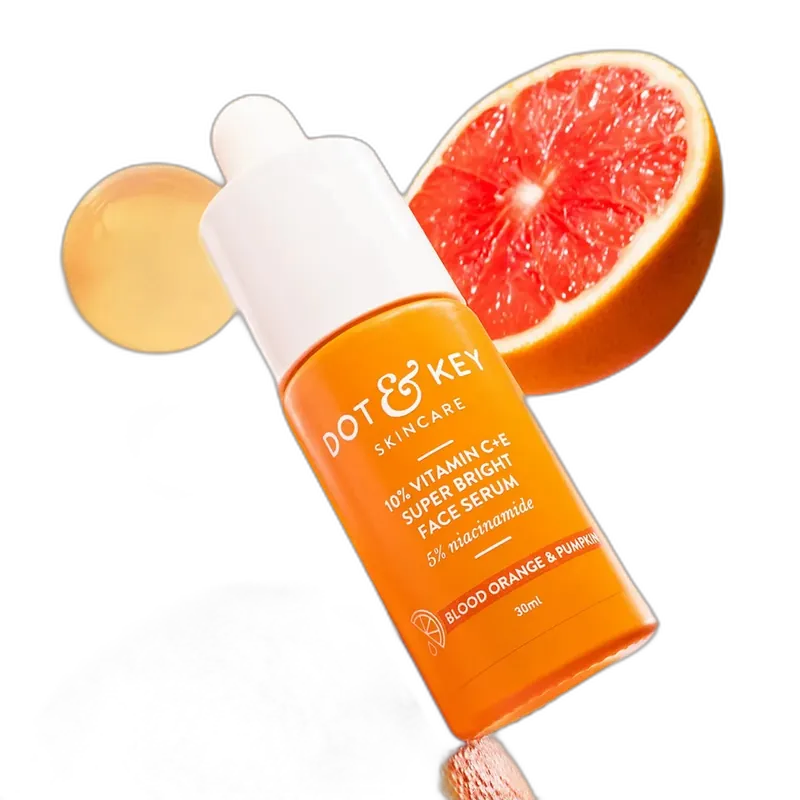
Vitamin C + E Super Bright Serum
Accessible Brightening Pick
 Verified reviewer
Pros & cons.
- +Stacks four brightening actives in one accessible formula
- +Stable ethyl ascorbic acid resists oxidation over time
- +Lightweight watery texture absorbs in seconds
- +Niacinamide and vitamin C coexist safely in one bottle
- +Targets post-acne marks and uneven tone specifically
- +Price point is well below Western equivalents
- +Pleasant fresh citrus sensory experience
- +Backed by years of real-world user feedback
- −Orange peel oil can irritate sensitive skin on first use
- −Results build slowly and require consistent daily use
- −Ethyl ascorbic acid is less potent than pure L-ascorbic
- −Dropper can occasionally drip messily
- −Won't meaningfully fade deep melasma or old scarring
The full review.
Dot & Key grew large by targeting a specific audience rather than going global immediately. This Indian direct-to-consumer brand launched in 2018 after noticing a gap: most vitamin C serums target European or American skin concerns. They often miss the post-acne marks, humidity-driven dullness, and uneven tone common in South Asian skincare. This Super Bright Serum proves that point.
The formula builds an accessible brightening serum by stacking four actives instead of relying on one. It uses 5% ethyl ascorbic acid as the main vitamin C derivative, niacinamide for barrier support and melanin transfer inhibition, alpha arbutin as a gentle tyrosinase inhibitor, and ferulic acid to stabilize the antioxidant network. This multi-pathway approach usually costs two or three times more, making it the most interesting part of this bottle.
Ethyl ascorbic acid deserves a closer look. This stable vitamin C derivative converts to ascorbic acid in the skin. While less potent gram-for-gram than pure ascorbic acid, it has two practical advantages. First, it does not oxidize into a brown mess after weeks of dropper exposure. Second, it has no pH conflict with niacinamide, so the formulator includes both without the typical internet warnings about mixing them. The serum stays its original color and works on multiple fronts in one step.
Texture
The texture is watery and light, similar to a toner, and absorbs in seconds without residue.
Scent
Orange peel oil, listed low on the ingredient list, provides a fresh-citrus note. This orange oil may concern sensitive-skinned users; limonene is a known sensitizer for some, and a brief tingle during first applications is common. For most, it is a pleasant sensory cue. For a few, it is a dealbreaker.
Best for
Do not expect overnight results. Ethyl ascorbic acid works slower than pure L-ascorbic acid, so brightening builds gradually. Users often see subtle radiance within two weeks and visible fading of mild post-acne marks and sun dullness around eight weeks, if they use daily sunscreen consistently. The serum is not a hyperpigmentation nuke—it won’t meaningfully fade deep melasma or old scarring—but it effectively addresses common Indian-market concerns like uneven tone and dullness.
Common Praise
This serum excels at value. At roughly eighteen dollars for thirty milliliters, it costs about half of a comparable Western vitamin C serum and contains more brightening actives. The packaging is competent, using frosted glass and a glass dropper. The formula has lasted several years on the market and has a meaningful following on Indian D2C platforms.
Common Complaints
The limitations are clear: orange oil is a liability for sensitive users, the dropper seal isn’t the tightest available, and ethyl ascorbic acid won’t satisfy purists seeking the L-ascorbic experience. These are trade-offs. For combination or oily-skinned users facing dullness, mild post-acne marks, or tone unevenness from a year of sun exposure, this is a genuine recommendation at a genuine price.
Ingredient analysis.
Full INCI list · pH 5.5
Aqua, Propanediol, Ethyl Ascorbic Acid, Niacinamide, Glycerin, Butylene Glycol, 1,2-Hexanediol, Betaine, Pentylene Glycol, Sodium Hyaluronate, Tocopheryl Acetate, Ferulic Acid, Alpha Arbutin, Panthenol, Centella Asiatica Extract, Citrus Aurantium Dulcis (Orange) Peel Oil, Ascorbyl Glucoside, Xanthan Gum, Disodium EDTA, Allantoin, Sodium Benzoate, Potassium Sorbate, Phenoxyethanol, Ethylhexylglycerin
Skin match.
The science.
The Science
This serum uses a multi-pathway approach. Ethyl ascorbic acid is a 3-O-ethyl ether of ascorbic acid; research in the Journal of Cosmetic Science shows it penetrates the stratum corneum more efficiently than L-ascorbic acid at comparable concentrations. It converts to free ascorbic acid in the skin to perform the same antioxidant and tyrosinase-inhibiting functions. Because it stays stable across a wider pH range, it coexists with niacinamide (4-10% range is typical in brightening formulas) without the oxidation concerns of early C+niacinamide blends. Niacinamide adds a distinct pathway: it blocks melanosome transfer from melanocytes to keratinocytes instead of inhibiting melanin production directly. Stacking these two ingredients hits pigmentation from different angles. Alpha arbutin provides a third pathway as a tyrosinase inhibitor with a milder profile than hydroquinone and a lower risk of ochronosis with long-term use. Ferulic acid completes the antioxidant network; it stabilizes and extends the efficacy of the vitamin C and E system, a synergy established in photoprotection literature since Lin et al.'s work on topical antioxidant combinations. This ingredient stack works on tyrosinase inhibition, melanin transfer inhibition, free radical scavenging, and barrier support simultaneously. No single active does the heavy lifting alone, but together they create a meaningful brightening effect over a realistic timeline.
Dermatologist Perspective
Dermatologists often recommend multi-pathway brightening serums like this for post-inflammatory hyperpigmentation, especially in skin of color where aggressive single-ingredient approaches can cause rebound darkening. Combining a stable vitamin C derivative with niacinamide and alpha arbutin is a standard clinical approach for gentle, long-term tone evening. Board-certified dermatologists note that consistency matters more than concentration—a 5% ethyl ascorbic acid serum used every morning with broad-spectrum sunscreen delivers better results than a 20% L-ascorbic acid serum used sporadically. The main caution dermatologists raise is the inclusion of essential oils like orange peel oil, which can sensitize some patients; a patch test on the inner arm is typically advised before daily facial use.
Where it fits in your routine.
Apply three to four drops to clean, dry skin every morning after cleansing and before moisturizer. Pat the product gently onto your face and neck. The light texture absorbs quickly, so do not rub aggressively. Always use a broad-spectrum sunscreen of SPF 30 or higher; vitamin C derivatives increase sun protection but do not replace it. If you have sensitive skin, use it every other morning for the first week, then move to daily use. Do not layer this directly with strong retinoids or benzoyl peroxide; use them in the morning and evening instead. Store the bottle away from heat and direct sunlight. This stable derivative is more forgiving than traditional L-ascorbic acid.
At approximately eighteen dollars for thirty milliliters, this serum costs less than Western equivalents and has more brightening actives than most formulas in its price bracket. No alternate sizes exist, which limits users wanting a larger bottle, but the thirty-milliliter bottle lasts two months with normal use. This makes the monthly cost around nine dollars. This price is affordable for a serum this well-formulated. The value is strong for customers seeking a multi-pathway approach with evidence-supported ingredients without paying premium prices. It is not the cheapest option on the shelf, but it is one of the most thoughtfully built options at this price point.
This brightening serum works for dullness, post-acne marks, or mild uneven tone without a premium price. It suits combination and oily skin well. It fits routines using daily sunscreen where the vitamin C derivative provides antioxidant benefits.
Skip this if you have reactive or fragrance-sensitive skin; the orange peel oil makes it a gamble. Skip it if you want potent L-ascorbic acid or if you need to treat deep melasma or old acne scarring, which require more aggressive interventions.
Product details.
Thin, water-light serum with a faint yellow tint
Noticeable fresh orange citrus
Frosted glass bottle with glass dropper
The first few uses may cause a light citrus tingle that lasts under a minute. No purging occurs. Skin looks slightly more radiant by the end of week one.
About 2 months with once-daily morning use of 3-4 drops
6 months
All Year
The backstory.
Dot & Key launched in 2018 as an Indian D2C brand specifically targeting skincare concerns common in South Asian skin: post-acne marks, uneven tone from sun exposure, and humidity-friendly textures. This serum became one of their flagship hits and helped put the brand on the map.
About Dot & Key
Emerging Brand (2–5 years)Dot & Key is an Indian indie skincare brand founded in 2018. It grows fast in the South Asian market. The formulations use well-studied actives, but the brand lacks independent clinical validation outside its D2C ecosystem.
Common myths.
Ethyl ascorbic acid is a weaker version of L-ascorbic acid.
This stable derivative converts to ascorbic acid in the skin. It has less potency gram-for-gram but stays shelf-stable longer, so this formula does not turn brown on store shelves.
FAQ.
Does this serum contain real vitamin C?
Yes — it uses 5% ethyl ascorbic acid, a stable vitamin C derivative, instead of pure L-ascorbic acid. This keeps the formula clear and allows niacinamide without oxidation.
Can I use this with niacinamide?
This serum already contains niacinamide, so you do not need to layer another. The ethyl ascorbic acid form has no pH conflict with niacinamide.
Will it tingle?
Orange peel oil causes a brief citrus tingle on first application. If it burns or persists, sensitive skin must discontinue use.
Is it safe during pregnancy?
Yes — all the actives (ethyl ascorbic acid, niacinamide, alpha arbutin) are pregnancy-compatible. Only the orange peel oil requires a patch test.
How long until I see results?
Subtle glow appears within 2 weeks; tone looks more even after 8 weeks of daily use with sunscreen.
Does it replace sunscreen?
No. Vitamin C serums boost sunscreen but do not replace it. Use SPF 30 or higher every morning.
Community
What the community says.
"visible brightening within a month"
"lightweight texture"
"accessible price"
"pleasant citrus scent"
"citrus scent too strong for some"
"dropper can drip"
"mild tingling on sensitive skin"
Featured in.
People also looked at.