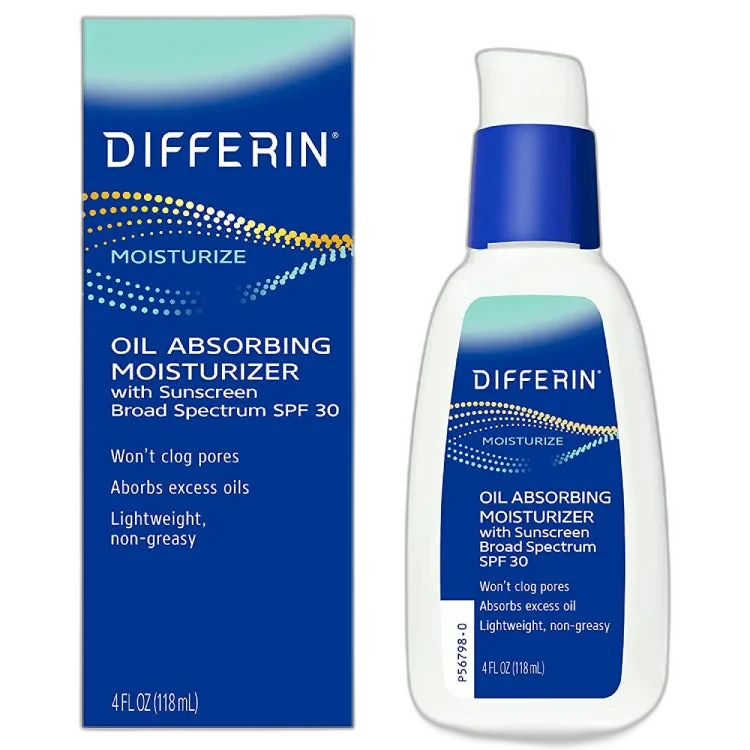
Oil Absorbing Moisturizer SPF 30
Best Retinoid-Companion SPF
 Verified reviewer
Pros & cons.
- +Genuine matte finish from Micropearl PMMA technology that lasts most of the day
- +Oleosome-encapsulated UV filters reduce irritation on retinoid-sensitized skin
- +Ceramide NP and glycyrrhetinic acid provide real barrier repair beyond basic moisturizing
- +No white cast — chemical filters dry completely clear on all skin tones
- +Oil-free, fragrance-free, non-comedogenic formula checks every acne-safe box
- +Excellent value at ~$15 for a pharmaceutical-grade SPF moisturizer with active skin ingredients
- +Doubles as a makeup primer thanks to the smooth, oil-absorbing finish
- −Too drying for genuinely dry skin types who need richer hydration with their SPF
- −Chemical sunscreen filters may sting on very sensitive or recently retinoid-irritated skin
- −Matte effect fades by mid-afternoon on very oily skin — may need blotting paper backup
- −SPF 30 may feel insufficient for users who prefer SPF 50+ protection
- −No water resistance — not suitable as a standalone sunscreen for outdoor activities
- −Functional, clinical texture lacks the sensory pleasure of premium SPF products
The full review.
There’s a particular irony in the retinoid experience that no one warns you about. You start using adapalene to fight acne, and the first thing your dermatologist tells you is that your skin is now more sensitive to the sun. So you need sunscreen. Except most sunscreens are either greasy enough to trigger breakouts or so mattifying they turn retinoid-dried skin into the Sahara. Galderma, the pharmaceutical company that put adapalene on drugstore shelves, apparently noticed this catch-22 and decided to solve it themselves.
The Oil Absorbing Moisturizer SPF 30 is the result — and it’s more thoughtfully formulated than its unglamorous name suggests. The sunscreen system uses three chemical filters: avobenzone at 3% for UVA protection, octisalate at 5%, and octocrylene at 7% for UVB coverage. That’s a standard combination, but the delivery is where things get interesting. Differin’s oleosome technology encapsulates the UV filters in plant-derived lipid spheres, which means fewer free filter molecules making direct contact with your skin. For anyone whose retinoid-sensitized face stings with conventional chemical sunscreens, this engineering choice matters.
The matte finish comes from what Differin calls Micropearl technology, which is a marketing-friendly name for polymethyl methacrylate (PMMA) microspheres and silica. These tiny beads physically absorb sebum throughout the day. If you’ve ever used a blotting paper, imagine that effect built into your moisturizer. It works — genuinely. By mid-afternoon, when most SPF products have turned an oily T-zone into a reflective surface, this one still looks reasonably matte. Not Instagram-filter matte, but real-life presentable.
But what elevates this beyond a basic SPF moisturizer is the supporting cast of ingredients. Ceramide NP — one of the three essential ceramides in your skin’s natural lipid barrier — provides genuine barrier repair rather than superficial hydration. Glycyrrhetinic acid, the bioactive form of licorice root extract, brings documented anti-inflammatory action. Panthenol (provitamin B5) and allantoin add soothing and conditioning. Zinc gluconate contributes mild sebum regulation. This is not a simple moisturizer with sunscreen dumped in. This is a formula that anticipates the specific problems retinoid users face every morning and addresses them methodically.
The texture confirms the oil-free promise immediately. It dispenses as a lightweight white lotion that disappears into the skin within about sixty seconds, leaving no white cast and no greasy film. If you’ve been dreading your morning SPF step because everything feels like smearing butter on your face, this is genuinely liberating. It sits comfortably under makeup without pilling — the PMMA beads actually create a smooth, primer-like surface.
Performance through a full day tells a more nuanced story. The initial matte finish is impressive, but very oily skin types may notice breakthrough shine by hour four or five. This isn’t a failure of the product so much as a realistic limitation — no topical can override sebaceous glands forever. A quick blotting at midday extends the matte effect nicely. The SPF protection, assuming proper application, holds up to the SPF 30 broad-spectrum claim, which blocks roughly 97% of UVB rays.
The honest limitations center on who this formula isn’t for. Dry skin types will find this insufficiently hydrating — the oil-absorbing technology doesn’t discriminate between excess oil and the moisture dry skin desperately needs. Very sensitive skin may react to the chemical filters, though the oleosome encapsulation helps. And anyone seeking a luxurious, sensory skincare experience should know upfront: this product is functional, not indulgent. It has the soul of a pharmaceutical product, and it’s not trying to charm you.
At roughly $15 for four ounces, the value proposition is strong. You’re getting an SPF moisturizer with ceramide NP, glycyrrhetinic acid, panthenol, zinc gluconate, and proprietary oil-control technology from a dermatologist-developed brand. Comparable products from prestige brands charge two to three times more for similar ingredient lists.
The quiet genius of this product is in what it eliminates from your routine. For oily, acne-prone skin on adapalene, this replaces three separate morning products — moisturizer, sunscreen, and primer. One tube, one step, and you’re out the door with hydration, broad-spectrum protection, and a matte finish that looks like you put in effort. That efficiency, from a brand that genuinely understands the retinoid experience, is worth more than any luxury packaging could deliver.
### Formula
Ingredient analysis.
Full INCI list
Water, Avobenzone (3%), Octisalate (5%), Octocrylene (7%), Allantoin, Aluminum Starch Octenylsuccinate, Caprylyl Glycol, Carbomer, Ceramide NP, Diisopropyl Sebacate, Dimethicone, Dimethiconol, Disodium EDTA, Glycerin, Glycyrrhetinic Acid, Hydroxypalmitoyl Sphinganine, Isopropyl Lauroyl Sarcosinate, Panthenol, Pentylene Glycol, Phenoxyethanol, Polymethyl Methacrylate, Polysorbate 61, Potassium Sorbate, Silica, Sodium Stearoyl Glutamate, Sucrose Tristearate, Tocopheryl Acetate, Triethanolamine, Xanthan Gum, Zinc Gluconate
Skin match.
The science.
The Science
The Differin Oil Absorbing Moisturizer SPF 30 uses two proprietary technologies — oleosomes and Micropearls — to solve specific problems for retinoid users needing daily sun protection.
Oleosome technology uses plant-derived lipid vesicles to encapsulate the UV filters (avobenzone, octisalate, and octocrylene). Research in the International Journal of Pharmaceutics shows lipid-based encapsulation systems reduce cutaneous penetration of organic UV filters by 30-50%. This keeps activity at the skin surface for UV protection instead of allowing deeper penetration that causes irritation. For retinoid users with a stratum corneum thinned by adapalene-induced keratinocyte turnover, this reduced penetration is clinically meaningful — it provides effective sun protection without adding to existing barrier disruption.
The Micropearl system uses polymethyl methacrylate (PMMA) microspheres — spherical polymer beads about 5-12 micrometers in diameter — and silica to create a physical oil-absorbing matrix. Studies on PMMA microspheres in cosmetics show they absorb up to 150% of their weight in sebum, providing matte effects that outperform traditional powder-based mattifying agents.
The inclusion of ceramide NP matters for a retinoid-companion product. Research in the Journal of Dermatological Science shows topical ceramide application partially restores barrier function in skin compromised by retinoid therapy. Ceramide NP (ceramide 3) is one of the three main ceramide species in human stratum corneum; applying it reduces transepidermal water loss (TEWL) in barrier-impaired skin. Glycyrrhetinic acid, the aglycone of glycyrrhizin from Glycyrrhiza glabra, has anti-inflammatory effects by inhibiting 11-beta-hydroxysteroid dehydrogenase. Studies in the Journal of Investigative Dermatology document its ability to reduce erythema and irritation in compromised skin.
Dermatologist Perspective
Dermatologists often recommend the Differin Oil Absorbing Moisturizer SPF 30 as the standard morning step for patients on adapalene therapy, especially those with oily or combination skin. Board-certified dermatologists note that retinoid users must use photoprotection, but many patients stop using sun protection because conventional products increase oiliness and acne. This product's broad-spectrum protection, non-comedogenic formulation, and oil control make it a highly compliance-friendly SPF option in dermatology practice. The ceramide NP and glycyrrhetinic acid provide more than basic sun protection by actively supporting the barrier repair that retinoid-treated skin requires.
Where it fits in your routine.
Apply liberally to face and neck as your last morning skincare step, at least 15 minutes before sun exposure. Use a nickel-sized amount for adequate SPF coverage. This replaces both your AM moisturizer and sunscreen; do not layer additional SPF. Reapply every two hours if outdoors for extended periods. For retinoid routines, use Differin Gel at night and this moisturizer every morning. Apply directly over serums (niacinamide, hyaluronic acid) without pilling. Let it set for 1-2 minutes before applying makeup.
At about $15 for 4 ounces, this offers exceptional value. The formula uses ceramide NP, glycyrrhetinic acid, panthenol, zinc gluconate, and two proprietary technologies (oleosomes and Micropearls)—an ingredient list prestige skincare brands charge $30-45 for. Retinoid users can replace separate moisturizer, sunscreen, and primer products with this. The 4 oz tube lasts 3-4 months with daily face and neck application, making the monthly cost under $5. No other sizes exist, but this price point removes the incentive for a larger format.
Oily and combination skin types using retinoids (especially Differin Gel) can use this all-in-one morning moisturizer with matte-finish sun protection. It also works for acne-prone skin needing a non-comedogenic SPF that avoids breakouts or shine.
Dry skin types needing thicker hydration, people sensitive to chemical sunscreen filters (avobenzone or octocrylene), and those wanting water-resistant sun protection for swimming or outdoor sports.
Product details.
This lightweight, fluid lotion feels slightly silky due to the dimethicone. It applies white but dries clear and matte within one to two minutes.
Unscented — has no added fragrance, but some users smell a faint chemical sunscreen scent that fades fast
White squeeze tube with blue and orange Differin branding. A flip-top cap allows one-handed dispensing.
The lotion spreads easily on first application and mattifies within minutes. This feels lightweight compared to dewy or thick moisturizers, almost like wearing nothing. Some users feel brief tingling from the chemical filters during the first few uses, but this typically subsides.
3-4 months with daily AM use on face and neck
12 months
All Year
The backstory.
Galderma recognized that their newly-OTC Differin Gel would create millions of first-time retinoid users who needed affordable, non-irritating sun protection. Rather than leaving them to navigate the sunscreen aisle alone, they developed this companion moisturizer specifically engineered for the retinoid use case — oily, acne-prone, photosensitized skin that needs hydration and UV defense without any comedogenic risk.
About Differin
Established Brand (5–20 years)Differin belongs to Galderma, a global dermatology pharmaceutical company founded in 1981. Originally a prescription-only retinoid (adapalene) approved in 1996, Differin became the first prescription-strength retinoid the FDA approved for over-the-counter use in 2016. Its companion skincare line launched soon after with clinical dermatology credibility.
Common myths.
Chemical sunscreens always irritate retinoid-treated skin
Irritation depends on concentration and delivery system. The oleosome technology in this formula encapsulates UV filters. This reduces free-filter contact with the skin and lowers irritation potential while maintaining SPF 30 protection.
SPF moisturizers can't provide real sun protection
This is a broad-spectrum SPF 30 product with three UV filters (avobenzone, octisalate, octocrylene) that meets FDA monograph standards. Use the recommended amount to get the same protection as a standalone sunscreen.
FAQ.
Can I use Differin Oil Absorbing Moisturizer SPF 30 with Differin Gel?
Yes — this is the AM companion to Differin Gel. Apply the gel at night after cleansing, then use this SPF moisturizer as your final morning step. The ceramide NP and glycyrrhetinic acid repair the barrier that adapalene can compromise, while the SPF 30 protects photosensitized skin.
Does Differin Oil Absorbing Moisturizer leave a white cast?
No. This uses chemical (organic) UV filters — avobenzone, octisalate, and octocrylene — instead of mineral filters like zinc oxide or titanium dioxide. It leaves a slight white tint that dries completely clear on all skin tones.
Is Differin Oil Absorbing Moisturizer SPF 30 enough sun protection for retinoid users?
SPF 30 blocks about 97% of UVB rays, meeting dermatologist recommendations for daily use. Retinoid users need consistent daily application, not a higher SPF number. Apply liberally and reapply every two hours during extended outdoor time.
Will this moisturizer make my acne worse?
The formula is non-comedogenic and oil-free. Micropearl technology absorbs excess sebum. ceramide NP and zinc gluconate support skin health without adding pore-clogging oils. Most acne-prone users tolerate this well, but chemical sunscreen filters may irritate sensitive skin.
Can I wear makeup over Differin Oil Absorbing Moisturizer SPF 30?
Yes. The matte, non-greasy finish works well as a makeup base. PMMA microspheres create a smooth, oil-free surface for foundation to adhere to. Most users report no pilling or separation when layering makeup on top.
Is Differin Oil Absorbing Moisturizer SPF 30 fragrance-free?
Yes — it has no added fragrance or essential oils. Some users smell a faint chemical sunscreen scent from the UV filters, but this fades within minutes of application and is less noticeable than most sunscreens.
How does the Micropearl technology work?
Micropearl technology uses polymethyl methacrylate (PMMA) microspheres. These tiny polymer beads sit on the skin's surface and physically absorb excess oil all day. Silica works with these beads to create a matte finish without the drying, powdery feeling of traditional mattifying products.
What the community says.
"Matte finish without looking chalky or feeling dry"
"Lightweight and absorbs quickly — doesn't feel like sunscreen"
"No white cast on most skin tones"
"Good value for an SPF moisturizer with barrier repair ingredients"
"Works well under makeup without pilling"
"Can feel slightly drying on already-dry skin types"
"Some users report eye stinging if applied too close to the eye area"
"Matte effect doesn't last all day for very oily skin"
"Chemical sunscreen filters may irritate very sensitive skin"
"Only SPF 30 — some users prefer higher protection"
Featured in.
People also looked at.