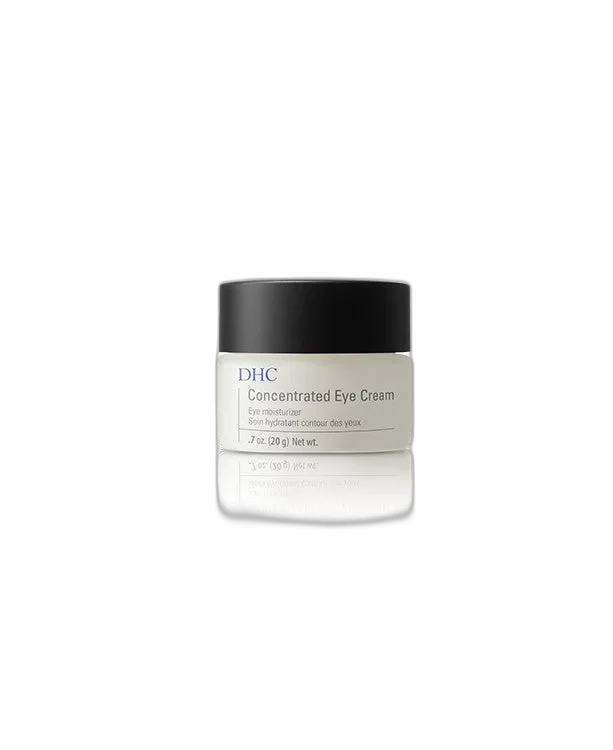
Concentrated Eye Cream
J-Beauty Eye Cream Classic
 Verified reviewer
Pros & cons.
- +Peptide stack combines argireline, palmitoyl tetrapeptide-7, and carnosine for multi-pathway aging support
- +Olive oil base provides rich hydration without heavy feel on delicate under-eye skin
- +No fragrance, no essential oils, no alcohol — safe for reactive eyes
- +Small rice-grain-sized doses mean tube lasts 4-6 months
- +40-year brand heritage with consistent formulation history
- +Silicone-glycerin slip layers well under makeup and sunscreen
- −Uses dated retinyl palmitate rather than a more effective modern retinoid
- −Contains parabens, which will be a dealbreaker for paraben-averse shoppers
- −Olive oil can be comedogenic if migrated into T-zone area
- −Minimal effect on pigmentation-based dark circles despite marketing implications
The full review.
About DHC
DHC started as a translation company.
Scent
There is no fragrance.
Ingredient analysis.
Full INCI list
Water, Glycerin, Cyclopentasiloxane, Dimethicone, Butylene Glycol, Cetyl Ethylhexanoate, PEG-10 Dimethicone, Squalane, PEG/PPG-19/19 Dimethicone, Sodium Chloride, Olea Europaea (Olive) Fruit Oil, Panax Ginseng Root Extract, Glycyrrhiza Glabra (Licorice) Root Extract, Aloe Barbadensis Leaf Extract, Tocopherol, Retinyl Palmitate, Ascorbyl Palmitate, Carnosine, Acetyl Hexapeptide-8, Palmitoyl Tetrapeptide-7, Sodium Hyaluronate, Disodium EDTA, Phenoxyethanol, Methylparaben, Propylparaben.
Skin match.
The science.
The Science
acetyl hexapeptide-8, marketed as Argireline, is the most clinically-supported active in this formula. A 2013 study in the International Journal of Cosmetic Science tested a 10% argireline solution applied twice daily. It found reduced wrinkle depth around the eyes after 28 days. This works by inhibiting SNAP-25 and soluble N-ethylmaleimide-sensitive factor attachment protein receptor (SNARE) complex formation, which reduces acetylcholine release at the neuromuscular junction. Most cosmetic eye creams use concentrations much lower than 10%, so real-world results are more modest.
Palmitoyl tetrapeptide-7 (also known as Rigin) downregulates pro-inflammatory cytokines like IL-6, which drives collagen degradation in photoaging. A 2013 in vitro study in the Journal of Cosmetic Dermatology showed this cytokine suppression in human fibroblast cultures, but whole-skin in vivo trials are limited.
The biochemical literature well-characterizes Carnosine's anti-glycation mechanism. Glycation is the non-enzymatic reaction between reducing sugars and protein amino groups. This forms advanced glycation end products (AGEs) that stiffen collagen and elastin. Carnosine acts as a sacrificial substrate, intercepting reactive carbonyl intermediates before they cross-link with skin collagen. Topical efficacy data is thinner than the mechanism suggests, but the rationale is sound.
Retinyl palmitate has the weakest evidence base among common retinoid derivatives. It requires enzymatic conversion to retinol, then retinaldehyde, and finally retinoic acid to affect the retinoid receptor pathway; each step loses concentration. A 2015 review in Dermato-Endocrinology noted that retinyl palmitate has poor in vivo conversion efficiency. Its use in modern anti-aging formulations stems from stability advantages rather than efficacy.
References
- Anti-wrinkle activity of acetyl hexapeptide-3 — International Journal of Cosmetic Science (2013)
- Retinoids in the treatment of skin aging — Dermato-Endocrinology (2015)
Dermatologist Perspective
Dermatologists usually classify eye creams like this one as hydration-and-comfort products, not clinical treatments. For patients with dry, dehydrated under-eye skin or early expression lines, board-certified dermatologists often suggest peptide-based eye creams as a gentle first-line option before prescription tretinoin or in-office treatments. The argireline literature is modestly supportive; most dermatologists view it as a 'soft' complement to other modalities rather than a replacement. For dark circles, dermatologists note that eye creams have limited effect if the cause is pigmentation or structural. In those cases, clinical procedures or pigmentation-targeted treatments work better. Dermatological consensus considers the paraben preservative system safe, though patient preference regarding parabens exists.
Where it fits in your routine.
Apply twice daily, morning and evening, after serums and before moisturizer. Use a rice-grain-sized amount for both eyes. Use your ring finger to pat the cream around the orbital bone, starting at the inner corner, moving along the brow bone, and out to the crow's feet area. This finger is the weakest and drags the delicate skin the least. Do not apply directly onto the lash line or the moist pink tissue. Let the cream absorb for 30 seconds before continuing your routine. If you use a retinoid serum elsewhere on your face at night, apply the eye cream first to buffer and protect the delicate periocular area.
At approximately $36 for 0.52 ounces, this sits in the mid-tier eye cream market. The per-ounce cost is about twice that of a CeraVe or Olay eye cream but roughly half the price of Shiseido Benefiance or SK-II eye creams with similar peptide complexity. The tube lasts four to six months at twice-daily application, which works out to around $75-85 per year — reasonable for someone committed to a peptide-based anti-aging approach. Only one size is available, so there's no cost advantage to bulk buying. Given DHC's forty-year brand heritage and the multi-peptide formulation, the value is fair, though not a standout bargain. Shoppers who prioritize a modern retinoid or paraben-free preservation may find better value at the same price point from more recently reformulated competitors.
This peptide-based anti-aging eye cream works for dry or dehydrated under-eye skin with a proven multi-decade formula. It suits J-beauty fans, those wanting an olive-oil-based product, or anyone testing argireline without luxury-priced specialty brand costs.
Skip this if you avoid parabens, want modern retinoids like retinaldehyde or encapsulated retinol, or if pigmentation-based dark circles matter more than hydration and fine lines. Skip during pregnancy because of the retinyl palmitate.
Product details.
Rich but fast-absorbing cream with a slight silicone slip.
Virtually scentless — faint neutral oil note.
Small metal tube with screw cap. It is hygienic, travel-friendly, and opaque to keep ingredients stable.
The silicone-glycerin base plumps the under-eye area immediately. The peptides and retinyl palmitate work without tingling or purging. Most users see visible hydration improvement within days and softer fine lines around week four.
4-6 months with twice-daily application around both eyes.
12 months
All Year
The backstory.
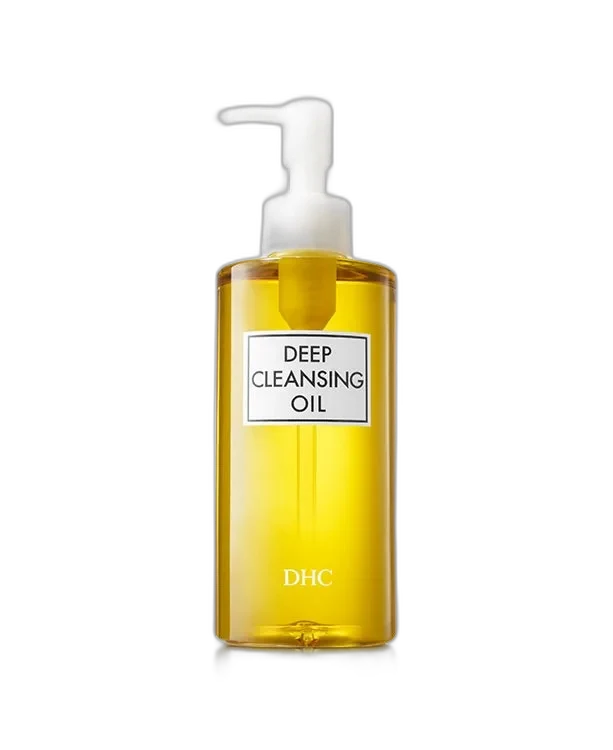
DHC started in 1983 as Daigaku Honyaku Center, a university translation service run by founder Yoshiaki Yoshida. Yoshida discovered olive oil as a skincare ingredient during a business trip to Europe and pivoted the company into cosmetics in 1984 with a single olive-oil-based cleansing oil. That product — DHC's Deep Cleansing Oil — became one of Japan's top-selling cosmetics products, and the eye cream is part of the olive-oil-based 'concentrated' line DHC built around that heritage.
About DHC
Legacy Brand (20+ years)DHC (Daigaku Honyaku Center) launched in Tokyo in 1983. It started as a university translation service then pivoted to olive-oil-based skincare. The brand has over four decades on the market and is one of Japan's largest mail-order cosmetics companies. It uses extensive in-house R&D but has limited independent clinical trials published in Western journals.
Common myths.
Argireline works like topical Botox.
Argireline targets a different part of the neurotransmitter release pathway than botulinum toxin. It produces a milder, topical, and reversible effect. Argireline softens the appearance of expression lines without paralyzing muscle.
Parabens in eye creams are unsafe.
Methylparaben and propylparaben at cosmetic use levels are among the most studied preservatives. Regulatory bodies like the FDA and SCCS repeatedly affirm their safety. Paraben discomfort is largely reputational, not toxicological.
FAQ.
Does DHC Concentrated Eye Cream actually work on dark circles?
About DHC Concentrated Eye Cream
Partially. The ginseng extract claims microcirculatory benefits that modestly reduce vascular-type dark circles, but pigmentation-based dark circles from post-inflammatory hyperpigmentation won't respond much. Most users report hydration and brightness improvements instead of full dark circle elimination.
Myth
Reality
How to Use
Who Should Buy
Who Should Not Buy
Best for
Works for
Not ideal for
AM routine
PM routine
Texture
Scent
Packaging
Best Season
Common Praise
Common Complaints
Pairs Well With
Conflicts With
Pregnancy
No, we do not recommend it. This formula contains retinyl palmitate, a vitamin A derivative often flagged for pregnancy caution, even though systemic absorption from a topical eye cream is minimal. Safer pregnancy-phase options use peptides alone without retinoids.
Parabens
Yes. This formula contains methylparaben and propylparaben as preservatives. Both are FDA-approved and safe at cosmetic use levels, but if you avoid parabens for personal preference, this formula isn't for you.
Amount to Use
A rice-grain-sized amount works for both eyes. Applying more causes pilling under foundation or when layered with other products, and won't add benefit since the active peptides absorb at low concentrations.
Fragrance
Yes, essentially. The olive oil and plant extracts create a very faint neutral scent, but there is no added fragrance or essential oils. This suits fragrance-sensitive users and those with reactive skin.
Crow's Feet
Yes, argireline shows its strongest effect there. Pat a small amount along the outer corner of the eye and up toward the temple with your ring finger; avoid tugging the thin skin.
Community
What the community says.
"Deep hydration for dry under-eye area"
"A little goes a long way"
"Doesn't sting or irritate eyes"
"Lasts many months per tube"
"Contains parabens — a dealbreaker for some"
"Can pill if applied over certain serums"
"Minimal effect on dark circles"
"Small tube for the price"
People also looked at.