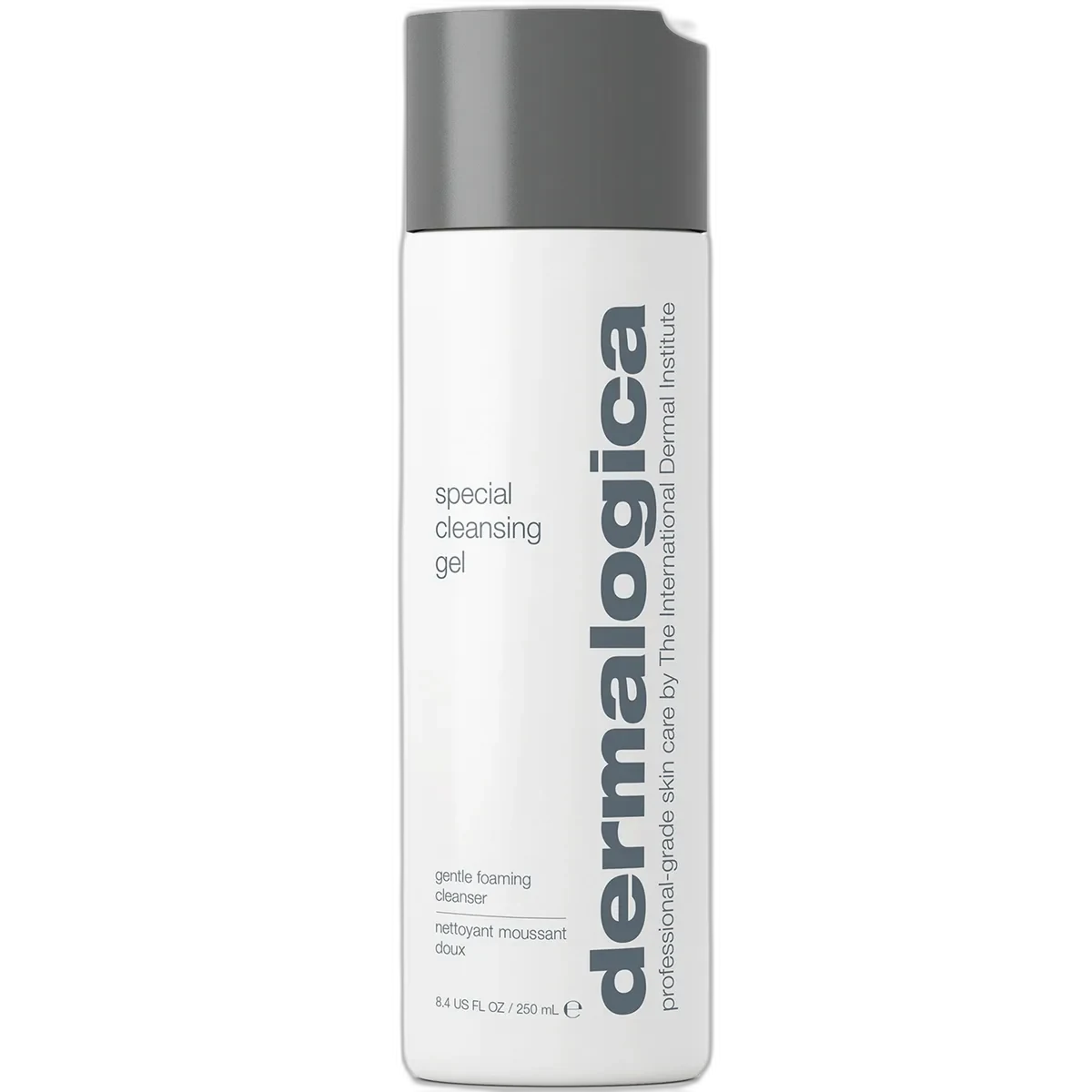
Special Cleansing Gel
The Original Professional Cleanser
 Verified reviewer
Pros & cons.
- +Genuinely mild sulfosuccinate and sarcosinate surfactants replace harsher sulfates of the original formula
- +Quillaja bark saponins provide a distinctive, natural-feeling lather unlike synthetic-only surfactant systems
- +pH-balanced at approximately 5.0 — matches the skin's acid mantle for barrier-supportive cleansing
- +Glycerin prevents over-stripping, delivering the hallmark 'clean but not tight' finish
- +Excellent product economy — one pump per wash, standard bottle lasts 4-6 months
- +Non-comedogenic and fungal acne safe — suitable for breakout-prone skin
- +Nearly 40 years of proven track record with 12,000+ reviews averaging 4.7 stars
- −Essential oils (lavender, bergamot, lemon, citronella) add fragrance allergen exposure with no cleansing benefit
- −Cannot remove heavy or waterproof makeup — requires an oil pre-cleanse step for full routine
- −Premium price of $49 in a category with effective gel cleansers at lower price points
- −Pump mechanism can be stiff and difficult to press, especially when new
- −Some users report batch-to-batch variations in scent or texture
The full review.
Some product loyalty borders on the irrational. This isn’t driven by limited editions or influencers, but by people buying the same face wash for fifteen years and refusing to switch. Dermalogica’s Special Cleansing Gel has built that loyalty by being fundamentally, almost stubbornly, boring.
Launched in 1986 as an original product—developed by Jane Wurwand for the International Dermal Institute treatment rooms—this gel cleanser has done the same job for nearly four decades. It cleans your face. It doesn’t strip your skin. It rinses off. You move on. Twelve thousand reviews later, it maintains consistent 4.7-star ratings and an Allure Readers’ Choice Award.
Reality
The surfactant system shows thoughtful evolution. The original formula used harsher sulfate surfactants common in the 1980s. The current version uses disodium laureth sulfosuccinate and sodium lauroyl sarcosinate—mild cleansing agents backed by clinical safety assessments. A 1999 study of eight surfactants found disodium laureth sulfosuccinate produced scarce positive irritant responses compared to known irritants. A 2024 study in the International Journal of Cosmetic Science confirmed sulfosuccinates are milder than SLES while maintaining equivalent cleansing performance. The formula was meaningfully improved.
The quillaja saponaria bark extract gives this cleanser its personality. Quillaja is a South American tree with bark rich in natural saponins—soap-like molecules that foam and cleanse without synthetic surfactant chemistry. This ingredient creates the distinctive, satisfying lather that feels more natural and less chemically aggressive than typical gel cleansers. It won’t dissolve waterproof mascara, but it wasn’t designed to—the precleanse step handles that.
The pH hovers around 5.0, matching the skin’s natural acid mantle. This matters. A cleanser that is too alkaline (many bar soaps hit pH 9-10) temporarily disrupts the acid mantle and can trigger compensatory oil production and barrier weakness. By maintaining the skin’s preferred pH range, this cleanser supports the barrier with every use. Professional estheticians understand this detail, and consumers feel it when their skin “just feels better” after use.
Glycerin pulls double duty—it is a humectant that prevents surfactants from over-stripping by drawing moisture to the skin surface during cleansing. This is why users describe the after-wash feeling as “clean but not tight.” That sensation—thorough cleanliness without a parched, squeaky feeling—is the product’s calling card and why people develop decade-long habits.
The lemon balm (melissa officinalis) extract adds a soothing, anti-inflammatory layer. It is a thoughtful inclusion for a daily-use product, helping calm the skin during the minor mechanical stress of washing so the twice-daily ritual doesn’t accumulate low-level irritation.
The essential oils are the formula’s most debatable feature. Lavender, lemon, bergamot, and citronella create the unmistakable Dermalogica scent—the herbal-botanical signature treatment room clients associate with professional skincare. For many, this scent is part of the appeal, a sensory cue that their routine has substance. For others—especially those with contact sensitivities or a preference for fragrance-free formulation—it is a daily dose of potential allergens that serves no cleansing function.
The rinse-off format mitigates the sensitization risk from these essential oils. Contact time is brief, and the ingredients wash away rather than sitting on the skin. However, as fragrance-free gel cleansers become increasingly common and effective, the essential oil inclusion feels like tradition preserved for tradition’s sake rather than a deliberate formulation choice.
At forty-nine dollars for 8.4 ounces, the per-use economics are reasonable. One pump per wash, twice daily, means the standard bottle lasts four to six months. The 16.9-ounce size at seventy-three dollars and the refill pouch at sixty-four offer better value. For a product used 730 times a year, the cost per use is well under fifteen cents—the sticker price is misleading relative to the actual value.
The fungal acne safety designation matters for those who need it. The formula is non-comedogenic with no identified comedogenic ingredients, and ingredient analysis databases flag it as malassezia-safe—a rare distinction for a cleanser with this level of ingredient complexity.
Special Cleansing Gel doesn’t promise transformation. It doesn’t claim to brighten, resurface, or treat. It cleans skin gently at the right pH without disturbing what doesn’t need disturbing, and it has done so since Ronald Reagan was president. In a category of products trying to be more than a cleanser, there is wisdom in one that is content to be exactly what it is—and to do it exceptionally well.
Ingredient analysis.
Full INCI list · pH 5
Water/Aqua/Eau, Disodium Laureth Sulfosuccinate, Sodium Lauroyl Sarcosinate, Quillaja Saponaria Bark Extract, Lavandula Angustifolia (Lavender) Oil, Melissa Officinalis Leaf Extract, Citrus Limon (Lemon) Peel Oil, Citrus Aurantium Bergamia (Bergamot) Fruit Oil, Cymbopogon Nardus (Citronella) Oil, Glycerin, Cocamidopropyl Betaine, Coco-Betaine, Hydroxyethylcellulose, Sodium Cocoyl Isethionate, Capryloyl Glycine, Sodium Lauryl Sulfoacetate, Methylpropanediol, Ethylhexylglycerin, Caprylhydroxamic Acid, PPG-5-Ceteth-20, Sodium Hydroxide, Disodium EDTA
Skin match.
The science.
The Science
The surfactant system improves on the original 1986 formula. Disodium laureth sulfosuccinate is the primary cleansing agent. A 1999 study in Contact Dermatitis tested eight surfactants for skin irritation potential; sulfosuccinate showed few positive irritant responses compared to known irritants like sodium lauryl sulfate. A 2024 study in the International Journal of Cosmetic Science confirmed sulfosuccinate-based formulations are milder than SLES but cleanse just as well.
Sodium lauroyl sarcosinate is the secondary surfactant and comes from the amino acid sarcosine. The CIR Expert Panel's 2001 final safety assessment in the International Journal of Toxicology concludes it is safe for cosmetic formulations. A 2024 study by Zhao et al. in the Journal of Cosmetic Dermatology studied its impact on the facial skin microbiome. It found that while the surfactant slightly decreased prokaryotic microbial alpha diversity, it did not extensively influence skin biophysical parameters—meaning the cleansing action does not significantly disrupt the skin's bacterial ecosystem.
The pH of approximately 5.0 matters. The skin's acid mantle has a pH of 4.5-5.5. Cleansers outside this range can temporarily impair barrier function, increase transepidermal water loss (TEWL), and trigger compensatory sebum production. By matching the skin's natural pH, this cleanser supports barrier integrity with every use—a cumulative benefit over hundreds of applications per year.
References
- Biophysical characterization of skin damage and recovery after exposure to different surfactants — Contact Dermatitis (1999)
- Final report on the safety assessment of Cocoyl Sarcosine, Lauroyl Sarcosine, Sodium Lauroyl Sarcosinate — International Journal of Toxicology (2001)
- The impacts of sodium lauroyl sarcosinate in facial cleanser on facial skin microbiome and lipidome — Journal of Cosmetic Dermatology (2024)
Dermatologist Perspective
Dermatologists view gel cleansers with mild surfactant systems as appropriate for most skin types. Special Cleansing Gel's sulfosuccinate-sarcosinate combination is among the gentler formulations in its category. Board-certified dermatologists note the pH-balanced formula supports the skin's acid mantle during cleansing—a key factor for patients with barrier concerns or those using active treatments that compromise barrier function. Estheticians frequently recommend the product as a second-step cleanser in the double-cleanse protocol. However, dermatologists treating patients with documented fragrance allergies or contact dermatitis typically recommend fragrance-free alternatives.
Where it fits in your routine.
Dispense one pump onto wet hands and lather. Massage into a damp face and neck in circular motions for 30-60 seconds. Rinse well with lukewarm water. Use morning and evening. If you wear sunscreen or makeup, use it in the PM after an oil cleanser (like Dermalogica Precleanse) as the second step of a double cleanse. One pump is enough; more does not improve cleansing and wastes product.
At $49 for 8.4 oz, the gel cleanser seems premium. But the per-use math changes that: one pump twice daily makes the bottle last 4-6 months, costing under $0.15 per use. The 16.9 oz size at $73 and the $64 refill pouch give better per-ounce value for regular users. The surfactant quality is above average, and the near-40-year track record builds confidence. Cheaper gel cleansers exist, but the specific mix of mild surfactants, pH balance, and proven long-term reliability provides real value.
Normal, combination, and oily skin types want a reliable, pH-balanced daily gel cleanser with gentle surfactants. It works for those who use a professional skincare ritual and want a cleanser for twice-daily, year-round use without barrier disruption.
People with documented fragrance or essential oil sensitivities should use a fragrance-free gel cleanser. Very dry skin types may prefer a cream or milk cleanser for comfort. Budget-conscious consumers find effective mild gel cleansers at lower prices.
Product details.
This lightweight, translucent green-tinted gel lathers into a gentle, refreshing foam when mixed with water. It is not overly sudsy; it produces a moderate, creamy lather that feels thorough but not aggressive.
A botanical blend leads with lavender, citrus, and mint undertones from lemon, bergamot, and lemon balm. Most users call this scent 'the Dermalogica smell' — it is the brand's olfactory signature.
Clear plastic pump bottles come in 8.4 oz and 16.9 oz sizes. The 1.7 oz travel size uses a squeeze tube. A 16.9 oz refill pouch costs less per ounce. Packaging is recyclable and uses FSC-certified cartons.
The cleansing experience feels familiar and satisfying from the first use. The gel lathers fast with water and spreads easily across the face. It rinses cleanly without residue. Skin feels refreshed and smooth, providing the hallmark "clean but not tight" sensation. The lavender-herbal scent is the most memorable sensory element.
4-6 months with twice-daily use (8.4 oz size, one pump per wash)
12 months
All Year
The backstory.
Launched alongside the brand itself in 1986, Special Cleansing Gel is effectively Dermalogica's founding product. Jane Wurwand created it as the daily cleanser she wished existed in professional treatment rooms — gentle enough for daily use but effective enough to properly prepare skin for treatment. Nearly four decades and over 12,000 reviews later, it remains the brand's most iconic product and the gateway through which many consumers discover professional skincare.
About Dermalogica
Legacy Brand (20+ years)Jane Wurwand founded Dermalogica in 1986, and Special Cleansing Gel was among the brand's first products. With nearly four decades on the market, over 12,000 user reviews, and an Allure Readers' Choice Award, it is one of the industry's most-reviewed professional cleansers.
Common myths.
Sulfate-free cleansers lack the lather and cleaning effectiveness of sulfate-based ones.
Sulfosuccinate, sarcosinate, and natural quillaja saponins create a thick lather that clinical testing shows cleanses effectively. A 2024 study in the International Journal of Cosmetic Science shows sulfosuccinates are milder than SLES but cleanse just as well.
Gel cleansers are too harsh for dry or sensitive skin.
This gel cleanser has a pH of approximately 5.0, matching the skin's natural acid mantle. Glycerin prevents over-stripping. Dry skin types may prefer a cream cleanser for comfort, but this gel works for most skin types if you do not over-cleanse.
FAQ.
Can Dermalogica Special Cleansing Gel remove makeup?
It removes light, everyday makeup but does not dissolve heavy, waterproof, or long-wear makeup alone. For those formulations, use an oil cleanser like Dermalogica Precleanse first, then use Special Cleansing Gel as the second cleanse step.
Is Dermalogica Special Cleansing Gel sulfate-free?
Yes — the current formula uses disodium laureth sulfosuccinate and sodium lauroyl sarcosinate rather than sodium lauryl sulfate (SLS) or sodium laureth sulfate (SLES). These surfactants are milder; clinical testing shows they cause fewer irritant responses and still cleanse effectively.
Is Dermalogica Special Cleansing Gel good for acne-prone skin?
Yes — the formula is non-comedogenic and ingredient analysis databases flag it as fungal acne safe. The gentle surfactant system cleanses well without stripping the barrier, and the pH of approximately 5.0 supports the skin's acid mantle. However, people sensitive to essential oils should patch test first.
How long does a bottle of Dermalogica Special Cleansing Gel last?
The standard 8.4 oz pump bottle lasts about 4-6 months if you use one pump twice daily. The 16.9 oz size and refill pouch last longer and cost less per ounce. One pump works for most people.
Is Dermalogica Special Cleansing Gel fragrance-free?
No — lavender oil, lemon peel oil, bergamot fruit oil, and citronella oil give the cleanser its herbal scent. It has no synthetic fragrances, but these essential oils are potential allergens for fragrance-sensitive individuals.
What is the pH of Dermalogica Special Cleansing Gel?
The pH is approximately 5.0-5.5, matching the skin's natural acid mantle. Dermalogica states all their cleansers are pH-balanced between 4.5-5.5. This slightly acidic pH maintains barrier function and does not disrupt the skin's protective acid layer.
What the community says.
"Gentle yet effective cleansing that never strips or dries out the skin"
"Small amount goes a long way — a pump bottle lasts months"
"Leaves skin smooth, clean, and refreshed without tightness"
"Long-term staple product — many users report 10-20+ years of continuous repurchase"
"Pleasant herbal lavender scent that feels spa-like"
"Works well for all seasons and as both AM and PM cleanser"
"Cannot remove heavy or waterproof makeup alone — needs a pre-cleanse step"
"Essential oils (lavender, bergamot, lemon, citronella) can irritate fragrance-sensitive skin"
"Premium price of $49 for a gel cleanser when simpler alternatives exist"
"Pump mechanism can be stiff and difficult to press initially"
"Some users notice formula or scent variations between batches"
People also looked at.