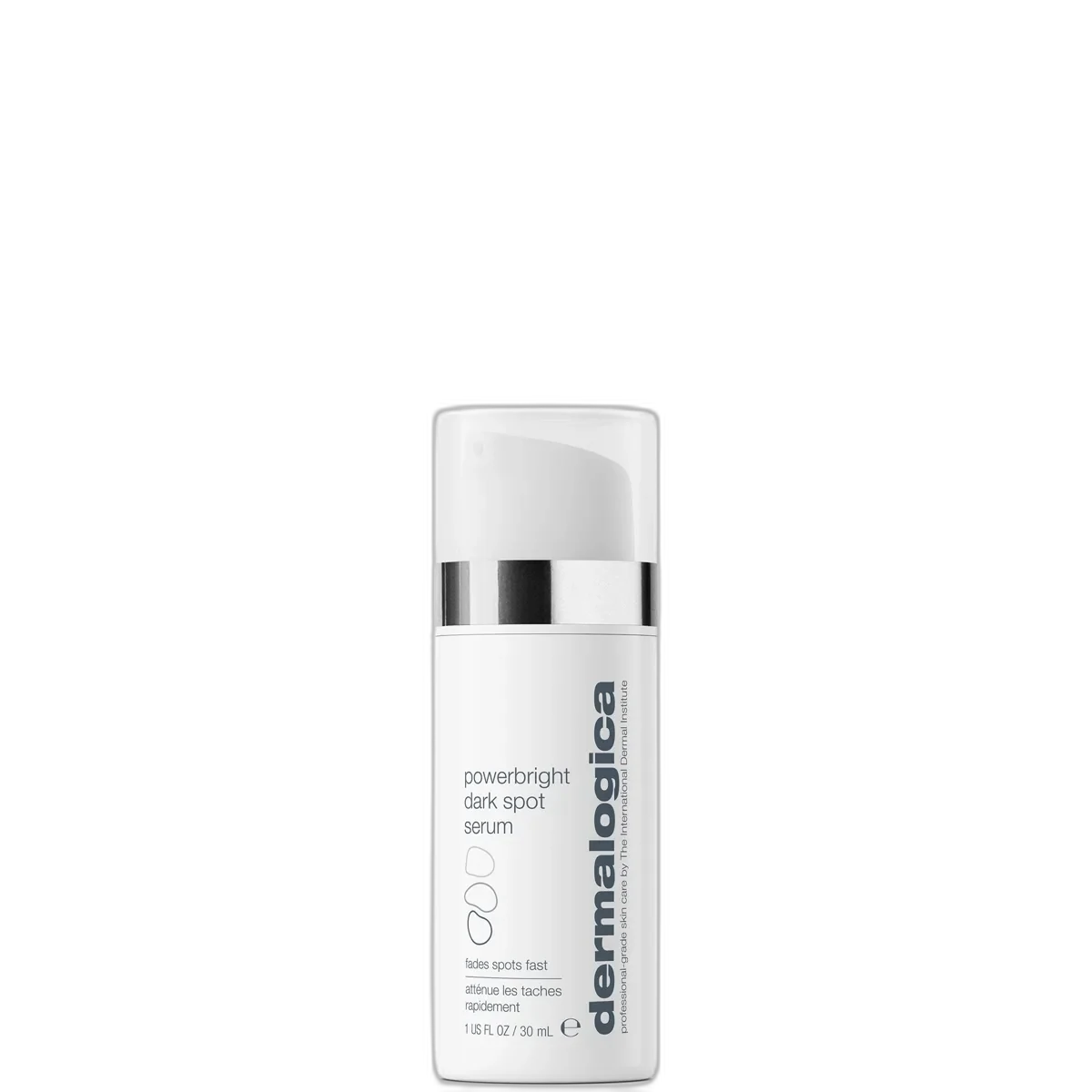
PowerBright Dark Spot Serum
Multi-Pathway Brightener
 Verified reviewer
Pros & cons.
- +Three-pathway brightening approach targets melanin production, transfer, and enzymatic activity simultaneously
- +Hexylresorcinol and niacinamide combination is clinically proven to work synergistically for superior results
- +Ectoin provides environmental protection to prevent new dark spots while treating existing ones
- +Lightweight milky texture absorbs quickly and layers beautifully under moisturizer and sunscreen
- +Airless pump packaging protects oxidation-sensitive actives and delivers precise dosing
- +Immediate optical brightening from titanium dioxide and pullulan — visible luminosity from first use
- +Gentler approach to brightening without hydroquinone, harsh acids, or peeling
- −Contains bergamot and citrus peel oils — photosensitizers in a product targeting sun-damage pigmentation
- −Premium $99 price for 1 oz when effective niacinamide serums exist at a fraction of the cost
- −Multiple essential oils create unnecessary irritation risk for sensitive and reactive skin
- −Results for deeper or hormonal pigmentation can be slow and subtle
- −Only available in one size with no trial option to test before committing
The full review.
There is a particular kind of formulation irony that makes a skincare reviewer pause. Imagine designing an exceptionally clever serum to fade dark spots caused by UV damage, filling it with three distinct anti-pigmentation pathways, protecting it in an airless pump — and then adding bergamot oil and lemon peel oil. Dermalogica’s PowerBright Dark Spot Serum is that irony, bottled. And the frustrating thing is that everything around those essential oils is genuinely impressive.
The brightening strategy here is one of the most scientifically rigorous you’ll find outside of a prescription. Rather than leaning on a single active and hoping for the best, this formula attacks melanin overproduction from three separate angles. Niacinamide, at an estimated 4% concentration, inhibits melanosome transfer — the process by which melanin packets move from melanocytes into the surrounding skin cells where they create visible discoloration. Hexylresorcinol, one of the most potent tyrosinase inhibitors approved for cosmetic use, blocks the enzyme that catalyzes melanin production in the first place. And shiitake mycelium extract provides additional enzymatic inhibition through kojic acid-like compounds. A 2022 clinical study published in the International Journal of Cosmetic Science confirmed that hexylresorcinol and niacinamide achieve synergistic brightening effects — the combination outperforms either ingredient alone.
The ectoin inclusion adds a preventive dimension that most brightening serums overlook entirely. This extremophile-derived molecule protects cells from UV and pollution-induced stress, essentially guarding against the environmental triggers that cause dark spots while the other actives work on fading existing ones. It’s a both-ends approach — corrective and prophylactic in a single pump.
The texture is beautifully executed. This isn’t a water-thin serum or a heavy cream — it’s a lightweight milky fluid with enough slip to spread easily but enough body to feel like it’s delivering something substantive. One pump covers the full face. It absorbs within a minute, leaves a subtle satin finish, and layers impeccably under moisturizer and sunscreen. The titanium dioxide and pullulan create an immediate optical brightening effect that makes skin look more luminous before the actives have even begun their work — a clever bit of formulation psychology that rewards users from day one.
The airless pump packaging deserves praise. Niacinamide and hexylresorcinol can degrade with air exposure, and the sealed pump system protects them while delivering precise, consistent doses. It’s the kind of thoughtful packaging decision that suggests the formulators understand their actives.
Now, about those essential oils. The ingredient list reads like an aromatherapy catalog: bergamot, orange peel, lemon peel, grapefruit peel, lavender, ginger, jasmine, juniper, benzoin resin. Bergamot oil is a known photosensitizer that contains furanocoumarins — compounds that can increase the skin’s sensitivity to UV radiation and potentially worsen the exact hyperpigmentation this serum is trying to treat. Lemon peel oil carries similar phototoxic potential. Including these in a product specifically designed for people with sun-damage-related dark spots is a formulation decision that prioritizes sensory experience over scientific coherence.
To be clear: the risk is manageable with diligent sunscreen use, and the concentrations of essential oils in this formula are likely low enough that the phototoxic potential is minimal in practice. But it’s a risk that doesn’t need to exist. There are plenty of ways to make a serum pleasant to use without adding known photosensitizers to a photodamage-correcting product. For a brand that educates 75,000 skin therapists annually, this feels like the fragrance team overruling the formulation team.
At ninety-nine dollars for one ounce, this is premium pricing that needs justification. The active combination is genuinely sophisticated — you won’t easily replicate the hexylresorcinol-niacinamide-shiitake triple approach at this price point. But you can find excellent niacinamide serums at a fraction of this cost, and the essential oil load adds nothing therapeutic to justify the premium. The value proposition rests entirely on whether you believe the multi-pathway approach delivers meaningfully better results than simpler alternatives.
User feedback is largely positive, with many reporting visible improvement in dark spots within two to four weeks. The pace of results seems to match the science — niacinamide-based brightening is gradual rather than dramatic, but the hexylresorcinol appears to accelerate the timeline compared to niacinamide alone. Users with post-inflammatory hyperpigmentation from acne tend to see faster results than those with hormonal melasma, which tracks with the different biological mechanisms underlying each condition.
The serum fills a legitimate gap in the market: professional-grade, multi-target brightening without hydroquinone, without aggressive acids, and without the harsh side effects that make many brightening products intolerable for daily use. For normal and combination skin types who can tolerate the essential oil content and are willing to invest in a considered approach to pigmentation, this delivers real results through real science. The formula just would have been better — meaningfully, measurably better — without the aromatherapy subplot.
Formula
Texture
The texture is beautifully executed. This isn’t a water-thin serum or a heavy cream — it’s a lightweight milky fluid with enough slip to spread easily but enough body to feel like it’s delivering something substantive. One pump covers the full face. It absorbs within a minute, leaves a subtle satin finish, and layers impeccably under moisturizer and sunscreen. The titanium dioxide and pullulan create an immediate optical brightening effect that makes skin look more luminous before the actives have even begun their work — a clever bit of formulation psychology that rewards users from day one.
Packaging
The airless pump packaging deserves praise. Niacinamide and hexylresorcinol can degrade with air exposure, and the sealed pump system protects them while delivering precise, consistent doses. It’s the kind of thoughtful packaging decision that suggests the formulators understand their actives.
Scent
Now, about those essential oils. The ingredient list reads like an aromatherapy catalog: bergamot, orange peel, lemon peel, grapefruit peel, lavender, ginger, jasmine, juniper, benzoin resin. Bergamot oil is a known photosensitizer that contains furanocoumarins — compounds that can increase the skin’s sensitivity to UV radiation and potentially worsen the exact hyperpigmentation this serum is trying to treat. Lemon peel oil carries similar phototoxic potential. Including these in a product specifically designed for people with sun-damage-related dark spots is a formulation decision that prioritizes sensory experience over scientific coherence.
Common Complaints
To be clear: the risk is manageable with diligent sunscreen use, and the concentrations of essential oils in this formula are likely low enough that the phototoxic potential is minimal in practice. But it’s a risk that doesn’t need to exist. There are plenty of ways to make a serum pleasant to use without adding known photosensitizers to a photodamage-correcting product. For a brand that educates 75,000 skin therapists annually, this feels like the fragrance team overruling the formulation team.
Best for
For normal and combination skin types who can tolerate the essential oil content and are willing to invest in a considered approach to pigmentation, this delivers real results through real science. The formula just would have been better — meaningfully, measurably better — without the aromatherapy subplot.
Ingredient analysis.
Full INCI list
Water/Aqua/Eau, Ethylhexyl Isononanoate, Triolein, Niacinamide, C12-16 Alcohols, 1,2-Hexanediol, Coco-Caprylate/Caprate, Lentinus Edodes Mycelium Extract, C18-36 Acid Triglyceride, Acrylates Copolymer, Butylene Glycol, Ectoin, Paeonia Suffruticosa Root Extract, Jojoba Esters, Hydroxyacetophenone, Hexylresorcinol, Phytosteryl Macadamiate, Sodium Hyaluronate Crosspolymer, Withania Somnifera Root Extract, Phytosterols, Sodium Levulinate, C12-18 Acid Triglyceride, Raspberry Ketone, Mimosa Tenuiflora Bark Extract, Vanilla Planifolia Fruit, Ilex Paraguariensis Leaf Extract, Helianthus Annuus (Sunflower) Seed Oil, Prunus Amygdalus Dulcis (Sweet Almond) Oil, Citrus Aurantium Dulcis (Orange) Peel Oil, Citrus Aurantium Bergamia (Bergamot) Fruit Oil, Citrus Medica Limonum (Lemon) Peel Oil, Citrus Paradisi (Grapefruit) Peel Oil, Ricinus Communis (Castor) Seed Oil, Rosmarinus Officinalis (Rosemary) Leaf Extract, Cistus Ladaniferus Resin, Zingiber Officinale (Ginger) Root Oil, Lavandula Angustifolia (Lavender) Oil, Ribes Nigrum (Black Currant) Seed Oil, Jasminum Sambac (Jasmine) Flower Extract, Cucumis Sativus (Cucumber) Seed Oil, Dipteryx Odorata Seed Extract, Styrax Benzoin Resin Extract, Viola Odorata Leaf Extract, Juniperus Virginiana Oil, Titanium Dioxide, Tocopherol, Ethylhexylglycerin, Xanthan Gum, Sclerotium Gum, Hydrogenated Lecithin, Lecithin, Palmitic Acid, Octyldecanol, Glycerin, Octyldodecyl Oleate, Squalene, Octyldodecyl Stearoyl Stearate, Tetrasodium Glutamate Diacetate, Caprylyl Glycol, Benzyl Glycol, Laureth-21, Pullulan, Silica, Alumina, Sodium Hydroxide, Sodium Dehydroacetate, Sodium Benzoate, Citral, Limonene, Linalool
Skin match.
The science.
The Science
The formula's core brightening duo — niacinamide and hexylresorcinol — has strong clinical validation. A 2022 randomized, double-blind, split-face clinical trial in the International Journal of Cosmetic Science by Shariff et al. shows that 4-hexylresorcinol and niacinamide work together to reduce melanin production in cultured melanocytes. This combination achieved greater clinical hyperpigmentation improvement over 12 weeks than niacinamide alone. The two ingredients use complementary mechanisms: hexylresorcinol inhibits tyrosinase (the enzyme that catalyzes melanin synthesis), and niacinamide blocks melanosome transfer (the process that distributes manufactured melanin to surrounding keratinocytes).
A 2002 study in the British Journal of Dermatology established that 5% niacinamide significantly decreases hyperpigmentation and increases skin lightness after four weeks. Additionally, a 2011 clinical trial in Dermatology Research and Practice showed 4% niacinamide is as effective as 4% hydroquinone for melasma treatment but with fewer side effects.
Ectoin, an extremophile-derived protective molecule, adds a preventive layer. A study in Skin Pharmacology and Physiology (2004) shows ectoin prevents UVA-induced premature photoaging at the cellular level. A 2007 randomized vehicle-controlled trial showed topical ectoin reduced wrinkle depth by 19% over four weeks and improved hydration, elasticity, and roughness. In this formula, ectoin acts as a UV-damage shield that complements the corrective actives by reducing future pigmentation triggers.
The shiitake mycelium extract (Lentinus edodes) adds a third anti-tyrosinase pathway via kojic acid-like compounds. Research in the Journal of Cosmetic Dermatology shows shiitake extract inhibits tyrosinase activity by 15-55% in vitro, while clinical studies show 40%+ lightening of pigmented spots over 12 weeks.
References
- Superior even skin tone and anti-ageing benefit of a combination of 4-hexylresorcinol and niacinamide — International Journal of Cosmetic Science (2022)
- The effect of niacinamide on reducing cutaneous pigmentation and suppression of melanosome transfer — British Journal of Dermatology (2002)
- A Double-Blind, Randomized Clinical Trial of Niacinamide 4% versus Hydroquinone 4% in the Treatment of Melasma — Dermatology Research and Practice (2011)
- Ectoin: an effective natural substance to prevent UVA-induced premature photoaging — Skin Pharmacology and Physiology (2004)
Dermatologist Perspective
Dermatologists in the PowerBright treatment protocol recommend this serum for patients seeking a non-hydroquinone approach to hyperpigmentation management. Board-certified dermatologists note that this multi-pathway strategy — targeting both melanin production and transfer simultaneously — is more scientifically sound than single-active approaches and carries less risk of rebound hyperpigmentation than hydroquinone. Dermatological literature increasingly recognizes the hexylresorcinol-niacinamide combination as a credible alternative for long-term pigmentation management. However, dermatologists emphasize that the essential oil content, specifically bergamot and citrus peel oils, is counterproductive in a photodamage-correcting formula and that strict daily SPF 30+ use is non-negotiable when using this product.
Where it fits in your routine.
Apply one pump to fingertips and press onto clean, dry skin morning and evening. Press into hyperpigmentation areas and blend across the full face for even tone. Follow with moisturizer. In the morning, use sunscreen after this serum to prevent pigmentation and protect against the formula's photosensitizing citrus oils. Use twice daily for 8-12 weeks to see full brightening results.
At $99 for 1 oz, the price reflects its professional positioning and complex multi-active formulation. The hexylresorcinol-niacinamide-shiitake combination is hard to replicate at a lower price, and ectoin adds uncommon preventive value. However, the high essential oil load adds no brightening efficacy and increases formulation cost without serving the customer's primary goal. Consumers with mild hyperpigmentation may get satisfactory results from a 5-10% niacinamide serum at a quarter of this price, but those with moderate-to-significant pigmentation concerns may benefit from the multi-pathway approach.
Normal and combination skin types with dark spots, post-inflammatory hyperpigmentation, or uneven skin tone can use this for multi-pathway brightening without hydroquinone or aggressive exfoliants. It works best for users who use essential oils and apply daily SPF.
Avoid the extensive essential oil profile if you have sensitive or fragrance-reactive skin. Deep hormonal melasma often requires prescription-strength options instead of an OTC serum. Users with mild hyperpigmentation and limited budgets can find effective niacinamide serums for much lower prices.
Product details.
All Year Certifications PETA Cruelty-FreeLeaping BunnyVegan
The backstory.
Part of Dermalogica's PowerBright collection, this serum was developed to bring a professional-grade, multi-target approach to dark spot correction into the daily routine. The formula reflects the brand's treatment-room philosophy of addressing pigmentation through layered mechanisms rather than relying on a single aggressive active, which is why it avoids hydroquinone and high-strength acids in favor of a gentler but multi-pronged strategy.
About Dermalogica
Legacy Brand (20+ years)Jane Wurwand founded Dermalogica in 1986 with the International Dermal Institute. The brand has occupied professional treatment rooms for nearly four decades. Over 100,000 skin therapists globally use Dermalogica, which has PETA and Leaping Bunny cruelty-free certifications.
Common myths.
You need hydroquinone to effectively fade dark spots.
This serum uses hexylresorcinol and niacinamide. A 2022 clinical study shows this combination achieves synergistic brightening. These multiple melanin inhibition pathways match or approach hydroquinone's efficacy without the rebound hyperpigmentation risk from long-term hydroquinone use.
Brightening serums do not need to tingle or peel to work.
The brightening actives (niacinamide, hexylresorcinol, shiitake) inhibit melanin production and transfer instead of exfoliating. No tingling or peeling does not mean the formula fails; it means the product targets pigmentation via enzymatic pathways rather than surface cell turnover.
FAQ.
Does Dermalogica PowerBright Dark Spot Serum contain hydroquinone?
No — this serum uses a hydroquinone-free multi-pathway approach. Niacinamide at approximately 4% inhibits melanosome transfer, hexylresorcinol blocks tyrosinase activity, and shiitake mycelium extract provides additional enzymatic melanin inhibition. This combination achieves synergistic brightening without the rebound hyperpigmentation risk of hydroquinone.
Can I use Dermalogica PowerBright with retinol?
Yes, but introduce them gradually. The niacinamide in this serum buffers retinol irritation, and the combination enhances brightening results. Apply the serum first, wait a few minutes, then layer retinol over it. Alternatively, use them at different times of day — the serum morning and evening, retinol PM only.
Is Dermalogica PowerBright Dark Spot Serum safe for dark skin tones?
The formula works for all skin tones. niacinamide and hexylresorcinol are safer for darker skin than hydroquinone, which risks paradoxical hyperpigmentation. Some users with deeper pigmentation report results take longer (8-12+ weeks) or show less change for stubborn dark spots.
Why does a brightening serum contain essential oils?
The citrus and botanical oils in this formula (bergamot, lemon, grapefruit, lavender) are included for scent rather than brightening function. This is a legitimate concern — bergamot and citrus peel oils contain compounds that can increase photosensitivity, which is counterproductive in a product targeting sun-damage-related dark spots. Diligent SPF use is absolutely essential when using this serum.
How long does it take for Dermalogica PowerBright to show results?
Titanium dioxide and pullulan provide immediate luminosity on first use. Dark spot fading starts within 2-4 weeks of consistent twice-daily use, with significant improvement at 8-12 weeks. Results vary by pigmentation depth and cause; post-inflammatory spots respond faster than hormonal melasma.
Community
What the community says.
"Visible fading of dark spots and sun damage within 2-4 weeks of use"
"Lightweight texture absorbs quickly and layers well under moisturizer and SPF"
"Immediate luminosity and brighter appearance from first application"
"Precise airless pump dispenser prevents waste and protects actives"
"Does not cause dryness or peeling — a gentler approach to brightening"
"High price of $99 for 1 oz feels steep relative to drugstore niacinamide options"
"Contains bergamot and citrus peel oils — photosensitizers in a product meant to treat sun damage"
"Results are slow or minimal for some users with deeper or more stubborn pigmentation"
"Multiple essential oils create irritation risk for sensitive skin types"
"Some users experienced breakouts possibly from squalene or botanical oils"
Featured in.
People also looked at.