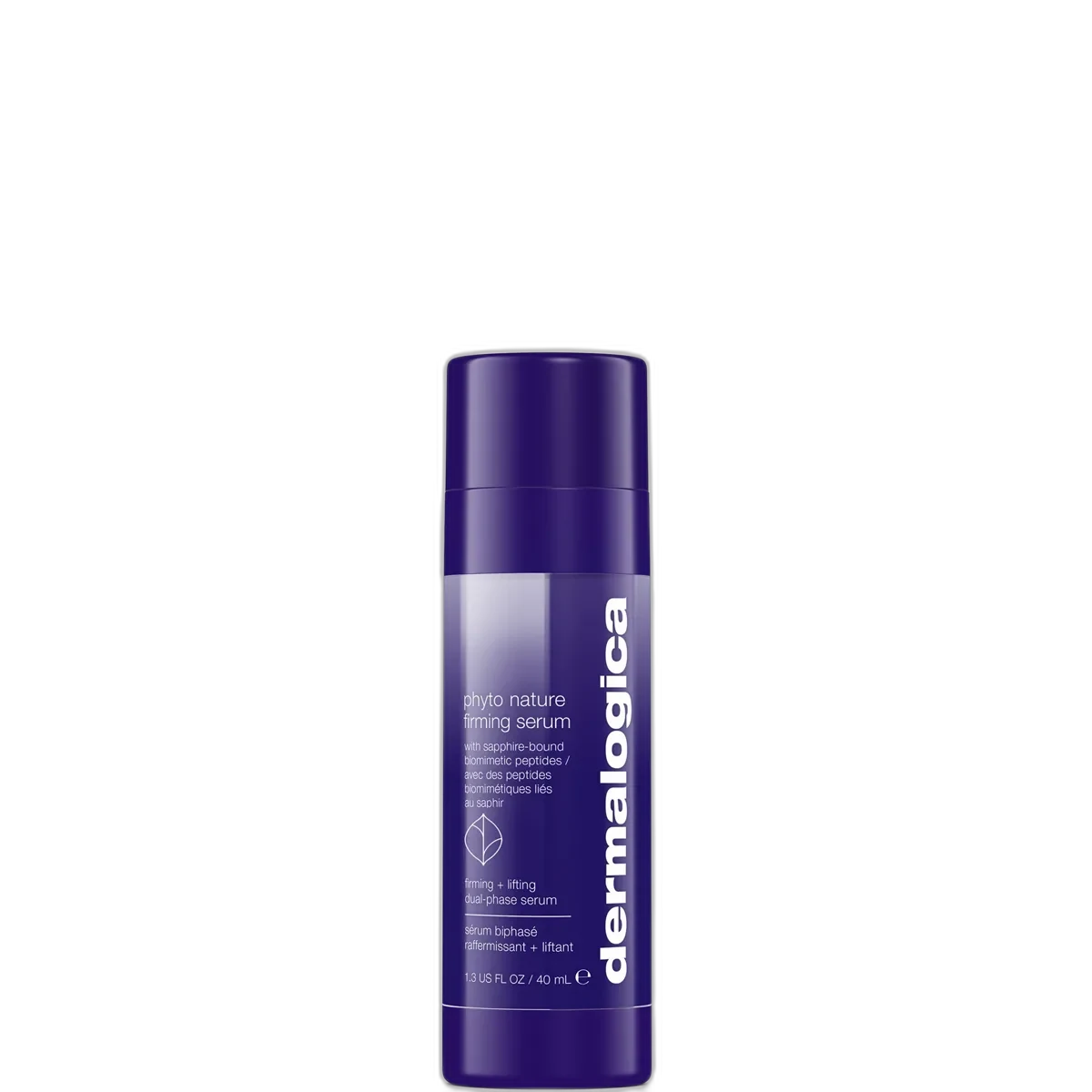
Phyto Nature Firming Serum
Peptide Powerhouse
 Verified reviewer
Pros & cons.
- +Innovative dual-phase delivery keeps oil-soluble and water-soluble actives stable until application
- +Thoughtful peptide pairing: Progeline protects existing collagen while Palmitoyl Tripeptide-28 builds new
- +Spilanthes acmella provides rapid expression line softening within 1-2 weeks of use
- +Comprehensive antioxidant coverage across both lipophilic (CoQ10) and hydrophilic (glutathione) environments
- +Dual-form hyaluronic acid delivers immediate plumping at multiple skin depths
- +Silky, luxurious texture that absorbs well without heavy residue
- −Multiple essential oils and fragrance allergens in a product targeting aging, increasingly reactive skin
- −Very expensive at $155 for 1.3 oz with results users describe as subtle rather than dramatic
- −Dual-chamber pump can malfunction and dispense uneven ratios of each phase
- −Too dewy for comfortable daytime use under makeup for some users
- −Only available in one size — no trial or travel options to test before committing
The full review.
Synthetic sapphire as a peptide delivery vehicle. A plant extract nicknamed ‘nature’s Botox.’ A dual-chamber bottle that keeps two incompatible worlds apart until the moment they meet your skin. Dermalogica’s Phyto Nature Firming Serum is not shy about its ambitions, and on paper, the formulation reads like a greatest-hits compilation of modern anti-aging science. The question is whether all that complexity translates to results you can actually see in the mirror.
The dual-phase concept deserves genuine credit. The lifting phase is oil-based, carrying lipophilic actives like CoQ10, Spilanthes acmella extract, and a rich blend of botanical oils including fermented camellia seed oil and moringa. The firming phase is water-based, housing the peptide complex (Progeline and Palmitoyl Tripeptide-28), dual-form hyaluronic acid, glutathione, and camu camu extract. By keeping these separated until dispensing, the formula protects oxidation-sensitive ingredients from degrading in the bottle — a legitimate formulation advantage that isn’t just marketing theater.
The peptide strategy here is thoughtfully layered. Trifluoroacetyl Tripeptide-2, marketed as Progeline, works by inhibiting progerin — the protein that accumulates in aging cells and drives structural decline. Clinical studies have shown it can preserve skin elasticity by 20% over 28 days and lift a sagging jawline by up to 10% over 56 days. Palmitoyl Tripeptide-28 complements this by actively stimulating new collagen production. It’s a preserve-and-rebuild approach: Progeline protects what you have while its partner builds new structural support. Conceptually, it’s one of the smarter peptide pairings on the market.
Spilanthes acmella, the ingredient that earns the ‘nature’s Botox’ comparison, adds a rapid-acting component to a formula that otherwise plays a longer game. This flower extract temporarily relaxes facial muscle contractions, which is why some users notice expression line softening within the first week or two — well before the peptides have had time to do their structural work. It’s a clever way to provide instant gratification while the deeper actives build momentum.
The texture is unlike most serums. When the pump dispenses both phases simultaneously, they blend into something silky and surprisingly luscious — richer than a typical water-based serum but without the heaviness of a facial oil. It absorbs within about a minute, leaving skin feeling plump and subtly luminous. There’s an immediate gratification factor here that the hyaluronic acid and oil phase deliver reliably.
But then there are the essential oils. Lavender oil (two types), eucalyptus oil, linalool, limonene, and geraniol — in a serum designed for aging skin that is, by definition, becoming more reactive and thinner with time. This is a puzzling formulation choice from a brand that prides itself on professional-grade skincare education. Essential oils add a pleasant botanical scent, certainly, but they also introduce sensitization risk that seems fundamentally at odds with the serum’s target demographic. Mature skin that’s losing firmness doesn’t need fragrance allergens; it needs actives delivered without unnecessary baggage.
The price tag demands serious scrutiny. At $155 for 1.3 ounces — with no larger size available — this is one of Dermalogica’s most expensive products. The dual-phase technology and peptide complex partially justify the premium, but user reviews consistently describe the results as pleasant rather than transformative. Words like ‘subtle,’ ‘nice glow,’ and ‘skin feels softer’ appear frequently. For $155, many consumers expect visible, demonstrable changes — and the gap between the formula’s scientific ambition and the reported real-world results is where this serum loses its argument.
The packaging is a double-edged sword. The dual-chamber airless pump is conceptually smart, but multiple reviewers report inconsistent dispensing — sometimes getting more of one phase than the other, which defeats the purpose of precise ratio delivery. For a product at this price point, packaging reliability should be beyond question.
The antioxidant strategy is where the formula quietly excels. CoQ10 in the oil phase and glutathione in the water phase create a comprehensive defense system that operates across both lipophilic and hydrophilic environments in the skin. Add in the turmeric extract, camu camu (one of nature’s richest vitamin C sources), and Moroccan rockrose, and you have an antioxidant cocktail that addresses free radical damage from multiple angles. This is thoughtful formulation work that doesn’t get enough attention amid the peptide headlines.
For dry and normal skin types who are comfortable with essential oils and willing to commit to the price, this serum offers a genuinely unique product experience and a scientifically credible approach to anti-aging. The dual-phase delivery is real innovation, the peptide pairing is well-reasoned, and the antioxidant coverage is thorough. But the essential oil inclusion narrows the audience unnecessarily, the pump reliability undermines the delivery promise, and the price-to-visible-results ratio makes it a harder recommendation than the ingredient list alone would suggest. It’s a serum that’s easier to admire than to justify.
Formula
Ingredient analysis.
Full INCI list
Lifting Phase: Isoamyl Laurate, Octyldodecanol, Isohexadecane, Diheptyl Succinate, Capryloyl Glycerin/Sebacic Acid Copolymer, Silica Silylate, Pentaclethra Macroloba Seed Oil, Pseudozyma Epicola/Camellia Sinensis Seed Oil Ferment Extract Filtrate, Spilanthes Acmella Flower Extract, Astragalus Membranaceus Root Extract, Curcuma Longa (Turmeric) Root Extract, Melia Azadirachta Leaf, Eclipta Prostrata Extract, Eclipta Prostrata Leaf Extract, Corallina Officinalis Extract, Melia Azadirachta Bark Extract, Moringa Oleifera Seed Oil, Ocimum Basilicum (Basil) Flower/Leaf Extract, Ocimum Sanctum Leaf Extract, Ethylcellulose, Carthamus Tinctorius (Safflower) Seed Oil, Hydroxyacetophenone, Caprylic/Capric Triglyceride, Lavandula Hybrida Oil, Lavandula Spica (Lavender) Flower Oil, Melia Azadirachta Flower Extract, Eucalyptus Globulus Leaf Oil, Hydroxymethoxyphenyl Decanone, Ubiquinone, Water/Aqua/Eau, Linalool, Limonene, Tocopherol, Geraniol. Firming Phase: Water/Aqua/Eau, 1,2-Hexanediol, Adipic Acid/Neopentyl Glycol Crosspolymer, Glycerin, Chondrus Crispus Extract, PEG-40 Hydrogenated Castor Oil, Cistus Monspeliensis Flower/Leaf/Stem Extract, Myrciaria Dubia Fruit Extract, Sodium Hyaluronate, Trifluoroacetyl Tripeptide-2, Glutathione, Palmitoyl Tripeptide-28, Synthetic Sapphire, Acer Rubrum Extract, Sodium Acetylated Hyaluronate, Caffeyl Glucoside, Curcuma Longa (Turmeric) Root Extract, Lavandula Spica (Lavender) Flower Oil, Eucalyptus Globulus Leaf Oil, Lavandula Hybrida Oil, Tamarindus Indica Seed Gum, Silica, Hydroxyacetophenone, Propanediol, Xanthan Gum, Maltodextrin, Pentylene Glycol, Sclerotium Gum, Lecithin, Pullulan, Gluconolactone, Dextran, Glyceryl Caprylate, Benzoic Acid, Linalool, Limonene, Benzyl Alcohol, Sodium Benzoate, Phenoxyethanol
Skin match.
The science.
The Science
The peptide duo in this formula has clinical backing. Trifluoroacetyl Tripeptide-2 (Progeline) targets the progerin pathway; the buildup of this truncated protein in aging cells speeds up structural decline. Clinical studies show a 2% Progeline formulation preserved skin elasticity by 20% over 28 days and lifted the jawline by up to 10% over 56 days. In vitro data shows it protected collagen fibers from degradation by about 43% and elastic fibers by nearly 100%.
The dual-form hyaluronic acid (sodium hyaluronate plus sodium acetylated hyaluronate) provides immediate and sustained anti-aging hydration. A 2021 study in Skin Research and Technology shows acetylated hyaluronic acid reduces crow's feet wrinkles and nasolabial fold depth within 6 hours of application, with wrinkle reduction lasting up to 2 months. The acetylated form also reduces MMP activity in UV-damaged and mature skin, providing protection beyond hydration.
Ubiquinone (CoQ10) is a well-studied topical antioxidant for aging skin. A 2009 review in BioFactors found topical CoQ10 significantly reduces facial wrinkle and fine line depth, likely by enhancing skin hyaluronate synthesis. Its position in the oil phase of this dual-phase system ensures stability and delivery into the lipid-rich stratum corneum.
Spilanthes acmella (Acmella oleracea) works as a topical muscle relaxant via spilanthol. This compound inhibits repeated facial muscle contractions in a mechanism similar to botulinum toxin, though the effect is temporary and milder. 2021 research confirmed its efficacy in anti-wrinkle formulations and showed it stimulates fibroblasts and collagen synthesis.
References
- Flash anti-wrinkle and hydration effects of sodium acetylated hyaluronate — Skin Research and Technology (2021)
- Coenzyme Q10, a cutaneous antioxidant and energizer — BioFactors (2009)
Dermatologist Perspective
Dermatologists view the Progeline and peptide combination as a credible non-retinoid anti-aging approach, especially for patients who cannot tolerate retinoids or want complementary treatments. Board-certified dermatologists note the dual-phase delivery system solves a formulation challenge—keeping oxidation-sensitive ingredients stable—while the peptide pairing targets collagen preservation and production. However, the essential oil content often irritates aging skin, which becomes more reactive over time. Dermatologists treating sensitive or rosacea-prone mature patients typically recommend fragrance-free alternatives for daily peptide serums.
Where it fits in your routine.
Shake the bottle well before each use to blend both phases. Dispense 2-3 pumps into palms, press hands together briefly to warm and mix the formula, then press into clean, toned skin. Apply to face and neck in the evening before moisturizer. Wait 60-90 seconds for absorption before layering. Use morning and evening, though most users prefer nighttime use for the dewy finish. Use consistently for at least 8 weeks to assess peptide benefits.
At $155 for 1.3 ounces with no alternative sizes, this is one of the most expensive products in Dermalogica's lineup. The dual-phase technology, peptide complex, and comprehensive antioxidant system drive formulation costs that partially justify the premium. However, the essential oils add no functional anti-aging benefit, and user reviews consistently call results subtle rather than transformative. The brand's professional pedigree and the formulation's scientific ambition are real, but budget-conscious consumers should weigh if the innovation premium yields better results than more affordable peptide serums.
Dry to normal skin types aged late 30s and older who want a multi-peptide approach to firming and use essential oils. This works for users who value innovative formulation technology and want a premium nightly treatment.
People with fragrance sensitivities, rosacea, or reactive skin should avoid the essential oil content. The oil phase is too heavy for oily skin. At $155 for 1.3 ounces, the subtle results reported by most users may not justify the cost for budget-conscious consumers.
Product details.
The scent is herbal and botanical, led by lavender and eucalyptus essential oils. It is not fragrance-free; it contains linalool, limonene, and geraniol.
A purple dual-chamber airless pump bottle dispenses the lifting (oil) and firming (water) phases at once. This airless design prevents oxidation of sensitive peptides and antioxidants. Some users report the pump mechanism is inconsistent.
The first application provides immediate plumping and a visible glow. Skin feels silky and nourished. Most users experience no tingling or irritation, but those sensitive to essential oils may feel warmth. The dual-phase texture requires a moment to learn — shake well before each pump.
2-3 months with nightly use of 2-3 pumps
12 months
All Year
The backstory.
Originally launched as part of Dermalogica's AGE Smart line, this serum represents the brand's most ambitious formulation effort — translating professional treatment-room technology into a daily-use product. The 'sapphire-bound' peptide delivery system and dual-phase format reflect Dermalogica's attempt to differentiate in the crowded anti-aging serum market with genuine formulation innovation rather than just ingredient stacking.
About Dermalogica
Legacy Brand (20+ years)Jane Wurwand founded Dermalogica in 1986 with the International Dermal Institute. Over 100,000 skin therapists in 100+ countries use the brand. Dermalogica has independent cruelty-free certification from PETA and Leaping Bunny.
Common myths.
Dual-phase products are marketing gimmicks; separate oil and water serums yield the same results.
The dual-phase format has a specific purpose: it keeps oxidation-sensitive ingredients like CoQ10 and glutathione stable and separate until application. This ensures the formula delivers oil-soluble and water-soluble actives at the correct ratio simultaneously. Layering separate products does not guarantee this delivery efficiency.
Peptide serums replace retinol in anti-aging routines.
Peptides and retinol use different mechanisms: peptides signal collagen production and protect existing structures, while retinol accelerates cell turnover. This serum complements a retinol routine (used on alternate nights) but does not replace retinol's proven resurfacing and turnover benefits.
FAQ.
Is Dermalogica Phyto Nature Firming Serum worth the price?
The formula uses Progeline, Palmitoyl Tripeptide-28, CoQ10, glutathione, and dual-form HA in a dual-phase delivery system. User reviews show subtle results rather than dramatic ones, and the essential oil content makes it unsuitable for sensitive skin. At $155 for 1.3 oz, this investment works best for dry-to-normal, non-sensitive skin types using it every night.
Can I use Dermalogica Phyto Nature Firming Serum with retinol?
Yes, but use them on alternate nights instead of layering. This peptide serum protects and stimulates collagen via different pathways than retinol. Skip the peptide serum on retinol nights and use a simpler hydrating serum to reduce potential irritation.
Why does Dermalogica Phyto Nature Firming Serum have two phases?
The dual-phase design separates oil-soluble ingredients (CoQ10, Spilanthes acmella, botanical oils) from water-soluble ones (peptides, hyaluronic acid, glutathione) until application. This preserves the potency of oxidation-sensitive actives and delivers lipophilic and hydrophilic ingredients to the skin at the same time in the correct ratio.
Is Dermalogica Phyto Nature Firming Serum fragrance-free?
No — some retailer listings are wrong; this serum contains lavender oil, eucalyptus oil, and EU-regulated fragrance allergens like linalool, limonene, and geraniol. This matters if you have fragrance sensitivities or reactive skin.
How long before I see results from Dermalogica Phyto Nature Firming Serum?
The hyaluronic acid provides immediate plumping and radiance on first use. Spilanthes acmella extract softens expression lines within 1-2 weeks. The Progeline and Palmitoyl Tripeptide-28 peptide complex requires 4-8 weeks of consistent nightly use for deeper firming benefits.
What does 'sapphire-bound' mean in Dermalogica's peptide technology?
Dermalogica uses synthetic sapphire particles to deliver the Palmitoyl Tripeptide-28 peptide. These sapphire particles act as carriers to increase the peptide's skin penetration and bioavailability. Dermalogica claims this increases efficacy, but limited independent research verifies this specific delivery system's superiority.
Can I use Dermalogica Phyto Nature Firming Serum during the day?
You can, but most users prefer applying it at night. The oil-phase gives the serum a dewy finish that feels heavy under makeup and sunscreen. If you use it during the day, follow with a lightweight moisturizer and SPF. Let the serum absorb fully before layering.
What the community says.
"Noticeable firming and plumping effect within the first two weeks"
"Skin feels smoother, softer, and more hydrated immediately"
"Improved radiance and more even skin tone over time"
"Innovative dual-phase concept keeps active ingredients potent"
"Pleasant botanical scent for those who enjoy lavender"
"Very expensive at $155 for 1.3 oz with results described as subtle"
"Dual-chamber pump can malfunction or dispense uneven ratios of each phase"
"Can feel too heavy or dewy for daytime use under makeup"
"Contains multiple essential oils despite being marketed for aging skin"
"Some users experienced skin congestion or irritation from the botanical extracts"
People also looked at.