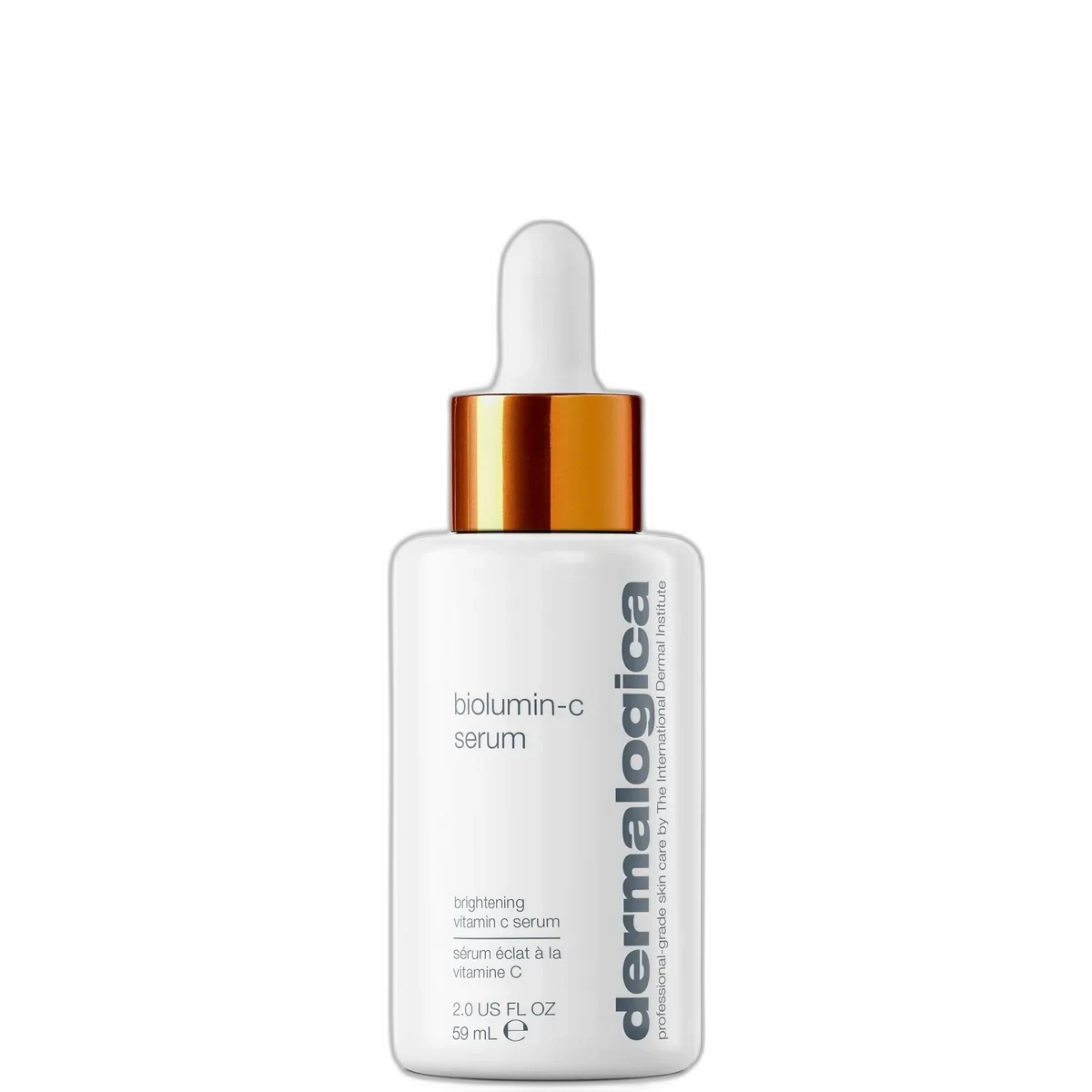
Biolumin-C Serum
Professional Brightening Powerhouse
 Verified reviewer
Pros & cons.
- +Exceptional 24-month shelf stability eliminates the oxidation anxiety of pure vitamin C serums
- +Dual-action formula combines vitamin C brightening with lactic acid exfoliation for accelerated results
- +Silky texture and luminous finish make it a pleasure to use daily under makeup
- +Palmitoyl Tripeptide-5 adds legitimate collagen-stimulating anti-aging benefits
- +Over 4,000 reviews with a 4.6 average demonstrate consistent real-world satisfaction
- +Available in three sizes including a value-oriented 2.0 oz option
- −$99 for 1 oz is steep for 4.7% stabilized vitamin C when higher-potency options cost less
- −Grapefruit peel oil and limonene are unnecessary sensitizers in a product designed for daily use
- −Stabilized derivatives are less potent than pure L-ascorbic acid at equivalent concentrations
- −One full dropper per application means the 1 oz bottle may last only 4-6 weeks
- −Carrageenan in the formula may concern acne-prone users due to comedogenic potential
The full review.
BioLumin-C hides its true nature in its name. The ‘C’ highlights vitamin C, and marketing emphasizes stable, bioavailable vitamin C at 3x the concentration of competitors. However, the INCI list shows ingredients by concentration; lactic acid sits in fifth position while both vitamin C derivatives appear much lower. By formulation hierarchy, this is a lactic acid serum more than a vitamin C serum. That is a benefit.
Lactic acid is a highly underrated AHA. It exfoliates like glycolic acid but uses a larger molecular size to slow penetration, which reduces irritation while still accelerating cell turnover. It also acts as a humectant, drawing moisture into skin during exfoliation. In this formula, lactic acid handles surface renewal: dissolving dead cells, improving texture, and enhancing radiance. The vitamin C derivatives then act on the freshly revealed skin, where their antioxidant and melanin-inhibiting properties penetrate more effectively.
The synergy between AHA exfoliation and vitamin C brightening makes this serum more effective than either ingredient alone. The 4.7% stabilized vitamin C does not do extraordinary things at that concentration; instead, the lactic acid prepares the canvas so the vitamin C paints on a smoother surface.
The stability claim is legitimate. Pure L-ascorbic acid serums often oxidize within weeks of opening when exposed to air. Within two to three months, expensive serums turn brown. Dermalogica’s two stabilized derivatives (Ascorbyl Methylsilanol Pectinate and Aminopropyl Ascorbyl Phosphate) avoid this. The 24-month period after opening allows for slow use without degradation. This solves a problem for people who discard half-used vitamin C serums due to oxidation.
The trade-off is potency. Stabilized vitamin C derivatives are not biochemically equivalent to pure L-ascorbic acid. They must convert to active ascorbic acid after skin penetration, and this conversion is not 100% efficient. The 4.7% combined concentration yields less than 4.7% effective ascorbic acid. Many well-regarded vitamin C serums use 10-20% pure L-ascorbic acid. Dermalogica’s approach is not wrong, just different; it prioritizes reliability over intensity.
Palmitoyl Tripeptide-5 adds anti-aging benefits. This synthetic peptide signals collagen production via the TGF-beta pathway to firm skin. In a leave-on serum at a concentration appearing in the mid-INCI list, it has a better chance of delivering benefits than the same peptide in the brand’s rinse-off cleanser.
The texture is a silky gel-serum that feels light, absorbs within one to two minutes, and leaves a luminous base for moisturizer and makeup. It feels slightly tacky during absorption, but the finish is a dewy glow that fits the ‘Lumin’ name. This serum makes skin look better immediately, even before long-term ingredients work.
Grapefruit peel oil is the formula’s most puzzling ingredient. Dermalogica does not use artificial fragrance, but grapefruit peel oil contains furanocoumarins and limonene, which are documented sensitizers. Since lactic acid increases photosensitivity, adding a potentially phototoxic essential oil seems driven by consumer experience rather than science. It smells nice, but it shouldn’t be there.
The price is significant. At $99 for one ounce, this serum competes with pure vitamin C formulas that have higher concentrations for half the price or less. The value lies in the stability, the multi-action formula (vitamin C plus AHA plus peptide), the professional heritage, and the delivery. Whether these justify a 2-3x price premium is personal. The 2.0 oz size at $154 offers better value, and Dermstore’s auto-replenish at 15% off reduces the cost.
With over 4,000 reviews averaging 4.6 stars over nearly eight years, the BioLumin-C Serum provides consistent, gentle results rather than dramatic transformations. This serum suits people wanting reliably luminous skin over time, not those chasing maximum vitamin C potency. Dermalogica makes a strong case for this choice. Whether $99 is the right price depends on your skin and your budget.
Formula
Formula
Ingredient analysis.
Full INCI list
Water/Aqua/Eau, Glycerin, Butylene Glycol, Ethoxydiglycol, Lactic Acid, Salvia Hispanica (Chia) Seed Extract, Sodium PCA, Palmitoyl Tripeptide-5, Sophora Japonica Flower Extract, Ascorbyl Methylsilanol Pectinate, Sodium Hyaluronate, Tocopherol, Dipotassium Glycyrrhizate, Aminopropyl Ascorbyl Phosphate, Polyacrylate-13, Propanediol, Citrus Grandis (Grapefruit) Peel Oil, Helianthus Annuus (Sunflower) Seed Oil, Polyisobutene, Methylpropanediol, Carrageenan, Pentylene Glycol, Glyceryl Polyacrylate, Caprylyl Glycol, Ethylhexylglycerin, Tetrasodium Glutamate Diacetate, Xanthan Gum, Polysorbate 20, Limonene, Sodium Hydroxide, Phenoxyethanol
Skin match.
The science.
The Science
This serum's dual vitamin C system prioritizes delivery and stability over raw concentration. A phosphate group stabilizes the water-soluble Aminopropyl Ascorbyl Phosphate, preventing the oxidation cascade that browns pure ascorbic acid formulas. It works at near-neutral pH, so it avoids the irritation caused by the low-pH environment L-ascorbic acid requires. Ascorbyl Methylsilanol Pectinate uses a silanol (organosilicon) carrier to improve transdermal delivery. Pharmaceutical research shows silicon compounds penetrate skin better because they are compatible with both the aqueous and lipid phases of the stratum corneum.
The lactic acid component adds clinically validated AHA exfoliation. Lactic acid is an effective keratolytic that promotes desquamation, improves skin texture, and helps co-formulated actives penetrate. Unlike glycolic acid, lactic acid acts as a humectant, drawing water into the stratum corneum while it exfoliates. This dual benefit helps the serum brighten skin without dehydration.
Palmitoyl Tripeptide-5 is a synthetic lipopeptide that mimics thrombospondin-1, a natural protein that activates latent TGF-beta (transforming growth factor beta). TGF-beta signaling tells fibroblasts to increase production of type I collagen and other extracellular matrix components. In vitro studies show Palmitoyl Tripeptide-5 increases collagen synthesis in human dermal fibroblast cultures, making it a firming active.
Dermalogica's clinical study (conducted independently on 30 participants over 8 weeks) reported that 97% found skin smoother, 82% found skin visibly rejuvenated, and 76% found skin looked brighter. These results involve a small sample size, and the methodology is not in peer-reviewed literature.
Dermatologist Perspective
Board-certified dermatologists see this formula as a gentle, multi-action approach to brightening and anti-aging. It trades the immediate potency of pure L-ascorbic acid for better stability and tolerance. Dermatologists note that patient compliance drives skincare outcomes. A product that doesn't oxidize, doesn't sting, and feels pleasant is used more consistently than a high-potency formula that degrades fast and causes discomfort. The lactic acid adds exfoliating value, but dermatologists recommend sun protection because AHA use increases photosensitivity. Most cosmetic dermatologists would flag the grapefruit peel oil as an unnecessary potential sensitizer.
Where it fits in your routine.
Apply one full dropper to clean, dry skin every morning. Press the serum into your face and neck with fingertips, avoiding the immediate eye area. Wait 1-2 minutes for absorption before applying moisturizer and sunscreen. The lactic acid makes daily SPF 30+ essential. Use it nightly on alternate days from retinol. Mild tingling during the first week is normal; persistent stinging means you must buffer with moisturizer or reduce frequency.
At $99 for 1.0 oz, the per-ounce cost is high — especially for a vitamin C serum using 4.7% stabilized derivatives instead of high-concentration pure ascorbic acid. The 2.0 oz size costs $154, which lowers the per-ounce price to $77; Dermstore's 15% auto-replenish discount drops this to about $66 per ounce. The 24-month shelf life prevents waste from oxidation — a cost savings compared to pure vitamin C serums where users often discard the last third of the bottle. The travel size (0.34 oz for $39) works as a trial entry point. Value depends on the stability advantage, the multi-action formula, and your preference for professional-grade positioning.
This multi-action brightening serum offers long shelf stability and no oxidation concerns. It suits normal to combination skin types wanting vitamin C antioxidant protection and AHA exfoliation in one product. It works for Dermalogica loyalists and users frustrated by pure vitamin C serums that oxidize before the bottle is empty.
Consumers seeking high-concentration L-ascorbic acid will find 4.7% stabilized derivatives underwhelming at this price. People sensitive to citrus or essential oils should avoid the grapefruit peel oil and limonene. Budget-conscious shoppers can find effective vitamin C and lactic acid products for much less than the $99 price point. The lactic acid plus vitamin C combination may stimulate very sensitive skin.
Product details.
Lightweight gel-serum with a silky, slightly viscous texture. It is not water-thin but absorbs in one to two minutes. It feels slightly tacky during absorption and settles to a smooth, dewy finish.
Grapefruit peel oil gives this a noticeable citrus aroma. Some find this pleasant; ingredient purists may not. It has no synthetic fragrance, but the essential oil means this is not fragrance-free.
A glass dropper bottle uses a double outer coating to protect the formula from light degradation. It comes in 0.34 oz, 1.0 oz, and 2.0 oz sizes. The glass is recyclable and outer cartons use FSC-certified paper.
It feels silky and has a faint citrus scent. The lactic acid causes mild warmth, which is normal; if it stings, buffer with a moisturizer or use it less often. The dewy glow shows after the first application. Some users see mild peeling or more sensitivity during the first week as the lactic acid speeds up cell turnover.
4-6 weeks with once-daily use (1.0 oz size, one full dropper per application)
24 months
All Year
The backstory.
Launched in 2018 as a flagship product in Dermalogica's Age Smart line, the BioLumin-C Serum was developed to solve what the brand's skin therapists saw as the biggest consumer frustration with vitamin C: products that oxidized before you could finish the bottle. By choosing stabilized derivatives over pure L-ascorbic acid, Dermalogica traded some potency for dramatically improved shelf stability — a 24-month PAO versus the typical 2-3 months for pure vitamin C serums.
About Dermalogica
Legacy Brand (20+ years)Jane Wurwand founded Dermalogica in 1986 in Los Angeles, developing it with the International Dermal Institute. Over 100,000 professional skin therapists worldwide use the brand, and Unilever has owned it since 2015.
Common myths.
Stabilized vitamin C derivatives work as well as pure L-ascorbic acid.
Stabilized forms in this serum avoid oxidation and irritation, though they lack the immediate potency of pure L-ascorbic acid. The 4.7% combined concentration of derivatives does not equal 4.7% L-ascorbic acid because bioavailability and conversion rates differ. This trades raw strength for stability and tolerance.
This is primarily a vitamin C serum.
Lactic acid sits higher in the INCI order than both vitamin C derivatives. This formula works as an AHA exfoliating serum and a vitamin C brightening serum. This dual action helps, because exfoliation increases vitamin C penetration and speeds up brightening results.
FAQ.
How much vitamin C is in Dermalogica BioLumin-C Serum?
The formula uses 4.7% of two stabilized vitamin C derivatives: Ascorbyl Methylsilanol Pectinate and Aminopropyl Ascorbyl Phosphate. These are not pure L-ascorbic acid; they are engineered for stability and gentle delivery. Dermalogica claims this combination delivers 3x the vitamin C of leading competitors, based on bioavailability rather than raw percentage.
Why is the Dermalogica BioLumin-C Serum so expensive?
The $99 price reflects Dermalogica's professional-grade positioning, the proprietary dual vitamin C delivery system, the collagen-boosting peptide, and the glass packaging with UV-protective coating. The 2.0 oz size at $154 offers better per-ounce value for regular users.
Does this vitamin C serum expire or oxidize quickly?
No — this is one of the most stable vitamin C serums available. These stabilized derivatives last 24 months after opening, while pure L-ascorbic acid serums last 2-3 months. The formula does not turn orange or brown in the bottle.
Can I use this serum at night?
Use it at night, but vitamin C works best in the morning to provide antioxidant protection against daytime UV and pollution. The lactic acid content also makes sunscreen essential during daytime use. If you use it in the evening, pair it with your retinol on alternating nights to avoid over-exfoliation.
Is the Dermalogica BioLumin-C Serum fragrance-free?
No — Citrus Grandis (Grapefruit) Peel Oil and Limonene provide a natural citrus scent. Dermalogica says it is free of artificial fragrances, but the essential oil is a genuine sensitizer. People with fragrance sensitivity should be aware of this.
What the community says.
"Visibly brightens skin and evens out overall skin tone within weeks"
"Lightweight silky texture that absorbs well and layers under makeup"
"Stable formula that doesn't oxidize quickly in the bottle like pure vitamin C"
"Noticeable improvement in skin texture and smoothness"
"Firming effect on skin with consistent use"
"$99 for 1 oz feels expensive for a 4.7% stabilized vitamin C serum"
"Exact vitamin C percentage was not disclosed until pressed by reviewers"
"Contains grapefruit peel oil and limonene — known sensitizers"
"Some users report pilling under makeup"
"Stabilized vitamin C derivatives are less potent than pure L-ascorbic acid"
People also looked at.