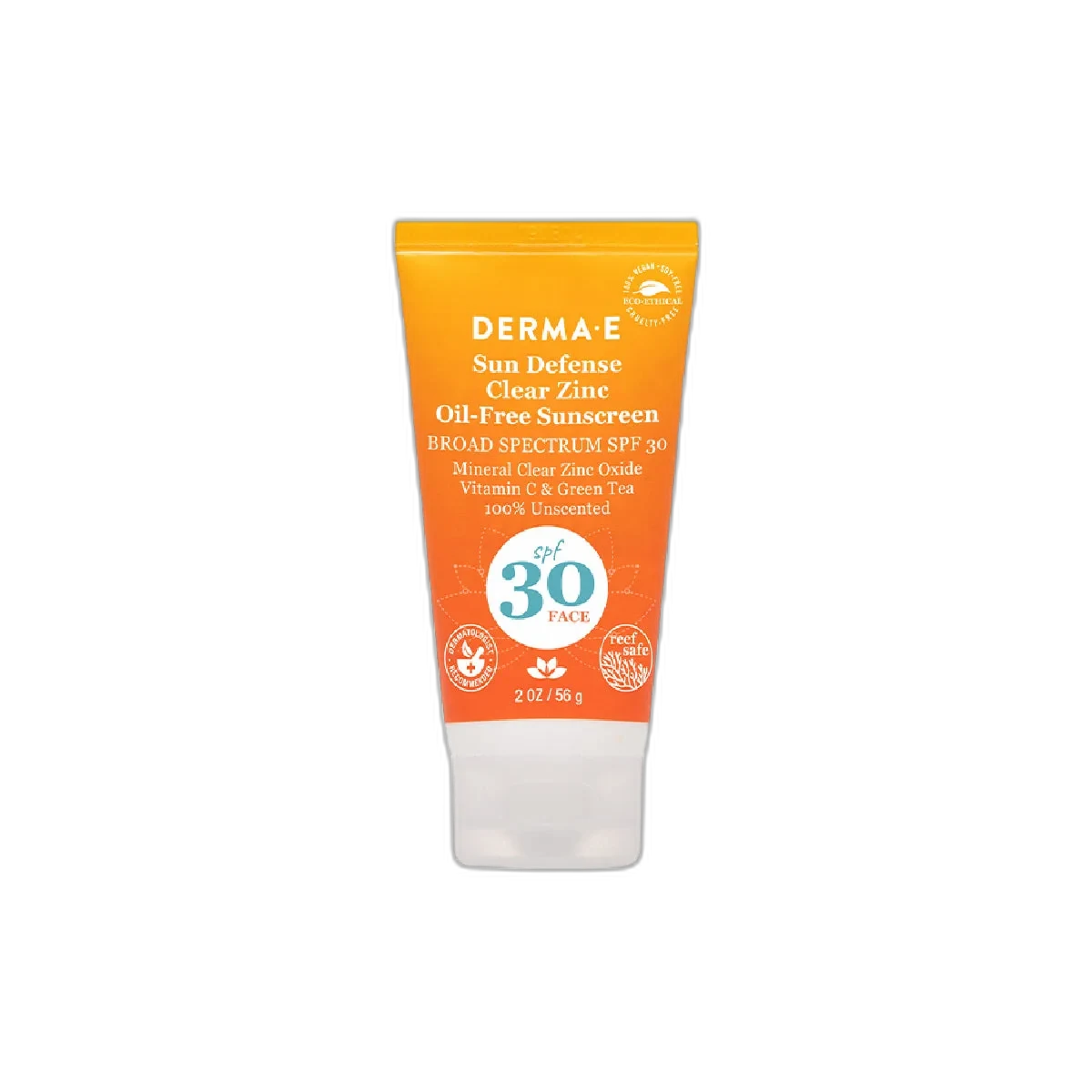
Sun Defense Mineral Oil-Free Face Sunscreen SPF 30
Clean Mineral Pick
 Verified reviewer
Pros & cons.
- +High 19.5% zinc oxide concentration delivers strong UVA protection
- +Essential-oil-free and fragrance-free — rare in the natural-brand category
- +Includes real L-ascorbic acid plus green tea and vitamin E antioxidants
- +Tolerated by rosacea, pregnancy, and post-procedure users
- +Pure mineral filter system with no chemical sunscreen actives
- +Certified vegan, cruelty-free, and reef-friendly
- +Oil-free base suitable for acne-prone and fungal-acne routines
- +Backed by Derma E's 40-year track record in US natural skincare
- −Noticeable white cast on medium-to-deeper skin tones
- −Thicker texture requires deliberate blending to apply evenly
- −More visible under liquid foundation than newer hybrid formulas
- −Only available in a single 2 oz size
- −SPF 30 may feel low next to premium SPF 50 mineral alternatives
The full review.
Most Derma E bestsellers use a signature botanical hook. The Acne Rebalancing Cream uses tea tree. The Firming DMAE Moisturizer has lavender oil. The Hydrating Day Cream uses a natural fragrance blend. Rosacea patients or users with reactive skin likely cannot use those safely—so for a long time, Derma E felt like a brand not built for them. Then, the Sun Defense mineral sunscreen arrives and does the opposite. No essential oils. No fragrance. No botanical extracts with known sensitization risk. It uses a high-zinc mineral filter system with aloe, vitamins, and clean emulsifiers. This product belongs in its own marketing universe because it reaches the exact audience the rest of the brand excludes.
The actives define this sunscreen. 19.5% zinc oxide is a high concentration—most daily mineral face sunscreens use 10% to 15%. Stepping up to nearly 20% delivers more UVA coverage but causes more visible whitening. The additional 2.64% titanium dioxide handles UVB and boosts the SPF to the labeled 30. For context, SPF 30 in a mineral filter system with this zinc load is not a weak sunscreen—the UVA protection is robust, likely more robust than many chemical SPF 50 alternatives. UVA causes most photoaging, pigmentation, and long-term skin cancer risk, so a strong UVA filter matters more in daily wear than the absolute SPF number.
The supporting ingredients earn this sunscreen its place. Aloe vera is the first inactive ingredient, providing cooling hydration to offset the drying potential of high zinc. The formula includes L-ascorbic acid—real vitamin C—which adds an antioxidant contribution during wear. Green tea extract brings polyphenol antioxidants, and vitamin E adds more antioxidant layering. Panthenol, lecithin, and plant-derived emulsifiers keep the formula comfortable. This is not revolutionary, but the cumulative effect creates a sunscreen that does preventive work beyond UV blocking.
The texture is where the product’s honesty shows. This is a mineral sunscreen with a visible zinc and titanium load; it looks and feels like one. The lotion is thick and opaque white. You need thirty to sixty seconds of deliberate blending to work it into the skin. Even after blending, the finish is recognizably mineral—a soft satin with a slight whitening effect that is manageable on fair-to-medium skin tones but more visible on darker tones. This is not a newer generation hybrid mineral-chemical sunscreen that disappears into medium skin. It is an older-generation mineral formula, and visibility is the price of the clean filter profile.
For users who need this sunscreen, the trade is worth it. Rosacea patients who cannot tolerate chemical filter heat often choose high-zinc mineral options, and this is better than most drugstore mineral options at a similar price point. Pregnant users who must skip salicylic acid, retinoids, and essential oils in most hydrating sunscreens often use mineral formulas, and this sunscreen is a reliable choice. Post-procedure patients—those recovering from microneedling, laser treatments, or chemical peels—usually need fragrance-free mineral sunscreens during the sensitive healing window, and this fits that need.
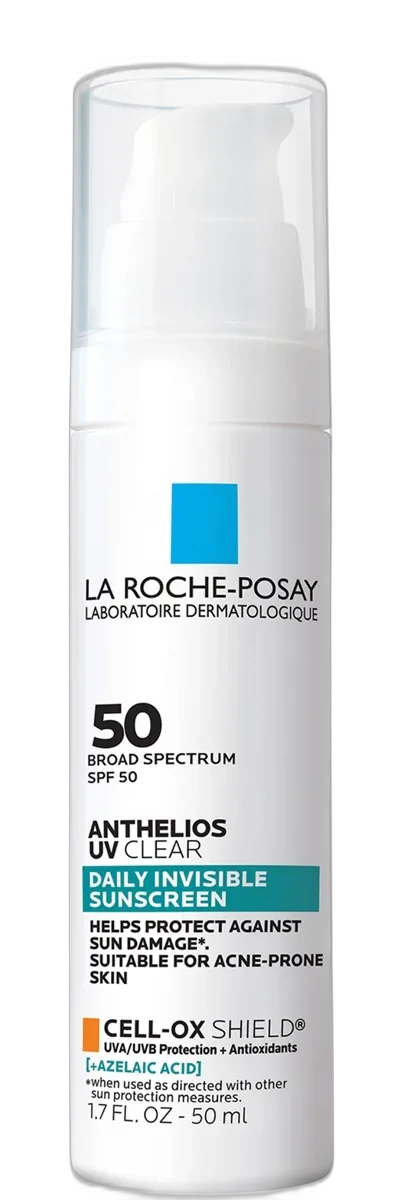
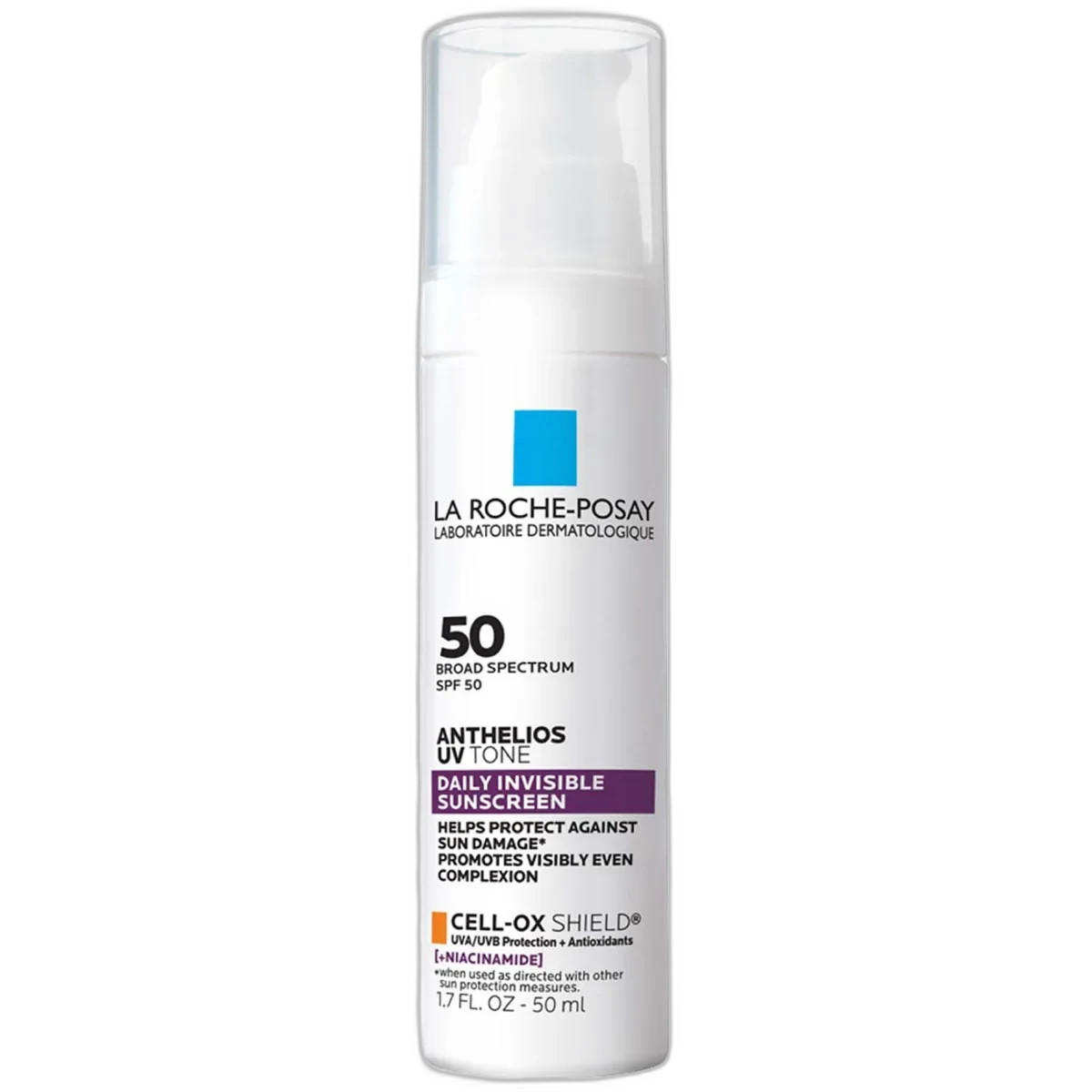
At around $21 for 2 oz, this sunscreen sits in the middle of the mineral face sunscreen market. Drugstore options like CeraVe’s Hydrating Mineral Sunscreen or La Roche-Posay’s Anthelios Mineral cost similar amounts or less, though most have lower zinc concentrations. Premium mineral sunscreens from Tizo, EltaMD, or SkinCeuticals cost significantly more; some are more elegant but not necessarily denser in filters. For shoppers wanting a vegan, cruelty-free, fragrance-free mineral sunscreen from a legacy natural brand, the value is solid.
A few practical notes. The tube packaging is more hygienic than a jar, which matters for daily use. The two-ounce size is standard for mineral face sunscreens and lasts about six weeks with recommended application. Blend it into the skin instead of patting, as patting leaves uneven mineral deposits. As with any sunscreen, protection depends on applying enough—two full finger lengths for the face and neck—and reapplying every two hours in direct sun. A mineral sunscreen applied thinly to avoid a cast is worse than a chemical sunscreen applied generously.
For its specific audience, this is a quiet workhorse. It is not the prettiest, lightest, or most invisible sunscreen. But it is honest, effective, and compatible with skin types that have few other options.
Ingredient analysis.
Full INCI list
Active: Zinc Oxide 19.5%, Titanium Dioxide 2.64%. Other Ingredients: Aloe Barbadensis Leaf Juice, Aluminum Oxide, Ascorbic Acid, Camellia Sinensis (Green Tea) Leaf Extract, Caprylic/Capric Triglyceride, Caprylyl Caprylate/Caprate, Cellulose Gum, Cetearyl Alcohol, Cetearyl Glucoside, Cetearyl Olivate, Coco-Caprylate, Coco-Glucoside, Diisostearoyl Polyglyceryl-3 Dimer Dilinoleate, Ethylhexylglycerin, Glycerin, Isostearic Acid, Lecithin, Microcrystalline Cellulose, Panthenol, Phenoxyethanol, Phytic Acid, Polyglyceryl-3 Polyricinoleate, Polyhydroxystearic Acid, Purified Water, Sclerotium Gum, Sodium Phytate, Sorbitan Olivate, Stearic Acid, Stearyl/Octyldodecyl Citrate Crosspolymer, Tocopheryl Acetate, Xanthan Gum
Skin match.
The science.
The Science
Zinc oxide and titanium dioxide mineral sunscreens work by scattering and absorbing ultraviolet radiation at the skin surface. Zinc oxide is the most comprehensive UVA filter available. It covers the full UVA1 range (340-400 nm) better than most single ingredients, making high-zinc formulations effective for preventing photoaging driven by long-wave UVA exposure.
This formula uses 19.5% zinc oxide, which is higher than the 10% to 15% typical in daily mineral face sunscreens. This concentration achieves robust broad-spectrum coverage and likely provides better UVA protection than many chemical SPF 50 formulations, though it causes more visible whitening. Published research shows that higher zinc concentrations produce measurably higher PA ratings.
The 2.64% titanium dioxide adds UVB protection and contributes to the labeled SPF 30. Together, these two mineral filters deliver full broad-spectrum protection without chemical filters, which suits users with filter sensitivities, hormonal concerns, or environmental preferences.
Including L-ascorbic acid directly in the sunscreen is unusual. Published research shows that topical vitamin C layered under or combined with sunscreen provides additive photoprotection by neutralizing UV-generated reactive oxygen species that pass the filter layer. Green tea polyphenols and vitamin E add more antioxidant coverage to defend against oxidative damage.
Aloe vera is at the top of the inactive ingredient list to help daily compliance. Mineral sunscreens can feel drying without a substantial humectant, and aloe provides hydration and a cooling sensation that improves the wearability of this heavy mineral emulsion.
Dermatologist Perspective
Dermatologists recommend high-zinc mineral sunscreens for patients with rosacea, sensitive skin, pregnancy-related skin concerns, and post-procedure healing windows. Board-certified dermatologists often highlight zinc oxide concentrations above 15% for patients focusing on UVA-driven photoaging prevention, noting that UVA coverage from these formulations is often stronger than the SPF number suggests. Dermatologists often place Derma E's Sun Defense alongside clean mineral options like Blue Lizard Sensitive or the EltaMD UV Pure family for sensitive-skin patients. The trade-off is clear: higher zinc load means better UVA protection but more visible whitening on deeper skin tones. Dermatologists also stress applying enough product and reapplying every two hours, as users often apply mineral sunscreens too thinly compared to chemical sunscreens.
Where it fits in your routine.
Apply this as the final AM step, after serums and moisturizer. Use two full finger lengths — the length of your index and middle finger from base to tip — on your face and neck for the labeled SPF 30 protection. Put the mineral lotion on your fingertips, warm it briefly, and blend into the skin with firm outward motions for 30-60 seconds. Reapply every two hours during direct sun exposure. The formula layers under most powder foundations. Liquid foundations can disturb the mineral layer; tap or stipple them on instead of dragging.
At about $21 for 2 oz, this sunscreen is mid-range for mineral face sunscreens. Drugstore options like CeraVe Hydrating Mineral Sunscreen or La Roche-Posay Anthelios Mineral Face cost similar amounts, but most drugstore options have lower zinc concentrations. Premium mineral brands like EltaMD, Tizo, and SkinCeuticals cost much more for similar or slightly more elegant formulations. The 2 oz size is the only option; this is standard for the category, but a larger economy size would offer better value for frequent users. For users seeking a vegan, cruelty-free, fragrance-free mineral sunscreen with a high zinc load from an established natural brand, the value is solid.
This mineral sunscreen works for rosacea, sensitive skin, pregnant or nursing users, post-procedure patients, and people with chemical filter sensitivity. It is fragrance-free, essential-oil-free, and has high zinc content. It also suits users seeking vegan and cruelty-free certifications from a legacy natural brand.
Skip this if you have deeper skin tones and cannot tolerate a visible white cast, prioritize sunscreen invisibility under makeup over filter density, or want the easiest application experience. Also skip if you need SPF 50 — this product tops out at SPF 30.
Product details.
Essentially scent-free — no added fragrance or essential oils ***
2 oz white squeeze tube ***
The first impression is classic mineral sunscreen whiteness. The lotion is opaque and requires deliberate blending to work into the skin. Once blended, the finish is a soft satin with a slight cooling sensation from the aloe. Medium-to-deeper skin tones will see a persistent white cast that does not fully disappear. ***
Used daily on the full face at the recommended quantity for 1-1.5 months.
12 months ***
All Year ***
The backstory.
The Sun Defense mineral sunscreen line was developed to fit within Derma E's fragrance-free, essential-oil-free subset, targeting users who wanted a cleaner alternative to chemical sunscreens without the botanical load that the brand's other bestsellers carry. It's become a quiet favorite in rosacea and sensitive-skin communities for exactly those reasons.
About Derma E
Legacy Brand (20+ years)Derma E has made natural skincare in California since 1984 and has Leaping Bunny and Vegan Society certifications. The brand developed its mineral sunscreen line for its fragrance-free, essential-oil-free subset. It targets users seeking cleaner sun protection without synthetic filters.
Common myths.
Mineral sunscreens lack broad-spectrum UVA protection.
This formula uses 19.5% zinc oxide for broad-spectrum UVA coverage. Zinc is one of the few single ingredients that covers the full UVA range alone. Older, lower-zinc mineral formulations created this myth, not current ones like this.
Titanium dioxide and zinc oxide in sunscreens cause cancer.
Decades of research show a scientific consensus: topical zinc oxide and titanium dioxide do not penetrate healthy skin in meaningful amounts and pose no cancer risk. This concern conflates inhalation of nanoparticles with topical cosmetic use, which is a different exposure pathway.
FAQ.
How bad is the white cast?
Medium skin tones show it, and deeper tones show it more. This high-mineral-load formula uses 19.5% zinc plus titanium dioxide; the cast is the price of that protection. If you blend it thoroughly and use the recommended quantity, the cast is manageable on light and medium tones but stays visible on deeper skin.
Is it suitable for rosacea?
Yes — this is a top sunscreen for rosacea-prone skin. It is fragrance-free, essential-oil-free, and uses only mineral filters, which do not generate heat like chemical filters. The aloe and panthenol in the base also support reactive skin.
Is it pregnancy-safe?
Yes. Zinc oxide and titanium dioxide mineral sunscreens are the standard recommendation for pregnant users. This formula has no retinoids, salicylic acid, or essential oils that raise pregnancy flags.
Will it clog my pores?
The formula is oil-free and uses non-comedogenic ingredients, so it works for acne-prone and fungal-acne-prone skin. Zinc oxide has mild anti-inflammatory properties that help some users with active acne.
Can I use it under makeup?
Yes, but the thick mineral texture takes practice to layer under liquid foundations without disturbing the sunscreen layer. Many users find that setting the sunscreen with a light powder or using a cushion foundation works better than dragging liquid foundation over the mineral base.
Is SPF 30 enough for daily use?
Yes — SPF 30 blocks about 97% of UVB rays at the recommended quantity, and the high zinc load provides strong UVA coverage. Application quantity matters more than the SPF number; under-applying any sunscreen reduces the actual protection proportionally.
What the community says.
"Tolerated by reactive skin"
"Fragrance-free"
"Clean mineral active list"
"Pregnancy-compatible"
"Noticeable white cast"
"Thicker texture than chemical alternatives"
"Takes effort to fully blend"
Featured in.
People also looked at.