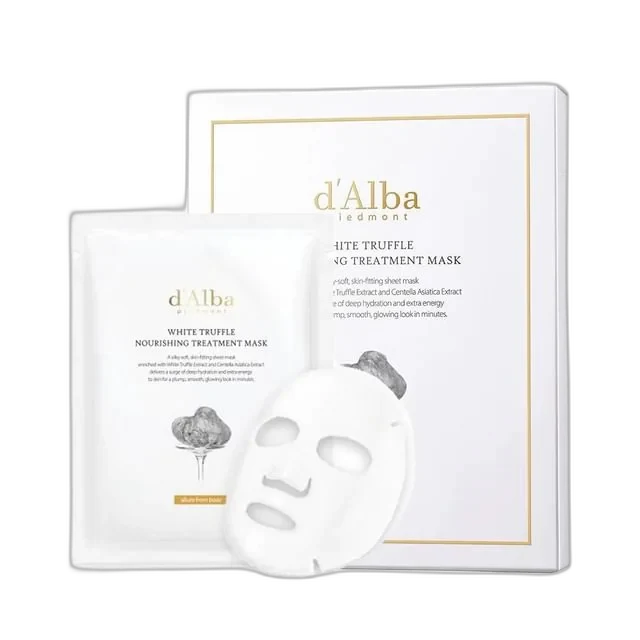
White Truffle Nourishing Treatment Mask
K-Beauty Recovery Sheet
 Verified reviewer
Pros & cons.
- +Rare concentration disclosure of 10,000ppm (1%) white truffle extract
- +Layered five-molecular-weight hyaluronic acid complex for deeper hydration
- +Genuine recovery formulation with centella, bifida ferment, allantoin, and panthenol
- +Fragrance-free and vegan with a thin comfortable cupra sheet
- +Essence is generous enough to use on neck and décolletage after removal
- +Layers cleanly under most skincare and doesn't disrupt routine flow
- −Peppermint, eucalyptus, and tea tree extracts can sting sensitive or reactive skin
- −Sheet runs slightly small for larger face shapes
- −At $4.40 per sheet, it's pricier than comparable single-active masks
- −Only sold in five-packs — no larger value-format options
- −White truffle marketing oversells the ingredient's actual evidence base
The full review.
Most K-beauty sheet masks hide hero ingredients in the middle of the INCI, leaving you to guess the concentration. d’Alba differs: the back of the box explicitly states the formula contains 10,000ppm — one percent — of white truffle extract. While 1% sounds small, it is a meaningful concentration in cosmetic chemistry. Naming a specific number is unusual and changes how you read the rest of the formula. When a brand provides numbers behind a claim, you trust the rest of the formula more, even if those numbers aren’t listed for every ingredient.
The rest of the formula shows why. The essence base uses water, dipropylene glycol, and glycerin — standard humectant infrastructure — plus betaine and arginine for extra water binding. The white truffle extract sits at position four, exactly where a disclosed 1% ingredient should land. The mask then pivots to its actual strength: a soothing stack of centella asiatica, allantoin, bifida ferment lysate, and dipotassium glycyrrhizate, followed by panthenol and tocopherol. This is a recovery mask with a hydrating backbone, not just a hydrating sheet mask. That distinction matters.
The hyaluronic acid strategy is worth noting. The formula uses sodium hyaluronate, sodium hyaluronate crosspolymer, and saccharide isomerate — three different water-binding molecules with different affinities and skin penetration depths. During the 15-20 minute occlusion of a sheet mask, this layered approach outperforms a single-molecule HA serum because the different fractions bind water at different depths while occlusion forces hydration in rather than letting it evaporate. After use, skin looks plumper and more translucent than a standard gel moisturizer can easily mimic.
The botanical extract list is long — about fifteen plant extracts after the niacinamide and panthenol — and most provide light soothing and antioxidant work. A few matter for sensitive users. Peppermint leaf, eucalyptus, and tea tree extracts contain volatile compounds that can tingle or sting reactive skin, even at low concentrations. The tingle is mild; most users feel a cooling effect rather than irritation. However, if you have active rosacea, a compromised barrier, or react to essential-oil-adjacent ingredients, patch test first because of these three. For normal or dry skin without reactivity, they add a barely-noticeable freshness.
The sheet uses thin cupra, which drapes well on most face shapes and stays saturated for the full wear time without sliding. There is no added fragrance; the mild herbal scent comes from the botanical extracts and fades within minutes. After removal, the sheet and sachet contain a substantial amount of leftover essence, enough to pat onto the neck, décolletage, and hands. d’Alba provides more product than the format requires, which is a thoughtful detail.
This mask fits specific needs. The sweet spot is dry or dehydrated skin after a long day, a long flight, or heavy use of actives. It is a recovery step rather than a daily ritual, providing enough soothing to justify use when skin needs help. For oily or combination skin, it works occasionally, especially after sun exposure or in winter. For very sensitive or active-rosacea skin, the volatile botanicals prevent it from being a first-line recommendation, but a patch test determines if you experience pleasant tingles or stinging and burning.
At $22 for a five-pack, you pay about $4.40 per mask. This is K-beauty premium territory — more expensive than COSRX or Isntree single-ingredient masks, but cheaper than SK-II or La Mer sheet masks. You pay for the unusual ingredient disclosure, the layered HA approach, and the recovery-focused formulation. The price is fair for the results, though a five-pack disappears quickly if you mask three times a week. For occasional use, it is a reasonable luxury.
About Brand-heritage honesty
d’Alba has operated since 2017, placing it in the ‘emerging’ tier of skincare. Its specific formulations have less clinical backing than La Roche-Posay or CeraVe, and white truffle marketing provides aesthetic value that science cannot fully support. Instead, the brand has built a series of well-formulated products that rely on format, aesthetic, and consistent experience. This mask exemplifies that philosophy: a thoughtfully composed formula with rare transparency, packaged to make masking feel more intentional than using a ten-dollar drugstore pack.
Formula
Ingredient analysis.
Full INCI list
Water, Dipropylene Glycol, Glycerin, Tuber Magnatum Extract (10,000ppm), Butylene Glycol, Betaine, Arginine, Centella Asiatica Extract, Allantoin, Bifida Ferment Lysate, Hydroxyethylcellulose, Dipotassium Glycyrrhizate, Pentylene Glycol, Camellia Sinensis Leaf Extract, Rosmarinus Officinalis (Rosemary) Leaf Extract, Lavandula Angustifolia (Lavender) Flower Extract, Olea Europaea (Olive) Leaf Extract, Melissa Officinalis Extract, Hibiscus Sabdariffa Flower Extract, Eucalyptus Globulus Leaf Extract, Anthemis Nobilis Flower Extract, Salvia Officinalis (Sage) Extract, Mentha Rotundifolia Leaf Extract, Jasminum Officinale (Jasmine) Extract, Cymbopogon Citratus Extract, Calendula Officinalis Flower Extract, Mentha Piperita (Peppermint) Leaf Extract, Melaleuca Alternifolia (Tea Tree) Extract, Sodium Hyaluronate, Saccharide Isomerate, Sodium Hyaluronate Crosspolymer, Scutellaria Baicalensis Root Extract, Polygonum Cuspidatum Root Extract, Niacinamide, Panthenol, Tocopherol, 1,2-Hexanediol, Ethylhexylglycerin, Disodium EDTA
Skin match.
The science.
The Science
This mask uses a layered hyaluronic acid approach. Sodium hyaluronate, sodium hyaluronate crosspolymer, and saccharide isomerate bind water at different molecular configurations. Published work shows multi-molecular-weight HA delivery systems manage transepidermal water loss and stratum corneum hydration better than single-fraction preparations over the same application window. The sheet mask format uses occlusion to keep the essence on the skin long enough for these HA fractions to reach their respective depths.
The soothing ingredients have more study data than the white truffle. Centella asiatica has extensive evidence for supporting wound healing and reducing skin inflammatory markers, mainly via its triterpene content (asiaticoside, madecassoside, asiatic acid). Dipotassium glycyrrhizate, from licorice, has published anti-inflammatory and anti-irritant activity that works with allantoin — a known keratinocyte proliferation modulator. Research shows Bifida ferment lysate aids barrier recovery and keratinocyte DNA repair enzyme activity, though most studies come from specific ingredient suppliers and require that sourcing context.
The white truffle extract is listed at 10,000ppm, but has less evidence than d'Alba's marketing suggests. Most published work on tuber magnatum covers its food-science profile — amino acid content, aromatic compounds, and in-vitro antioxidant activity — with little independent human skin efficacy data. At 1%, the amount is high enough to be functionally present rather than just a label claim, but it provides trace antioxidant support while the more established actives do the heavier work.
Dermatologist Perspective
Dermatologists see well-formulated hydrating sheet masks as a reasonable occasional step for dry or dehydrated patients, especially for short-term recovery after procedures, travel, or sun exposure. Board-certified dermatologists note that sheet masks supplement, rather than replace, daily moisturizer. For this mask, the centella asiatica, bifida ferment, panthenol, and hyaluronic complex make it a sensible recommendation for patients needing gentle barrier support. The peppermint, eucalyptus, and tea tree extracts typically trigger a caution for patients with active rosacea, perioral dermatitis, or fragrance-sensitive skin — common advice is to patch test before full-face application.
Where it fits in your routine.
Apply to damp skin after cleansing and toning. Unfold the sheet and align it to the face; smooth out air bubbles and ensure contact around the nose and jawline. Leave on for 15-20 minutes. Do not wear it longer, as extended wear reverses hydration. Remove the sheet, then pat the remaining essence into the face, neck, and décolletage until absorbed. Do not rinse. Follow with moisturizer to seal in the hydration. Use 1-3 times weekly as needed.
At $22 for five sheets, each mask costs $4.40 — a K-beauty premium price. The per-sheet cost is justified by the ingredient disclosure, layered HA complex, and recovery-focused formulation. One mask per week makes a pack last over a month, keeping annual costs manageable. Frequent use increases the cost quickly. A cheaper hydrating alternative like a COSRX propolis or Isntree HA mask works better as a routine staple, leaving this one for genuine recovery days.
This recovery-focused sheet mask suits dry, dehydrated, or tired skin needing soothing and hydrating ingredients. It works well for post-travel, post-sun, or post-actives care. The vegan, fragrance-free formulation includes full ingredient disclosure.
Patch test or skip if you have active rosacea, a compromised barrier, or sensitivity to peppermint, eucalyptus, or tea tree extracts. Skip if you mask often and want better cost per sheet; cheaper alternatives provide similar hydration for less.
Product details.
Thin cupra sheet saturated in a watery gel essence
Mild herbal from botanical extracts — no added fragrance
Individual foil sachets — 5 sheets per box
The sheet adheres well to the face and the essence stays cool. Users with a compromised barrier may feel a light tingle or cooling from peppermint and eucalyptus. Skin looks plumper and brighter immediately after removal; the full effect settles within 5-10 minutes.
One 5-pack lasts 5 weeks at once-weekly use
All Year
The backstory.
d'Alba launched this sheet mask variant in 2020 to extend the Trufferol brand story into occasional-use format. The brand positioned it as a pampering step for dry and tired skin, with packaging that deliberately references the Italian Piedmont region. It became one of the bestselling items in the sheet-mask tier on Olive Young and remains d'Alba's highest-rated mask SKU.
About d'Alba
Emerging Brand (2–5 years)d'Alba's sheet mask line brings its white truffle brand identity to a single-use format. These masks have strong organic traction on Olive Young and YesStyle but, like all d'Alba products, rely on ingredient selection rather than published clinical trials.
Common myths.
Leaving a sheet mask on longer gives better results.
After 20 minutes, a drying sheet mask draws moisture out of the skin, reversing the hydration you just built. Remove at 15-20 minutes and seal with moisturizer.
White truffle makes this a luxury anti-aging mask.
Truffle extract is 1% here — more than most d'Alba products — but centella, bifida ferment, panthenol, and the hyaluronic complex do the actual soothing and anti-aging work. The truffle is meaningful but not the primary engine.
FAQ.
How often should I use these masks?
Use this one to three times per week for maintenance hydration. Daily use works because the mask is gentle, but it is wasteful; your skin has limits on how much it benefits from consecutive-day masking.
Is this mask safe for sensitive skin?
This fragrance-free formula uses soothing botanicals, but peppermint, eucalyptus, and tea tree extracts can tingle or sting highly reactive users. Patch test the essence on your inner arm first if you have active rosacea or compromised barrier.
Should I rinse after removing the mask?
No. Pat the remaining essence into your face, neck, and décolletage until absorbed, then apply moisturizer. Rinsing washes away the soluble actives and defeats the purpose.
Can I use this mask while pregnant?
Yes — the formula lacks retinoids, salicylic acid, or hydroquinone. Patch test first if you are sensitive to fragrance or volatile botanicals during pregnancy.
How is this different from d'Alba's spray serums?
This sheet mask omits the biphasic plant oil phase. It uses only water-soluble hydrators, calming extracts, and the hyaluronic acid complex. It is gentler and focuses on recovery more than the daily-use serums, which prioritize the glow finish.
Is the sheet material comfortable?
Yes — this thin cupra sheet drapes well on most face shapes, but users with larger faces sometimes find it slightly small across the jawline. It stays saturated for the full 15-20 minute wear time and does not slide.
What the community says.
"Hydrating and calming"
"Thin comfortable sheet"
"Lots of essence"
"Good for sensitive skin"
"Fragrance-free"
"Peppermint and eucalyptus tingle"
"Sheet is slightly small for larger faces"
"Not cheap per sheet"
People also looked at.