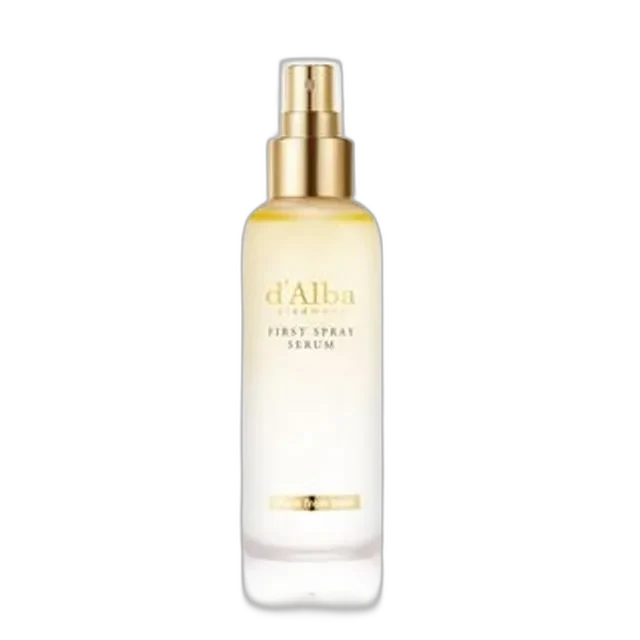
White Truffle First Spray Serum
K-Beauty Cult Classic
 Verified reviewer
Pros & cons.
- +Meaningful niacinamide concentration high on the INCI delivers real tone and barrier benefits
- +Adenosine adds regulated anti-wrinkle support at a functionally relevant dose
- +Biphasic oil-and-water format delivers hydration and lipid nourishment in one step
- +Visible glow and softer surface texture within minutes of first use
- +Bifida ferment lysate and licorice root extract add soothing microbiome support
- +Vegan and cruelty-free certified with sensorial premium packaging
- +Broad compatibility with other routine steps — fits under moisturizer and makeup
- −Contains fragrance, alcohol denat, and peppermint extract that can irritate sensitive skin
- −Not fungal-acne safe due to comedogenic oil blend
- −Price outpaces the active ingredient density compared to cheaper alternatives
- −Requires vigorous shaking before every use to emulsify the two phases
- −White truffle marketing oversells a fairly minor ingredient
The full review.
Every brand has one product that built it, and for d’Alba it’s this bottle. Launched in 2017 as the company’s debut product, the White Truffle First Spray Serum didn’t just become a best-seller on Olive Young shelves — it effectively created a category. Before this serum, biphasic mists weren’t really a thing in mainstream K-beauty. After it, every other Korean brand seemed to be chasing the format, and d’Alba spent the next several years rolling out Aromatic, Vital, Pink Correcting, and other variants that all trace their DNA back to this original bottle. Understanding this formula is understanding what d’Alba is actually selling.
The format is the hook. Inside the clear glass bottle, a thin layer of golden plant oil floats above a water phase built on dipropylene glycol, niacinamide, and hydroxyethyl urea. You’re supposed to shake the bottle hard for ten to fifteen seconds, watch the two layers merge into a soft cloudy emulsion, and spray the mist onto your face before the oil has time to float back up. It’s a small ritual, and that ritual is half the product experience. The other half is what actually happens on skin — and here, the formula earns more respect than the brand’s truffle-focused marketing might suggest.
The niacinamide is the first thing worth naming. It sits at position five on the INCI, which in cosmetic chemistry terms means it’s present at a concentration high enough to do real work. Over weeks of twice-daily use, that niacinamide supports the barrier, nudges sebum regulation, and produces a mild brightening effect through melanosome transfer modulation. Then there’s adenosine, which shows up further down the list but is one of Korea’s MFDS-notified functional anti-wrinkle actives — meaning its inclusion at the approved concentration has regulatory weight behind its anti-aging claim. The supporting cast is sensible: sorbitol, betaine, and sodium hyaluronate for water binding, bifida ferment lysate for microbiome support, dipotassium glycyrrhizate and oat extract for calming. The plant oil phase — primarily avocado and sunflower — carries fatty acids and phytosterols that soften the skin surface and leave the glow effect behind.
Then there’s the white truffle extract. It’s still here, nestled between glycerin and fragrance, doing what it does in every d’Alba product: anchoring brand identity. The evidence base for topical tuber magnatum extract is thin compared to what d’Alba’s marketing implies, and the honest framing is that the truffle is a supporting player while the niacinamide and adenosine do the actual skincare lifting. This isn’t a criticism exactly — plenty of successful K-beauty products use a signature ingredient as identity while relying on workhorse actives underneath — but if you’re buying the serum because you believe truffle extract is the active anti-aging hero, you’re being oversold on the wrong ingredient.
Where the original runs into friction is the fine print. Compared to the Aromatic variant, this formula includes fragrance, alcohol denat, and peppermint leaf extract — none at high concentrations, but all present and all potential triggers for sensitive skin. The alcohol is low enough that it doesn’t dry out normal skin meaningfully, the peppermint delivers a barely-there cooling sensation rather than any active irritation, and the fragrance is lighter than you’d expect from a product marketed as ‘aromatic.’ But for a barrier-compromised user or someone with reactive skin, these details matter. And the oil blend contains comedogenic lipids — oleic-heavy avocado oil and trace soybean oil — that make this a bad fit for fungal-acne sufferers and a cautious choice for very oily complexions.
Let’s talk price honestly. At forty dollars for 100ml, you’re paying a K-beauty premium that outstrips the raw ingredient density of the formula. Round Lab and Beauty of Joseon offer serums with higher niacinamide concentrations for meaningfully less money, and they skip the fragrance. What those competitors don’t offer is the biphasic format, the glass-bottle glow ritual, or the brand aesthetic that makes the morning feel like a small occasion. That’s the calculation you’re making when you buy a d’Alba spray serum: you’re paying for a well-formulated product in a specific experiential package, not purely for actives-per-dollar.
About BrandName
d’Alba
Brand-heritage honesty
d’Alba has been around since 2017, which is just about the borderline between ‘emerging’ and ‘established.’ The brand hasn’t built the decades of independent clinical validation that a CeraVe or La Roche-Posay can point to, but it has built something harder to fake — a base of genuinely devoted users who keep rebuying because the product works for their skin and feels good in their morning. That’s not nothing, and the formula is sophisticated enough to justify the loyalty it’s earned.
Who’s this for?
Normal-to-dry skin that wants a hydrating, lightly glow-inducing serum with real niacinamide and a small ritual attached.
Who should skip?
Sensitive skin, barrier-compromised users, fungal-acne-prone complexions, and anyone optimizing purely on price-per-active.
Best for
This is a good product with genuine flaws — not a miracle, not a scam, just a well-made luxury mist that has earned its position as the cornerstone of one of the more sensory-forward K-beauty brands on the market.
Ingredient analysis.
Full INCI list
Water, Dipropylene Glycol, Neopentyl Glycol Diheptanoate, 1,2-Hexanediol, Niacinamide, Sorbitol, Hydroxyethyl Urea, Persea Gratissima (Avocado) Oil, Salvia Hispanica Seed Extract, Ocimum Basilicum (Basil) Flower/Leaf/Stem Extract, Betaine, Avena Sativa (Oat) Kernel Extract, Butylene Glycol, Tuber Magnatum Extract, Glycerin, Fragrance, Helianthus Annuus (Sunflower) Seed Oil, Vegetable Oil, Tocopheryl Acetate, Disodium EDTA, Dipotassium Glycyrrhizate, Adenosine, Sodium Palmitoyl Proline, Bifida Ferment Lysate, Nymphaea Alba Flower Extract, Sodium Hyaluronate, Alcohol, Glycine Soja (Soybean) Oil, Veronica Officinalis Extract, Primula Veris Extract, Mentha Piperita (Peppermint) Leaf Extract, Melissa Officinalis Leaf Extract, Malva Sylvestris (Mallow) Extract, Alchemilla Vulgaris Extract, Achillea Millefolium Extract, Saussurea Involucrata Extract, Panax Ginseng Root Extract, Nelumbo Nucifera Flower Extract, Morus Alba Bark Extract, Lilium Candidum Flower Extract, Leontopodium Alpinum Extract, Houttuynia Cordata Extract, Freesia Refracta Extract, Carbomer, Bellis Perennis (Daisy) Flower Extract, Arginine, Potassium Sorbate, Bixa Orellana Seed Extract, Sodium Hydroxide, Tocopherol
Skin match.
The science.
The Science
The niacinamide content is the formula's strongest scientific claim. Peer-reviewed research shows topical niacinamide at 2-5% improves transepidermal water loss, reduces sebum excretion, and modulates melanosome transfer. At position five on the INCI, this serum uses a concentration where these effects become measurable with consistent use over weeks. Adenosine is notable because Korea's Ministry of Food and Drug Safety lists it as a functional anti-wrinkle ingredient at 0.04%. This regulated concentration carries evidence-backed claims for fine-line improvement via dermal fibroblast stimulation.
Bifida ferment lysate has more specialized literature. Research on fermented probiotic lysates shows effects on keratinocyte DNA repair enzyme activity and the UV damage response, though much of this research comes from specific ingredient suppliers and requires that context. The plant oil blend — avocado, sunflower, soybean — provides linoleic and oleic acids plus phytosterols; literature broadly supports the barrier-supporting effects of plant lipid blends on dehydrated skin. Vitamin E (tocopherol and tocopheryl acetate) is a well-established topical antioxidant that neutralizes lipid peroxidation, which helps the plant oil phase stay stable in the bottle. The white truffle extract has a thinner evidence base. Most published work on tuber magnatum covers its food-science profile rather than topical skin efficacy, and independent human skin trial data is limited. Treat it as a trace antioxidant, not the central active.
Dermatologist Perspective
Dermatologists generally view the niacinamide-adenosine combination as a reasonable daily serum foundation, especially for patients who want to maintain hydration and support the barrier without harsh actives. Board-certified dermatologists treating sensitive skin, rosacea, or perioral dermatitis typically avoid products containing fragrance, peppermint, and alcohol denat — all of which are present here — even at low concentrations. For patients with normal skin and no reactivity concerns, the formula's active backbone is sound enough for a routine. Dermatologists treating fungal acne or malassezia folliculitis would flag the comedogenic oil content and recommend alternatives without plant oil phases.
Where it fits in your routine.
Shake the bottle for 10-15 seconds until the oil and water phases emulsify into a cloudy mixture. Hold 15cm from your face and mist 2-3 pumps onto the skin, then pat it in. Use after cleansing and before moisturizer in both morning and evening routines. Apply moisturizer next to lock in the lipid phase. Do not spray heavily over finished makeup; the oil phase disturbs liquid foundations.
At $40 for 100ml, this serum's K-beauty premium exceeds its active density on paper. The 100ml size offers the best per-milliliter value; 50ml travel-size bottles cost more per milliliter and only suit testing before purchase. You pay for brand, format, and sensorial experience rather than maximum niacinamide or adenosine concentration per dollar. The price works if you value ritual and aesthetics. If you prioritize clinical ingredient density, Beauty of Joseon Glow Deep Serum delivers more for less money.
Normal to dry skin seeking a sensorial hydrating serum with niacinamide, a trace of adenosine, and a plant oil glow finish. It works well for morning rituals and those curious about the biphasic format d'Alba uses to build its reputation.
Use this for sensitive or barrier-compromised skin, fungal-acne or very oily users, rosacea patients, and anyone who prioritizes active ingredient density over sensorial experience. Skip if fragrance or alcohol in skincare is a dealbreaker.
Product details.
Biphasic spray — a fine gold oil layer floats on top of the clear water phase until you shake it
Light floral-herbal with a soft powdery dry-down
Glass bottle with fine-mist pump and overcap
Immediate glow and comfortable hydration. Skin looks softly luminous within one minute. Sensitive users may feel a faint cooling tingle from the peppermint extract — it is not painful. Fragrance is noticeable at first and settles within 5-10 minutes.
About 2-3 months with twice-daily face application
12 months
All Year
The backstory.
d'Alba launched in 2017 with this serum as its flagship. The biphasic spray format was unusual for the Korean market at the time, and the combination of Italian white truffle branding, plant oil blends, and a mist application turned out to be an immediate hit on Olive Young shelves. It quickly became the product that built the brand's global footprint and sparked the entire 'Trufferol' product line that followed.
About d'Alba
Emerging Brand (2–5 years)The original White Truffle First Spray Serum launched d'Alba in 2017. It is the brand's hero SKU and one of the highest-volume K-beauty mists globally, though independent clinical validation is limited.
Common myths.
This is a cleaner version of the Aromatic Spray Serum.
The original formula contains alcohol and peppermint extract later in the INCI, which the Aromatic variant omits. The Aromatic variant has a gentler composition but more floral fragrance — the "cleaner" label depends on your sensitivities.
The oil phase clogs pores for everyone.
Avocado and sunflower oils are comedogenic for some but many tolerate them. The soybean and oleic acid content creates the real fungal-acne risk, not the entire oil phase. Individual tolerance varies.
FAQ.
What's the difference between this and the Aromatic version?
The original contains alcohol and peppermint extract later in the INCI and has a lighter scent. The Aromatic version uses a rose water base and a more perfumed profile but lacks alcohol. Pick the original for a lighter scent or the Aromatic for a floral experience.
Do I need to shake it?
Yes — the oil and water phases separate in the bottle. They emulsify only after a 10-15 second shake before use. If you do not shake, the nozzle dispenses only oil or only water, and neither delivers the intended effect.
Is it safe during pregnancy?
The formula lacks retinoids, salicylic acid, or hydroquinone, making it generally pregnancy-safe. Patch test first if you have fragrance-sensitivity or pregnancy-related skin reactivity.
Will this cause breakouts?
The oil phase and comedogenic lipids make it not fungal-acne safe. Users with malassezia-driven breakouts or active inflammatory acne may react poorly. Normal and dry skin usually tolerate it well.
Can I use it as a toner?
Functionally, yes—it replaces a hydrating toner step. But it costs more than a dedicated toner, and the oil phase adds lipid treatment whether you want it or not. For simple routines, it compresses several steps into one.
Is it worth the price?
You pay a premium for format, scent, and brand identity alongside a competent formula. The price is defensible if you value sensorial skincare and the biphasic ritual. Cheaper alternatives deliver more niacinamide per dollar.
What the community says.
"Beautiful glow"
"Hydrating"
"Elegant scent"
"Luxurious feel"
"Makes skin look alive"
"Added fragrance and alcohol"
"Not fungal-acne safe"
"Expensive for active content"
"Requires constant shaking"
Featured in.
People also looked at.