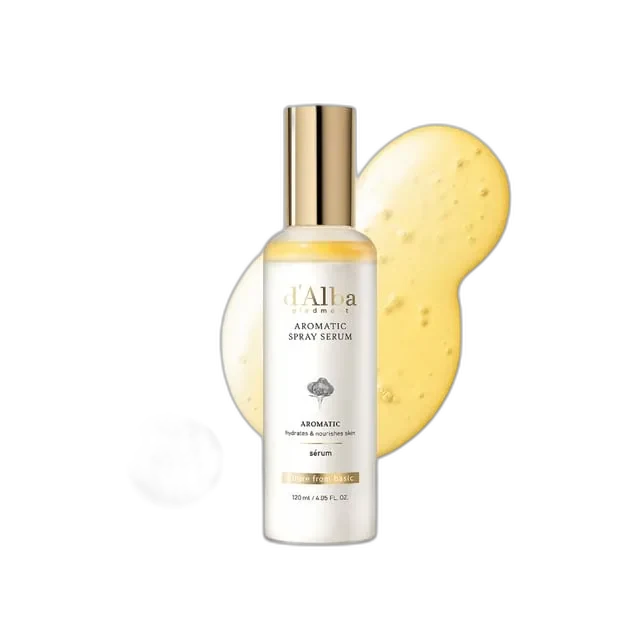
White Truffle First Aromatic Spray Serum
K-Beauty Cult Mist
 Verified reviewer
Pros & cons.
- +Distinctive biphasic shake-and-spray format delivers hydration plus lipid nourishment in one step
- +Meaningful niacinamide provides genuine barrier and tone benefits over time
- +Rich plant oil phase leaves skin visibly glowier and softer
- +Bifida ferment lysate adds a soothing microbiome-support dimension
- +Luxurious rose scent and packaging make the morning routine feel intentional
- +Absorbs fully within 60 seconds with no greasy residue
- −Added fragrance and rose water can irritate sensitive or barrier-compromised skin
- −Plant oil blend is not fungal-acne safe and can aggravate oily complexions
- −Price outpaces the actual active ingredient density
- −Requires vigorous shaking before every use
- −Spraying over makeup can disturb liquid foundations
The full review.
The first time you pick up a bottle of the d’Alba First Aromatic Spray Serum, you notice it’s doing something that most serums refuse to do: it’s separating. A layer of golden oil sits on top of a clear, pale rose-water phase like a miniature vinaigrette waiting for its moment. That separation is the entire point. You’re supposed to shake it — a good, vigorous ten-second shake — watch the two phases merge into a cloudy cream, and then spray the emulsion onto your face before the oil has a chance to float back up to the top. It’s theatrical in a way that very few skincare products bother to be anymore, and that theater is half the reason this serum has built the kind of obsessive following that sells out repeatedly on Olive Young.
Here’s what’s actually in the bottle. The water phase is built on rosa damascena flower water instead of plain water, which gives the mist its signature floral backbone and adds a small amount of polyphenol activity on top of the hydration. Propped up against it are niacinamide (the real workhorse of the formula and the ingredient most likely to give you measurable results), hydroxyethyl urea and betaine for water binding, panthenol for barrier soothing, and bifida ferment lysate for a probiotic-style nudge to skin resilience. The oil phase is where d’Alba goes all in on its brand identity: tocopherol anchors white truffle extract, and together they form what the brand calls ‘Trufferol’ — a pairing that sounds scientific but is really just vitamin E and a tiny dose of truffle antioxidants sharing the same lipid layer. Around them, an enthusiastic plant oil blend — avocado, camellia, macadamia, evening primrose, olive, soybean — carries fatty acids and sterols onto skin.
The Aromatic version differentiates itself from the original First Spray Serum by leaning harder into floral scent, and this is where your reaction will depend entirely on your nose. If you like damask rose in skincare — the slightly powdery, slightly honeyed scent that Byredo and Jo Malone have trained a generation to associate with luxury — you’ll find the mist immediately seductive. If you don’t, the fragrance will read as overwhelming within the first few uses and you’ll pack the bottle away. There’s no middle ground here, and the fragrance is not optional in the sense that rose water is structurally central to the formula. Fragrance-sensitive users should be honest with themselves about whether they actually want this in their routine or just want the aesthetic of it.
On application, the mist feels immediately hydrating and leaves a soft dewy film that catches the light. Skin does actually look glowier within thirty seconds, and the effect is more pronounced than a standard hydrating mist because the oil phase leaves behind fatty acids that soften surface texture. Over weeks of use, the niacinamide starts to pull its weight — skin tone looks a touch more even, barrier feels steadier, and any ambient redness settles. None of this is miraculous, but it’s legitimately pleasant and it’s not placebo.
Where the serum runs into trouble is the suitability question. The plant oil blend is rich, and several of the oils — olive and soybean, specifically — are not fungal-acne safe and can sit poorly on oily or acne-prone skin. If you’re already managing malassezia-driven breakouts or active inflammatory acne, this is not your serum. It’s also not the right pick for barrier-compromised skin in a rough patch, because the fragrance load is meaningful and the rose water itself can be a trigger for highly reactive users. The sweet spot is normal-to-dry skin with no active sensitivity, where the formula reads as luxurious rather than risky.
And then there’s the price. At roughly $42 for 100ml, you’re paying a premium that outpaces the ingredient density of the formula. A Beauty of Joseon Glow Deep Serum delivers more niacinamide and more propolis for under half the price. The Aromatic First Spray isn’t trying to compete on active content per dollar, though. It’s trying to compete on ritual, scent, and the feeling of opening a well-designed bottle in the morning — and for a significant subset of skincare enthusiasts, that tradeoff is exactly right. Brand-heritage honesty: d’Alba has only been around since 2017, and the clinical backing is thin. What it has instead is a formula that actually earns its followers, which counts for more than most marketing-driven indie launches.
Buy it if you love sensorial skincare, rose scents, and the small pleasure of shaking a bottle in the morning. Skip it if you’re optimizing for efficiency per dollar, you have oily or acne-prone skin, or fragrance is a deal-breaker for you. It’s a product that knows exactly what it is — and charges accordingly.
Formula
Ingredient analysis.
Full INCI list
Rosa Damascena Flower Water, Dipropylene Glycol, Neopentyl Glycol Diheptanoate, Water, Glycereth-26, 1,2-Hexanediol, Niacinamide, Tuber Magnatum Extract, Tocopherol, Hydroxyethyl Urea, Butylene Glycol, Persea Gratissima (Avocado) Oil, Betaine, Glycerin, Panthenol, Helianthus Annuus (Sunflower) Seed Oil, Sorbitol, Dipotassium Glycyrrhizate, Disodium EDTA, Tocopheryl Acetate, Adenosine, Bifida Ferment Lysate, Camellia Japonica Seed Oil, Hibiscus Esculentus Fruit Extract, Macadamia Ternifolia Seed Oil, Oenothera Biennis (Evening Primrose) Oil, Olea Europaea (Olive) Fruit Oil, Glycine Soja (Soybean) Oil, Arginine, Bellis Perennis (Daisy) Flower Extract, Carbomer, Freesia Refracta Extract, Houttuynia Cordata Extract, Leontopodium Alpinum Extract, Lilium Candidum Flower Extract, Morus Alba Bark Extract, Nelumbo Nucifera Flower Extract, Ocimum Basilicum Flower/Leaf/Stem Extract, Panax Ginseng Root Extract, Saussurea Involucrata Extract, Chamomilla Recutita Flower Extract, Fragrance
Skin match.
The science.
The Science
Niacinamide is the formula's most defensible claim. Peer-reviewed work shows topical niacinamide at 2-5% improves barrier function, reduces transepidermal water loss, and modulates melanosome transfer to brighten skin. Using this mist twice a day provides enough low-dose exposure to improve tone and resilience over weeks. The plant oil blend provides linoleic acid (from sunflower, evening primrose, and soybean), oleic acid (avocado, olive, camellia), and phytosterols to support the stratum corneum lipid layer; while the literature is less precise, it supports barrier benefits from plant lipid blends on dry and dehydrated skin.
The bifida ferment lysate story goes beyond microbiome marketing. Published work on fermented lysates shows effects on DNA repair enzyme activity and UV-induced damage response in keratinocyte models, though most studies come from specific ingredient suppliers. Tocopherol's role as a topical antioxidant is well established; it neutralizes lipid peroxidation and works synergistically with vitamin C, even though this formula lacks vitamin C. The white truffle extract has a thinner evidence base. Most published work on tuber magnatum focuses on its food-science profile—amino acids, aromatic compounds, and in vitro antioxidant content—and little independent human skin efficacy data exists. The truffle extract likely contributes trace antioxidant support, but the brand identity does most of the heavy lifting.
Dermatologist Perspective
Dermatologists like formulas that layer gentle hydrators with a well-studied active like niacinamide, and this serum fits that profile. In clinical practice, however, added fragrance and rose water lower this product's ranking for patients with sensitive skin, rosacea, or active eczema. Board-certified dermatologists treating dry, healthy skin without reactivity concerns might find the biphasic format and plant lipid blend useful for patients wanting a sensorial routine step. This is not a first-line choice for patients with active acne or fungal-acne concerns because the comedogenic oil load is a meaningful drawback.
Where it fits in your routine.
Shake the bottle vigorously for 10-15 seconds until the oil and water phases emulsify into a cloudy suspension. Hold the bottle 15cm from the face and spray 2-3 pumps, then pat the product into skin without rubbing. Use after cleansing and before moisturizer in morning and evening routines. Follow with a moisturizer to lock in the lipid phase. Do not spray over finished makeup, as the oil phase disturbs liquid foundations.
At $42 for 100ml, the Aromatic Spray Serum is priced at the high end for Korean serums. The brand sells this 100ml size and smaller travel-size versions; the 100ml offers the best value per milliliter. You pay for the format, scent, and the biphasic ritual experience—not more actives than comparable serums. A Beauty of Joseon or Isntree serum provides more niacinamide per dollar, but lacks the aromatic rose scent or the oil-water shake. The price is defensible if you buy skincare for pleasure. It is not if you buy skincare purely for active density.
This is for normal to dry skin users who want fragrance-forward skincare and a hydrating serum that adds a plant oil treatment in one mist step. It works well for people who want an intentional morning ritual and a product that feels as good as it performs.
Oily, acne-prone, or fungal-acne-prone users should avoid the plant oil blend. Skip this if you have sensitive or barrier-compromised skin that reacts to fragrance or rose water, or if you prioritize ingredient-to-dollar efficiency over sensorial experience.
Product details.
Biphasic spray — separates into rose water and golden oil phases; shake to emulsify.
Distinct damask rose with herbal and slightly powdery undertones
Glass bottle with fine-mist pump and plastic overcap
The first spray after shaking gives a visible glow and a rose scent that some users love and others find overwhelming. Skin looks slightly sheeny for the first minute. Most users feel no stinging, but very reactive skin should patch test because of the fragrance and rose water content.
About 2-3 months with twice-daily face application
12 months
All Year
The backstory.
The First Spray Serum is the product that built d'Alba's international reputation. Launched in 2018 as the brand's flagship, it went viral on Korean beauty TikTok and Olive Young shelves for its unusual biphasic format and immediate glow effect. The Aromatic variant differs from the standard First Spray Serum by leaning more heavily into floral scent — primarily rose water — making it the more overtly sensorial of the two.
About d'Alba
Emerging Brand (2–5 years)d'Alba launched in 2017 as a Korean indie brand centered on white truffle extract, and the First Spray Serum line is the product that put it on the map. Independent clinical validation is limited, but the formulas have strong real-world traction and Olive Young best-seller status across multiple years.
Common myths.
The separated oil phase means the product has gone bad.
Biphasic serums separate by design. The oil and water phases emulsify only when you shake and spray, delivering hydration and lipid nourishment in one step.
White truffle extract is a proven anti-aging powerhouse.
Topical white truffle extract has little evidence. Niacinamide, vitamin E, and plant oil antioxidants provide the serum's anti-aging effects; the truffle is mostly brand identity.
FAQ.
What's the difference between the Aromatic and the original First Spray Serum?
The Aromatic version uses more rose and floral notes for a stronger scent. The original has a lighter, more neutral scent. Both use the same Trufferol base and biphasic format, so choose based on scent preference.
Do I need to shake it every time?
Yes — the oil and water phases separate in the bottle. You must emulsify them so the mist delivers hydration and lipid nourishment. Shake the bottle firmly for 10-15 seconds before each use.
Can I spray it over makeup?
Technically yes, but the oil phase disturbs most liquid foundations and causes patchy spots. Use it underneath makeup or on bare skin as a refresher instead.
Is it safe for sensitive skin?
The formula is generally gentle, but fragrance and rose water can trigger reactions in highly reactive skin or barrier-compromised users. Patch test behind the ear before daily use if your skin irritates easily.
Will this cause breakouts?
The formula contains plant oils that are not fungal-acne safe. These can cause issues for very oily or acne-prone users. Better-suited serums exist for malassezia-driven breakouts or active inflammatory acne.
Is it worth the price?
If you prioritize texture, glow, and sensorial experience, yes. If you optimize purely for ingredient-to-dollar ratio, cheaper serums with higher active concentrations exist. You pay for format and brand identity as much as active content.
What the community says.
"Gorgeous rose scent"
"Instant glow"
"Hydrating"
"Feels luxurious"
"Pretty packaging"
"Strong fragrance"
"Not suited for oily skin"
"Pricey for the active content"
"Needs vigorous shaking"
Featured in.
People also looked at.