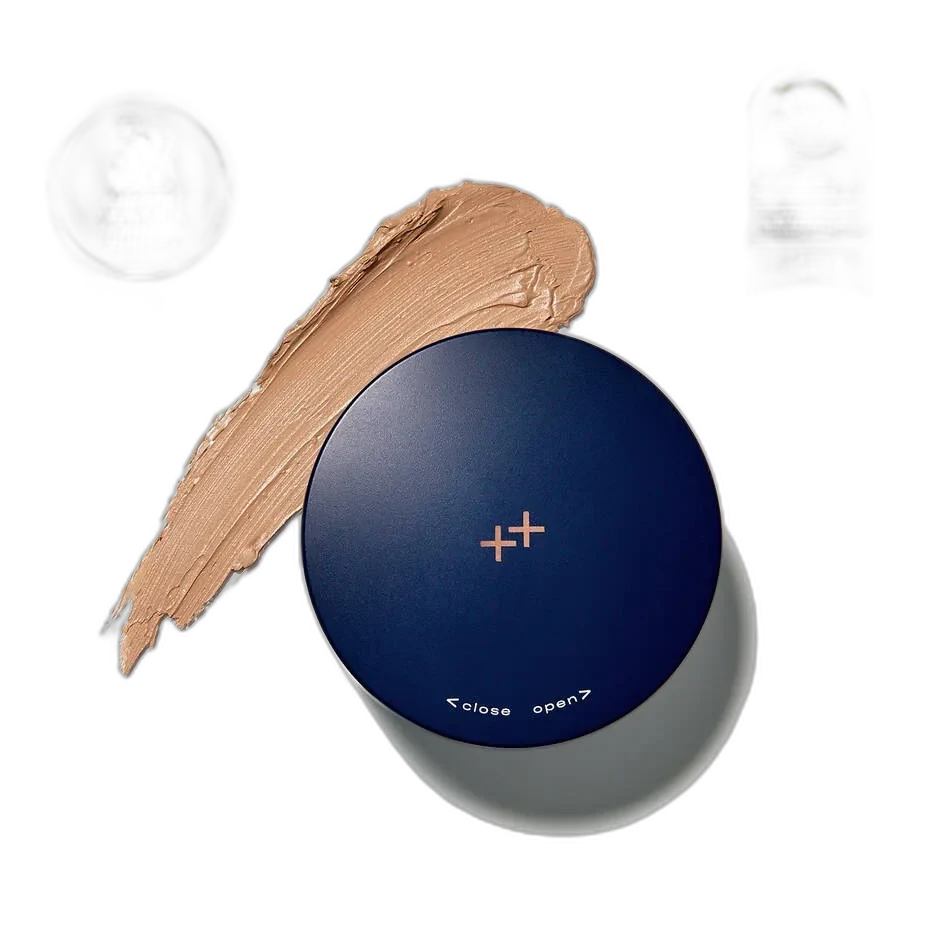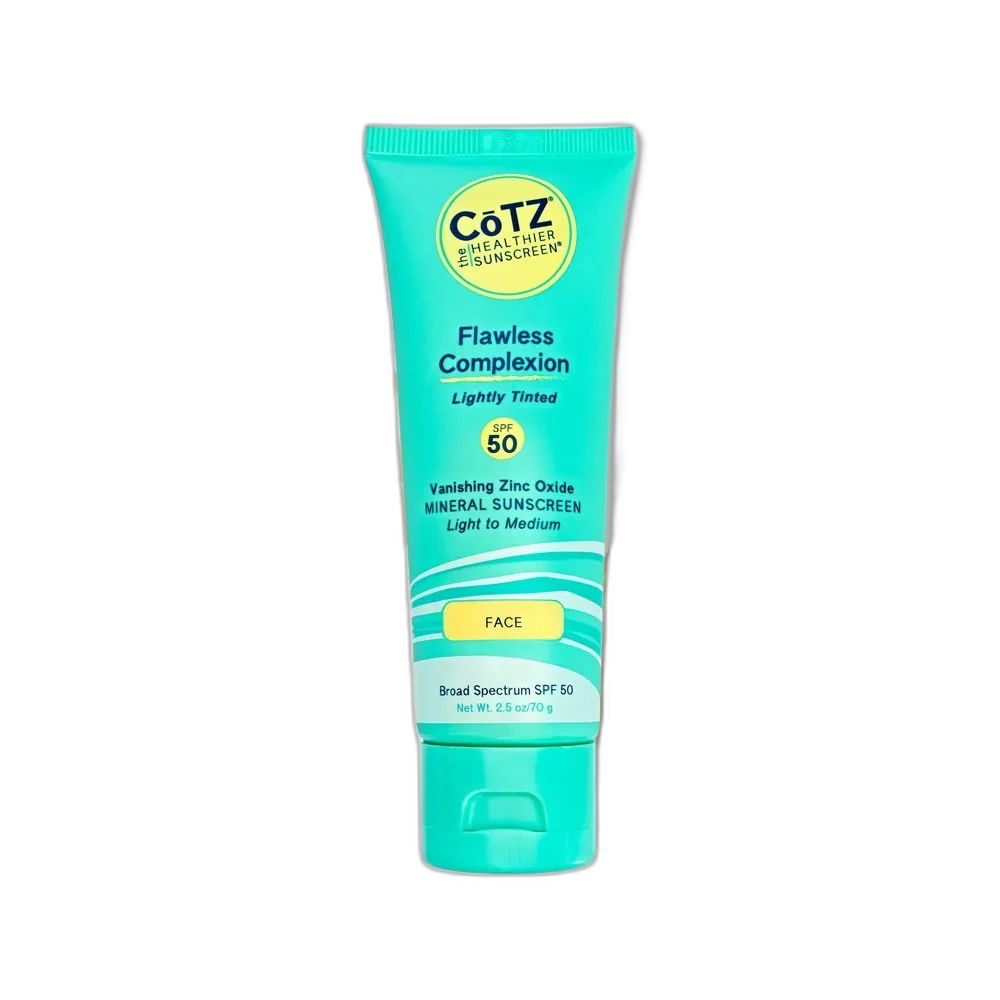
Flawless Complexion Tinted SPF 50
SPF 50 + Coverage
 Verified reviewer
Pros & cons.
- +SPF 50 with 13.5% total mineral filter load and no chemical UV filters
- +Higher iron oxide content for meaningful visible-light protection
- +Foundation-adjacent finish can replace light coverage
- +Clean inactive deck with no fragrance or essential oils
- +Well-tolerated on rosacea and post-procedure skin
- +Pregnancy and breastfeeding safe
- +Mica-enhanced light diffusion softens pore and texture appearance
- −Universal tint too light for deep skin tones
- −Medium-thick texture can feel heavy in humid conditions
- −Not water-resistant for swimming or intense sweat activity
- −Small 1.5 oz size for daily committed users
The full review.
Most sunscreens fall into one of two categories. The first is the dermatology-office recommendation: clean ingredient deck, fragrance-free, reliable protection, and an aesthetic that your dermatologist approves of but your bathroom mirror does not. The second is the cosmetic sunscreen: elegant texture, beautiful finish, often a tinted moisturizer or BB cream in disguise, but with a formulation that either skimps on UV filters or compensates with ingredients that dermatologists’ patients can’t reliably tolerate. Products that genuinely bridge these two categories are rare, and they’re rare because the constraints pull in opposite directions. A dermatologist-grade mineral sunscreen at SPF 50 with clean inactives should, in principle, feel thick and chalky. A cosmetically elegant tinted sunscreen should, in principle, lean on either chemical filters or trendy botanicals to achieve its texture goals. Cotz Flawless Complexion Tinted SPF 50 is one of the genuinely successful attempts at splitting the difference, and it earns its place in the lineup by doing more with mineral filters than most brands bother to.
The active side of the formula is a 10% zinc oxide and 3.5% titanium dioxide combination, totaling 13.5% mineral filter load. That’s slightly heavier than the 12% load in the Lightly Tinted SPF 35 version, and it’s what delivers the SPF 50 rating without touching any chemical UV filters. For users who care about the difference between SPF 35 and SPF 50 — and the difference is real if modest, with SPF 50 blocking roughly one additional percent of UVB — the upgrade is straightforward. For users with high sun exposure, melasma, or elevated skin cancer risk, that extra margin adds up over years of daily use.
The iron oxide load is where Flawless Complexion earns its name. More iron oxide means more visible-light absorption, which means more meaningful protection against the blue-light wavelengths that drive melasma progression. It also means a more substantial cosmetic tint that can provide light coverage on its own. Paired with mica — a subtle light-diffusing mineral that softens the appearance of pores and fine texture — the finish ends up in foundation-adjacent territory. Users with relatively even tone and minimal blemishes often find that they can skip their usual foundation entirely on days they use Flawless Complexion, which simplifies the morning routine and reduces total product layers on the face. Users with more significant coverage needs can still layer foundation on top without issues.
In use, the texture is medium-thick — heavier than the SPF 35 Lightly Tinted version, but still manageable with patient blending. First application takes about 30–45 seconds to work in evenly, and once set, the finish sits comfortably between satin and matte. There’s no greasiness, no shine, and none of the weird half-dry feel that some tinted mineral sunscreens produce. The formula does run slightly heavier in humid conditions, and users with very oily skin may want to set with a light powder for all-day wear. Under makeup, it plays well as long as you give it 2–3 minutes to fully set before layering.
The tolerability story is exactly what Cotz users expect from the brand. No fragrance, no essential oils, no denatured alcohol, no plant extracts. For rosacea patients, post-procedure clients, fragrance-sensitive users, and pregnant and breastfeeding users seeking a clean mineral option, Flawless Complexion ticks every box the Lightly Tinted version does plus the additional SPF margin and better cosmetic finish. It does not sting around the eyes, it does not trigger flare-ups in chronically reactive skin, and it can be applied directly after chemical peels and laser treatments under most clinical protocols.
The limitations are the same ones every tinted mineral sunscreen has to reckon with. The universal tint fits light to medium skin tones; deeper tones will see an ashy or too-light finish and should look at shade-specific alternatives. The 1.5-ounce size is small for committed daily users who apply the proper quarter-teaspoon dose — expect six to eight weeks per tube. The formula is not water-resistant enough for swimming or heavy sweat activity; for beach and pool use, Cotz makes a dedicated water-resistant formula. And while the texture is better than the older Lightly Tinted version, it’s still a step behind the newest ultra-refined tinted formulas from brands like EltaMD, ISDIN, and Colorescience that have invested more in invisible-finish technology.
At twenty-nine dollars, Flawless Complexion costs two dollars more than the Lightly Tinted version and four dollars more than the untinted original. That’s a modest upcharge for the SPF 50 rating, heavier iron oxide content, and more foundation-like finish. For users working on melasma specifically, or users with high outdoor exposure, or users who want a single product that handles morning SPF and light coverage in one step, the upgrade is usually worth it. For users with mild sun exposure and no pigmentation concerns, the Lightly Tinted SPF 35 is still a reasonable choice at the lower price point.
Who should buy Flawless Complexion?
People with melasma or hyperpigmentation who want the strongest practical visible-light protection. People with high daily sun exposure. People who want a simplified morning routine that combines sunscreen and light foundation. Rosacea patients looking for a tinted sunscreen that won’t trigger flares.
Who should skip it?
People with deep skin tones who need a shaded alternative. Users with extremely oily skin who need a mattifying sunscreen specifically. Anyone who prefers a truly invisible finish over even the lightly tinted options.
Ingredient analysis.
Full INCI list
Active Ingredients: Zinc Oxide 10%, Titanium Dioxide 3.5%. Inactive Ingredients: Water, C12-15 Alkyl Benzoate, Cyclopentasiloxane, Butyloctyl Salicylate, Styrene/Acrylates Copolymer, PEG-10 Dimethicone, Sorbitan Sesquioleate, Dimethicone, Caprylyl Methicone, Sodium Chloride, Iron Oxides (CI 77491, CI 77492, CI 77499), Mica, Disteardimonium Hectorite, Hydrogen Dimethicone, Triethoxycaprylylsilane, Phenoxyethanol, Tocopheryl Acetate, Propylene Carbonate, Disodium EDTA
Skin match.
The science.
The Science
High-SPF tinted mineral sunscreens work well for users with photoaggravated pigmentation, especially melasma. Research shows UV and visible light both drive pigmentation. Iron oxides, used as cosmetic colorants, absorb the visible-light wavelengths that worsen melasma. Human clinical studies show tinted mineral sunscreens improve melasma outcomes more than untinted versions, regardless of the UV filter profile. Flawless Complexion uses 10% zinc oxide and 3.5% titanium dioxide to provide broad-spectrum SPF 50 coverage across all UVA and UVB ranges using well-studied physical filters. Its high iron oxide content adds visible-light protection for pigmentation-prone users. For users without pigmentation concerns, the SPF 50 rating blocks about one additional percent of UVB compared to SPF 30–35 formulas. Consistent daily use provides meaningful lifetime protection against photoaging and skin cancer. Photobiology research shows daily broad-spectrum sunscreen is the most effective anti-aging intervention available, and tinted mineral formulas tolerate best for sensitive and reactive populations. Cotz has not published a head-to-head clinical trial of Flawless Complexion, but the formulation follows principles in the broader literature.
Dermatologist Perspective
Dermatologists treating melasma and high-risk pigmentation often recommend tinted SPF 50 mineral sunscreens in integrated treatment protocols, especially for patients with heavy sun exposure or those who failed with lower-SPF formulas. This clinical logic prioritizes visible-light protection from iron oxides, broad-spectrum UV coverage from zinc and titanium, and a clean inactive deck to avoid triggering reactive skin. Board-certified dermatologists note that patient compliance drives long-term sun protection outcomes. This is why a cosmetically tolerable tinted formula like Flawless Complexion—one patients actually wear consistently—often outperforms technically higher-SPF alternatives that feel bad on skin. Dermatology office practice establishes this product's fit for rosacea, post-procedure, and fragrance-sensitive patients.
Where it fits in your routine.
Apply this as your final morning step after moisturizer. Use a quarter-teaspoon for the face and blend for 30–45 seconds until the tint looks uniform. Wait 2–3 minutes before applying foundation or powder for more coverage. Reapply every two hours during sun exposure. For melasma protocols, use with a brightening serum every morning, regardless of weather or season.
At $29 for 1.5 ounces, Flawless Complexion costs slightly more than other Cotz face sunscreens but competes with similar dermatologist-tier tinted mineral SPF 50 options. EltaMD UV Clear Tinted and ISDIN Eryfotona Ageless cost the same or more. Flawless Complexion is a cost-effective clean-formulation choice for users needing visible-light protection and a higher SPF rating. The size is a practical limitation — users applying the proper dose use one tube in six to eight weeks, and no larger size exists.
People with melasma, post-inflammatory hyperpigmentation, or high daily sun exposure who want higher SPF and visible-light protection in one product. Users who want one product for sunscreen and light foundation. Rosacea and post-procedure patients looking for a dermatologist-friendly tinted SPF 50.
People with deep skin tones who need shade-specific alternatives. Users with very oily skin seeking a mattifying finish. Anyone wanting a completely invisible non-tinted formula or a water-resistant beach sunscreen.
Product details.
Medium-thick tinted mineral lotion with more coverage than the Lightly Tinted version
Fragrance-free
Squeeze tube
Blends to a more covered, foundation-like finish on light to medium skin. Extra iron oxide and mica add a cosmetic polish the Lightly Tinted formula lacks. The SPF 50 rating offers more photoaging protection margin for users with heavy outdoor exposure.
Approximately 6–8 weeks with daily face application
12 months
All Year
The backstory.
Flawless Complexion was introduced as Cotz's higher-SPF, higher-coverage tinted option for users who wanted a single morning product that handled both serious sun protection and basic cosmetic finish. It's become a popular pick in dermatology office retail for patients with melasma or heavy outdoor commitments who value the combination of SPF 50 and visible-light protection in one tube.
About Cotz
Established Brand (5–20 years)Cotz is a US mineral sunscreen specialist founded in 2005. Dermatology offices widely stock Cotz, which uses fragrance-free, essential-oil-free formulations for rosacea and post-procedure patients. Flawless Complexion is the brand's higher-SPF tinted option with heavier cosmetic coverage.
Common myths.
SPF 50 offers dramatically more protection than SPF 35.
SPF 35 blocks about 97.1% of UVB; SPF 50 blocks 98%. This difference is small but matters for heavy outdoor exposure or high-risk skin cancer patients. Both work for daily office use.
Tinted sunscreens can replace foundation entirely.
Flawless Complexion provides light coverage for some users and skin conditions. Users wanting full coverage, blemish concealment, or color-correcting still need a real foundation.
FAQ.
What's the difference between Cotz Flawless Complexion and Cotz Lightly Tinted?
Flawless Complexion has SPF 50 instead of SPF 35. It uses a higher mineral filter load (13.5% vs 12%) and more iron oxide plus mica for heavier cosmetic coverage. Choose Flawless Complexion for more sun protection margin and a makeup-like finish. Choose the Lightly Tinted version for a lighter daily feel.
Can Cotz Flawless Complexion replace my foundation?
Yes, for users with minimal blemishes or light coverage needs. The iron oxide and mica content tints and diffuses light to even out tone. Users wanting full coverage should still use a real foundation over the sunscreen.
Is Flawless Complexion SPF 50 water resistant?
It is not water-resistant enough for swimming or heavy sweat. Cotz makes a specific water-resistant formula for the beach, pool, and intense outdoor activity.
Is this sunscreen safe for melasma patients?
Yes — many melasma protocols recommend it because the iron oxide provides visible-light protection that chemical and untinted mineral sunscreens lack. The SPF 50 rating adds protective margin.
Does Flawless Complexion work on deep skin tones?
The universal tint works for light to medium skin tones. Deeper skin tones show an ashy or too-light finish and need a shade-specific tinted mineral sunscreen instead.
Can I wear makeup over Flawless Complexion?
Yes. Wait 2–3 minutes after application for the formula to set, then apply foundation or powder. Many users find additional foundation unnecessary because the tint alone provides adequate coverage.
Community
What the community says.
"Excellent coverage and finish"
"Doubles as foundation on light days"
"Non-stinging on reactive skin"
"Not great on deep skin tones"
"Can feel heavy in humidity"
"Small tube for daily use"
People also looked at.