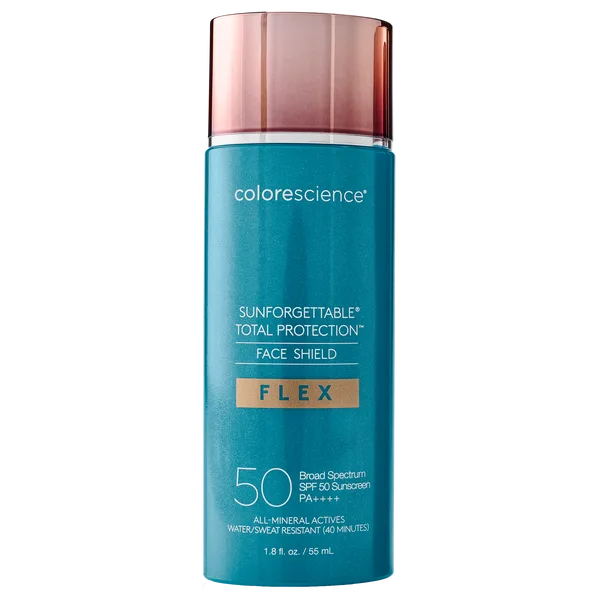
Flex Healthy Glow Defense SPF 50
Award-Winning Mineral Shield
 Verified reviewer
Pros & cons.
- +Tone-adapting pigments genuinely work — activates from white to custom tint on fingertips
- +SPF 50 from 12% zinc oxide alone with remarkably lightweight, fluid texture
- +No white cast across a wide range of skin tones with proper shade selection
- +Comprehensive environmental protection: UV, visible light, blue light, pollution, infrared
- +Niacinamide and snow mushroom provide real skincare benefits beyond sun protection
- +Generous 1.8 oz tube lasts 2-3 months — better value than most clinical sunscreens
- +Oil-free, non-comedogenic formula suitable for acne-prone skin
- −Can pill over certain moisturizers or serums with incompatible bases
- −Shade matching between options still requires trial — not universally adaptive
- −40-minute water resistance is limited for heavy outdoor activity
- −Premium price at $58 though offset by larger tube size
- −Silicone-heavy formula won't appeal to silicone-averse consumers
The full review.
Nine thousand reviews. For a mineral sunscreen. That number alone tells you something unusual is happening with Colorescience’s Face Shield Flex. Mineral sunscreens don’t typically inspire this kind of devotion — they’re the vegetables of skincare, something people use because they should, not because they want to. The Face Shield Flex changed that equation for a lot of people, and the reason is a neat bit of pigment technology that solves the two problems mineral sunscreens have struggled with for decades: white cast and shade matching.
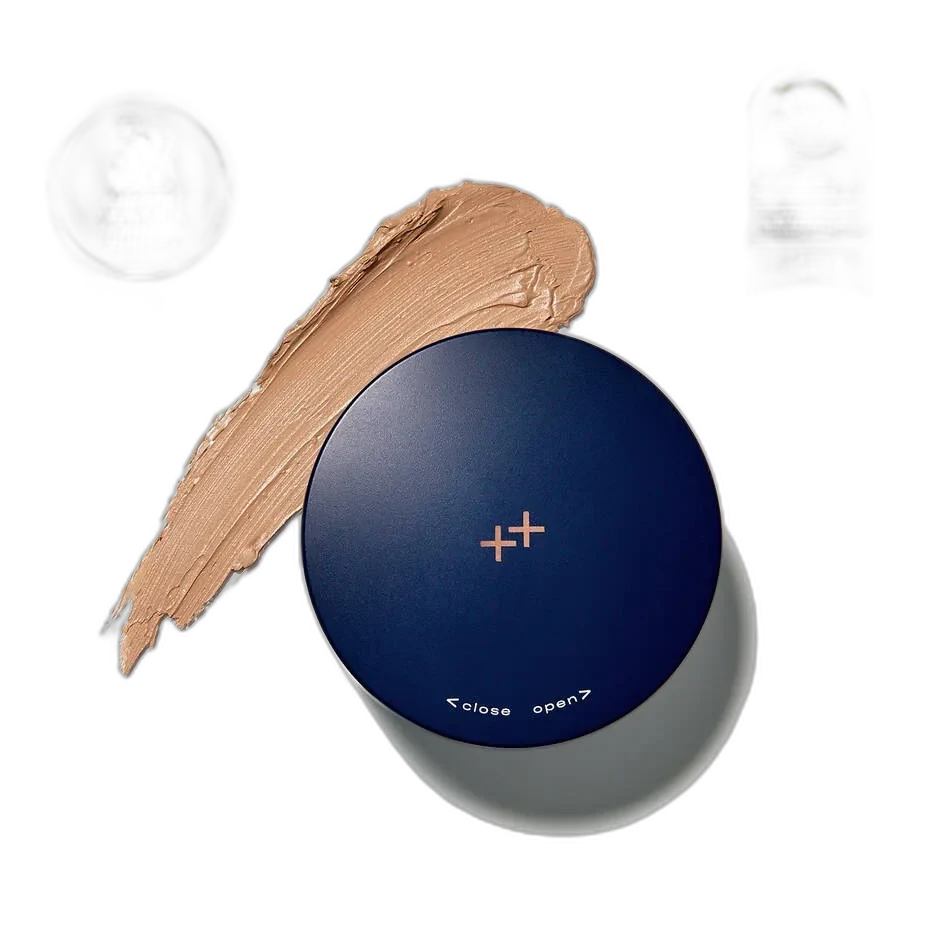
Here’s how it works. The product dispenses as a white cream — standard mineral sunscreen appearance. But when you rub it between your fingertips, encapsulated iron oxide pigments rupture and release their color, transforming the white cream into a skin-tone tint that adapts to a range of complexions. It’s not magic, it’s polymer-encapsulated pigment technology, but the effect feels close enough. In practice, this means you can apply an SPF 50 mineral sunscreen and end up looking like you’re wearing a light, natural foundation rather than a zinc oxide mask.
The core formula is 12% zinc oxide — the only active ingredient. Getting to SPF 50 with zinc oxide alone requires either high concentrations (which feel heavy) or advanced particle distribution (which feels light). Colorescience went with the latter, using a sophisticated silicone base that suspends and distributes zinc oxide particles with unusual efficiency. The result is an SPF 50 that spreads like a lightweight fluid rather than a thick paste. The silicones aren’t just there for texture — they’re structural components that make the whole formula work.
Beyond UV, Colorescience’s EnviroScreen Technology provides what they call comprehensive environmental defense. The iron oxides block visible light — particularly blue light wavelengths that have been shown to trigger hyperpigmentation and oxidative stress. Antioxidants including a vitamin E derivative (disodium lauriminodipropionate tocopheryl phosphates), sunflower sprout extract, and dimethylmethoxy chromanol address free radical damage from pollution and infrared radiation. Whether you need protection from these environmental stressors depends on your situation, but for urban dwellers and those managing pigmentation, the additional coverage is scientifically relevant.
The skincare ingredients elevate this beyond a simple sunscreen. Niacinamide appears early in the inactive ingredient list, suggesting a functional concentration. Over weeks of daily use, niacinamide strengthens the skin barrier, reduces transepidermal water loss, and helps manage oil production and redness. Tremella fuciformis sporocarp extract — snow mushroom — provides humectant hydration through polysaccharides that rival hyaluronic acid in water-binding capacity. Bisabolol and allantoin add anti-inflammatory and skin-conditioning benefits. The result is a sunscreen that makes skin look and feel better over time, not just on the day of application.
The finish is semi-matte and natural — not flat, not dewy, just convincingly skin-like. For many users, this replaces foundation entirely for daily wear. The coverage is light to medium and buildable, so you can apply a thin layer for a barely-there look or build up over areas that need more evening. The formula is oil-free and non-comedogenic, making it workable for oily and acne-prone skin — a population that often struggles to find mineral sunscreens that don’t exacerbate their concerns.
The shade range has expanded significantly since launch and now includes Fair, Light, Medium, Tan, Deep, and Rich Deep options. Each shade is designed to adapt across a spectrum rather than match one exact tone, which gives more flexibility than traditional shade systems. That said, shade matching still requires some trial — users between categories sometimes find neither is perfect, and the adaptive range has limits.
Application technique matters. The product performs best when you squeeze it onto your fingertips, rub your fingers together to activate the pigments, and then pat-blend onto your face. Trying to apply it directly from tube to face before activating the pigments can result in streaking. It’s a small learning curve, and once you develop the habit, the two-second finger-rub becomes automatic.
At $58 for 1.8 ounces, this is premium but not unreasonable for the clinical sunscreen category. The tube is significantly larger than the brand’s 1 oz treatment products (All Calm, Even Up), which means it actually lasts a reasonable amount of time — two to three months of daily use. The per-use cost lands around $0.60-0.90, which is competitive with many popular mineral sunscreens when you factor in the tinted coverage it provides.
The most common complaints center on pilling — the silicone base can roll up over certain moisturizers or serums, particularly those with conflicting silicone or water-based formulations. Finding the right products to layer underneath requires some experimentation. A few users also report the formula looking patchy after several hours, especially in hot or humid conditions where sweat breaks through the 40-minute water resistance.
But these are minor frictions in what is overall an outstanding product. The Face Shield Flex solved the mineral sunscreen experience problem — it looks good, feels good, protects comprehensively, and includes genuine skincare actives. For the nine thousand-plus people who’ve reviewed it, that combination was worth writing about. They’re not wrong.
Ingredient analysis.
Full INCI list
Active Ingredient: Zinc Oxide 12%. Inactive Ingredients: Water, C12-15 Alkyl Benzoate, Butyloctyl Salicylate, Lauryl PEG-8 Dimethicone, Isododecane, Propanediol, Caprylyl Methicone, Dimethicone, Niacinamide, Tridecyl Salicylate, Dimethicone/Vinyl Dimethicone Crosspolymer, Trilaureth-4 Phosphate, Dimethiconol/Propylsilsesquioxane/Silicate Crosspolymer, Lauryl PEG-10 Tris(Trimethylsiloxy)silylethyl Dimethicone, Mica, Polyester-1, Maltodextrin, Sodium Chloride, Bisabolol, Disodium Lauriminodipropionate Tocopheryl Phosphates, Ethylhexylglycerin, Tremella Fuciformis Sporocarp Extract, Allantoin, Silica Dimethyl Silylate, Caprylyl Glycol, Isoceteth-10, Zein, Hexylene Glycol, Dimethylmethoxy Chromanol, Synthetic Fluorphlogopite, Zea Mays (Corn) Starch, Silica, Caesalpinia Spinosa Fruit Pod Extract, Hydrogenated Lecithin, Tetrasodium Glutamate Diacetate, Caprylic/Capric Triglyceride, Helianthus Annuus (Sunflower) Sprout Extract, Phenoxyethanol, Sodium Benzoate, Benzoic Acid, Dehydroacetic Acid, Sodium Hydroxide, Sodium Myristoyl Glutamate, Aluminium Hydroxide, Titanium Dioxide (CI 77891), Iron Oxides (CI 77491, CI 77492, CI 77499)
Skin match.
The science.
The Science
The formula uses 12% zinc oxide as the sole active ingredient to reach SPF 50, using advanced particle dispersion technology to maximize UV scattering. Zinc oxide provides broad-spectrum protection across the UVA-I (340-400nm), UVA-II (320-340nm), and UVB (290-320nm) range; it is the only single UV filter covering this entire spectrum.
Iron oxide pigments add protection in the visible light range (400-700nm). A 2021 study in Photodermatology, Photoimmunology & Photomedicine shows iron oxide-containing tinted sunscreens reduce visible light-induced pigmentation by up to 84% compared to untinted formulations. This helps prevent and manage hyperpigmentation and melasma, as visible light triggers these conditions independently of UV exposure.
Niacinamide appears high in the inactive ingredients and has extensive research behind it. A 2005 study in the International Journal of Dermatology shows 4% topical niacinamide significantly reduces hyperpigmentation and increases skin lightness after 8 weeks. Niacinamide also increases ceramide and fatty acid synthesis in the stratum corneum, strengthening the skin barrier through daily use.
Tremella fuciformis sporocarp extract (snow mushroom) produces polysaccharides with high water-holding capacity. Research in the International Journal of Biological Macromolecules shows Tremella polysaccharides hold nearly 500 times their weight in water, matching or exceeding hyaluronic acid's hydrating capacity with a smaller molecular size for better skin penetration.
Dimethylmethoxy chromanol is a synthetic antioxidant that neutralizes free radicals from UV and visible light exposure, adding a layer of defense against molecular photodamage.
References
- The effect of niacinamide on reducing cutaneous pigmentation and suppression of melanosome transfer — International Journal of Dermatology (2005)
Dermatologist Perspective
Board-certified dermatologists often recommend Face Shield Flex as a daily mineral sunscreen for various skin types and concerns. Dermatologists note the tinted formulation provides clinically meaningful visible light protection for hyperpigmentation and melasma management—conditions where untinted sunscreens alone are insufficient. The oil-free, non-comedogenic formula makes Face Shield Flex one of the few mineral SPF 50 products dermatologists recommend to acne-prone patients. Niacinamide provides barrier-strengthening and anti-inflammatory benefits that support skin health beyond UV protection. Dermatologists typically recommend this as a standalone daily SPF for patients who prefer one cosmetically elegant product over a multi-step sunscreen routine.
Where it fits in your routine.
Apply a nickel-sized amount to your fingertips. Rub your fingertips together to activate the tone-adapting pigments; the white cream turns into a skin-tone tint. Pat and blend onto your face, neck, and ears as the final step of your morning skincare routine. Add more coverage where needed. Let it set for 30 seconds before applying makeup. Reapply every two hours during extended sun exposure, or after 40 minutes of water exposure or heavy sweating.
At $58 for 1.8 ounces, this premium product offers better per-ounce value than most clinical sunscreens. The brand's own All Calm ($115/1oz) and Even Up ($155/1oz) cost much more per ounce. One tube lasts about 2-3 months with daily use, costing $20-30 per month. Because it replaces a mineral sunscreen and a tinted primer or light foundation, the effective per-product cost is competitive. Similar clinical-grade tinted mineral sunscreens from EltaMD and SkinCeuticals cost $35-50 for smaller tubes.
Daily mineral sunscreen users wanting pleasant wear and natural-looking tinted coverage. People who stopped using mineral sunscreens due to white cast or thick texture. Hyperpigmentation sufferers needing visible light protection alongside UV blocking. Sensitive skin types requiring fragrance-free, non-irritating SPF 50.
Budget-conscious users seeking mineral SPF at drugstore prices. People who avoid silicone-based products. Those wanting a completely untinted, invisible sunscreen will not like the tinted formula. Users needing water resistance longer than 40 minutes for water sports or heavy exercise.
Product details.
The fluid, lightweight texture starts white and turns into a skin-tone tint when rubbed between fingertips. It blends smoothly without dragging. It sets to a semi-matte, natural finish.
Unscented — no fragrance or essential oils. ***
Sleek squeeze tube has a controlled-flow opening. The design is professional and clinical. The 1.8 oz size exceeds most clinical sunscreens.
The product dispenses white. When you rub it between fingertips, encapsulated pigments activate and the white turns into a skin-tone tint. It blends into the face with minimal white cast and gives light-to-medium buildable coverage. The finish is naturally matte but not flat. The 12% zinc oxide does not cause irritation or heaviness.
2-3 months with daily facial application. ***
12 months ***
All Year ***
The backstory.
Colorescience developed the Face Shield Flex to solve the two biggest complaints about mineral sunscreens: white cast and shade matching. The tone-adapting pigment technology was created to provide a single product that works across multiple skin tones without requiring an extensive shade range. The EnviroScreen Technology represents the brand's thesis that modern sun protection needs to address environmental threats beyond just UV radiation.
About Colorescience
Established Brand (5–20 years)Diane Ranger, a mineral makeup and sun protection pioneer, founded Colorescience in 2000. The brand's products are patented, clinically tested, and dermatologists widely recommend them. The Face Shield Flex is a top seller with over 9,000 reviews and multiple beauty awards.
Common myths.
Zinc oxide alone cannot reach SPF 50 in an elegant formula.
This product reaches SPF 50 using only 12% zinc oxide. Advanced dispersion technology maximizes the UV-scattering efficiency of every zinc oxide particle. The silicone base distributes particles evenly, providing high protection without the heavy, chalky feel of traditional zinc formulas.
One shade of tinted sunscreen cannot cover multiple skin tones.
Encapsulated pigments in each shade offer flexibility, providing a color range instead of one fixed shade. Each shade option adapts more broadly than traditional fixed-tint products, though they do not match every skin tone perfectly.
FAQ.
How does the tone-adapting technology in Colorescience Flex work?
The sunscreen uses encapsulated iron oxide pigments activated by friction. Rubbing the product between your fingertips breaks the capsules. This releases pigments that blend to match various skin tones. The product starts white and develops its tint during activation and application.
What shade of Colorescience Flex should I choose?
Flex comes in Fair, Light, Medium, Tan, Deep, and Rich Deep shade ranges. Each shade adapts across a spectrum instead of matching one exact tone. Test both shades if you are between them; the adaptable pigments are forgiving, but the closer match looks most natural.
Does Colorescience Flex really protect against blue light and pollution?
Yes. The iron oxides protect against visible light, including blue light wavelengths. EnviroScreen Technology also uses antioxidants (vitamin E derivative, sunflower sprout extract) to neutralize free radicals from pollution and infrared radiation. These benefits go beyond standard UV filtering.
Is Colorescience Flex water resistant?
Yes — the formula resists water and sweat for 40 minutes, so it works for light outdoor activities. Reapply after 40 minutes or after toweling off if you swim or sweat heavily.
***
Can I use Colorescience Flex instead of foundation?
Many users find the light-to-medium buildable coverage enough for daily wear without foundation. The semi-matte finish looks natural and skin-like. It works well as a base under foundation for fuller coverage.
***
Community
What the community says.
"Tone-adapting technology works across multiple skin tones"
"Lightweight feel despite full mineral SPF 50 protection"
"Natural semi-matte finish that replaces foundation for many users"
"Protects against UV, blue light, pollution, and infrared"
"No white cast across a range of skin tones"
"Premium price point at $58"
"Finding the right shade between options can be tricky"
"Some users report patchiness after several hours"
"Contains silicones which some users avoid"
"Can pill over certain moisturizers or serums"
People also looked at.