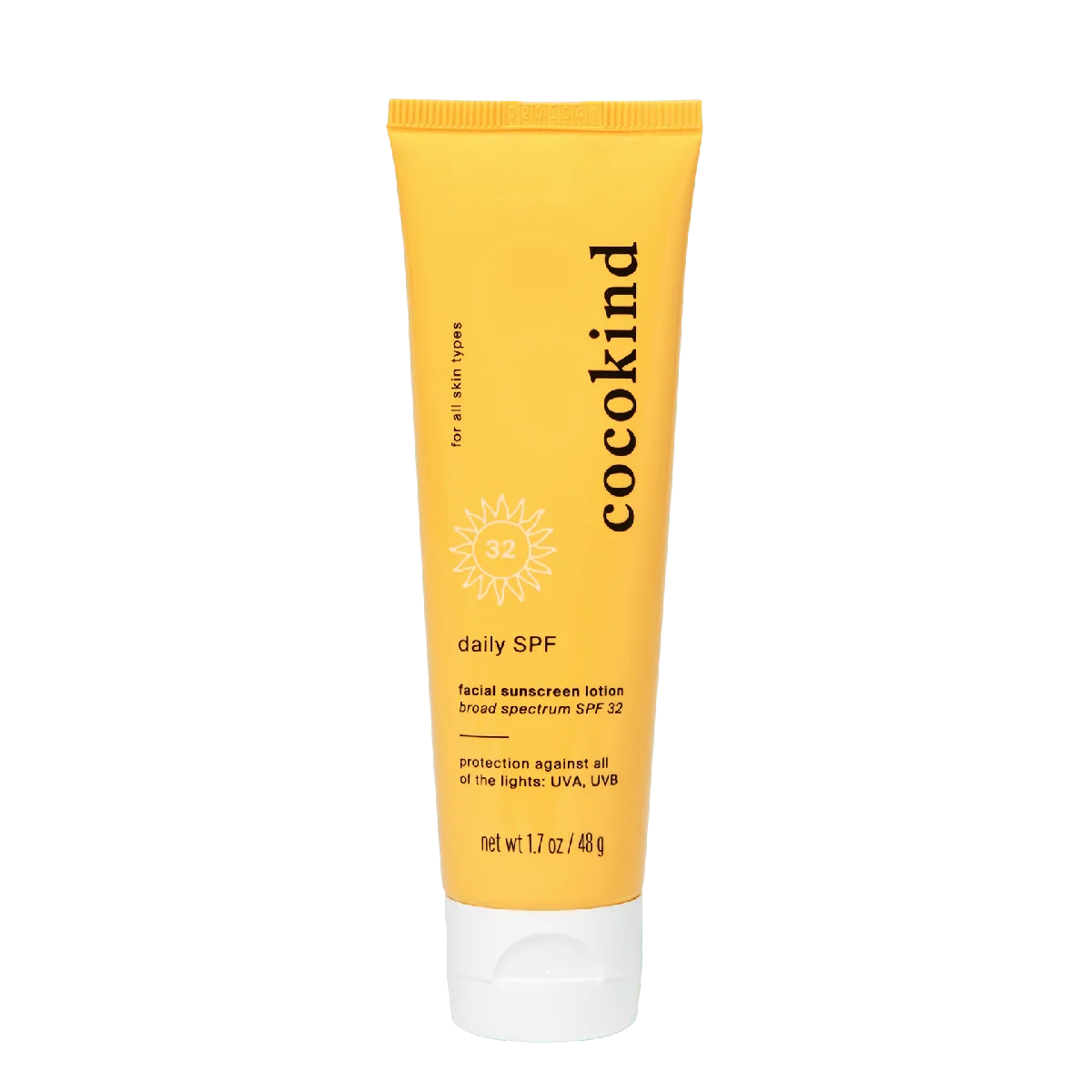
Daily SPF 32
Clean Beauty SPF Pick
 Verified reviewer
Pros & cons.
- +High 21% zinc oxide provides robust broad-spectrum protection without chemical UV filters
- +Remarkably short clean ingredient list with recognizable soothing botanicals
- +Surprisingly smooth texture for a high-concentration mineral formula without silicones
- +Fragrance-free and genuinely gentle enough for the most sensitive reactive skin types
- +Affordable for the clean-beauty mineral sunscreen category at $25
- +Reef-safe and environmentally conscious with vegan and cruelty-free credentials
- −Noticeable white cast that is problematic for medium to deep skin tones
- −SPF 32 is lower than the SPF 50 many dermatologists and consumers prefer
- −Not water-resistant making it unsuitable for outdoor sports or beach use
- −Oils and shea butter may cause breakouts in acne-prone or very oily skin types
- −No tinted option available to address the white cast issue
The full review.
Most sunscreen ingredient lists feel like chemistry exams. Cocokind’s Daily SPF 32 reads like a recipe card: Water, coconut oil derivatives, aloe, argan oil, sunflower oil, shea butter, zinc oxide. The list is short—under thirty items—and most ingredients are easy to understand without a textbook.
This transparency goes beyond marketing. Cocokind builds its brand on the idea that evaluating skincare shouldn’t require a chemistry degree, and the Daily SPF 32 follows this philosophy. Every ingredient has a clear purpose: zinc oxide blocks UV rays, aloe soothes, argan and sunflower oils moisturize, and licorice and bisabolol calm inflammation. It contains no mysterious polymers, no synthetic fragrances, and no chemical UV absorbers. It is nearly as minimal as a functional sunscreen can be.
The twenty-one percent zinc oxide concentration is significant. This product does not dabble in mineral protection; it commits to it. At this level, it provides broad-spectrum UVA and UVB coverage that rivals many SPF 50 products in UVA protection (zinc oxide blocks UVA, which causes skin aging, effectively). The SPF 32 rating is lower than many consumers prefer, but the difference between SPF 32 and SPF 50 in daily use is only about one percentage point of UV blockage.
Cocokind invested real formulation effort into the texture. Twenty-one percent zinc oxide in a clean formula—without silicones for slip or synthetic emulsifiers for refinement—should feel like spreading paste. It does not. Coconut alkanes and coconut-derived emulsifiers create a lotion-like consistency that spreads easily. The finish is natural, not matte or dewy; skin looks like skin, just slightly more hydrated.
The white cast is the honest reality for any mineral sunscreen at this concentration. On light skin tones, it fades to near-invisible within one or two minutes. On medium skin tones, it is noticeable but manageable. On deeper skin tones, it is a deal-breaker for many, and Cocokind does not offer a tinted version. This is the fundamental limit of non-tinted mineral sunscreens; no formulation can completely solve this with twenty-one percent zinc oxide.
The soothing base is notable. Dipotassium glycyrrhizate from licorice root, bisabolol from chamomile, and aloe vera juice create a calming foundation that works for sensitive and reactive skin. Many mineral sunscreens treat the base as an afterthought, making it sticky, heavy, or drying. Cocokind designed the wearing experience for people whose skin reacts to almost everything.
Argan oil and sunflower seed oil add emollient moisture to counteract the drying effect of high-concentration zinc. Shea butter provides occlusive protection. Spirulina and phytoplankton extracts add marine-botanical antioxidants, acknowledging that UV protection is only one part of environmental defense.
The product is not water-resistant, limiting its use for outdoor activities. This is a daily urban sunscreen for commuting, walking the dog, or sitting near windows—not for the beach or trails. While SPF 32 is adequate for incidental exposure, it provides less margin of safety than SPF 50 during extended outdoor time.
At twenty-five dollars for 1.7 ounces, the price is fair for the clean-beauty mineral sunscreen category. Premium mineral sunscreens often cost forty to seventy dollars. Drugstore mineral options cost less but typically use the synthetic ingredients Cocokind’s target consumer avoids.
Cocokind’s Daily SPF 32 is not the most cosmetically elegant, the highest protection, or equally effective for all skin tones. Instead, it is a clean, gentle, and effective mineral sunscreen at a reasonable price. For consumers who read every ingredient and want to know exactly what is on their face, it is one of the most trustworthy options on the shelf.
Ingredient analysis.
Full INCI list
Active Ingredient: Zinc Oxide 21%. Inactive Ingredients: Water, Caprylic/Capric Triglyceride, Coconut Alkanes, Cetearyl Alcohol, Glycerin, Aloe Barbadensis Leaf Juice, Argania Spinosa Kernel Oil, Tocopheryl Acetate, Helianthus Annuus (Sunflower) Seed Oil, Coco-Glucoside, Glyceryl Caprylate, Sodium Phytate, Caprylyl/Capryl Glucoside, Xanthan Gum, Dipotassium Glycyrrhizate, Sclerotium Gum, Cetearyl Glucoside, Butyrospermum Parkii (Shea) Butter, Tocopherol, Coco-Caprylate/Caprate, Caprylhydroxamic Acid, Sucrose, Spirulina Maxima Extract, Phaeodactylum Tricornutum Extract, Oryza Sativa Starch, Bisabolol, Lecithin, Polyhydroxystearic Acid, Polyglyceryl-3 Polyricinoleate, Isostearic Acid, Glucose, C8 Alcohol, C10 Alcohol
Skin match.
The science.
The Science
Zinc oxide at 21% provides broad-spectrum UV protection by scattering and absorbing radiation. Chemical UV filters absorb specific wavelengths and convert them to heat, but zinc oxide reflects and scatters UV radiation across the entire UVA and UVB spectrum. Research in the Journal of the American Academy of Dermatology shows zinc oxide provides more robust UVA protection — which prevents photoaging — than many chemical UVA filters.
The non-nano particle size means the zinc oxide particles are larger than 100 nanometers. They sit on the skin surface instead of penetrating viable skin layers. Research in the International Journal of Cosmetic Science shows non-nano zinc oxide has minimal dermal absorption, supporting its safety for daily use.
Dipotassium Glycyrrhizate comes from licorice root. Studies in the Journal of Dermatological Science show it inhibits prostaglandin synthesis and reduces UV-induced inflammation. This anti-inflammatory activity matters in sunscreen, where the goal is to block UV and minimize the inflammatory cascade UV exposure triggers.
Bisabolol is the active component of chamomile extract. Research in the European Journal of Pharmacology shows it has wound-healing and anti-inflammatory properties. Using it with licorice extract creates a dual anti-inflammatory system that supports skin comfort during daily sunscreen wear.
Dermatologist Perspective
Board-certified dermatologists consider zinc oxide one of the safest, most effective UV filters, especially for children and sensitive skin. The 21% concentration in this formula provides excellent broad-spectrum coverage. Dermatologists say SPF 32 works for daily incidental sun exposure but recommend higher SPF for patients with significant outdoor time or photosensitive conditions. Dermatologists frequently recommend the mineral-only approach for patients with eczema, rosacea, or post-procedure skin, because zinc oxide is inherently anti-inflammatory and triggers fewer reactions than chemical filters. The clean base formula with anti-inflammatory botanicals matches dermatological recommendations for sensitive skin sun protection.
Where it fits in your routine.
Apply a nickel-sized dollop to the face as the last step of your morning skincare routine. Warm it between palms for a few seconds, then press and smooth it onto the face and neck to minimize white cast. Let the product set for 1-2 minutes before applying makeup. Reapply every two hours during extended outdoor sun exposure. One morning application works for daily indoor use with incidental sun exposure.
At $25 for 1.7 oz, this is an affordable clean-beauty mineral sunscreen. Premium clean mineral sunscreens from Drunk Elephant, Supergoop, and Ilia cost $36-48 for similar sizes. The ingredient quality — argan oil, aloe vera, licorice, bisabolol — matches or exceeds many higher-priced alternatives. Pricier options often have better SPF levels or less white cast via tinting or advanced dispersing technology. This offers excellent value for budget-conscious clean-beauty consumers.
This sunscreen works for clean-beauty consumers seeking a mineral SPF with a short, recognizable ingredient list. It suits sensitive skin types that react to chemical sunscreens, fragrances, or synthetic ingredients. Light to medium skin tones get the best cosmetic experience. The mineral-only approach suits those who prioritize reef safety and environmental responsibility.
Medium to deep skin tones will find the white cast unacceptable without a tinted option. The formula contains oils and shea butter, which affects oily and acne-prone skin. Choose a sport-specific SPF if you need water-resistant sunscreen for outdoor activities. A chemical or tinted mineral sunscreen works better if white cast and SPF level matter more than ingredient purity.
Product details.
This 21% zinc oxide formula has a lightweight lotion consistency and feels unusually smooth. It is slightly thicker than a moisturizer but spreads easily without typical mineral sunscreen drag.
Fragrance-free with minimal product scent
The simple recyclable tube matches Cocokind's eco-conscious branding. It squeezes out the right amount easily.
The sunscreen spreads easier than expected for a high-zinc formula. A slight white cast fades as the product settles, but stays visible on medium to deep skin tones. The finish is natural and comfortable—not matte or dewy, but skin with a subtle sheen.
6-8 weeks with daily face application
12 months
All Year
The backstory.
Cocokind developed this sunscreen to fill a gap between expensive clean-beauty mineral sunscreens and drugstore options that compromise on ingredient purity. The brand's emphasis on transparency extends to the sunscreen — non-nano zinc oxide, reef-safe claims, and a short ingredient list that consumers can actually understand. It became one of Cocokind's bestsellers after launching, driven by demand from clean-beauty consumers who wanted an affordable daily mineral SPF.
About Cocokind
Established Brand (5–20 years)Priscilla Tsai founded Cocokind in 2015 to provide affordable, clean, and effective skincare. Cocokind sells at Target, Ulta, and Whole Foods, building credibility through ingredient transparency and barrier-friendly formulations.
Common myths.
Mineral sunscreens always leave a heavy white cast
21% zinc oxide leaves a white cast, especially on deeper skin tones, but modern formulation techniques improve mineral sunscreen aesthetics. This formula uses dispersing agents and coconut alkanes to help the zinc oxide blend more evenly, though it cannot eliminate the cast at this concentration.
SPF 32 is not enough protection for daily use
SPF 32 blocks about 97% of UVB rays, while SPF 50 blocks 98%. This difference is minimal for daily urban use. The gap matters most during long outdoor exposure, where higher SPF offers a larger safety margin. For daily commuting and indoor work, SPF 32 meets what dermatologists consider adequate.
FAQ.
Does Cocokind Daily SPF 32 leave a white cast?
The 21% zinc oxide leaves a visible white cast, especially on medium to deep skin tones. The formula blends better than many mineral sunscreens but does not fully remove the cast. Pressing the product into skin after warming it between palms helps minimize it. People with deeper skin tones may prefer tinted mineral sunscreens instead.
Is Cocokind SPF 32 reef-safe?
Yes — this sunscreen uses only zinc oxide as its UV filter (no oxybenzone, octinoxate, or other chemical filters flagged for coral reef damage). Non-nano zinc oxide is one of the most environmentally friendly sunscreen actives.
Can I use Cocokind Daily SPF for the beach?
This sunscreen works for daily urban use, not outdoor water activities. It lacks water resistance, and SPF 32 provides less safety margin during extended sun exposure. Use a water-resistant SPF 50+ sunscreen and reapply frequently for beach days or outdoor sports.
Is Cocokind SPF 32 good for acne-prone skin?
The formula is silicone-free, fragrance-free, and uses non-comedogenic zinc oxide as its UV filter. It contains coconut alkanes, argan oil, and shea butter, which some acne-prone individuals find comedogenic. Highly breakout-prone users should patch test first or use an oil-free mineral sunscreen.
How does Cocokind SPF 32 compare to other mineral sunscreens?
At $25 for 1.7 oz, this offers good value among clean-beauty mineral sunscreens. The 21% zinc oxide concentration provides strong protection. The soothing botanical base (aloe, argan, licorice, bisabolol) is more intentional than many competitors. The main trade-offs are a white cast on deeper skin tones and lower SPF than products offering SPF 50.
What the community says.
"Lightweight non-greasy texture for a mineral sunscreen"
"Fragrance-free and genuinely gentle on sensitive skin"
"Clean ingredient list with meaningful skincare botanicals"
"Affordable clean-beauty mineral sunscreen option"
"Noticeable white cast especially on medium to deep skin tones"
"SPF 32 is lower than the SPF 50 many people prefer"
"Not water-resistant and not suitable for outdoor activities"
"Can feel slightly greasy on oily skin types"
Featured in.
People also looked at.