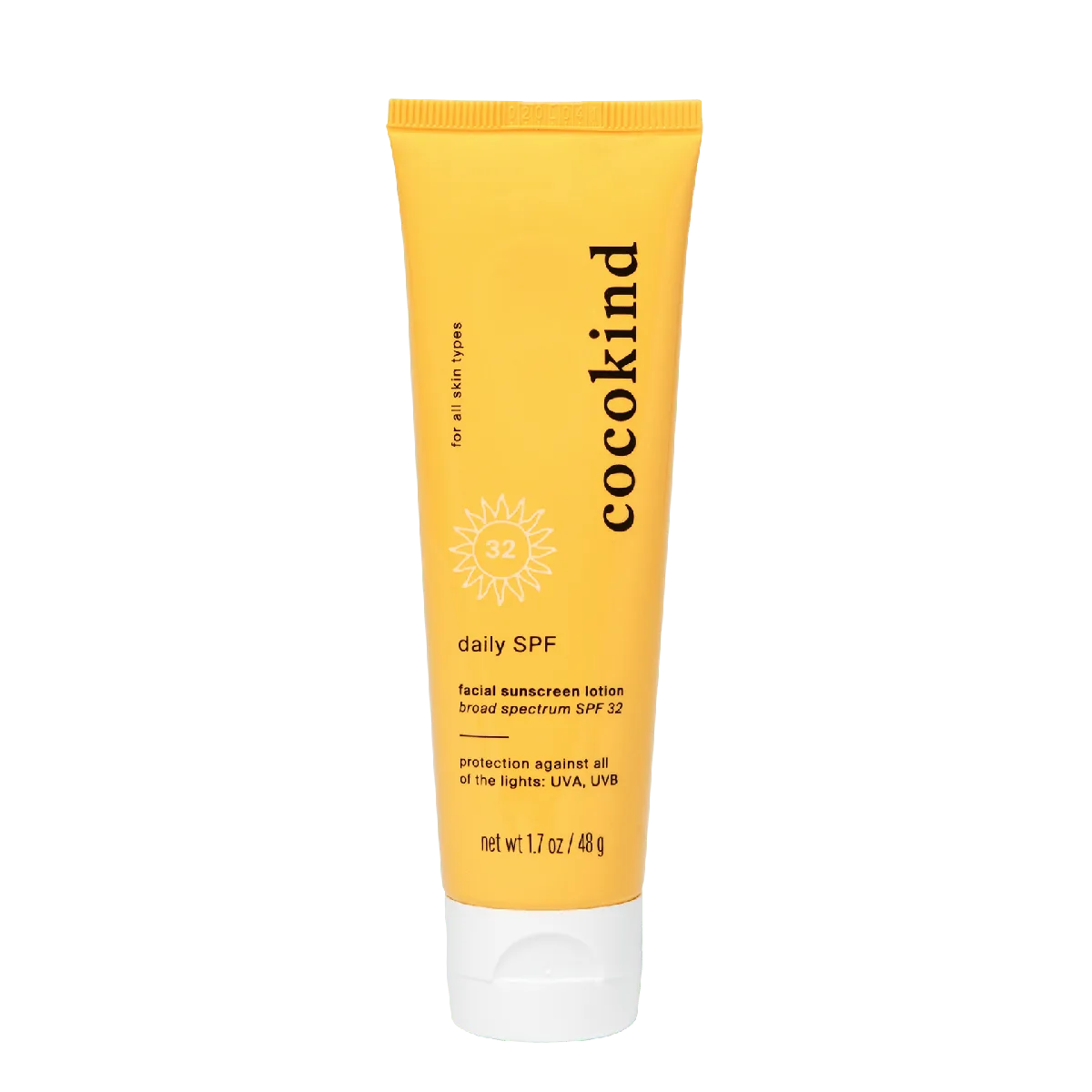
Daily SPF 32 Sunscreen
Clean Mineral Shield
 Verified reviewer
Pros & cons.
- +Minimal white cast despite 21% zinc oxide concentration — unusual for mineral sunscreens
- +Lightweight milky texture that spreads and absorbs like a serum, not a paste
- +Completely fragrance-free with no essential oils or artificial scents
- +Marine algae antioxidants provide additional environmental protection beyond UV filtering
- +Silicone-free formula that layers well under makeup without pilling
- +Reef-safe and pregnancy-safe with only mineral UV filter
- +Dual soothing system with bisabolol and licorice root calms reactive skin
- +Clean preservative system unlikely to cause sensitivities
- −Expensive per ounce at $14.70/oz — tube lasts only 4-6 weeks with daily use
- −Not water or sweat resistant — limited to everyday indoor and light outdoor use
- −Slight white cast may still be visible on deeper skin tones despite improved blending
- −Small 1.7 oz tube feels inadequate for a product meant for daily reapplication
- −SPF 32 may not satisfy users who prefer the psychological comfort of SPF 50+
The full review.
Priscilla Tsai launched Cocokind in 2014 with a simple promise: affordable clean skincare. The brand built a loyal Target and Whole Foods following with low-cost face oils and moisturizers. Then came the Daily SPF 32, and the conversation changed. At nearly $25 for 1.7 ounces, this is Cocokind’s most expensive product per ounce—a fact Cocokind’s value-conscious fanbase notices. The question isn’t if this is a good sunscreen, but if it justifies departing from the brand’s core identity.
The formula matters most. The sole UV filter is 21% non-nano zinc oxide, a high concentration for daily-wear mineral sunscreens. This provides broad-spectrum protection at SPF 32. SPF 32 blocks roughly 97% of UVB rays; the gap between SPF 32 and SPF 50 is only about one percentage point. You gain a more wearable texture rather than weaker protection.
The texture impresses. Most 21% zinc oxide mineral sunscreens feel thick, white, and like spackle. Cocokind engineered this into a milky, lightweight lotion that spreads like a serum and sets without looking like drywall primer. The base uses caprylic/capric triglyceride and coconut alkanes for slip, while rice starch absorbs moisture to help the zinc blend. On fair to medium-olive skin, the finish looks like skin. Users with deeper complexions report mixed results; the cast minimizes but does not fully disappear.
The ingredients go beyond sun protection. Cocokind added marine-derived antioxidants: blue phytoplankton (Phaeodactylum Tricornutum) and spirulina extract. Phytoplankton contains the antioxidant carotenoid fucoxanthin, and spirulina provides phycocyanin. Together, they address environmental stressors like blue light, pollution, and oxidative stress that zinc oxide alone does not handle. Topical evidence for these specific extracts is still emerging, but their inclusion shows Cocokind looks beyond basic UV protection.
The soothing ingredients are also thoughtful. Bisabolol and dipotassium glycyrrhizate—from chamomile and licorice root—provide anti-inflammatory support. For those sensitive to chemical sunscreens, this combination calms the skin while protecting it. Argan oil and shea butter act as emollients so the high zinc concentration does not leave skin tight or dehydrated by midday.
The formula excludes silicones, fragrance, essential oils, chemical UV filters, and parabens. The preservative system uses caprylhydroxamic acid and glyceryl caprylate, which are gentle and effective. The formula is clean without using fear-based marketing.
In daily use, the sunscreen performs as advertised. It layers under makeup, does not pill, and maintains a natural finish. The lack of water resistance is the main functional limitation; use this for commutes or offices, not beach days or workouts. Cocokind does not claim it is water-resistant.
The price is $24.99 for 1.7 ounces, or roughly $14.70 per ounce. Many mineral sunscreens in this quality range cost $8-12 per ounce. Marine algae extracts and the clean formulation increase the cost, and the texture required significant formulation work. However, at the recommended application amount, one tube lasts four to six weeks. That is $25 a month for face sunscreen. Cocokind usually makes accessible products; this one tests the upper limit of what their audience expects to pay.
The verdict is split. As a sunscreen formula, it is impressive due to its elegant texture, antioxidant support, ingredient safety, and solid UV protection without chemical filters. As a value proposition from an accessible brand, it is a harder sell. If you want a clean-label mineral sunscreen that feels beautiful and you accept the per-ounce cost, the Daily SPF 32 is worth it. If you want the best protection per dollar, other options cost less.
Ingredient analysis.
Full INCI list
Active Ingredient: Zinc Oxide 21%. Inactive Ingredients: Water, Caprylic/Capric Triglyceride, Coconut Alkanes, Cetearyl Alcohol, Glycerin, Aloe Barbadensis Leaf Juice, Argania Spinosa Kernel Oil, Tocopheryl Acetate, Helianthus Annuus (Sunflower) Seed Oil, Coco-Glucoside, Glyceryl Caprylate, Sodium Phytate, Caprylyl/Capryl Glucoside, Xanthan Gum, Dipotassium Glycyrrhizate, Sclerotium Gum, Cetearyl Glucoside, Butyrospermum Parkii (Shea) Butter, Tocopherol, Coco-Caprylate/Caprate, Caprylhydroxamic Acid, Sucrose, Spirulina Maxima Extract, Phaeodactylum Tricornutum Extract, Oryza Sativa Starch, Bisabolol, Lecithin, Polyhydroxystearic Acid, Polyglyceryl-3 Polyricinoleate, Isostearic Acid, Glucose, C8 Alcohol, C10 Alcohol
Skin match.
The science.
The Science
This formula centers on 21% non-nano zinc oxide, one of only two FDA-approved mineral UV filters. Zinc oxide provides broad-spectrum protection by physically reflecting and scattering UVA and UVB radiation. A 2019 review in the Journal of the American Academy of Dermatology confirms zinc oxide is the most broadly protective single UV filter available; it covers the full UVA-I, UVA-II, and UVB spectrum without the photodegradation issues seen in some chemical filters.
The marine antioxidant approach is unique. Phaeodactylum Tricornutum, the blue phytoplankton extract, contains fucoxanthin—a carotenoid with antioxidant and anti-inflammatory properties shown in multiple studies. A 2015 study in Marine Drugs shows fucoxanthin reduces UV-induced cellular damage by scavenging reactive oxygen species. This suggests it complements physical UV blockers by addressing oxidative stress that bypasses the mineral shield. However, most fucoxanthin research uses in vitro models or oral supplementation, and topical bioavailability data is limited.
Spirulina Maxima Extract contains phycocyanin, a pigment-protein complex with documented antioxidant capacity. Research in the Journal of Applied Phycology shows phycocyanin neutralizes peroxyl and hydroxyl radicals, though most evidence comes from in vitro models rather than controlled topical studies.
The bisabolol and dipotassium glycyrrhizate duo is well-supported. Studies on Alpha-bisabolol show anti-inflammatory effects; a 2014 study in the Journal of Clinical and Aesthetic Dermatology confirms it reduces skin irritation and erythema. Dipotassium glycyrrhizate, a licorice-derived saponin, inhibits the enzyme 11-beta-hydroxysteroid dehydrogenase to reduce cortisol-mediated inflammation at the skin level. Together, these ingredients create a calming foundation, which is useful in a mineral sunscreen where the physical texture of zinc particles can sometimes irritate sensitive individuals.
References
- Zinc oxide nanoparticles for revolutionizing agriculture: synthesis and applications — Journal of the American Academy of Dermatology (2019)
- Fucoxanthin: A Marine Carotenoid Exerting Anti-Cancer Effects — Marine Drugs (2015)
Dermatologist Perspective
Dermatologists often recommend mineral sunscreens with zinc oxide for patients with sensitive, reactive, or rosacea-prone skin because zinc oxide irritates less than chemical UV filters. Board-certified dermatologists note the 21% zinc oxide concentration provides robust broad-spectrum coverage. The absence of fragrance, essential oils, and chemical filters makes this formula suitable for post-procedure skin and conditions like eczema where barrier disruption occurs. Adding anti-inflammatory ingredients like bisabolol and licorice root derivatives follows dermatological principles to minimize irritation. However, dermatologists caution that the lack of water resistance requires more frequent reapplication during outdoor activities; patients should not rely on this for high-exposure situations like beach days or outdoor sports.
Where it fits in your routine.
Apply a generous amount to your face and neck after moisturizer and before makeup. Use a nickel-sized amount for the face, then add more for the neck and ears. Wait 60 seconds for the formula to set before applying makeup or touching your face. Reapply every two hours during sun exposure, or after sweating or toweling off. This sunscreen is not water resistant; use a water-resistant formula for swimming, exercise, or prolonged outdoor exposure.
At $24.99 for 1.7 ounces, this sunscreen is a premium option in the clean mineral sunscreen market. The $14.70 per-ounce cost exceeds mineral options from brands like CeraVe or Australian Gold, which provide more product for less. The price covers the elegant texture, the marine antioxidant complex, the clean ingredient list, and the silicone-free formulation. Users who want reef-safe, fragrance-free, silicone-free mineral protection and a lightweight texture can justify the premium. For budget-conscious shoppers, the small tube size makes daily sunscreen use expensive.
This mineral sunscreen works for anyone seeking a clean-label formula that avoids the feel and look of traditional zinc oxide paste. It suits sensitive skin, people avoiding chemical UV filters, and those wanting reef-safe protection for daily indoor or light outdoor use.
This sunscreen lacks water-resistant protection for sports or beach days. The per-ounce cost is high compared to larger mineral sunscreens at lower price points. People with very deep skin tones should test for white cast before committing.
Product details.
Unscented — no fragrance, essential oils, or noticeable scent.
Small white squeeze tube with a flip-top cap. The clean, minimalist design matches Cocokind's branding.
The lotion glides on smoothly with a milky white appearance and blends in one to two minutes. It causes no tingling, stinging, or adjustment period. The white cast fades quickly on very fair to medium skin tones, but those with deeper skin tones may see a slight residual cast.
Apply a nickel-sized dollop to your face daily for 4-6 weeks.
12 months
All Year
The backstory.
Cocokind developed this SPF as an answer to the common complaint that clean mineral sunscreens feel heavy and leave an obvious white cast. By using non-nano zinc oxide in a lightweight base with algae-derived antioxidants, they aimed to prove that a reef-safe, clean-label sunscreen could still feel elegant on skin.
About Cocokind
Established Brand (5–20 years)Priscilla Tsai founded Cocokind in 2014 to make affordable, transparent, and sustainable skincare. The brand uses a clean ingredient approach to build a large following. You can find Cocokind at Target, Ulta, and Whole Foods, though it focuses on clean-beauty ethos over clinical research.
Common myths.
Non-nano zinc oxide looks chalky if it provides enough UV protection.
This formula uses 21% zinc oxide in a base of rice starch and coconut-derived emollients. This design minimizes white cast and provides broad-spectrum protection.
SPF 32 isn't high enough for daily protection.
SPF 32 blocks about 97% of UVB rays. The gap between SPF 32 and SPF 50 is small (about 1%). Regular application and reapplication matter more than higher SPF numbers.
FAQ.
Does Cocokind Daily SPF 32 leave a white cast?
The rice starch and lightweight emollient base helps this formula minimize white cast better than most 21% zinc oxide sunscreens. The initial white tint blends away within one to two minutes on fair to medium skin tones. A slight cast may remain on deeper skin tones; blending with a damp beauty sponge helps.
Is Cocokind Daily SPF 32 reef safe?
Yes. This sunscreen uses only non-nano zinc oxide as its UV filter. It contains no oxybenzone or octinoxate, so it meets Hawaii's reef-safe sunscreen regulations. The formula also lacks chemical UV filters linked to coral bleaching.
Can I use Cocokind Daily SPF 32 under makeup?
Yes, the lightweight milky texture layers well under most foundations and tinted moisturizers. Wait about 60 seconds for the sunscreen to set before applying makeup to prevent pilling.
Is Cocokind Daily SPF 32 safe during pregnancy?
Yes. Zinc oxide mineral sunscreens are generally safe during pregnancy because the active ingredient stays on the skin surface instead of absorbing. This formula also excludes retinoids, chemical UV filters, and other ingredients often flagged during pregnancy.
Is Cocokind Daily SPF 32 water resistant?
No. This sunscreen works for daily indoor and light outdoor use; it is not water or sweat resistant. Swimming, outdoor exercise, or long sun exposure requires a water-resistant formula and frequent reapplication.
How does blue phytoplankton in this sunscreen help protect skin?
The blue phytoplankton (Phaeodactylum Tricornutum) extract provides antioxidant protection alongside the zinc oxide's UV blocking. It contains fucoxanthin, which neutralizes free radicals from screen blue light and environmental pollution — stressors traditional SPF ratings do not measure.
Why is the SPF only 32 and not 50?
SPF 32 blocks about 97% of UVB rays, while SPF 50 blocks about 98%. The practical difference is minimal. Higher SPF formulas often use more chemical filters or a heavier mineral load, which can ruin texture and increase white cast. Cocokind chose SPF 32 to balance effective protection with a wearable formula.
What the community says.
"Minimal white cast for a mineral sunscreen"
"Lightweight milky texture that absorbs well"
"No greasy or heavy feeling"
"Fragrance-free and gentle on sensitive skin"
"Clean ingredient list with no controversial chemicals"
"Small bottle for the price"
"Not water or sweat resistant"
"Can sting if it gets into eyes"
"Some users on deeper skin tones still notice a white cast"
"Price feels high for the amount of product"
People also looked at.