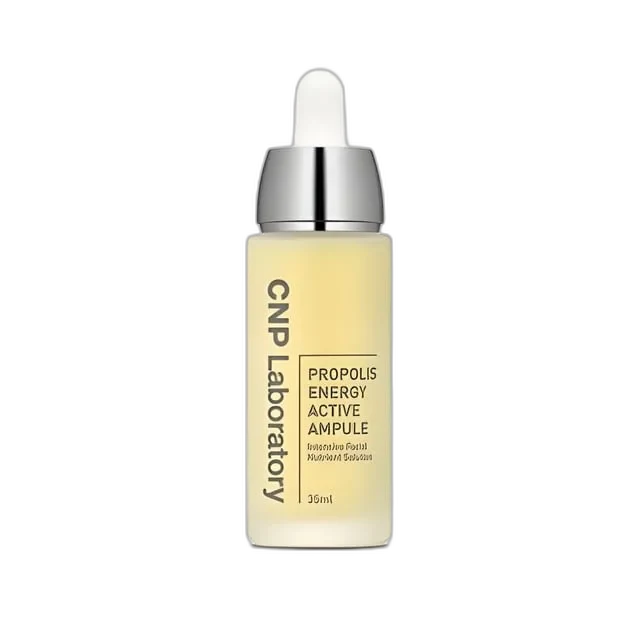
Propolis Energy Ampule
K-Beauty Derm Clinic Staple
 Verified reviewer
Pros & cons.
- +Propolis extract listed as first ingredient — rare in the propolis category
- +Full centella complex plus niacinamide, panthenol, and allantoin calming base
- +Beta-glucan adds film-forming hydration and calming support
- +Visible plumping and glow from first use
- +Genuinely effective for barrier recovery and mid-cycle redness
- +Over a decade of clinic validation and consistent positive reviews
- −Sticky finish divides users — not for those who hate any tackiness
- −Bee-derived ingredients unsafe for bee allergy or propolis sensitization
- −Fragrance plus natural propolis scent limits it for fragrance-reactive users
- −15ml size offers poor per-ml value versus the larger Korean-market size
- −Not a dedicated acne treatment despite calming properties
The full review.
Long-term K-beauty shoppers know propolis is everywhere. Serums, ampoules, masks, toners, and sleeping masks all use it. Most propolis-focused products are water-first formulations with propolis extract listed in the middle or bottom of the ingredient list for marketing. This is like labeling cereal “made with real fruit” when it only contains 0.3% fruit. The CNP Propolis Energy Ampule differs. Propolis extract is the first ingredient, meaning it makes up more of the product by volume than anything else, including water. This formulation choice is rare in the propolis serum category. It gives the ampoule its amber tint and honey-floral scent, which comes from actual propolis rather than fragrance. This is why the product has stayed on Korean dermatology clinic shelves for over twelve years despite cheaper propolis ampoules entering the market. The formulation is thoughtful. Butylene glycol and glycerin act as humectants. Beta-glucan, a fermentation-derived polysaccharide with immune-modulating and film-forming properties, adds hydration and calming action. Sodium hyaluronate and hydrolyzed HA complete the humectant stack. The calming toolkit includes centella asiatica with individually listed madecassoside and asiaticoside, panthenol, allantoin, niacinamide, and arginine. Finally, the brand’s signature hive-theme ingredients—bee venom, royal jelly extract, and honey extract—add amino acid and humectant support to the propolis-centric identity. On application, the formula feels propolis-forward. The texture is a slightly viscous amber liquid that feels tacky for about a minute before settling. The scent is a light honey-floral that fades quickly but remains noticeable to scent-sensitive users. The finish provides the plump, glowy, dewy appearance users praise, appearing immediately and accumulating with consistent use. It works well under heavy winter moisturizers or layered sleeping masks. For compromised or reactive skin, it is a workhorse. Post-procedure users report faster redness recovery. Eczema-adjacent users report calmer flare-up recovery. Users with retinol-induced dryness or chemical exfoliant over-use often use it to return to baseline. This is not medical-grade intervention—prescription therapy is the right path for serious dermatological conditions—but this ampoule works as a supportive calming and hydrating layer. There are explicit caveats. First, the tacky finish is real; layering moisturizer on top helps, but users who hate stickiness will find it frustrating. Second, the scent, while partly from the propolis, may bother fragrance-allergic users. Third, this product contains propolis, bee venom, royal jelly, and honey extract. If you have a bee allergy, bee venom sensitivity, or propolis sensitization, do not use this. Bee allergy can cause severe reactions, and the bee venom in this formula is not hypoallergenic. Anyone new to propolis products should patch test on the inner wrist for 48 hours before facial use. Fourth, the 15ml size is small for the price—about $2.30 per milliliter, or roughly $35 for two months of twice-daily use. A 50ml size in Korean markets offers better per-milliliter value for long-term users. The main point: a K-beauty product on the market for over a decade that remains recommended in Korean dermatology clinics has earned its reputation. CNP built this ampoule using a principle most competitors skip (propolis as the lead ingredient) and a calming toolkit reflecting the brand’s dermatologist-founder heritage. The result is a good propolis ampule that works for users who tolerate the scent, the tack, and the bee-derived ingredients. For those users, it is a reliable entry in its category.
Formula
Ingredient analysis.
Full INCI list · pH 5.5
Propolis Extract, Butylene Glycol, Water, Glycerin, PEG/PPG-17/6 Copolymer, 1,2-Hexanediol, Beta-Glucan, Sodium Hyaluronate, Hydrolyzed Hyaluronic Acid, Panthenol, Allantoin, Centella Asiatica Extract, Madecassoside, Asiaticoside, Niacinamide, Bee Venom, Royal Jelly Extract, Honey Extract, Arginine, Carbomer, PEG-60 Hydrogenated Castor Oil, Caprylyl Glycol, Ethylhexylglycerin, Disodium EDTA, Fragrance.
Skin match.
The science.
The Science
Propolis has a clear scientific track record as a topical ingredient. Honey bees produce this resinous substance to seal and sterilize the hive. It contains a complex mixture of flavonoids (galangin, chrysin, pinocembrin), phenolic compounds (caffeic acid phenethyl ester, ferulic acid), and essential oils. Flavonoids provide natural antioxidant activity, and caffeic acid phenethyl ester shows anti-inflammatory and antimicrobial effects in studies. A 2018 review in Phytotherapy Research summarized clinical dermatological uses for propolis in wound healing, acne support, and skin barrier recovery. It concluded that topical propolis has reasonable evidence for calming and mild antimicrobial action, though clinical trial quality varies. For skin-barrier applications, the flavonoid-phenolic combination provides multi-mechanism calming action that differs from single-molecule actives like niacinamide — it is a botanical complex rather than a targeted molecular intervention. Beta-glucan also has supporting evidence. Derived from oats, yeast, or fungi, studies show its topical use in wound healing and immune modulation. A 2011 study in the Archives of Dermatological Research shows it can accelerate skin barrier recovery in experimental settings. Its film-forming properties work well in leave-on serums to extend the action of smaller humectants. The centella and niacinamide content add independent, well-established calming and barrier-support effects. Bee venom inclusion is more speculative — some studies suggest it may stimulate collagen production and provide mild plumping effects, but evidence is limited and the inclusion poses a sensitization concern for anyone with bee allergy. Overall, the formulation stacks ingredients with supportive evidence in a propolis-dominant base, matching what the science supports.
Dermatologist Perspective
Dermatologists in Korea use propolis products in clinic recovery protocols and post-procedure aftercare; CNP's ampule is a frequent recommendation in those settings. Board-certified dermatologists note propolis can be a useful calming and mild antibacterial layer for compromised skin, but bee allergy or prior sensitization to propolis is a strict contraindication. Outside Korea, dermatologists are generally more cautious about recommending bee-derived products due to sensitization risk. However, for patients without bee allergies, the formulation's calming ingredient stack is a reasonable choice for supportive care. This product is not a treatment for inflammatory dermatological conditions. Patients with active eczema, severe acne, or rosacea should work with their dermatologist on a primary treatment plan before adding supportive products like this.
Guidance
Where it fits in your routine.
Apply 2-3 drops to the face after cleansing and toning. Press it in gently and avoid the eye area. Wait 60-90 seconds for the initial tack to settle, then apply moisturizer. Use twice daily. For compromised or post-procedure skin, use it as a targeted spot treatment on reactive patches. People with a known bee allergy should avoid this product. First-time users should patch test on the inner wrist for 48 hours before full facial application.
At $35 for 15ml, the cost is $2.30 per ml. Korean markets sell a 50ml size for roughly $50, which lowers the cost to about $1 per ml; this is the better choice for consistent use. The price is defensible for users who want the propolis-forward formulation, clinic heritage, and proven track record. Users seeking only propolis as an ingredient can find cheaper alternatives from Beauty of Joseon, Some By Mi, and Purito with similar ingredient profiles, though none match CNP's propolis-as-first-ingredient formulation signal.
This propolis-forward calming and plumping ampoule works for dry, normal, combination, or oily-dehydrated skin. It suits post-procedure recovery, over-exfoliation barrier damage, and mid-cycle reactive skin. K-beauty enthusiasts seeking clinic heritage will like this choice.
Avoid this product if you have a known bee allergy, bee venom sensitivity, or prior propolis sensitization; the risk outweighs the benefit. Users who dislike tacky finishes will not like the application. Budget buyers can find cheaper propolis products elsewhere, but those have less propolis content.
Product details.
This amber liquid is slightly viscous. It feels tacky at first, then settles into a plump, glowing finish.
Subtle honey-floral from the propolis and fragrance.
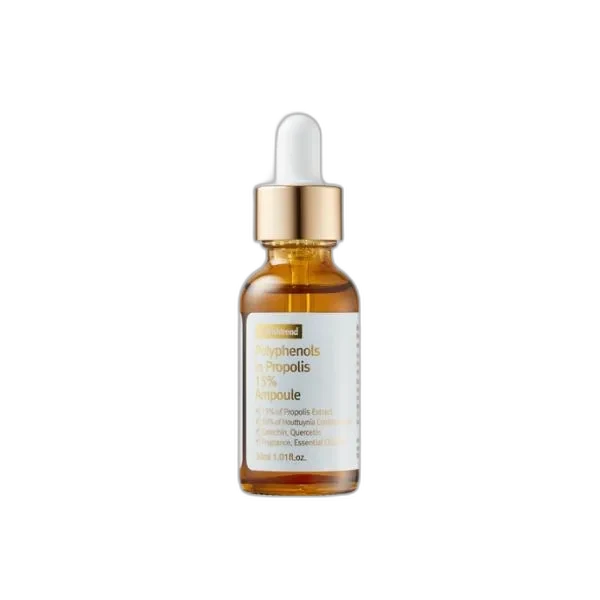
Amber glass bottle with pipette dropper.
The first use feels sticky for about a minute. It then settles into a glowy, slightly plumped skin finish. It causes no tingling or warming. Dry or dehydrated skin shows an immediate luminous effect.
A 15ml bottle lasts 6-8 weeks with twice-daily application; the 50ml size lasts proportionally longer and has better per-ml value.
12 months
fall winter
The backstory.
CNP launched the Propolis Energy Ampule in 2012 and it has remained one of the brand's anchor products ever since — partly because Korean dermatology clinics adopted it as a go-to post-procedure soothing treatment, and partly because it preceded and helped create the broader propolis-focused K-beauty category.
About CNP Laboratory
Established Brand (5–20 years)Korean dermatologists co-founded CNP Laboratory in 2000, using their clinic network for distribution. The Propolis Energy Ampule is one of the brand's longest-running and most recommended products; it often appears in Korean dermatology clinic retail sections.
Common myths.
Propolis products are greasy or only for acne skin.
Well-formulated propolis products focus on humectants instead of oils, and propolis works for all skin types. In Korea, people use this ampule for dry and mature skin as much as for acne-prone skin.
FAQ.
What does CNP Propolis Energy Ampule do?
This propolis-dominant ampoule calms inflammation, hydrates deeply, and makes skin look plumper and glowier. Regular use supports barrier recovery and reduces mid-cycle redness.
Is it good for acne?
Propolis has natural antibacterial properties that calm acne-adjacent inflammation, but it is not a dedicated acne treatment. It works as a barrier-supportive calming ampoule that reduces breakout inflammation instead of treating breakouts directly.
Can you use it daily?
Yes — most skin types can use this twice daily. The formula is gentle for long-term use. Its propolis-centric base has less sensitization risk than potent actives like retinoids or strong acids.
Is this safe for sensitive skin?
Yes — centella, panthenol, and allantoin make it safe for reactive skin. However, propolis and bee venom mean you must avoid this product if you have a known bee allergy or sensitization. Patch test on the inner wrist first if unsure.
Why is the texture tacky?
The propolis and beta-glucan film settles within 60-90 seconds and leaves a plumped glow. Apply a moisturizer on top to smooth the finish if the initial tack bothers you.
What the community says.
"visibly plumped skin"
"soothes irritation fast"
"nice glow"
"works during derm recovery"
"tacky finish"
"slight honey scent"
"small size for price"
Featured in.
People also looked at.