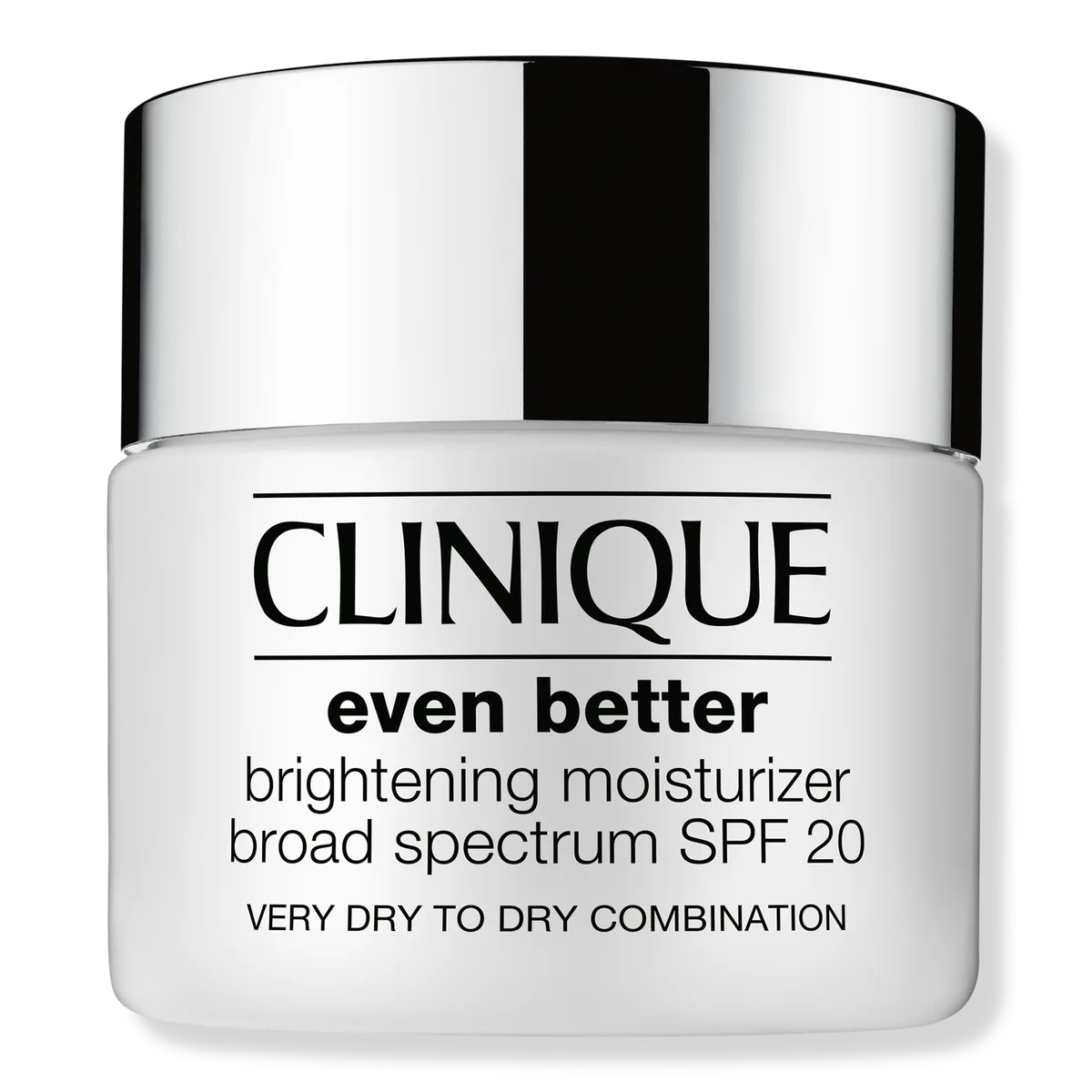
Even Better Skin Tone Correcting Moisturizer SPF 20
Tone-Correcting Multi-Tasker
 Verified reviewer
Pros & cons.
- +Multi-pathway brightening approach targeting melanin production, transfer, and surface cell turnover
- +Dual vitamin C derivatives (ascorbyl glucoside and magnesium ascorbyl phosphate) for enhanced efficacy
- +Sophisticated botanical complex with researched anti-inflammatory and antioxidant ingredients
- +Silky, primer-like texture creates an excellent base for makeup application
- +Fragrance-free and allergy-tested — suitable for reactive skin prone to hyperpigmentation
- +Built-in SPF 20 provides moderate daily UV protection in one step
- +Acetyl glucosamine offers gentle non-acid exfoliation to accelerate pigmented cell turnover
- −Insufficient hydration for dry skin — feels more like a treatment than a moisturizer
- −SPF 20 is below dermatological recommendation for active hyperpigmentation treatment
- −Premium $65 price point for a product that may need supplemental moisturizer and sunscreen
- −Results on deep or long-standing dark spots are modest compared to prescription options
- −Contains chemical UV filters that some users prefer to avoid
The full review.
Hyperpigmentation is not one problem. It is a chain of events — UV exposure triggers inflammation, inflammation activates melanocytes, melanocytes produce melanin, melanin transfers to surrounding cells, and those cells eventually surface as the dark spots that make you reach for a correcting product in the first place. Most brightening moisturizers intervene at one, maybe two points in this cascade. The Clinique Even Better Skin Tone Correcting Moisturizer SPF 20 attempts to interrupt it at four.
This ambition is visible in the ingredient list, which reads less like a moisturizer and more like a research paper bibliography. Two different vitamin C derivatives — ascorbyl glucoside and magnesium ascorbyl phosphate — tackle melanin production through slightly different enzymatic pathways. Acetyl glucosamine promotes the shedding of pigmented surface cells through non-acid exfoliation. Dipotassium glycyrrhizate, derived from licorice root, inhibits the transfer of melanin from melanocytes to keratinocytes. And the SPF 20 provides a base layer of protection against the UV radiation that starts the whole cascade over again.
Clinique’s Even Better line launched around 2011 and represented the brand’s most focused entry into the hyperpigmentation space — a category that had traditionally been dominated by either harsh prescription treatments or gentle but ineffective cosmetic promises. The line drew on decades of the brand’s dermatologist-guided research and positioned itself in the gap between clinical aggression and cosmetic gentleness.
The botanical supporting cast adds depth that goes beyond typical greenwashing. Scutellaria baicalensis root extract brings documented anti-inflammatory activity, helping to calm the inflammatory signals that trigger post-inflammatory hyperpigmentation. Curcuma longa (turmeric) root extract contributes antioxidant properties. Pomegranate juice and olive fruit extract round out an antioxidant complex designed to protect against the oxidative stress that accelerates pigmentation. These are not filler botanicals — each has a defensible rationale for inclusion in a brightening formula.
Texture
The texture, though, tells a story the ingredient list doesn’t fully prepare you for. This is not a moisturizer in the rich, enveloping sense of the word. It is a lightweight, almost silicone-y fluid that absorbs into skin within seconds, leaving behind a smooth, slightly matte, primer-like finish. On combination and oily skin, this is genuinely pleasant — it provides a polished base for makeup without adding weight or shine. On dry skin, it is a disappointment. There is glycerin, sodium hyaluronate, and cholesterol in the formula, but they are overshadowed by the overall lightweight vehicle. Dry-skinned users consistently report needing a separate moisturizer underneath, which raises the question of whether this product functions better as a brightening treatment with SPF than as a standalone moisturizer.
SPF
Speaking of SPF — twenty is the number, and it is both the product’s convenience and its contradiction. For a formula specifically designed to address sun-induced pigmentation, SPF 20 provides only moderate protection. It blocks roughly 95% of UVB rays, compared to 97% for SPF 30 and 98% for SPF 50. In practical terms, for a daily commuter with incidental sun exposure, SPF 20 is adequate. For someone actively treating dark spots and trying to prevent new ones — precisely the target user of this product — dermatological consensus strongly favors SPF 30 or higher. The irony of a brightening product that doesn’t fully protect against the darkening agent it’s fighting is hard to ignore.
Results
Results, when they come, are real but gradual. The immediate effect is cosmetic — a smoother, more luminous appearance from the silky texture and light-diffusing properties. Genuine tone improvement begins to emerge around the four-to-eight-week mark, with the most noticeable results on recent, superficial sun spots. Deep, long-standing hyperpigmentation shows more modest improvement, as expected from any non-prescription topical. Users who pair this with a dedicated retinol at night and a higher SPF for outdoor exposure report the most significant results, suggesting this moisturizer works best as part of a comprehensive brightening protocol rather than a solo solution.
Price
At sixty-five dollars for 1.7 ounces, this sits in Clinique’s upper pricing tier. The ingredient quality genuinely justifies a premium — dual vitamin C derivatives, researched botanicals, acetyl glucosamine, and licorice root derivative represent meaningful formulation investment. But the insufficient hydration for dry skin and the SPF 20 limitation mean you may be buying additional products to compensate for this one’s gaps. For combination-to-oily skin dealing with mild to moderate hyperpigmentation and looking for a daily brightening-plus-SPF step, this is a well-conceived product. Just don’t expect it to be your entire solution.
Ingredient analysis.
Full INCI list
Water/Aqua/Eau, Butyloctyl Salicylate, Ethylhexyl Salicylate, Butyl Methoxydibenzoylmethane, Octocrylene, Nylon-12, Octyldodecyl Neopentanoate, Behenyl Alcohol, Ascorbyl Glucoside, Cetyl Esters, Myristyl Myristate, Butylene Glycol, Polyethylene, Ammonium Acryloyldimethyltaurate/VP Copolymer, Saccharomyces Cerevisiae Extract, Yeast Extract/Faex/Extrait De Levure, Betula Alba (Birch) Bark Extract, Cucumis Sativus (Cucumber) Fruit Extract, Scutellaria Baicalensis Root Extract, Pyrus Malus (Apple) Fruit Extract, Trametes Versicolor Extract, Triticum Vulgare (Wheat Bran) Extract, Saccharomyces Lysate Extract, Punica Granatum (Pomegranate) Fruit Juice, Olea Europaea (Olive) Fruit Extract, Curcuma Longa (Turmeric) Root Extract, Oryza Sativa (Rice) Bran Extract, Citrus Grandis (Grapefruit) Peel Extract, PEG-6, Cholesterol, Dimethicone, Glyceryl Stearate, PEG-100 Stearate, Glycerin, Di-PPG-2 Myreth-10 Adipate, Caffeine, Steareth-21, Sodium RNA, Cellulose, Acetyl Glucosamine, Tromethamine, Sucrose, Myristyl Laurate, Di-C12-18 Alkyl Dimonium Chloride, Salicylic Acid, Sodium Hyaluronate, Tocopheryl Acetate, Trisiloxane, Linoleic Acid, Caprylyl Glycol, Myristyl Alcohol, Sodium Sulfite, Sodium Metabisulfite, Magnesium Ascorbyl Phosphate, Betaine, Trehalose, Hexylene Glycol, Dipotassium Glycyrrhizate, Lauryl PEG-9 Polydimethylsiloxyethyl Dimethicone, Disodium EDTA, Phenoxyethanol
Skin match.
The science.
The Science
This formula brightens skin by interrupting the melanogenesis cascade at multiple points. Ascorbyl glucoside, a stable glycosylated form of vitamin C, inhibits tyrosinase — the key enzyme in melanin synthesis. A 2009 study in the International Journal of Cosmetic Science shows ascorbyl glucoside reduces melanin content and tyrosinase activity in melanocyte cultures, and stays more stable in formulations than pure L-ascorbic acid.
Magnesium ascorbyl phosphate provides a second vitamin C pathway with its own stability and penetration. Research in the Journal of the American Academy of Dermatology confirms its efficacy as a topical skin-lightening agent; the phosphate group increases water solubility and skin penetration over the parent molecule.
Acetyl glucosamine adds a complementary mechanism by promoting epidermal cell turnover. A 2007 study in the British Journal of Dermatology found 2% N-acetyl glucosamine significantly reduced facial hyperpigmentation over 8 weeks, and combining it with niacinamide worked better than either ingredient alone.
Dipotassium glycyrrhizate, the salt form of glycyrrhizinic acid from licorice root, targets a downstream step: the transfer of melanosomes from melanocytes to surrounding keratinocytes. This mechanism differs from tyrosinase inhibition, so it works synergistically with the vitamin C derivatives instead of redundantly. Studies show licorice-derived compounds reduce hyperpigmentation via this transfer-inhibition pathway and provide anti-inflammatory benefits for post-inflammatory pigmentation.
Dermatologist Perspective
Board-certified dermatologists value multi-mechanism approaches to hyperpigmentation; this formula's strategy of targeting melanin production, transfer, and surface cell turnover aligns with current dermatological thinking. Dermatologists note the stable vitamin C derivatives used here trade some potency versus L-ascorbic acid for much better formulation stability — a practical factor that matters more than theoretical potency in a daily-use product. The main concern in dermatological circles is the SPF 20 level, as current guidelines recommend SPF 30 or higher for patients treating pigmentation disorders. Dermatologists typically recommend this product as part of a brightening protocol that includes a separate, higher-SPF sunscreen for meaningful outdoor exposure.
Where it fits in your routine.
Apply one to two pumps to clean, dry skin every morning after serums absorb. Spread it evenly over the face and hyperpigmentation areas. Wait 2-3 minutes for full absorption before applying makeup. Layer a dedicated SPF 30+ sunscreen on top if you spend time outdoors or near windows; the built-in SPF 20 provides moderate incidental protection but lacks enough coverage for extended exposure. Use every morning for 8-12 weeks to see results on dark spots. Pair with a gentle retinol at night to accelerate tone correction.
At $65 for 1.7 ounces, this is a large daily skincare investment. The ingredient complexity justifies the premium — dual vitamin C derivatives, researched botanicals, and multi-pathway actives drive formulation costs. However, dry skin types likely need a supplemental moisturizer and anyone serious about hyperpigmentation prevention needs an additional sunscreen, making the true cost of effective use higher than the sticker price. At two to three months per bottle with daily morning use, the per-day cost is approximately 70 cents to $1. This is reasonable for a prestige brightening treatment but steep for a lightweight, primer-like product.
This works for combination to oily skin types with mild to moderate hyperpigmentation, sun spots, or post-inflammatory dark marks. It combines a brightening treatment with SPF protection and a makeup-ready finish for a multi-tasking morning step. It is best for those who prefer a lightweight, silky texture over a thick cream.
Dry skin types needing substantial hydration from their moisturizer will find this insufficient. People with deep, stubborn melasma or significant hyperpigmentation needing aggressive treatment should use prescription options. Those needing high SPF protection should choose a dedicated sunscreen instead.
Product details.
Fragrance-free. Clean, neutral scent.
Clinique's signature clean design uses a sleek pump bottle. The pump controls dispensing and keeps the formula hygienic. The bottle is sturdy enough for travel.
The first application shows a silky, primer-like texture that absorbs in seconds. Skin looks smoother with immediate, subtle luminosity. Dry skin types may find the hydration insufficient; the lightweight formula feels like it provides little moisture. Brightening effects are gradual. Do not expect visible dark spot reduction before the 4-week mark.
2-3 months with once-daily morning application
12 months
All Year
The backstory.
The Even Better line emerged from Clinique's research into the complex biochemistry of hyperpigmentation — the recognition that dark spots aren't caused by a single mechanism but by a cascade of processes from UV exposure through melanin production to pigment distribution. This moisturizer was formulated to intervene at multiple points in that cascade, an approach that reflects Clinique's clinical, multi-step philosophy applied at the molecular level.
About Clinique
Legacy Brand (20+ years)Clinique launched in 1968 as the first prestige skincare brand developed with dermatologists. The Even Better line is one of Clinique's most research-backed ranges. It uses clinically tested brightening ingredients to target hyperpigmentation and uneven skin tone.
Common myths.
A moisturizer with SPF can replace a dedicated sunscreen entirely
This product's SPF 20 provides moderate protection for incidental sun exposure, such as commuting or running errands. For extended outdoor time, beach days, or preventing hyperpigmentation, use a dedicated SPF 30-50 sunscreen instead or layered on top.
Vitamin C products work immediately to brighten skin
The stable vitamin C derivatives in this formula inhibit melanin production gradually. Expect 4-8 weeks for tone improvement and 8-12 weeks for results on established dark spots. The immediate 'glow' comes from the silky texture and light-reflecting properties, not the actives.
FAQ.
Does Clinique Even Better moisturizer actually lighten dark spots?
Ascorbyl glucoside and magnesium ascorbyl phosphate work with acetyl glucosamine and licorice-derived dipotassium glycyrrhizate to target melanin production and distribution via multiple pathways. Users see gradual improvement over 8-12 weeks, but results on deep or long-standing hyperpigmentation are modest compared to prescription treatments like hydroquinone.
Is SPF 20 in this moisturizer enough protection?
SPF 20 blocks about 95% of UVB rays. This level works for short daily sun exposure like commuting. But if you treat hyperpigmentation — the goal of this product — dermatologists recommend SPF 30-50 minimum. Apply a dedicated sunscreen over this moisturizer to protect against the UV exposure that caused your dark spots.
Can I use this with a separate vitamin C serum?
Layering extra vitamin C over this moisturizer's dual vitamin C formula is not harmful, but it may irritate sensitive skin. To maximize brightening, use a dedicated vitamin C serum in the morning and this moisturizer as your SPF step, or alternate products to avoid overloading skin with the same active.
Why does this moisturizer feel more like a primer than a cream?
The lightweight, silicone-containing formula with nylon-12 creates a smooth, blurring finish like a primer. This design prioritizes a matte, non-greasy finish that works under makeup. Dry skin types can layer a richer moisturizer or hydrating serum underneath for hydration.
Is this product safe to use during pregnancy?
This formula uses chemical UV filters (butyl methoxydibenzoylmethane, octocrylene) and salicylic acid. Some healthcare providers recommend avoiding these during pregnancy. Consult your OB-GYN before use during pregnancy or breastfeeding.
Community
What the community says.
"Velvet-smooth texture absorbs beautifully"
"Gradual brightening effect with consistent use"
"Works well as a makeup base"
"Fragrance-free formula suitable for reactive skin"
"Not moisturizing enough for dry skin — feels more like a primer"
"Limited visible results on stubborn dark spots"
"Premium price for moderate results"
"SPF 20 may not be sufficient for primary sun protection"
People also looked at.