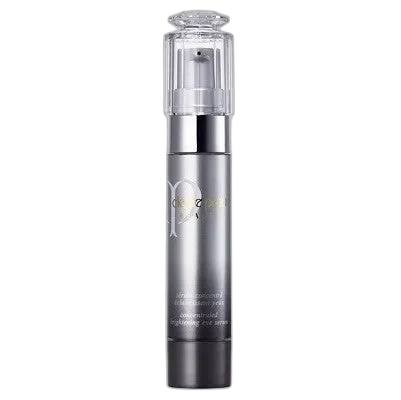
Concentrated Brightening Eye Serum
Japanese Luxury Brightener
 Verified reviewer
Pros & cons.
- +Proprietary 4MSK brightening technology backed by decades of Shiseido melanin research
- +Multi-pathway approach to dark circles using three distinct pigmentation-inhibiting mechanisms
- +Exquisitely lightweight serum texture that absorbs instantly without heaviness or residue
- +Immediate optical brightening from light-diffusing silk proteins and mineral particles
- +Modified hyaluronic acid provides enhanced skin adhesion for sustained periorbital hydration
- +Elegant packaging and application ritual reflect genuine Japanese luxury craftsmanship
- −Very high price at $125 for just 0.5 oz of product
- −Alcohol Denat positioned fourth in the INCI is concerning for the delicate eye area
- −Contains fragrance with individual allergens unsuitable for sensitive periorbital skin
- −Only addresses the pigmentation component of dark circles not vascular or structural causes
- −Requires six to eight weeks of consistent use before meaningful visible brightening appears
The full review.
Shiseido has been studying melanin longer than most skincare brands have existed. Since the 1980s, the Japanese cosmetics giant’s research labs have been systematically mapping the pigmentation pathway, looking for precise intervention points where a molecule could interrupt excessive melanin production without disrupting the skin’s normal function. That research produced 4MSK — Potassium Methoxysalicylate — a brightening agent that Shiseido patented and has kept within its family of brands. Clé de Peau Beauté, the company’s most prestigious skincare line, deploys it here in the Concentrated Brightening Eye Serum, targeting what is arguably the most stubborn brightening challenge in skincare: the under-eye area.
Dark circles are not a single problem. They are a composite of melanin deposits, visible blood vessels through thin skin, hollowing from fat pad displacement, and shadowing from periorbital bone structure. No topical product can address all of these simultaneously. What this serum does — and does credibly — is target the melanin component. The 4MSK inhibits tyrosinase, the enzyme that catalyzes the rate-limiting step in melanin synthesis. The 3-O-Ethyl Ascorbic Acid provides a stable vitamin C derivative that interrupts the pathway at a different point. And Dipotassium Glycyrrhizate, from licorice root, adds a third mechanism of melanin inhibition alongside anti-inflammatory activity. It is a genuine three-pronged attack on pigmentation, not a marketing claim disguised as science.
The texture reveals the Japanese luxury sensibility that Clé de Peau is known for. This is a lightweight, slightly pearlescent serum that glides onto the periorbital skin with almost no friction. It absorbs within seconds, leaving behind a subtle luminosity from the titanium dioxide and mica that serves as both an immediate cosmetic benefit and a clever incentive for continued use. The ritual of application feels intentional — a moment of careful attention to a part of the face that most people rush past.
Hydrolyzed silk adds to the optical effect, forming a delicate light-diffusing layer that softens the appearance of the under-eye area even before the actives have time to work. Sodium Acetylated Hyaluronate — a modified HA with enhanced skin adhesion — provides hydration that helps plump fine crepiness. Betaine, positioned high in the formula, offers additional osmotic hydration. The base is well-constructed for an eye-area product.
But luxury skincare at this price point should be beyond reproach, and this formula has two notable compromises. Alcohol Denat sits fourth in the INCI list — unusually high for an eye-area product that will be applied to some of the thinnest, most sensitive skin on the face. It likely serves as a solubilizer and quick-dry agent, contributing to the elegant texture, but it can be drying and irritating with long-term use. The fragrance is the second compromise. Individual allergens are listed — hexyl cinnamal, citronellol, limonene, linalool — and while the scent is admittedly delicate and pleasant, its presence in a $125 eye serum intended for the periorbital area feels like an aesthetic choice that should have yielded to a safety one.
Performance is where the serum earns its keep, at least partially. Users who use it consistently for six to eight weeks report genuinely visible brightening of dark circles, particularly those with hyperpigmentation rather than purely vascular or structural darkness. The effect is cumulative and gradual — this is not an instant fix but a genuine modulation of melanin production over time. Morning use paired with rigorous sun protection yields the best results, as UV exposure actively stimulates the melanin production that the serum is working to suppress.
The elephant in the room is the price. At one hundred twenty-five dollars for half an ounce, this is a significant investment in a product that addresses one specific concern. The 4MSK technology is genuinely proprietary and not available in drugstore alternatives, which gives it a defensible uniqueness. But the surrounding ingredients — vitamin C derivatives, licorice extract, hyaluronic acid — are available in numerous formulations at a fraction of the cost. You are paying for the synergy of Shiseido’s research, the proprietary active, the Japanese formulation expertise, and the unmistakably luxurious experience. Whether that justifies the premium depends entirely on how you weight proprietary science against accessible alternatives.
Clé de Peau’s Concentrated Brightening Eye Serum is one of the more scientifically substantive luxury eye treatments available. The 4MSK technology is real, the multi-pathway approach is sound, and the results for pigmentation-based dark circles are documented. It does not solve the entire dark circle puzzle — nothing topical does — but it addresses the melanin piece with genuine sophistication. If Clé de Peau reformulated to remove the fragrance and reduce the alcohol, this would be a near-unqualified recommendation for anyone willing to invest at this level. As it stands, it is a product with real substance behind the luxury, asking you to accept two compromises that it should not need to make.
Formula
Ingredient analysis.
Full INCI list
Water (Aqua), Dipropylene Glycol, Dimethicone, Alcohol Denat, Betaine, Butylene Glycol, PEG-240/HDI Copolymer Bis-Decyltetradeceth-20 Ether, PEG-6, PEG-32, Glycerin, Potassium Methoxysalicylate, PEG/PPG-19/19 Dimethicone, Isostearyl Alcohol, Hydrogenated Polyisobutene, Carbomer, Titanium Dioxide (CI 77891), Phenoxyethanol, Mica, Potassium Hydroxide, Xanthan Gum, Alcohol, Disodium EDTA, Isostearic Acid, Dipotassium Glycyrrhizate, Fragrance (Parfum), Acrylates/C10-30 Alkyl Acrylate Crosspolymer, Sodium Metaphosphate, Lauryl Betaine, Panthenyl Ethyl Ether, Tocopheryl Acetate, Aluminum Hydroxide, Polysilicone-2, Sodium Metabisulfite, Hexyl Cinnamal, Alpha-Isomethyl Ionone, Citronellol, Limonene, Linalool, BHT, Camellia Sinensis Leaf Extract, Sodium Acetylated Hyaluronate, 3-O-Ethyl Ascorbic Acid, Rosa Centifolia Flower Extract, Hydrolyzed Silk, Cinnamomum Cassia Bark Extract, Tocopherol, Rosa Roxburghii Fruit Extract, Sodium Benzoate, Zingiber Aromaticus Extract, Hydrolyzed Conchiolin Protein
Skin match.
The science.
The Science
The cornerstone of this formula is Potassium Methoxysalicylate (4MSK), a Shiseido-developed brightening agent that inhibits melanin production by interfering with tyrosinase activity. Research published by Shiseido scientists demonstrated that 4MSK suppresses melanin synthesis in cultured human melanocytes while showing favorable safety profiles for cosmetic use. The molecule was developed through systematic screening of salicylate derivatives for optimal brightening activity with minimal irritation.
3-O-Ethyl Ascorbic Acid is a stable vitamin C derivative with demonstrated ability to inhibit melanogenesis through a different mechanism than 4MSK — specifically by reducing oxidized melanin intermediates and interfering with the conversion of DOPA to dopaquinone. A study published in the Journal of Cosmetic Dermatology (2019) showed that 3-O-Ethyl Ascorbic Acid demonstrated superior stability compared to L-ascorbic acid while maintaining comparable brightening efficacy.
Dipotassium Glycyrrhizate, derived from licorice root, provides a third brightening mechanism through its inhibition of prostaglandin-mediated melanocyte activation. Published research in the Journal of Dermatological Science has shown that licorice-derived compounds reduce UV-induced hyperpigmentation through both direct melanin inhibition and anti-inflammatory pathways. The combination of three mechanistically distinct brightening agents in this formula creates a multi-target approach to periorbital hyperpigmentation.
References
- Stability and efficacy of 3-O-Ethyl Ascorbic Acid as a cosmetic brightening agent — Journal of Cosmetic Dermatology (2019)
Dermatologist Perspective
Board-certified dermatologists recognize that periorbital hyperpigmentation is one of the most common and challenging cosmetic concerns patients present with. The multi-pathway brightening approach in this serum aligns with dermatological understanding that effective pigmentation treatment often requires targeting multiple steps in the melanin synthesis pathway simultaneously. Dermatologists note that 4MSK has a favorable safety profile compared to some stronger prescription-grade brightening agents, making it appropriate for the sensitive eye area. However, many dermatologists express concern about alcohol and fragrance in periorbital formulations, as these can compromise the already thin and vulnerable barrier of the eye area and potentially trigger irritant or allergic contact dermatitis in susceptible individuals.
Where it fits in your routine.
Apply a small amount to clean skin around the orbital bone. Use your ring finger for the gentlest touch. Pat — do not drag — from the inner corner of the eye outward along the under-eye area and the brow bone. Use twice daily, morning and evening, after toner but before eye cream or moisturizer. Use sunscreen during the day because UV exposure stimulates the melanin production this serum suppresses. Use consistently for at least six to eight weeks to see brightening results.
At $125 for 0.5 oz, this eye serum is a high-end luxury product. The 4MSK technology is proprietary to the Shiseido family, which justifies the premium price. However, many cheaper formulations use the same vitamin C derivative, licorice extract, and hyaluronic acid. Value depends on whether you prioritize the proprietary brightening technology or the total formulation. The investment works for dark circles caused by pigmentation. For vascular or structural dark circles, the premium is harder to justify.
This serum works best for visible dark circles from hyperpigmentation, not vascular issues or hollowing. It targets luxury skincare enthusiasts who want proprietary Japanese skincare science and a targeted brightening treatment. Users who find generic vitamin C eye products insufficient may benefit from this multi-pathway approach.
Brightening serums won't fix dark circles caused by thin skin showing blood vessels, fat pad loss, or bone structure shadowing. The alcohol and fragrance content makes this unsuitable for sensitive skin or fragrance allergies. Shoppers on a budget can find effective vitamin C and licorice-based eye treatments for less.
Product details.
Subtle rose notes create a delicate floral fragrance that is noticeable upon application.
Frosted glass bottle with a precision dropper applicator in Clé de Peau's signature packaging. The design shows the brand's focus on the application ritual. Finish satinglowylightweight
The serum feels lightweight and slightly cooling on the skin upon first application. Light-diffusing ingredients show immediate, subtle luminosity. The non-sticky texture makes it easy to layer under eye cream. No adjustment period is needed, but full brightening effects take several weeks to develop.
3-4 months with twice-daily application to both eyes
12 months
All Year
The backstory.
Clé de Peau's brightening range is built on Shiseido's decades-long research into melanin biology. The Concentrated Brightening Eye Serum was developed specifically to address the unique pigmentation challenges of the periorbital area, where thin skin, visible blood vessels, and melanin deposits create the complex appearance of dark circles. The 4MSK technology was originally developed for Shiseido's broader brightening research and was adapted for the delicate eye area in this specialized formula.
About Clé de Peau Beauté
Legacy Brand (20+ years)Clé de Peau Beauté launched in 1982 as Shiseido's prestige skincare division. Shiseido is one of Japan's oldest and most scientifically advanced cosmetic companies. The brand's name means 'the key to skin's beauty' in French. Shiseido's Skin Beauty Innovation Research Center develops its formulations using over four decades of skin-cell science research.
Common myths.
Lack of sleep causes dark circles; no topical product helps.
While fatigue contributes to dark circles, hyperpigmentation beneath the eyes has a genuine melanin component that brightening agents like 4MSK can address. This serum targets the pigmentation pathway specifically, though it cannot change the vascular or structural components of dark circles that relate to skin thinness or blood vessel visibility.
Luxury eye serums are basic formulas in expensive packaging
The 4MSK in this formula is a proprietary ingredient from Shiseido's research; drugstore formulations do not use it. Whether this justifies the $125 price tag is debatable, but the active technology differs from what is common at lower price points.
FAQ.
Does Clé de Peau Concentrated Brightening Eye Serum really work on dark circles?
The serum targets dark circle melanin with Shiseido's proprietary 4MSK (Potassium Methoxysalicylate), a stable vitamin C derivative, and licorice extract. Users report visible brightening in 2-4 weeks. Dark circles from vascular issues or structural skin thinning respond less to topical brightening agents.
Is Clé de Peau Brightening Eye Serum worth the price?
At $125 for 0.5 oz, you pay for Shiseido's proprietary 4MSK technology, which lower-priced formulations lack. The multi-pathway brightening approach uses 4MSK, ethyl ascorbic acid, and licorice extract. Whether this premium over more affordable vitamin C eye treatments is justified depends on your value of the proprietary technology and luxury experience.
Can I use this eye serum with retinol?
Yes — this serum lacks retinol or retinoids, so you can layer it with retinol products. Apply the eye serum first, then your retinol treatment. The brightening agents in this serum complement the collagen-stimulating and cell-turnover benefits of retinol for a complete anti-aging eye routine.
How long does it take to see results from Clé de Peau Eye Serum?
Light-diffusing ingredients give immediate, subtle luminosity. Dark circles show visible brightening within 2-4 weeks of twice-daily use. The 4MSK and vitamin C derivatives reach maximum results over 6-8 weeks as they modulate melanin production at the cellular level.
Is this eye serum safe for sensitive skin?
The formula contains alcohol denat and fragrance, including fragrance allergens like citronellol and linalool, which can irritate sensitive periorbital skin. People with reactive skin or fragrance sensitivities should patch test first. The actives — 4MSK and ethyl ascorbic acid — are generally well-tolerated.
Community
What the community says.
"Visible brightening of dark under-eye circles within weeks"
"Lightweight serum texture absorbs quickly without heaviness"
"Elegant packaging with precise applicator"
"Noticeable improvement in overall eye-area radiance"
"Very expensive for the amount of product received"
"Contains fragrance and alcohol near the sensitive eye area"
"Some users report no significant difference versus more affordable options"
"Requires consistent long-term use to see meaningful results"
People also looked at.