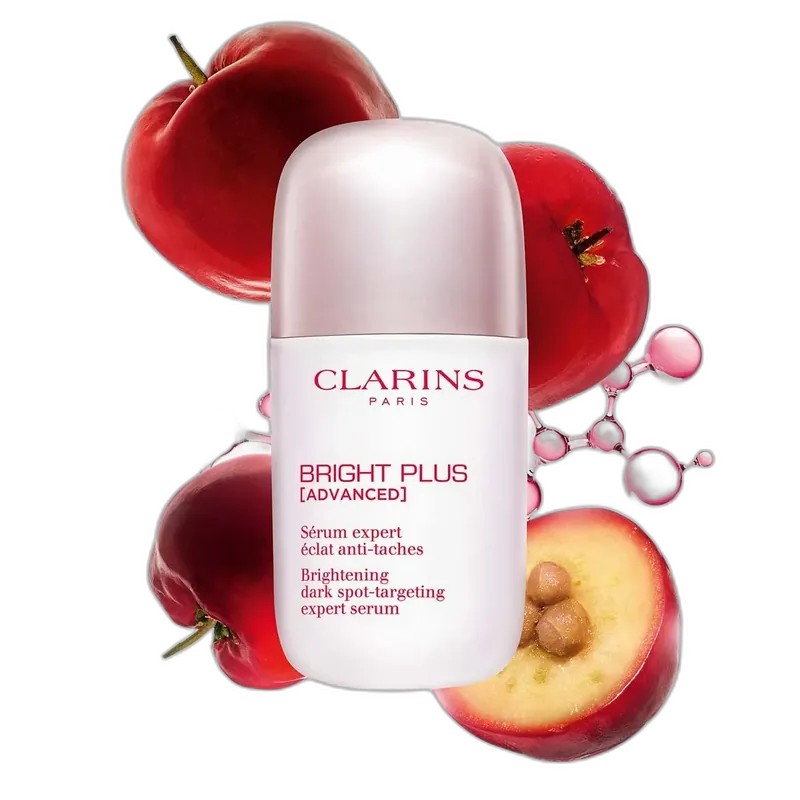
Bright Plus Advanced Brightening Dark Spot Targeting Serum
Plant-Powered Brightener
 Verified reviewer
Pros & cons.
- +Dual-pathway brightening approach: niacinamide blocks melanin transfer while ascorbyl glucoside inhibits production
- +Niacinamide at a meaningful concentration — one of the most proven brightening ingredients available
- +Stable vitamin C derivative maintains efficacy longer than pure ascorbic acid
- +Dual acerola cherry extracts provide natural vitamin C and polyphenol antioxidants
- +Alcohol-free, paraben-free formula with 91% naturally derived ingredients
- +Lightweight texture absorbs quickly and layers well under moisturizer and sunscreen
- +Green tea extract provides photoprotective support for the brightening actives
- −Contains fragrance — unnecessary in a treatment serum and limits sensitive skin suitability
- −Premium price at $89 for ingredients available in comparable serums at lower cost
- −Results on deep, stubborn dark spots are slow and may be modest
- −Some users report initial tingling or mild breakouts during first week
- −Dimethicone may be unwelcome for those avoiding silicones
- −Ascorbyl glucoside is less potent than pure ascorbic acid at equivalent concentrations
The full review.
When a brand with seventy years of botanical expertise releases a brightening serum, you expect plants. Clarins delivers. The Bright Plus serum features dual acerola cherry extracts — both fruit and seed — from a berry that contains up to 4,500mg of vitamin C per 100 grams, alongside green tea, elderflower, and lady’s mantle extracts. But what makes this serum genuinely interesting is that Clarins did not rely solely on botanicals. They paired their plant complex with niacinamide — one of the most rigorously studied brightening ingredients in dermatology — and ascorbyl glucoside, a stable vitamin C derivative. The result is a serum that respects Clarins’ heritage while acknowledging the science.
Niacinamide sits fourth on the INCI list, behind water, glycerin, and dimethicone — a position that suggests a concentration in the 3-5% range, which aligns with the levels shown to be effective in published clinical research. A landmark study demonstrated that topical niacinamide significantly reduced hyperpigmented spots and improved skin tone evenness, with effects comparable to 4% hydroquinone but without the latter’s side effect profile. In this formula, niacinamide does the heavy lifting: inhibiting the transfer of melanin-containing packages from pigment-producing cells to surrounding skin cells, effectively reducing the visible appearance of dark spots from the inside out.
Ascorbyl glucoside complements the niacinamide through a different brightening pathway. While niacinamide blocks melanin transfer, ascorbyl glucoside inhibits tyrosinase — the enzyme that catalyzes melanin production in the first place. This dual-pathway approach is one of the more intelligent formulation strategies in the brightening category. Ascorbyl glucoside also offers a practical advantage: it is significantly more stable than pure ascorbic acid in water-based formulations, maintaining its efficacy over the product’s shelf life without the rapid oxidation that plagues pure vitamin C serums.
The acerola extracts add a botanical dimension to the vitamin C story. In vitro research has shown that aqueous acerola extract inhibits tyrosinase and suppresses melanogenesis at the transcriptional level — meaning it works not just by blocking the enzyme but by reducing the cell’s production of the enzyme itself. Whether the concentration in this formula is sufficient for these in vitro findings to translate into clinical results is uncertain, but the inclusion of both fruit and seed extracts maximizes the range of bioactive compounds extracted from this vitamin C-rich berry.
Green tea extract brings EGCG — the catechin antioxidant that has been extensively studied for its photoprotective properties. In a brightening context, green tea helps prevent UV-triggered melanin overproduction, essentially protecting the gains made by the niacinamide and vitamin C while the serum works to fade existing spots.
Texture
The texture is a lightweight, milky fluid that absorbs quickly and sits comfortably under moisturizer and sunscreen. There is no stickiness or residue — a practical consideration for a product used twice daily. Some users report a subtle tingling on first use, likely from the ascorbyl glucoside, which typically resolves within the first few applications.
Scent
The fragrance inclusion is the formula’s most notable weakness. While the scent is mild, its presence in a daily-use treatment serum is unnecessary and limits the product’s suitability for fragrance-sensitive individuals. In a formula that otherwise demonstrates intelligent restraint — no alcohol, no parabens, a focused active roster — the fragrance feels like a brand-identity concession rather than a formulation necessity.
Packaging
The dimethicone provides a smooth application feel and helps create a comfortable, non-greasy finish. Boron nitride adds a subtle optical smoothing effect. These are functional choices that enhance the user experience without detracting from the active ingredients.
Results
Results are gradual rather than dramatic. Expect a brighter, more radiant complexion within the first week or two — largely from the immediate antioxidant and tone-evening effects of niacinamide and vitamin C. Visible reduction in dark spots typically becomes noticeable at the three to four week mark, with more significant improvement in overall skin clarity at eight to twelve weeks. Deep, stubborn pigmentation — like post-inflammatory hyperpigmentation from acne or years of sun damage — may take longer and may benefit from combining this serum with other treatments under dermatological guidance.
Price
At $89 for one ounce, the Bright Plus serum is positioned at the premium end of the brightening market. The formula justifies a premium over drugstore niacinamide serums — the ascorbyl glucoside, dual acerola extracts, green tea, and overall formulation quality are genuine differentiators. But comparable niacinamide plus vitamin C derivative serums from established brands exist at half this price. The Clarins premium reflects seventy years of botanical expertise, French luxury positioning, and the plant-sourced ingredient philosophy that has defined the brand since 1954. Whether that heritage is worth the surcharge depends on how much you value the story behind your skincare.
Ingredient analysis.
Full INCI list
Aqua/Water/Eau, Glycerin, Dimethicone, Niacinamide, Pentylene Glycol, Ascorbyl Glucoside, Butylene Glycol, Boron Nitride, Cellulose, Sodium Hydroxide, Sodium Polyacrylate, Acrylates/C10-30 Alkyl Acrylate Crosspolymer, Sodium Citrate, Chlorphenesin, Ethylhexylglycerin, Xanthan Gum, Biotin, Parfum/Fragrance, Sambucus Nigra Flower Extract, Citric Acid, Malpighia Emarginata (Acerola) Fruit Extract, Alchemilla Vulgaris Extract, Malpighia Emarginata (Acerola) Seed Extract, Xylitol, Pancratium Maritimum Extract, Sodium Benzoate, Camellia Sinensis Leaf Extract, Potassium Sorbate
Skin match.
The science.
The Science
The Bright Plus serum brightens skin using two complementary mechanisms to target melanin production. Multiple clinical studies validate niacinamide's ability to inhibit melanosome transfer. In a study in the British Journal of Dermatology by Hakozaki et al. (2002), niacinamide reduced melanin transfer by 35-68% in co-culture models, which improved hyperpigmentation in clinical trials. A randomized controlled trial in PMC showed 4% niacinamide treats melasma similarly to 4% hydroquinone but with fewer side effects.
Ascorbyl glucoside works upstream of niacinamide by inhibiting tyrosinase, the rate-limiting enzyme in melanin biosynthesis. In the skin, alpha-glucosidase enzymatically cleaves it into free ascorbic acid, creating a reservoir of active vitamin C. Ascorbyl glucoside is less potent than pure L-ascorbic acid at equivalent concentrations, but its stability in water-based formulations makes it a practical choice for daily-use serums.
Studies show Malpighia emarginata (acerola) has a very high ascorbic acid content. A review in Foods (2018, PMC6098779) documented the antioxidant and anti-inflammatory properties of acerola. In vitro studies show acerola extract suppresses tyrosinase activity and melanogenesis at the mRNA level in B16 melanoma cells, providing a multi-level approach to pigmentation reduction.
Camellia sinensis (green tea) extract contains EGCG, which numerous studies show reduces UV-induced melanogenesis. This photoprotective effect complements the direct tyrosinase inhibition from the vitamin C derivatives; it helps prevent new dark spot formation while the other actives treat existing pigmentation.
References
- The effect of niacinamide on reducing cutaneous pigmentation and suppression of melanosome transfer — British Journal of Dermatology (2002)
- Topical niacinamide reduces yellowing, wrinkling, red blotchiness, and hyperpigmented spots in aging facial skin — International Journal of Cosmetic Science (2004)
- Acerola, an untapped functional superfruit: a review on latest frontiers — Foods (2018)
Dermatologist Perspective
Board-certified dermatologists would see this as a well-constructed brightening serum using evidence-based actives. Niacinamide has a well-established track record for reducing hyperpigmentation in dermatological literature. Its concentration makes this serum a credible non-hydroquinone brightening option for patients. Dermatologists would value the alcohol-free formulation and the dual-pathway approach (niacinamide + vitamin C derivative). However, most would recommend using this with a broad-spectrum SPF 30+ sunscreen to prevent new pigmentation. They would also note that stubborn melasma or deep post-inflammatory hyperpigmentation may require prescription-strength treatments beyond this serum.
Where it fits in your routine.
Apply 2-3 pumps to a clean face and neck every morning and evening. Pat it into the skin and let it absorb before you apply moisturizer. Always follow with broad-spectrum SPF 30+ sunscreen in the morning. Sun protection prevents new dark spot formation when you use brightening ingredients. Use it with retinol treatments in the evening for better brightening results.
At $89 for 1 oz, the Bright Plus serum costs more than most brightening serums. The niacinamide and ascorbyl glucoside combination works, and dual acerola extracts add botanical depth. A 1.7 oz size at $120 gives better per-ounce value for regular users. Comparable niacinamide + vitamin C serums from brands like Paula's Choice and The Ordinary cost much less, but they may lack the acerola and green tea botanical complex. The price reflects Clarins' 70-year heritage and plant-based formulation philosophy.
People with dark spots, uneven skin tone, or sun damage seeking a gentle, alcohol-free brightening serum with proven actives. Consumers who value Clarins' plant-based skincare philosophy. Anyone wanting a niacinamide serum that also includes natural vitamin C from acerola cherry.
People with very deep or stubborn pigmentation needing prescription-strength treatments. Anyone with known fragrance sensitivities. Budget-conscious consumers who find comparable niacinamide + vitamin C serums at lower price points.
Product details.
Light floral fragrance — noticeable but not overpowering
The pump bottle dispenses precisely and protects the vitamin C derivative from light and air degradation. Finish naturallightweightfast-absorbing What to Expect on First Use The formula applies smoothly and softens skin immediately. The vitamin C derivative causes a subtle tingling for some users, but this usually stops after the first few uses. Skin looks brighter and more luminous within the first week. No purging occurs. How Long It Lasts 2-3 months using twice-daily application to face and neck Period After Opening 12 months
All Year
The backstory.
The Bright Plus serum launched in 2020 as the evolution of Clarins' longstanding White Plus range, reflecting both updated formulation science and a naming shift that better represents the product's brightening function. It draws on Clarins' seven decades of botanical expertise, incorporating acerola cherry — one of nature's richest vitamin C sources — alongside clinically validated niacinamide and a stable vitamin C derivative.
About Clarins
Clarins is a Legacy Brand (20+ years). Jacques Courtin-Clarins founded Clarins in 1954. The brand has led plant-based skincare for over 70 years. The Bright Plus line replaces the White Plus range, showing Clarins' long focus on botanical ingredients for skin tone correction.
Common myths.
Brightening serums bleach the skin to make it lighter
This serum inhibits excess melanin production and promotes even melanin distribution. It targets hyperpigmented spots and uneven tone rather than baseline skin color. It does not lighten your natural skin tone; it restores evenness where overproduction occurred.
Acerola's natural vitamin C outperforms synthetic vitamin C derivatives
Both natural acerola extract and synthetic ascorbyl glucoside inhibit tyrosinase. Ascorbyl glucoside stays stable in water-based formulations. Acerola extracts add polyphenol antioxidants, so they complement the synthetic derivative instead of replacing it.
FAQ.
How long does Clarins Bright Plus serum take to work?
Most users see brighter, more radiant skin within 1-2 weeks. Dark spots show visible reduction at 3-4 weeks with consistent twice-daily use. Overall skin tone clarity improves significantly after 8-12 weeks. Deep or stubborn pigmentation takes longer and works better with other treatments.
Can I use Clarins Bright Plus serum with retinol?
Yes — niacinamide and stable vitamin C derivatives like ascorbyl glucoside work with retinol. Apply the serum first, let it absorb, then use your retinol product. Niacinamide buffers some of retinol's irritating effects while both brighten skin through complementary mechanisms.
Is Clarins Bright Plus serum worth $89?
The formula uses niacinamide and ascorbyl glucoside at meaningful concentrations, plus acerola and green tea extracts. However, established brands sell similar niacinamide + vitamin C derivative serums for $25-50. The higher price reflects Clarins' 70-year botanical heritage, plant-sourced ingredient philosophy, and luxury positioning. A 1.7 oz size at $120 has better per-ounce value.
Do I need sunscreen when using Clarins Bright Plus serum?
Sunscreen is essential when you use any brightening product. Vitamin C and niacinamide help protect against UV damage, but they do not replace sunscreen. UV exposure triggers dark spot formation, so using a brightening serum without SPF 30+ is counterproductive. Apply this serum under your sunscreen every morning.
Is Clarins Bright Plus serum good for sensitive skin?
This alcohol-free formula is gentle; niacinamide works well for most skin types. It contains fragrance, which concerns users with very sensitive or reactive skin. Ascorbyl glucoside is gentler than pure ascorbic acid. Patch test if you have a history of sensitivity, though most users with mildly sensitive skin tolerate this well.
What the community says.
"Noticeably brightens skin within 3-4 weeks of consistent use"
"Lightweight, milky texture absorbs quickly without residue"
"Layers well under moisturizer and sunscreen"
"Skin feels softer and looks more radiant overall"
"91% naturally-derived ingredients appeals to plant-based skincare fans"
"Contains fragrance — a concern for sensitive skin users"
"Results on deep or stubborn dark spots are slow or modest"
"Premium price for a niacinamide and vitamin C derivative formula"
"Some users find the formula slightly tacky before absorbing"
"A few users report tingling or minor breakouts during initial use"
Featured in.
People also looked at.