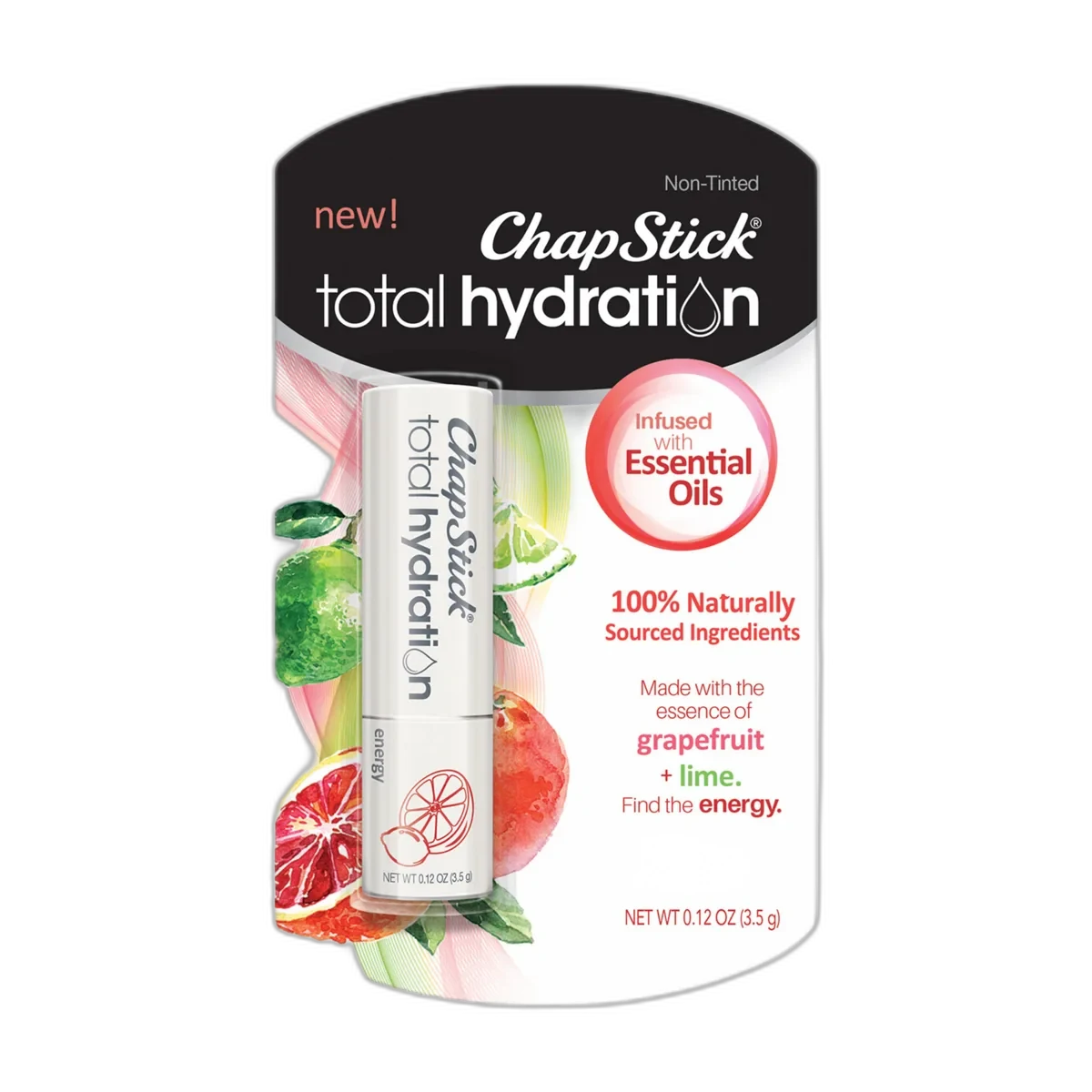
Total Hydration Essential Oils Lip Care
Drugstore Natural Lip Essential
 Verified reviewer
Pros & cons.
- +100% naturally sourced ingredients with no petrolatum, parabens, or synthetic fragrance
- +Sunflower seed oil base provides genuine linoleic acid-rich emollience
- +Multi-butter blend (shea, mango) creates lasting lip comfort without heavy feel
- +Extremely affordable at drugstore pricing under $5
- +Pleasant essential oil scents create distinct sensory experiences across variants
- +Smooth, non-waxy texture that applies comfortably without buildup
- −Citrus essential oils can irritate sensitive or already-cracked lips
- −No SPF protection — requires a separate lip sunscreen for UV coverage
- −Contains beeswax, making it unsuitable for vegan consumers
- −Hydration duration is moderate — heavier balms last longer
- −Essential oil scents may be too strong for fragrance-sensitive users
The full review.
For most of its history, ChapStick meant one thing: a waxy, petroleum-based tube used reflexively on dry lips. The brand dominated so much that its name became a generic term, like ‘band-aid’ or ‘kleenex.’ However, as the clean beauty movement grew and consumers read ingredient lists, ChapStick’s use of petrolatum and mineral oil fell behind newer, plant-based competitors.
The Total Hydration Essential Oils line, launched in 2019, is ChapStick’s response. They did not half-measure this. Sunflower seed oil is the primary ingredient, with jojoba esters, coconut oil, candelilla wax, and beeswax providing structure. Shea butter, mango seed butter, avocado oil, and olive oil add emollience. The essential oil blend varies by variant (grapefruit and lime for Energy, lavender and chamomile for Relax, peppermint and geranium for Chill), adding aromatherapy that makes lip balm application more intentional.
Texture
The texture hits a sweet spot many natural lip balms miss. It glides on without dragging, feels substantial, and stays light enough to avoid the heavy, waxy buildup that requires blotting thirty seconds later. Sunflower seed oil works well as a base; it is rich in linoleic acid to support the skin barrier and absorbs without a greasy film. The combination of candelilla and carnauba wax with beeswax creates a structure that stays stable in heat and remains flexible in cold.
Best for
The moisturizing performance works for everyday lip maintenance. Dry, mildly chapped lips feel smooth within minutes. Plant oils provide emollience instead of just sitting on the surface, and the shea and mango butters add a protective layer that lasts a few hours. This is not a heavy-duty treatment for severely cracked or peeling lips, and it does not try to be. It is a daily-use lip balm that keeps normal-to-dry lips in good condition.
Scent
The essential oils are both the benefit and the risk. The scents are pleasant and mood-enhancing—the grapefruit and lime in Energy is bright, while the lavender and chamomile in Relax is soothing. However, citrus peel oils contain limonene and linalool, which can cause contact sensitization on delicate lip skin. If lips are cracked or irritated, applying citrus essential oils to broken skin can sting and worsen inflammation. ChapStick does not market this as a treatment for damaged lips, but consumers using it on bad lips should be aware.
Works for
The raspberry seed oil inclusion is a good addition; it contains natural UV-absorbing compounds and antioxidants, though not at levels providing meaningful sun protection. Dual forms of vitamin E (tocopheryl acetate and tocopherol) provide stability and bioavailability for antioxidant lip protection.
Value
At around four to five dollars, the value is strong. You get a thoughtfully formulated, naturally sourced lip balm with premium ingredients—sunflower oil, shea butter, avocado oil, jojoba esters—at a drugstore price. Competitors charge two to three times more for similar ingredient profiles. ChapStick’s distribution means you can find it at almost any pharmacy, grocery store, or big-box retailer in the country.
Marketing
The ‘mood’ marketing is lighthearted. Calling a flavor ‘Energy’ or ‘Chill’ is a stretch, but the essential oil scents create distinct sensory experiences that feel more personal than ‘cherry’ or ‘mint.’ It is a smart way to differentiate in a category where most products are functionally similar.
Summary
ChapStick Total Hydration Essential Oils is not revolutionary. It is a legacy brand doing something well because newer brands pressured it to—and doing it at a price that makes natural lip care accessible. The formula is honest, the ingredients are legitimate, and the performance meets everyday expectations. For a brand that spent over a century selling petroleum jelly for lips, this is meaningful progress.
Ingredient analysis.
Full INCI list
Helianthus Annuus (Sunflower) Seed Oil, Jojoba Esters, Euphorbia Cerifera (Candelilla) Wax, Cocos Nucifera (Coconut) Oil, Beeswax, Canola Oil, Copernicia Cerifera (Carnauba) Wax, Tocopheryl Acetate, Butyrospermum Parkii (Shea) Butter, Mangifera Indica (Mango) Seed Butter, Octyldodecanol, Persea Gratissima (Avocado) Oil, Olea Europaea (Olive) Fruit Oil, Citrus Paradisi (Grapefruit) Peel Oil, Tocopherol, Hydrogenated Soybean Oil, Flavor, Citrus Aurantifolia (Lime) Oil, Rubus Idaeus (Raspberry) Seed Oil, Glyceryl Stearate
Skin match.
The science.
The Science
The main ingredient, Helianthus annuus (sunflower) seed oil, supports the skin barrier. It contains 65-70% linoleic acid. Dermatological research shows sunflower seed oil strengthens the stratum corneum and reduces transepidermal water loss. A study in Pediatric Dermatology shows sunflower seed oil improves skin barrier function more than olive oil, making it an evidence-based emollient.
Butyrospermum parkii (shea) butter has triterpenes, specifically lupeol, which show anti-inflammatory properties in research. These compounds soothe mild inflammation from chapped lips and provide an occlusive barrier.
The essential oil components — citrus paradisi (grapefruit) peel oil and citrus aurantifolia (lime) oil — have limonene and other terpenes with antimicrobial properties. These compounds are also contact sensitizers. Research in the Contact Dermatitis journal shows oxidized limonene causes common fragrance allergies; the thin, highly vascularized lip epithelium is especially prone to contact sensitization.
Tocopherol and tocopheryl acetate provide antioxidant protection. Decades of cosmetic research support vitamin E's lip-conditioning properties. Tocopheryl acetate offers better formulation stability, while tocopherol is more biologically active on the skin.
Dermatologist Perspective
Dermatologists favor moving from petrolatum-only formulas to diverse emollient blends with real moisturizing ingredients. However, most board-certified dermatologists would say the essential oils — especially the citrus peel oils — are unnecessary and increase allergic contact dermatitis risks on the delicate lip area. For patients with cheilitis, eczema, or lip irritation history, dermatologists typically recommend simpler, fragrance-free lip balms with plain emollients. Dermatologists would also flag the lack of SPF, as the lips are vulnerable to UV-induced actinic cheilitis.
Where it fits in your routine.
Apply directly to lips as needed throughout the day. For best results, apply to clean, dry lips. Use it under lip color or alone. Reapply after eating or drinking. If outdoors, use a dedicated SPF lip balm for sun protection. Do not apply to severely cracked or bleeding lips; the essential oils may sting.
At about $4.49 per standard tube, this naturally sourced lip balm offers excellent value. The ingredient list — sunflower oil, shea butter, avocado oil, coconut oil, jojoba esters — matches premium natural lip care quality at a mass-market price. Boutique brand natural lip balms with similar formulations usually cost $8-15. ChapStick's manufacturing scale and distribution network make this one of the most accessible naturally sourced lip balms.
People seeking affordable, naturally sourced daily lip balm with a pleasant scent. Users switching from petroleum-based lip care to plant-based alternatives. Consumers who like the aromatherapy of essential oil blends.
Avoid the citrus-scented variants if you have sensitive lips, a history of contact dermatitis, or active lip irritation. Vegan consumers should pick a lip balm without beeswax. Use a dedicated sun-protective lip product if you need SPF lip protection.
Product details.
Smooth, slightly waxy balm that glides on easily without a greasy feel. It is less heavy than petroleum-based lip balms but more substantial than lip oils.
Natural citrus essential oil fragrance (variants vary: grapefruit + lime, orange + lemon, lavender + chamomile, etc.)
Standard lip balm twist-up tube, portable and pocket-friendly
It applies smoothly, feels comfortable immediately, and has a pleasant essential oil aroma. Lips feel soft and moisturized within minutes. Most users feel no tingling or irritation, but those with cracked or broken skin on the lips may feel a slight citrus tingle from the essential oils.
1-2 months with regular daily use
24 months
All Year
The backstory.
ChapStick — a brand so iconic its name has become a generic term for lip balm — launched the Total Hydration Essential Oils line in 2019 as part of a broader shift toward naturally sourced formulations. After over a century of petroleum-based lip care, this line represents ChapStick's acknowledgment that consumers increasingly want plant-derived ingredients without sacrificing the reliable performance the brand built its reputation on.
About ChapStick
Legacy Brand (20+ years)ChapStick has been an American lip care staple since 1880. It is one of the oldest and most recognized lip balm brands globally. Dermatologists did not develop it, but its longevity and availability make it a household name with over a century of consumer trust.
Common myths.
Lip balm causes dependency — use increases the need for it
Lip balm does not cause physical dependency. The urge to reapply stems from how topical products work temporarily. This formula uses emollient oils and waxes to protect lips, but eating, drinking, and licking wear them off. Reapplication is normal, not addictive.
Essential oils in lip balm are always safe because they're natural
Citrus essential oils, such as grapefruit and lime peel oil, cause irritation and photosensitivity. This is true for the thin, delicate skin of the lips. "Natural" does not mean "non-irritating." People with sensitive lips or contact dermatitis history should patch test or use fragrance-free alternatives.
FAQ.
Which ChapStick Total Hydration Essential Oils flavor is best?
All variants use the same moisturizing base of sunflower oil, coconut oil, and shea butter; only the essential oil blend differs. 'Chill' adds hemp seed oil and peppermint, 'Energy' features grapefruit and lime, 'Relax' uses lavender and chamomile, 'Happy' has orange and lemon, and 'Peace' combines rosemary and peppermint. Pick based on scent preference, as moisturizing efficacy is comparable across variants.
Is ChapStick Total Hydration Essential Oils good for very dry lips?
This lip balm uses plant oils and butters for daily hydration. For severely dry or cracked lips, a heavier occlusive like a petroleum-based balm or a dedicated lip treatment works better. The citrus essential oils in some variants sting damaged lip skin.
Does ChapStick Total Hydration Essential Oils have SPF?
No — this line lacks sun protection. Use a dedicated SPF lip balm or apply a lip sunscreen over it for outdoor activities. ChapStick offers other SPF variants for daily sun protection.
Is ChapStick Total Hydration Essential Oils vegan?
No — the formula contains beeswax, an animal-derived ingredient. People seeking a vegan lip balm should choose alternatives using only plant-based waxes like candelilla or carnauba wax without beeswax.
What the community says.
"Effectively moisturizes dry and chapped lips"
"Pleasant, natural essential oil scent"
"100% naturally sourced ingredient list"
"Affordable and widely available"
"Smooth, comfortable application without waxy feel"
"Essential oils may irritate sensitive lips"
"Citrus oils can cause tingling or stinging on cracked lips"
"Hydration does not last as long as heavier balm formulas"
"Contains beeswax, not suitable for vegans"
"Some users find the scent too strong"