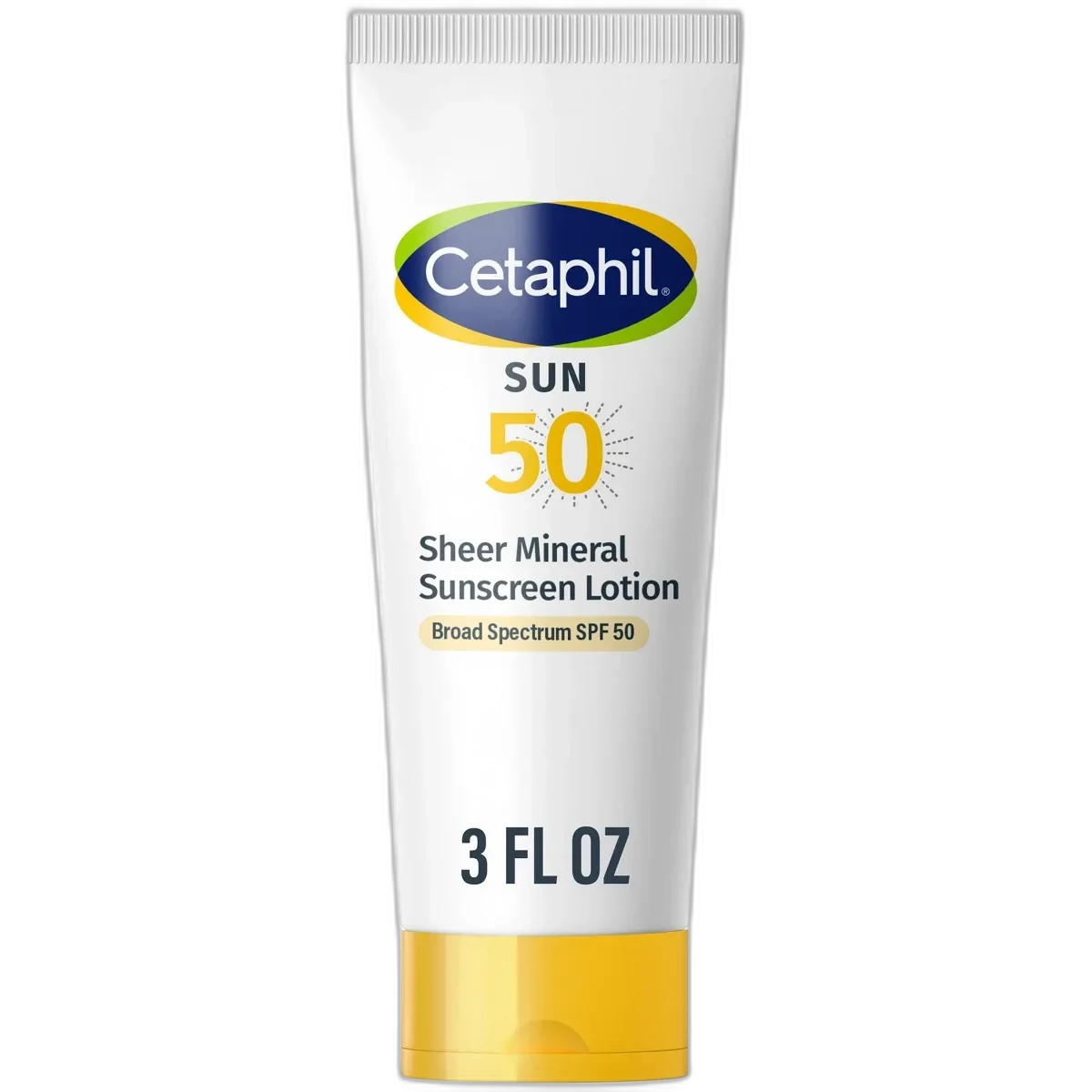
Sheer Mineral Sunscreen SPF 50
Mineral Sunscreen Made Wearable
 Verified reviewer
Pros & cons.
- +Remarkably lightweight liquid texture that blends like a serum — a rare achievement for a zinc oxide SPF 50
- +Significantly less white cast than competing mineral SPF 50 sunscreens
- +Zinc oxide-only formula provides the broadest single-filter UV coverage available
- +Soothing complex (bisabolol, allantoin, niacinamide) actively calms sensitive and reactive skin
- +Fragrance-free, paraben-free, and free of chemical UV filters — maximum sensitivity tolerance
- +Water-resistant for 80 minutes — suitable for active outdoor use
- +Works as a primer-like base under makeup with a natural, satin finish
- −Some white cast remains visible on deeper skin tones despite the improved formula
- −Needs to be shaken before each use as the zinc oxide can settle in the liquid
- −Higher per-ounce cost than mass-market chemical sunscreens at ~$18 for 1.7 oz
- −Liquid consistency may feel unfamiliar to users accustomed to cream sunscreens
- −The 1.7 oz face-specific size depletes in 1-2 months with daily recommended application
The full review.
Convincing people to switch to mineral sunscreen is a known struggle. You cite broader UV coverage, better stability, lower irritation, and reef-friendly profiles. They listen, try a mineral sunscreen, look like a ghost, and return to chemical SPF. The mineral sunscreen industry has a messaging problem, but the real issue is texture.
Cetaphil’s Sheer Mineral Sunscreen SPF 50 solves this texture problem. The product is a lightweight liquid—not a thick lotion—that pours from the bottle and blends like a serum. It uses 12% zinc oxide as its only UV filter, provides SPF 50 broad-spectrum protection, and stays water resistant for 80 minutes. It leaves less white cast than most SPF 30 mineral sunscreens. This requires impressive engineering.
A silicone-based vehicle is the key. Dimethicone, caprylyl methicone, and a crosslinked silicone polymer disperse zinc oxide particles at sizes and concentrations that minimize visible white residue. Polymethylsilsesquioxane adds microspheres for a smooth, primer-like finish. This formula distributes zinc oxide more uniformly and finely than cream-based mineral sunscreens, reducing white cast and patchy protection from uneven application.
The skin feel is pleasant. The liquid drops onto your palm, spreads easily, and sinks into a natural, slightly satin finish within a minute. There is no dragging, no white streaking, and no thick coating. You might not guess this is a mineral sunscreen. The finish works under makeup like a smoothing primer and holds up all day without the greasy breakdown seen in some mineral formulas.
The zinc oxide-only approach is deliberate. Many mineral sunscreens combine zinc oxide with titanium dioxide to boost SPF via UVB absorption. Cetaphil uses 12% zinc oxide alone, relying on the one mineral filter that covers the entire UV spectrum. This simplifies the formula, reduces particulate ingredients that cause white cast, and uses zinc oxide’s natural anti-inflammatory properties. Simpler formulas mean fewer potential triggers for sensitive and reactive skin.
Soothing ingredients target sensitive skin. Bisabolol (from chamomile) and allantoin are anti-inflammatory and skin-healing agents. Niacinamide supports barrier function and adds anti-inflammatory benefit. Tocopherol (vitamin E) offers antioxidant protection. These ingredients create a sunscreen that calms the skin while protecting it—a benefit for those with rosacea, eczema tendencies, or post-procedure sensitivity.
Regarding white cast: on fair skin (Fitzpatrick I-II), it is essentially invisible after thirty seconds of blending. On light-medium skin (Fitzpatrick III), it disappears almost completely. On medium skin (Fitzpatrick IV), a subtle luminosity remains. On medium-deep to deep skin (Fitzpatrick V-VI), a slight cast stays visible, though it is less pronounced than cream-based mineral sunscreens with similar zinc oxide concentrations. This is not a universal solution, but it is a step forward.
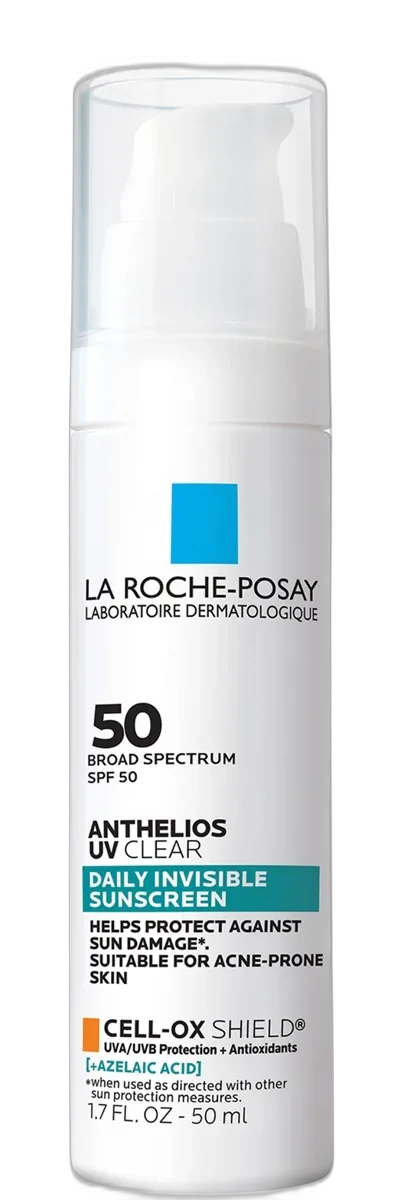
The 1.7-ounce bottle is for facial use. At about eighteen dollars, the per-ounce cost exceeds mass-market chemical sunscreens. Value depends on your comparison. Against other mineral SPF 50 face sunscreens—EltaMD, Supergoop Mineral, La Roche-Posay—Cetaphil is competitively priced with a texture that rivals products costing twice as much. Cetaphil also offers a 3 oz lotion version for broader body coverage at a better per-ounce rate.
Cetaphil’s 75-plus-year legacy in sensitive skin care informs this product. The brand’s reputation with dermatologists comes from decades of clinical studies and evidence-based formulation. This is not a trendy social media brand. It is a pharmaceutical-heritage brand that has spent three-quarters of a century learning what sensitive skin needs.
Sunscreen protection only works if people apply it daily. A superior SPF that feels terrible provides zero benefit. Cetaphil’s achievement is not exotic ingredients or breakthrough technology—it is making the safest sun protection feel good enough to wear every day. That innovation saves skin.
Formula
Ingredient analysis.
Full INCI list
Active Ingredient: Zinc Oxide (12%). Inactive Ingredients: Water, Allantoin, Bisabolol, Butyloctyl Salicylate, C12-15 Alkyl Benzoate, Caprylyl Glycol, Caprylyl Methicone, Dimethicone, Dimethiconol/Propylsilsesquioxane/Silicate Crosspolymer, Ethylhexylglycerin, Hexylene Glycol, Isododecane, Lauryl PEG-10 Tris(Trimethylsiloxy)silylethyl Dimethicone, Lauryl PEG-8 Dimethicone, Niacinamide, Octyldodecyl Neopentanoate, PEG-10, Phenoxyethanol, Polymethylsilsesquioxane, Propanediol, Sodium Chloride, Sodium Hydroxide, Tetrasodium Glutamate Diacetate, Tocopherol, Trilaureth-4 Phosphate
Skin match.
The science.
The Science
Zinc oxide at 12% provides broad-spectrum UV protection by absorbing and scattering UV photons. While titanium dioxide primarily attenuates UVB and short-wave UVA, zinc oxide absorbs effectively across the 290-400nm UVA-UVB spectrum. A study in the Journal of the American Academy of Dermatology (Pinnell et al., 2000) shows zinc oxide is the most effective single mineral UV filter for broad-spectrum protection, offering more uniform coverage across the UV spectrum than any other individual filter.
Particle size and dispersion determine how the liquid vehicle minimizes white cast while maintaining protection. Modern zinc oxide formulations use 100-200nm particles—small enough to reduce visible whiteness but large enough to maintain UV absorption in the critical UVA range. The silicone-based vehicle in this formula improves particle distribution across the skin, reducing the clumping that causes patchy white spots in cream-based mineral sunscreens.
Zinc oxide also has intrinsic anti-inflammatory properties. Research in the International Journal of Dermatology shows zinc oxide reduces pro-inflammatory cytokine production in UV-exposed skin, adding a secondary protective mechanism beyond physical UV filtration. The bisabolol in the formula complements this by inhibiting cyclooxygenase-2 (COX-2) activity, while allantoin promotes keratinocyte proliferation and wound healing.
Niacinamide provides barrier support and photoprotective enhancement. As a precursor to NAD+ and NADPH—cofactors used during UV-induced DNA repair—topical niacinamide helps maintain the cellular energy reserves needed for efficient photodamage repair, complementing the primary UV filtration from the zinc oxide.
Dermatologist Perspective
Dermatologists often recommend zinc oxide-only sunscreens for patients with reactive skin conditions like rosacea, eczema, contact dermatitis, and post-procedure sensitivity. Board-certified dermatologists note that Cetaphil's liquid format solves the main barrier to mineral sunscreen compliance: the unpleasant texture and white cast that cause patients to stop using mineral SPF products. The simplified ingredient list—zinc oxide as the sole active with minimal inactive ingredients—reduces sensitization risks. Dermatologists managing melasma patients may note this product lacks iron oxides and does not provide the visible light protection found in tinted mineral sunscreens, making it a UV-specific shield rather than a comprehensive photoprotection solution for pigmentation-prone patients.
Where it fits in your routine.
Shake well before each use to redistribute the zinc oxide. Apply liberally to the face and neck as the final morning skincare step, after moisturizer. Use at least 1/4 teaspoon for the face; the liquid consistency helps you apply the correct amount. Blend gently and let it set for 1-2 minutes before applying makeup. Reapply every 2 hours during outdoor activities, and immediately after swimming, sweating, or towel-drying. Double cleanse in the evening to remove all zinc oxide.
At about $18 for 1.7 oz, this sits in the mid-range for mineral face sunscreens. EltaMD UV Clear SPF 46 costs about $39 for 1.7 oz, and Supergoop Mineral Sheerscreen SPF 30 is roughly $38 for 1.5 oz. Cetaphil provides similar or better mineral protection at nearly half the prestige price. The 3 oz lotion variant has better per-ounce value if you prefer a traditional format over a liquid. Daily use lasts 1-2 months per bottle, making annual costs $110-220 — a fair price for effective mineral sun protection and soothing benefits.
This SPF 50 is a lightweight, wearable mineral option for daily use. It works for sensitive, rosacea-prone, or reactive skin that cannot tolerate chemical UV filters. It suits people who stopped using mineral sunscreens because of white cast or heavy texture. This zinc oxide-only formula is an ideal daily face sunscreen for those wanting simplicity and safety.
People with very deep skin tones who want zero white cast should use a tinted sunscreen. Those seeking visible light (HEV) protection need iron oxide-tinted alternatives. For an affordable body sunscreen per ounce, choose the 3 oz lotion version.
Product details.
Fragrance-free. The scent is neutral — one of the most scentless sunscreens available.
Small bottle has a controlled-pour opening. The 1.7 oz face-specific size is practical. Shake the liquid formula before each use because zinc oxide settles. A 3 oz lotion format and a 0.5 oz stick are also available.
The liquid consistency differs from typical mineral sunscreens; it feels like a lightweight serum. It blends into the skin in 30-60 seconds with minimal white cast. It causes no stinging, burning, or tightness. The finish is natural and sheer—elegant for a 100% mineral, zinc oxide-only formula.
1-2 months with daily face application at recommended amount
12 months
All Year
The backstory.
Cetaphil developed this liquid format to solve the biggest barrier to mineral sunscreen adoption: the poor cosmetic experience. Working with Galderma's formulation chemists, they created a silicone-based vehicle that suspends zinc oxide particles at sizes and dispersions that minimize white cast while maintaining UV protection. The result is a mineral sunscreen that people actually want to wear — which, in the world of sun protection, is the metric that matters most.
About Cetaphil
Legacy Brand (20+ years)A Texas pharmacist developed Cetaphil in 1947. Galderma, a global dermatology company, owns the brand now. Over 550 clinical studies involving more than 32,000 sensitive skin subjects back Cetaphil. Dermatologists worldwide widely recommend Cetaphil.
Common myths.
Zinc oxide-only sunscreens cannot achieve SPF 50.
Zinc oxide at 12% provides SPF 50 broad-spectrum protection alone. Zinc oxide has the broadest UV absorption spectrum of any single mineral filter and covers both UVA and UVB wavelengths. FDA testing verifies the SPF 50 claim.
Liquid sunscreens offer less protection than thick creams.
UV protection depends on UV filter concentration and distribution, not product viscosity. A thin liquid with 12% zinc oxide provides the same protection as a thick cream at 12% if you apply the same amount. The liquid format helps ensure more uniform distribution across the skin.
FAQ.
Does Cetaphil Sheer Mineral Sunscreen leave a white cast?
This costs less than most mineral SPF 50 products. The liquid format disperses zinc oxide particles more finely than cream formulations, so the finish is sheerer. On fair to light-medium skin tones, the white cast is minimal or undetectable. On deeper skin tones, a slight cast remains visible but is more manageable than cream-based mineral alternatives.
Why is this sunscreen a liquid instead of a cream?
The liquid format improves wearability. Cetaphil's silicone-based vehicle suspends zinc oxide particles at sizes and dispersions that minimize white cast but keep full SPF 50 protection. It blends like a lightweight serum rather than a traditional sunscreen, so daily use is easier and more consistent.
Is zinc oxide alone enough for full UV protection?
Yes — zinc oxide is the only single mineral filter that gives genuine broad-spectrum protection for both UVA and UVB wavelengths. At 12%, this formula has SPF 50 broad-spectrum protection from FDA-standardized testing. Many dermatologists call zinc oxide-only formulas the gold standard for sensitive skin sun protection.
Is this sunscreen water-resistant?
Yes — it provides SPF protection for up to 80 minutes of water exposure or heavy sweating. Reapply immediately after 80 minutes in water. For daily wear without water exposure, reapply every 2 hours during continued sun exposure.
Can I use this on my body or just my face?
You can use this on the body, though it is designed for the face. The 1.7 oz size runs out fast if used on the whole body. Cetaphil offers a 3 oz Sheer Mineral Sunscreen Lotion SPF 50 for larger areas.
What the community says.
"Lightweight liquid texture is remarkably easy to blend for a mineral sunscreen"
"Much less white cast than competing mineral SPF 50 products"
"Gentle and non-irritating on sensitive and reactive skin"
"Sheer, natural finish that works well under makeup"
"Water-resistant for 80 minutes"
"Some users still notice a slight white cast on darker skin tones"
"The liquid consistency feels different from traditional sunscreen lotions"
"Price per ounce is on the higher side for a drugstore sunscreen"
"Needs to be shaken before use — the formula can separate"
Featured in.
People also looked at.