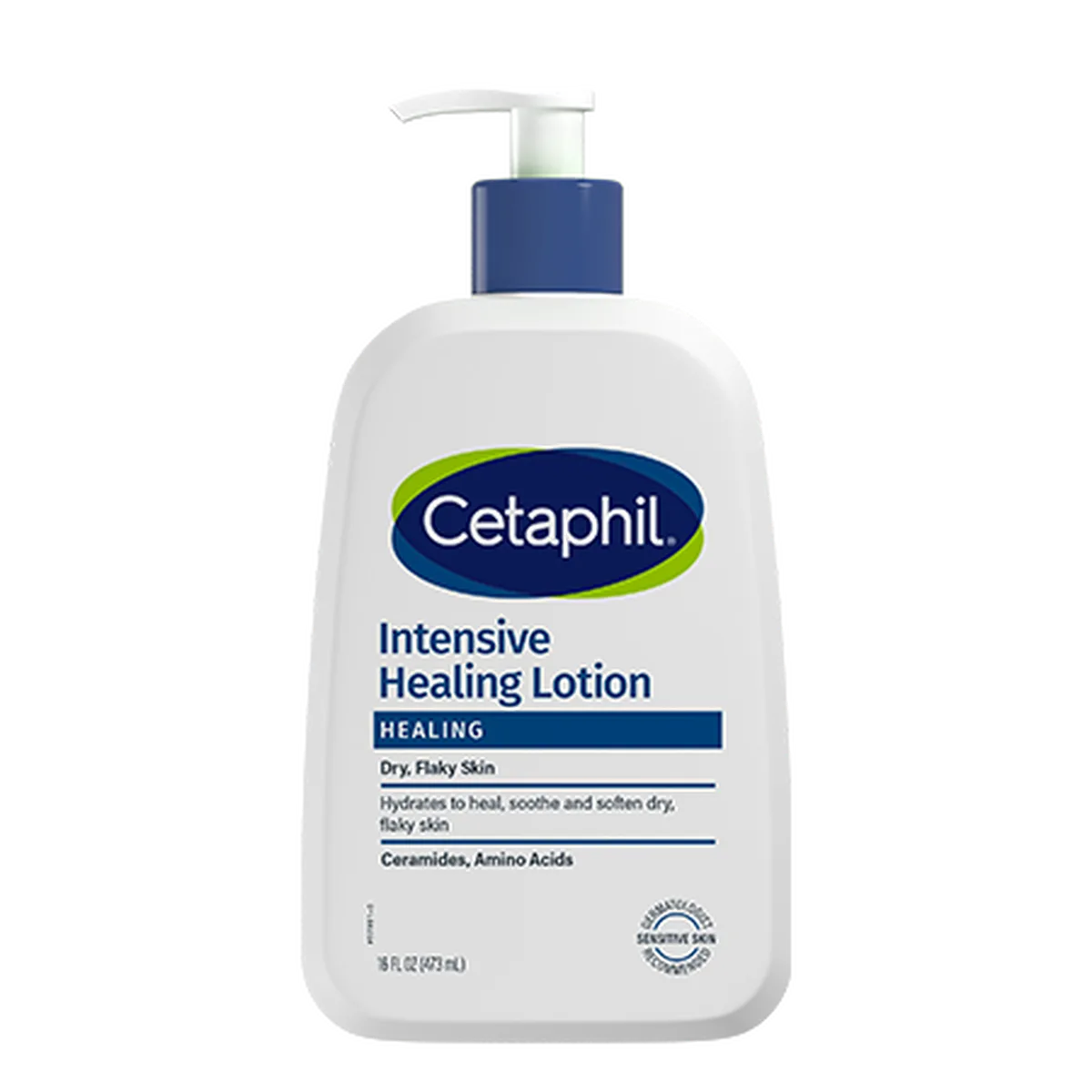
Intensive Healing Lotion
Winter Skin Savior
 Verified reviewer
Pros & cons.
- +Dual ceramide strategy provides both immediate barrier patching and stimulated endogenous production
- +Allantoin promotes active cell healing alongside the barrier repair lipids
- +Rich texture absorbs without greasiness — practical for twice-daily full-body application
- +Completely fragrance-free with no masking fragrance or botanical scent additives
- +Exceptional 4.7-4.8 average rating across thousands of user reviews confirms real-world efficacy
- +Strong value at 16 oz for roughly $17 — two to three months of daily body-wide use
- +Comprehensive supporting cast: sunflower oil for linoleic acid, shea butter for occlusion, B5 for soothing
- −Contains silicones (cyclopentasiloxane, dimethiconol) that some consumers prefer to avoid
- −Comedogenic ingredients make it unsuitable for facial use on acne-prone skin
- −Not occlusive enough for the most severe dryness — may need to layer with a healing ointment
- −Not fungal acne safe due to sunflower oil, shea butter, and fatty alcohol content
- −Does not carry the National Eczema Association Seal of Acceptance
The full review.
The ceramide trend has given us a market flooded with products that list ceramides on the label and call it a day. Add a trace amount to a standard moisturizer, put ceramide in the product name, and watch the sales roll in. The ingredient has become so ubiquitous that its mere presence on an INCI list has stopped meaning much. What matters is what happens around the ceramide — the delivery system, the concentration, and the supporting cast of ingredients that determine whether the ceramide actually integrates into the skin’s lipid matrix or simply washes off.
Cetaphil’s Intensive Healing Lotion takes an approach that’s more nuanced than most. Yes, it contains ceramide NP — a specific type that mirrors one of the naturally occurring ceramides in the stratum corneum. But the formula’s real intelligence is pairing that exogenous ceramide with niacinamide, which research published in the British Journal of Dermatology established as a stimulator of endogenous ceramide synthesis. The niacinamide upregulates serine palmitoyl transferase, the rate-limiting enzyme in ceramide biosynthesis, essentially teaching the skin to produce more of its own ceramides. So you get immediate barrier patching from the added ceramide NP and ongoing barrier strengthening from the niacinamide-driven internal production. It’s the difference between putting a bandage on a cut and also giving the body nutrients to heal the wound underneath.
The supporting ingredient list reads like a greatest-hits compilation of barrier repair science. Glycerin, listed second, provides the humectant foundation that pulls water into the compromised stratum corneum. Sunflower seed oil delivers linoleic acid — an essential fatty acid that dry, damaged skin is typically deficient in — which integrates into the lipid bilayers between corneocytes. Shea butter adds occlusive emolliency that seals the moisture and lipids in place. Panthenol and pantolactone provide the B5 soothing system. And allantoin — a quietly powerful ingredient that promotes cell proliferation and tissue repair — encourages healthy turnover of the damaged cells that the barrier is trying to protect.
The texture hits a practical sweet spot. It’s richer than a standard body lotion but not as thick or occlusive as an ointment or body butter. It spreads easily across large body areas without requiring excessive effort, absorbs within a few minutes without leaving a greasy film, and doesn’t transfer onto clothing or bedsheets. For a product you’re meant to use twice daily on your entire body, this everyday wearability matters enormously — the most sophisticated formula in the world is useless if it’s too inconvenient to apply consistently.
The fragrance-free claim is genuine here — no masking fragrance, no botanical essential oils, no sneaky scent molecules buried in the INCI list. Multiple users independently confirm the same thing: it smells like absolutely nothing. For skin that’s actively dry, cracked, or healing, this absence is its own form of kindness. Fragrance is the number one cause of cosmetic contact dermatitis, and on compromised skin, even mild scent compounds can trigger stinging and irritation.
The clinical results are reflected in an unusually enthusiastic review base. At a 4.7-4.8 average across retailers, this is one of the highest-rated body lotions in the drugstore category. Users don’t just tolerate it — they describe genuine healing. Cracked heels improving in under a week. Eczema patches calming noticeably within days. Winter-ravaged hands and shins returning to comfortable baseline. The consistency of these reports across thousands of reviews suggests the dual ceramide strategy is translating from formulation theory to real-world results.
There are honest limitations. This lotion contains cyclopentasiloxane and dimethiconol — volatile and non-volatile silicones that contribute to the smooth application and non-greasy finish but that some consumers actively avoid. The fatty alcohols (cetearyl, cetyl, behenyl) and shea butter give it a comedogenicity profile that makes it unsuitable for facial use on acne-prone skin. And for the most severe dryness — deep fissures, intensely thick eczema plaques — this lotion may not be occlusive enough on its own. Cetaphil’s Healing Ointment fills that heavier-duty role, and the two products layer well together.
The value is straightforward and strong. Sixteen ounces of a ceramide-niacinamide-allantoin formula for approximately seventeen dollars provides two to three months of daily full-body use. That’s less than ten cents per application for a product containing ingredients that individually would command premium pricing in facial skincare. Galderma’s pharmaceutical manufacturing standards ensure batch-to-batch consistency that smaller brands sometimes struggle to maintain.
This is a body lotion for skin that needs actual help — not just a pleasant post-shower ritual, but functional repair. The ceramide-niacinamide dual mechanism, the allantoin healing support, and the comprehensive emollient system make it one of the most clinically grounded body lotions at the drugstore. It’s the rare product where the ingredient list fully delivers on the product name.
Formula
Texture
The texture hits a practical sweet spot. It’s richer than a standard body lotion but not as thick or occlusive as an ointment or body butter. It spreads easily across large body areas without requiring excessive effort, absorbs within a few minutes without leaving a greasy film, and doesn’t transfer onto clothing or bedsheets. For a product you’re meant to use twice daily on your entire body, this everyday wearability matters enormously — the most sophisticated formula in the world is useless if it’s too inconvenient to apply consistently.
Scent
The fragrance-free claim is genuine here — no masking fragrance, no botanical essential oils, no sneaky scent molecules buried in the INCI list. Multiple users independently confirm the same thing: it smells like absolutely nothing. For skin that’s actively dry, cracked, or healing, this absence is its own form of kindness. Fragrance is the number one cause of cosmetic contact dermatitis, and on compromised skin, even mild scent compounds can trigger stinging and irritation.
Common Praise
The clinical results are reflected in an unusually enthusiastic review base. At a 4.7-4.8 average across retailers, this is one of the highest-rated body lotions in the drugstore category. Users don’t just tolerate it — they describe genuine healing. Cracked heels improving in under a week. Eczema patches calming noticeably within days. Winter-ravaged hands and shins returning to comfortable baseline. The consistency of these reports across thousands of reviews suggests the dual ceramide strategy is translating from formulation theory to real-world results.
Common Complaints
There are honest limitations. This lotion contains cyclopentasiloxane and dimethiconol — volatile and non-volatile silicones that contribute to the smooth application and non-greasy finish but that some consumers actively avoid. The fatty alcohols (cetearyl, cetyl, behenyl) and shea butter give it a comedogenicity profile that makes it unsuitable for facial use on acne-prone skin. And for the most severe dryness — deep fissures, intensely thick eczema plaques — this lotion may not be occlusive enough on its own. Cetaphil’s Healing Ointment fills that heavier-duty role, and the two products layer well together.
Value
The value is straightforward and strong. Sixteen ounces of a ceramide-niacinamide-allantoin formula for approximately seventeen dollars provides two to three months of daily full-body use. That’s less than ten cents per application for a product containing ingredients that individually would command premium pricing in facial skincare. Galderma’s pharmaceutical manufacturing standards ensure batch-to-batch consistency that smaller brands sometimes struggle to maintain.
Best for
This is a body lotion for skin that needs actual help — not just a pleasant post-shower ritual, but functional repair. The ceramide-niacinamide dual mechanism, the allantoin healing support, and the comprehensive emollient system make it one of the most clinically grounded body lotions at the drugstore. It’s the rare product where the ingredient list fully delivers on the product name.
Ingredient analysis.
Full INCI list
Water, Glycerin, Caprylic/Capric Triglyceride, Helianthus Annuus (Sunflower) Seed Oil, Pentylene Glycol, Butyrospermum Parkii (Shea) Butter, Cyclopentasiloxane, Cetearyl Alcohol, Sorbitol, Behenyl Alcohol, Glyceryl Stearate, Tocopheryl Acetate, Cetyl Alcohol, Niacinamide, Arginine, Glyceryl Stearate Citrate, Sodium Polyacrylate, Disodium Ethylene Dicocamide PEG-15 Disulfate, Caprylyl Glycol, Ceteareth-20, Sodium PCA, Panthenol, Citric Acid, Allantoin, Dimethiconol, Disodium EDTA, Sodium Hyaluronate, Ceramide NP, Pantolactone
Skin match.
The science.
The Science
The formula uses a dual ceramide repair strategy. It combines exogenous ceramide NP with niacinamide-driven endogenous ceramide synthesis to fix barrier dysfunction from two directions at once.
Ceramide NP (also known as hydroxypalmitoyl sphinganine) is a naturally occurring ceramide species in human stratum corneum. A qualitative review in the Journal of the European Academy of Dermatology and Venereology (2022) shows that ceramide-containing formulations improve skin barrier function, increase stratum corneum hydration, and reduce transepidermal water loss. The review notes that ceramide formulations do more than moisturize the surface; they repair the structural barrier.
Tanno et al. established niacinamide's role in ceramide synthesis in a study published in the British Journal of Dermatology (2000). The researchers showed that nicotinamide increased biosynthesis of ceramides, free fatty acids (2.3-fold increase), and cholesterol (1.5-fold increase) in the epidermis by upregulating serine palmitoyl transferase expression. Niacinamide does not just add to the barrier—it rebuilds the skin's ability to maintain its own barrier.
A randomized controlled study in PMC (2023) evaluated niacinamide-containing body emollients combined with cleansing gel in patients with mild atopic dermatitis. The study found significant improvement in barrier function and eczema severity scores. This supports using niacinamide-containing body products as adjunctive therapy for inflammatory dry-skin conditions.
The sunflower seed oil in this formula provides linoleic acid, an essential fatty acid that improves skin barrier integrity. Linoleic acid enters the ceramide-cholesterol-fatty acid lipid matrix of the stratum corneum. It complements the ceramide NP by supplying a different class of barrier lipid that dry, compromised skin often lacks.
Allantoin adds healing beyond moisturization. As a keratolytic and cell proliferant, it encourages turnover of damaged corneocytes and provides a protective film that shields healing skin from irritation—applying wound-care principles to daily barrier maintenance.
References
- Nicotinamide increases biosynthesis of ceramides as well as other stratum corneum lipids to improve the epidermal permeability barrier — British Journal of Dermatology (2000)
- Clinical significance of the water retention and barrier function-improving capabilities of ceramide-containing formulations — Journal of the European Academy of Dermatology and Venereology (2022)
- Efficacy of niacinamide-containing body emollients combined with cleansing gel in mild atopic dermatitis — PMC (2023)
Dermatologist Perspective
Dermatologists often recommend ceramide-containing moisturizers for patients with compromised barrier function. This formula's dual approach—exogenous ceramides plus niacinamide-stimulated endogenous production—matches current clinical understanding of barrier repair. Board-certified dermatologists note this combination provides more sustained barrier improvement than either approach alone. The fragrance-free, hypoallergenic formulation is a safe choice for patients with multiple sensitivities or those using topical prescription treatments that compromise barrier function. While it lacks the NEA seal (some other Cetaphil products have it), clinical evidence for its key ingredients supports its use as a supportive moisturizer for eczema-prone skin.
Where it fits in your routine.
Apply a generous amount to your whole body right after bathing. Apply while skin is still damp to trap moisture and help the humectant system work better. Focus on rough areas like elbows, knees, heels, and shins. Use a thicker layer on severely dry patches and let it absorb longer. Use morning and evening. Layer under Cetaphil Healing Ointment on the driest areas for maximum overnight barrier repair.
At approximately $16.99 for 16 fl oz, this lotion lasts two to three months with daily full-body use — about eight to ten cents per application. The price competes with basic drugstore body lotions that lack ceramide NP, niacinamide, sodium hyaluronate, allantoin, and panthenol. Galderma's pharmaceutical manufacturing standards provide formulation rigor that justifies the small premium over generic body lotions. The single 16 oz size works for body use, but a pump dispenser would improve daily convenience.
People with chronically dry, rough, or flaky body skin who need more than basic moisturizing lotion. Eczema sufferers who use a daily moisturizer with prescription treatments. Those with winter skin, post-shower tightness, or barrier compromise from harsh environmental conditions.
People with oily or acne-prone body skin who do not need this emollience. Anyone who avoids silicones in their skincare. If your body skin is healthy and only needs light daily moisturizing, this provides more than you need — Cetaphil's standard Moisturizing Lotion is a better match.
Product details.
This smooth cream-lotion balances therapeutic richness with everyday wearability. It is not watery or thin, but it is lighter than an ointment. The formula spreads easily and absorbs within a few minutes without a greasy film.
It is fragrance-free. Users say it smells like nothing—no masking fragrance, no botanical scents, and no detectable chemical odor.
White plastic bottle with a flip-top cap uses Cetaphil's standard teal-and-white clinical design. The 16 fl oz size works well for body-wide use. The packaging is functional and utilitarian.
The first application soothes dry, tight skin immediately. The lotion absorbs in minutes and leaves skin softer and more comfortable. It does not sting or tingle, even on rough, cracked areas. Consistent use smooths and heals flaky or rough patches within 3-4 days.
2-3 months with daily full-body application
12 months
fall winter
The backstory.
Cetaphil developed this lotion to fill the gap between their standard Moisturizing Lotion (which maintains healthy skin) and their Healing Ointment (which addresses severe dryness). The Intensive Healing Lotion targets skin that's actively compromised — cracked, flaky, rough — and needs more than hydration but less than an ointment. The ceramide-niacinamide dual approach reflects Galderma's pharmaceutical R&D translating clinical barrier repair science into an accessible consumer product.
About Cetaphil
Legacy Brand (20+ years)Pharmacist Erwin S. Whiting created Cetaphil in 1947. Galderma, a Swiss dermatological pharmaceutical company, owns it now. This Intensive Healing Lotion uses the brand's legacy gentle-care philosophy alongside modern ceramide science and barrier-repair technology.
FAQ.
Is Cetaphil Intensive Healing Lotion good for eczema?
The formula lacks the National Eczema Association seal (though some other Cetaphil products have it), but the ceramide NP, niacinamide, and allantoin repair the barrier. Many eczema sufferers use it to manage dry, flaky symptoms. Use it as a daily moisturizer alongside prescription eczema treatments.
Can I use Cetaphil Intensive Healing Lotion on my face?
This formula is for body use. It contains shea butter, cetearyl alcohol, and sunflower seed oil, which are too heavy or comedogenic for facial skin, especially for acne-prone skin. Use Cetaphil's dedicated facial moisturizers for facial use instead.
How does this compare to CeraVe Moisturizing Cream?
Both contain ceramides and are fragrance-free. The Cetaphil formula adds niacinamide to boost endogenous ceramide production, allantoin for healing, and sunflower seed oil for linoleic acid support. The Cetaphil is a lotion that absorbs faster; CeraVe's cream is thicker and more occlusive.
Is the Cetaphil Intensive Healing Lotion the same as the Ultra-Healing Lotion?
Yes — this product used to be Cetaphil Ultra-Healing Lotion with Ceramides. The name changed to Intensive Healing Lotion around 2020-2021, but the core formula is the same.
Can I use this lotion during pregnancy?
The formula lacks retinoids, salicylic acid, or other pregnancy-flagged ingredients. The ceramides, niacinamide, panthenol, and glycerin are pregnancy-safe. Cetaphil hasn't tested this product on pregnant populations, so consult your healthcare provider if you have concerns.
How long does it take for the Intensive Healing Lotion to work?
Most users report softer skin after one application and see rough, flaky patches improve within 3-5 days. Consistent twice-daily use for 2-4 weeks improves barrier repair and moisture, especially when applied to damp skin after bathing.
What the community says.
"Heals dry and cracked skin noticeably within days of starting use"
"Rich, creamy texture absorbs without leaving a greasy or sticky residue"
"Fragrance-free formula is ideal for sensitive and reactive skin"
"Excellent for winter dry skin and post-shower moisture locking"
"Ceramide and niacinamide combination provides genuine barrier repair"
"Good value at 16 oz — lasts months with full-body daily use"
"May not be thick enough for severely dry patches — some prefer the Healing Ointment"
"Contains silicones that some consumers prefer to avoid"
"Pump or squeeze bottle dispensing can be inconsistent"
"Not suitable for facial use on acne-prone skin due to comedogenic ingredients"
"Requires twice-daily application for best results on very dry skin"