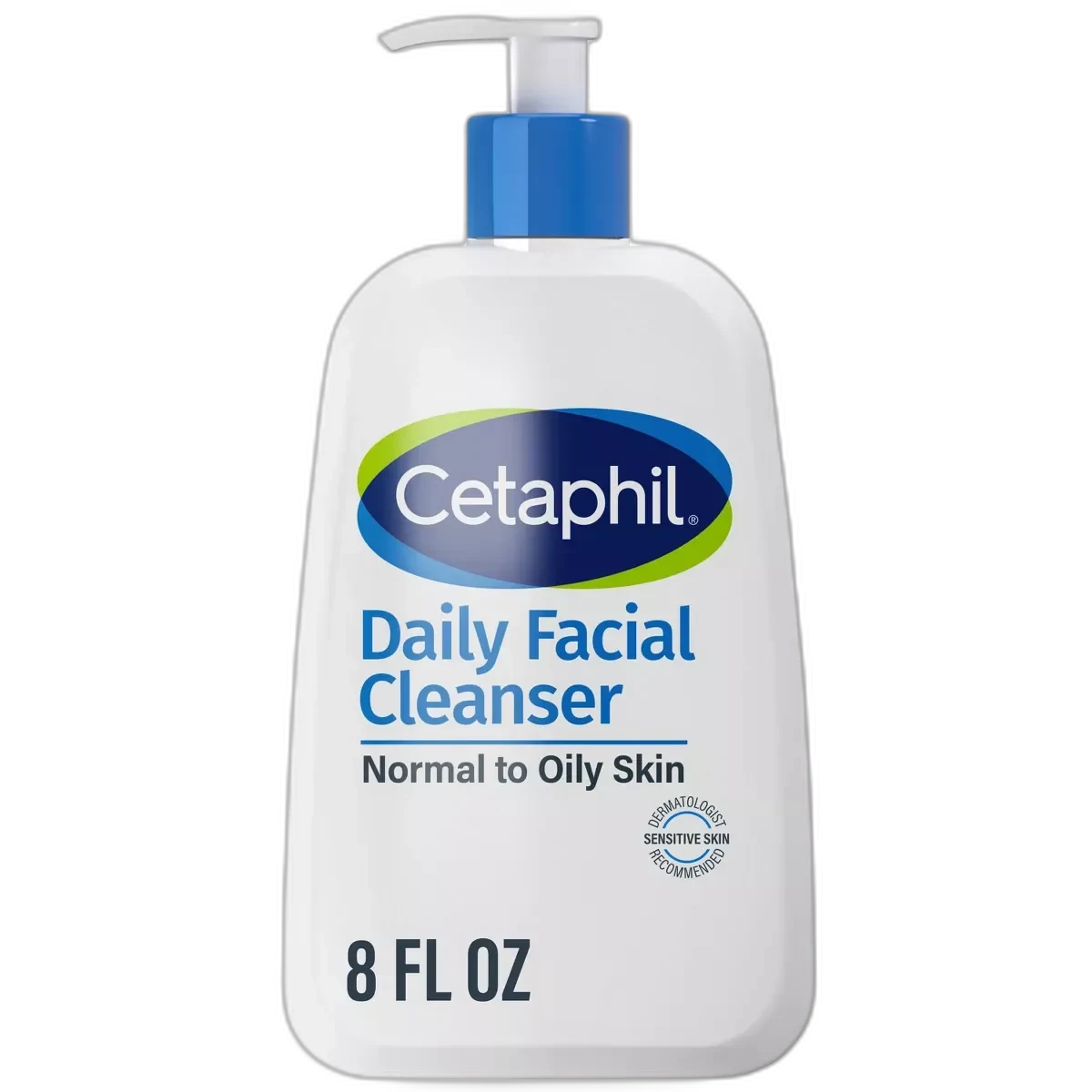
Daily Facial Cleanser
Derm Office Staple
 Verified reviewer
Pros & cons.
- +Triple-mild surfactant system cleanses effectively without stripping the skin barrier
- +B-vitamin trio of niacinamide, panthenol, and pantolactone conditions skin during cleansing
- +Only 13 ingredients minimizes risk of sensitization and allergic reactions
- +Exceptional value at roughly $10 for 3-4 months of twice-daily use
- +Sulfate-free, paraben-free, and oil-free — compatible with most treatment routines
- +Pairs well with retinoids and active treatments as a non-irritating cleansing step
- +Available in multiple sizes including a convenient pump dispenser for larger bottles
- −Contains masking fragrance despite being marketed for sensitive skin — not truly fragrance-free
- −Cannot remove heavy makeup or waterproof sunscreen without a first-step oil cleanser
- −May feel slightly drying for very dry skin types who need a cream or balm cleanser
- −Thin, runny gel consistency can dispense messily from the squeeze bottle
- −Not cruelty-free — Galderma has not obtained Leaping Bunny or PETA certification
The full review.
In 2021, Cetaphil reformulated their Daily Facial Cleanser, moving away from its decades-long reputation for being merely reliable. This wasn’t a minor update; it was a complete redesign of a $10 cleanser. The old formula was functional and safe, often recommended by dermatologists because it caused no harm. The new formula aims to improve skin condition.
The reformulation centers on a B-vitamin trio: niacinamide, panthenol, and pantolactone. These are typically found in serums rather than rinse-off cleansers. While you won’t get the same niacinamide benefits as a leave-on 10% serum, research on panthenol formulations in the Journal of Cosmetic Science shows meaningful barrier support even with low contact times. This combination acts as a conditioning system. As surfactants remove oil and grime, the B vitamins deposit a thin protective layer to prevent the tight, stripped feeling common with foaming cleansers.
Cetaphil replaced the old surfactant system with a triple-mild combination: cocamidopropyl betaine, disodium laureth sulfosuccinate, and sodium cocoamphoacetate. These are not sulfates. All three are amphoteric, making them gentle for sensitive skin while producing the light foam oily skin types prefer. This engineering allows effective cleansing without harshness.
The texture is a clear, fluid gel. It foams modestly with water and rinses completely clean without residue, film, or a squeaky feel. It has almost no scent because the formula uses a masking fragrance—a low-concentration additive to neutralize raw ingredient odors. Most people won’t detect it, but its presence on the INCI list is notable for a product marketed to sensitive skin. Cetaphil sells a separate fragrance-free version with an identical formula minus that ingredient, suggesting the masking fragrance is optional.
This cleanser performs well in its category. It works for morning cleansing after overnight sebum production, post-gym freshening, and removing light layers of tinted moisturizer or mineral sunscreen. It struggles with heavy-duty makeup removal; waterproof mascara and long-wear foundation require an oil-based first cleanser, using this as a second step. This is a standard trade-off for gentle foaming cleansers.
The 2021 reformulation received mixed reactions. Some long-time users who used the original formula for a decade or more reported breakouts, stinging, or texture changes. This happens when legacy formulas change. While the new formula is objectively gentler and more sophisticated, skin adapted to the old surfactant system sometimes reacted to the switch. New users will not face this. Returning users who had bad experiences post-2021 might try it again, as many initial reactions were transitional.
With only thirteen ingredients on its INCI list, this is a highly streamlined cleanser. Fewer ingredients reduce potential triggers, making it suitable for most skin types, from acne-prone teens to retinoid-using adults needing to avoid irritation. The minimalism is intentional; every ingredient has a specific function.
The value is high. At roughly $10 for eight ounces—or about $17 for a twenty-ounce pump bottle—a single bottle lasts three to four months for less than the cost of a fancy lunch. Larger sizes lower the per-ounce cost, and the pump bottle adds convenience.
This cleanser is not transformative. It won’t treat acne, brighten hyperpigmentation, or replace active treatments. It cleans skin thoroughly and leaves it in better condition. By preparing the skin for subsequent steps, it maintains its place on dermatologist recommendation lists.
Formula
Ingredient analysis.
Full INCI list
Water, Glycerin, Cocamidopropyl Betaine, Disodium Laureth Sulfosuccinate, Sodium Cocoamphoacetate, Panthenol, Niacinamide, Pantolactone, Acrylates/C10-30 Alkyl Acrylate Crosspolymer, Sodium Benzoate, Masking Fragrance, Sodium Chloride, Citric Acid
Skin match.
The science.
The Science
The 2021 reformulation built this cleanser around a B-vitamin conditioning system that distinguishes it from most rinse-off products at its price point. The combination of niacinamide, panthenol, and pantolactone works as an integrated barrier-support trio rather than isolated ingredients.
Panthenol's efficacy in topical formulations is well-documented. A study published in the Journal of Cosmetic Science (2011) by Camargo et al. demonstrated that panthenol formulations significantly decreased transepidermal water loss (TEWL) after 30 days of application, with measurable barrier improvement detectable within two hours of a single application on compromised skin. While that study examined leave-on formulations, the principle of panthenol's rapid skin penetration supports its inclusion even in rinse-off products where contact time is limited.
Niacinamide's role in this formula is primarily as a ceramide synthesis booster. Research published in Antioxidants (2021) established that niacinamide enhances ceramide production through upregulation of serine palmitoyl transferase expression, directly strengthening the lipid matrix of the stratum corneum. In a cleanser context, this means each wash deposits a small but cumulative barrier-supporting signal rather than simply removing surface oil.
The surfactant system itself represents thoughtful formulation chemistry. By combining cocamidopropyl betaine, disodium laureth sulfosuccinate, and sodium cocoamphoacetate — all amphoteric or mild anionic surfactants — the formula achieves effective foam and cleansing power while avoiding the barrier disruption associated with sodium lauryl sulfate. A 2024 safety assessment published in PMC confirmed that high-purity cocamidopropyl betaine does not induce allergic reactions in clinical testing, resolving earlier concerns that were traced to manufacturing impurities rather than the ingredient itself.
The synergy between the cleansing and conditioning systems is the formula's real innovation: the mild surfactants create minimal disruption for the B vitamins to repair, resulting in a net-positive cleansing experience for the skin barrier.
References
- Skin moisturizing effects of panthenol-based formulations — Journal of Cosmetic Science (2011)
- Mechanistic Basis and Clinical Evidence for the Applications of Nicotinamide (Niacinamide) to Control Skin Aging and Pigmentation — Antioxidants (2021)
- Safety assessment of cocamidopropyl betaine as a cosmetic ingredient — PMC (2024)
Dermatologist Perspective
Dermatologists have recommended Cetaphil cleansers for decades, and the Daily Facial Cleanser's 2021 reformulation gave them stronger reasons to continue. Board-certified dermatologists frequently suggest this cleanser for patients on retinoid therapy, noting that its sulfate-free surfactant system and niacinamide content support barrier integrity during treatments that can compromise it. The minimalist ingredient list makes it a practical recommendation for patients with contact dermatitis or multiple sensitivities, as fewer ingredients mean fewer variables to troubleshoot. Galderma's pharmaceutical background gives clinicians confidence in the formulation rigor — this is a product designed by the same company that makes prescription dermatological treatments, not a marketing-driven beauty brand experimenting with skincare.
Where it fits in your routine.
Wet your face with lukewarm water. Put a nickel-sized amount in your palms and lather. Massage onto your face in circles for 30-60 seconds, focusing on the T-zone if oily. Rinse well with lukewarm water and pat dry with a clean towel. Use morning and evening. For makeup removal, use an oil-based cleanser first. Follow immediately with your treatment serums or moisturizer while skin is still slightly damp to maximize hydration.
At $9.99 for 8 fl oz, this cleanser lasts about 3-4 months with twice-daily use. This makes the daily cost less than fifteen cents. The 20 fl oz pump bottle costs approximately $17, which lowers the per-ounce price and adds convenience. The price is competitive for a formula with niacinamide, panthenol, and a sulfate-free surfactant system. Cetaphil has nearly eight decades as a pharmaceutical skincare brand. Galderma's research infrastructure provides formulation expertise that many premium cleansers costing three to five times more lack. Multiple size options let you trial the smaller bottle before buying the economy size.
This cleanser works for oily, combination, or normal skin types wanting a thorough clean without stripping. It suits retinoid users, teens starting a routine, and anyone wanting a short ingredient list and high value per ounce.
People with very dry or eczema-prone skin can use Cetaphil's non-foaming Gentle Skin Cleanser. Those with a confirmed fragrance allergy should use the separate fragrance-free version. This cleanser does not remove heavy makeup in one step.
Product details.
The regular version uses a masking fragrance. This creates a faint, barely perceptible clean scent that neutralizes ingredient odors instead of adding a noticeable aroma. Most users call it nearly unscented.
White opaque plastic squeeze bottle with a teal flip-top cap. The 16 oz and 20 oz sizes use a pump dispenser. The design is functional and utilitarian, featuring a clean white label and teal Cetaphil branding.
First use is straightforward — the gel foams lightly with water and rinses clean without residue or tightness. Users switching from the pre-2021 formula notice a different texture and foam quality. No adjustment period is needed; the formula is gentle enough for immediate twice-daily use.
3-4 months with twice-daily use at the 8 fl oz size
12 months
All Year
The backstory.
Cetaphil began in a Texas pharmacy in 1947 when pharmacist Erwin S. Whiting developed a gentle cleanser for patients whose skin couldn't tolerate soap. The Daily Facial Cleanser extended that philosophy to oilier skin types, and its 2021 reformulation brought the formula into the modern era by swapping older surfactants for milder alternatives and adding barrier-supporting B vitamins.
About Cetaphil
Legacy Brand (20+ years)Cetaphil was created by pharmacist Erwin S. Whiting in 1947 and is now owned by Galderma, a Swiss dermatological pharmaceutical company. The brand is one of the most frequently recommended skincare lines by dermatologists worldwide, available in over 70 countries with nearly eight decades of clinical trust.
Common myths.
Cetaphil cleansers are identical — the Daily Facial Cleanser and Gentle Skin Cleanser are interchangeable.
These are quite different formulas. The Daily Facial Cleanser is a foaming gel designed for oily and combination skin, while the Gentle Skin Cleanser is a non-foaming, cream-based formula for dry and very sensitive skin. Their surfactant systems, textures, and target skin types differ significantly.
The masking fragrance makes this product unsafe for sensitive skin.
Masking fragrances neutralize raw ingredient odors at low concentrations rather than adding scent. Any fragrance compound can cause sensitization, but the risk is lower than with conventional fragrances. People with confirmed fragrance allergies should use the fragrance-free version.
FAQ.
Is Cetaphil Daily Facial Cleanser good for acne-prone skin?
Yes — its non-comedogenic, oil-free formula uses mild surfactants to cleanse without clogging pores. Niacinamide regulates oil production and calms inflammation. Because it lacks active acne-fighting ingredients like salicylic acid or benzoyl peroxide, use it with a dedicated acne treatment for best results.
Can I use Cetaphil Daily Facial Cleanser to remove makeup?
It removes light daily makeup and non-waterproof products well. For heavy makeup, full-coverage foundation, or waterproof sunscreen, use an oil-based cleanser first, then use this as your second cleanse to ensure a thorough clean.
Is the Cetaphil Daily Facial Cleanser the same as the Gentle Skin Cleanser?
No — these are different products for different skin types. The Daily Facial Cleanser is a foaming gel for oily and combination skin, while the Gentle Skin Cleanser is a non-foaming cream formula designed for dry and very sensitive skin. They share the Cetaphil name but have distinct ingredient lists and textures.
Did Cetaphil change the Daily Facial Cleanser formula?
Cetaphil reformulated this product in 2021. The new version adds niacinamide, panthenol, and glycerin, removes parabens, and uses milder surfactants. Most users find the new formula gentler, but some accustomed to the old version reported adjustment issues.
Is Cetaphil Daily Facial Cleanser fragrance-free?
The standard version uses a masking fragrance. This low-concentration ingredient neutralizes raw ingredient odors instead of adding scent. For a fragrance-free option, Cetaphil sells a separate Daily Facial Cleanser Fragrance Free variant. This version has the identical formula but lacks the masking fragrance.
Can I use this cleanser with retinol or tretinoin?
This cleanser uses a mild surfactant system, niacinamide, and panthenol to support the barrier. It works well for retinoid users who need a gentle, non-stripping cleanse. Use it morning and evening, then apply your retinoid after cleansing in the PM.
Is Cetaphil Daily Facial Cleanser safe during pregnancy?
The formula lacks retinoids, salicylic acid, or other pregnancy-contraindicated ingredients. niacinamide, panthenol, and glycerin are all pregnancy-safe. For extra caution, use the fragrance-free version to avoid undisclosed fragrance compounds.
What the community says.
"Gentle and non-stripping on sensitive skin"
"Effectively removes daily grime and excess oil"
"Exceptional value at drugstore pricing"
"Light foaming action feels clean without tightness"
"Works well as a reliable morning cleanser"
"Minimalist ingredient list reduces irritation risk"
"Does not remove heavy makeup or waterproof sunscreen without double cleansing"
"2021 reformulation caused breakouts or stinging for some longtime users"
"Contains masking fragrance despite being marketed for sensitive skin"
"Thin, runny consistency can be messy to dispense"
"May feel slightly drying for very dry skin types"
People also looked at.