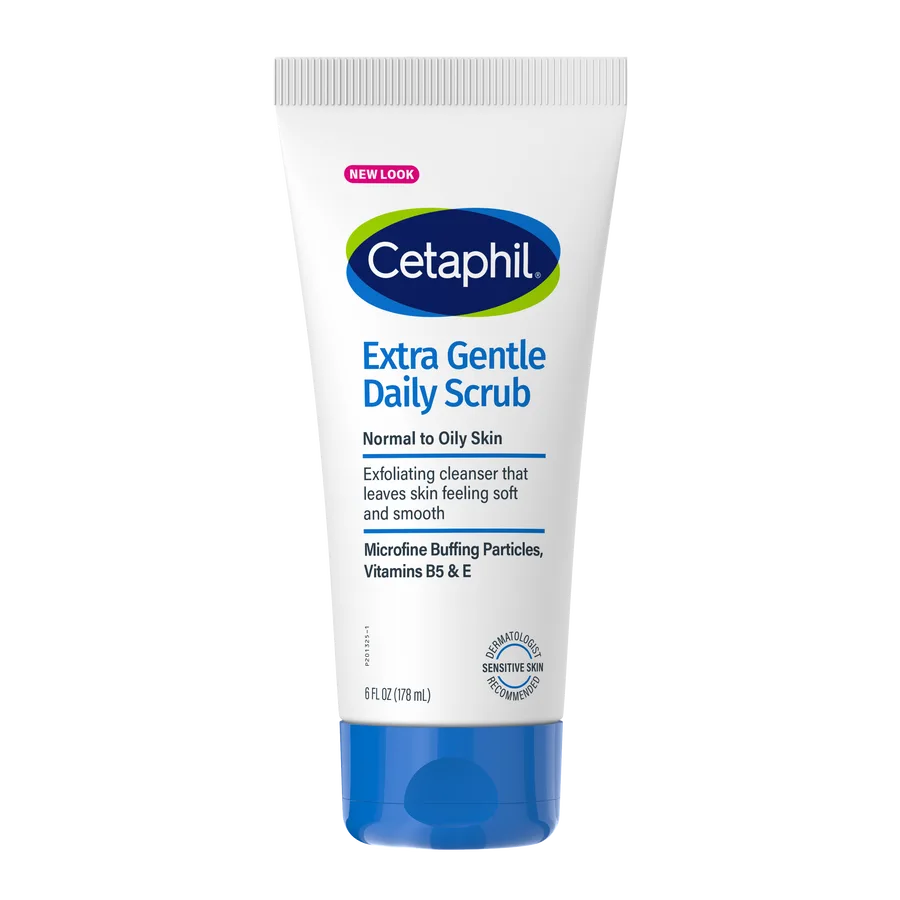
Daily Exfoliating Cleanser
Everyday Gentle Polish
 Verified reviewer
Pros & cons.
- +Micro-fine bamboo particles provide the gentlest physical exfoliation available at the drugstore
- +Panthenol and vitamin E provide barrier support and conditioning during the cleansing process
- +Gentle amphoteric surfactant system foams well without the irritation of SLS or SLES
- +Skin feels clean and smooth after rinsing without dryness or tightness
- +Excellent value at approximately nine dollars for six ounces lasting six to eight weeks
- +Biodegradable bamboo particles are an environmentally conscious alternative to plastic microbeads
- +Sulfate-free, paraben-free, and oil-free with a hypoallergenic formulation
- −Contains fragrance (Parfum and Heliotropine) despite sensitive-skin positioning
- −Exfoliation is too mild for users who need deeper surface resurfacing or pore clearing
- −Physical-only exfoliation does not penetrate pores like chemical exfoliants can
- −Some users report breakouts or burning, likely from fragrance ingredients
- −Not effective for heavy makeup removal or thorough oil cleansing
The full review.
The microbead ban left a gap in the skincare market. When governments banned the plastic spheres used in exfoliating cleansers for decades, brands searched for alternatives. Some used crushed walnut shell, which is jagged and scratches the skin. Others switched to chemical exfoliation. Cetaphil used bamboo, creating one of the gentlest physical exfoliating cleansers available.
The Bambusa Arundinacea stem extract provides micro-fine silica particles. These particles are small, acting more like a fine powder in gel than the visible granules in most facial scrubs. When massaged into wet skin, the polishing sensation is subtle; first-time users may doubt the product is working. It is. After rinsing, skin feels smoother, softer, and more refined. It gently polishes rather than dramatically resurfacing, similar to lightly sanding wood.
The surfactant system uses cocamidopropyl betaine, an amphoteric cleanser. It creates foam without the irritation risk of sodium lauryl sulfate. Research in Dermatitis confirms amphoteric surfactants have significantly lower irritation potential than anionic alternatives, making them safe for daily use on reactive skin. The foam feels like a real cleanser without stripping the skin.
Panthenol and vitamin E distinguish this from commodity scrubs. Panthenol — provitamin B5 — converts to pantothenic acid on the skin. Published research shows it decreases transepidermal water loss, supporting the moisture barrier during cleansing. In a daily exfoliation product, this barrier support prevents the cumulative irritation from mechanical dead skin cell removal.
Glycerin is fourth in the INCI list. It acts as a humectant to draw moisture into the skin while surfactants remove oil and debris. The glycerin, panthenol, and gentle surfactant base leave skin clean but not tight, a balance many exfoliating cleansers miss.
Regarding fragrance: Cetaphil is a brand known for gentle skincare for sensitive skin. Including Parfum and heliotropine in a daily exfoliating cleanser is a puzzling choice. The scent is mild — some call it baby powder — but it disqualifies the product for consumers who avoid fragrance due to principle or dermatological advice. Since Cetaphil sells many fragrance-free cleansers, adding fragrance here weakens its sensitive-skin positioning.
Best for
As a daily exfoliant, this cleanser provides maintenance exfoliation. It does not resurface acne scars, clear blackheads, or provide the dramatic smoothing of a chemical peel. It removes surface dead cells, improves texture gradually, and keeps the complexion refined. For those who find chemical exfoliants too intense, this physical approach is a simpler, more controllable alternative.
Works for
The limitation is the method. Physical exfoliation works on the skin surface. It does not penetrate pores, dissolve sebum, or stimulate cell turnover like salicylic acid, glycolic acid, or retinoids. For blackheads, acne, or major texture concerns, this cleanser is a complement, not a solution. It works best alongside a leave-on treatment for deeper issues.
Common Complaints
Some users report breakouts or burning — reactions likely caused by fragrance ingredients or physical stimulation on sensitive skin. These reports are in the minority but consistent enough to require a patch test for anyone with fragrance sensitivities or reactive skin.
Packaging
At nine dollars for six ounces, the value is excellent. The tube lasts six to eight weeks with daily use, costing roughly five dollars per month. For a branded, dermatologist-tested exfoliating cleanser with panthenol and vitamin E, this price is hard to beat. It is accessible for skincare beginners or experienced users wanting a reliable, no-fuss physical exfoliation.
About Cetaphil
The Cetaphil Daily Exfoliating Cleanser is not revolutionary. It aims to be the gentlest drugstore scrub, and it succeeds using the competence Cetaphil has shown for seventy-five years. If you want skin polished, not punished, for five dollars a month, use this product.
Ingredient analysis.
Full INCI list
Water (Aqua), Cocamidopropyl Betaine, Disodium Cocoamphodiacetate, Glycerin, Coco-Glucoside, Panthenol, Tocopheryl Acetate, Bambusa Arundinacea Stem Extract, Sodium Hydroxide, Sodium Benzoate, Sodium Citrate, Xanthan Gum, Heliotropine, Phenoxyethanol, Polyquaternium-10, Acrylates/C10-30 Alkyl Acrylate Crosspolymer, Citric Acid, Sodium Chloride, Sodium Cocoamphoacetate, Masking Fragrance (Parfum)
Skin match.
The science.
The Science
This cleanser uses physical exfoliation to mechanically remove outermost corneocytes through gentle abrasion, while supporting ingredients protect barrier integrity.
Bambusa Arundinacea stem extract provides silica-based exfoliation via bamboo-derived particles. Silica particles are more rounded and uniform than crushed plant materials like walnut shell, which reduces micro-tear risks from aggressive physical exfoliants. No peer-reviewed studies specifically evaluate bamboo stem extract as a facial exfoliant, but the material science is simple: fine, uniform particles provide controlled surface abrasion.
Panthenol (provitamin B5) is a well-studied skin conditioning agent in cosmetic chemistry. A 2011 study in the Journal of Cosmetic Dermatology shows that 1.0% and 5.0% panthenol formulations significantly decrease transepidermal water loss after 30 days. A 2017 review in the Journal of Dermatological Treatment confirms panthenol's moisturizing, barrier-enhancing, and wound-healing properties after 70 years of clinical use. In an exfoliating cleanser, panthenol helps prevent the barrier compromise that daily physical exfoliation can cause.
The surfactant system uses cocamidopropyl betaine, an amphoteric surfactant. A 2010 study in Dermatitis found that amphoteric surfactants like cocamidopropyl betaine have significantly lower irritation potential than anionic surfactants. A 2024 safety assessment in the International Journal of Toxicology concludes that cocamidopropyl betaine at cosmetic use concentrations is unlikely to cause contact sensitization under normal conditions. This gentle, well-characterized surfactant works for daily use.
References
- Skin moisturizing effects of panthenol-based formulations — Journal of Cosmetic Dermatology (2011)
- Topical use of dexpanthenol: a 70th anniversary article — Journal of Dermatological Treatment (2017)
- Safety assessment of cocamidopropyl betaine, a cosmetic ingredient — International Journal of Toxicology (2024)
- Irritant and sensitizing potential of eight surfactants commonly used in skin cleansers: an evaluation of 105 patients — Dermatitis (2010)
Dermatologist Perspective
Dermatologists recommend physical exfoliating cleansers with fine particles for patients who prefer tactile exfoliation over chemical acids or find AHA and BHA products too irritating. Board-certified dermatologists note the Cetaphil Daily Exfoliating Cleanser's micro-fine bamboo particles are among the gentlest physical exfoliants, making them appropriate for sensitive skin types seeking surface smoothing without chemical intervention. However, dermatologists advise pairing physical exfoliation with chemical exfoliants or retinoids for patients with acne, significant texture concerns, or hyperpigmentation, as surface polishing alone does not address pore-level issues or stimulate cell turnover.
Where it fits in your routine.
Wet your face with lukewarm water. Squeeze a small amount of gel onto your fingertips. Massage it in circular motions across your face for thirty to sixty seconds. Focus on areas with rough texture or dullness. Avoid the eye area. Rinse with lukewarm water and pat dry. Use a hydrating toner or serum and moisturizer next. Always use sunscreen in the morning. Start once daily and adjust based on skin tolerance; every other day works for most sensitive skin types.
At about nine dollars for six ounces, this is one of the most affordable dermatologist-tested exfoliating cleansers available. One tube lasts six to eight weeks with daily facial use, making the monthly cost roughly five dollars. Panthenol and vitamin E act as skin-conditioning agents—ingredients usually found in more expensive formulations—which adds value. Compared to luxury micro-exfoliating cleansers at thirty to fifty dollars, this provides comparable physical exfoliation and better moisturizing support for much less.
This is a gentle daily physical exfoliant that polishes without stripping. It works for skincare beginners wanting a simple introduction to exfoliation, people who find chemical exfoliants too strong or unpredictable, and anyone needing an affordable, reliable daily cleanser that leaves skin smooth without drama.
People who need fragrance-free products cannot use this cleanser because it contains Parfum. People with acne, deep blackheads, or significant texture concerns need the pore-penetrating action of chemical exfoliants. Users want intense exfoliation or visible resurfacing results.
Product details.
It contains a light masking fragrance. Users describe the scent as baby powder-like, mild and pleasant, or sometimes stronger than expected. It is not fragrance-free despite the gentle positioning.
White squeeze tube with a flip-top cap and Cetaphil's teal branding. It uses a standard pharmacy-style design. The size works for travel.
Skin feels smoother and softer after one use. Micro-fine particles polish skin without scratching or irritation. Rinsing leaves no residue or tightness. This immediate smoothness makes the product satisfying, even if long-term effects are more subtle. ***
6-8 weeks with once-daily facial use ***
12 months ***
All Year ***
The backstory.
Cetaphil developed the Daily Exfoliating Cleanser in 2017 as an environmentally conscious alternative to microbead-containing scrubs, which were being banned globally due to ocean pollution concerns. By using bamboo-derived silica particles instead, Cetaphil created a biodegradable physical exfoliant that maintained the brand's commitment to gentleness while addressing the growing demand for sustainable skincare.
About Cetaphil
Legacy Brand (20+ years)Cetaphil launched in 1947 and dermatologists have recommended it for over 75 years. Galderma, a major dermatological pharmaceutical company, owns the brand. It is one of the most recognized names in gentle skincare worldwide.
Common myths.
Avoid physical exfoliation; it harms the skin.
Large, jagged particles cause skin damage during aggressive physical exfoliation. Micro-fine, rounded bamboo-derived granules in this formula exfoliate the surface without causing micro-tears. Particle size, shape, and pressure matter more than the concept of physical exfoliation.
You should exfoliate every day
This product is labeled 'daily,' but many skin types work better with every-other-day use. Sensitive skin, compromised barriers, and skin using chemical exfoliants should use it less often. Daily use works for normal skin types that tolerate it well, but more exfoliation is not always better.
FAQ.
Is the Cetaphil Daily Exfoliating Cleanser the same as the Extra Gentle Daily Scrub?
Yes — these are regional names for the same product. The US market sells 'Cetaphil Extra Gentle Daily Scrub' while international markets use 'Cetaphil Daily Exfoliating Cleanser.' The formulation is identical, using bamboo-derived micro-fine exfoliating particles with panthenol and vitamin E.
Can I use the Cetaphil Exfoliating Cleanser every day?
Normal and combination skin types can use it daily without irritation because of the ultra-fine bamboo particles and gentle amphoteric surfactants. If you use chemical exfoliants like AHA or BHA serums, use it on alternate days to avoid over-exfoliation. Sensitive skin types should start with two to three times per week and increase frequency only if well tolerated.
Is the Cetaphil Exfoliating Cleanser fragrance-free?
No — Cetaphil's reputation for sensitive skin does not apply here; this cleanser contains heliotropine and a masking fragrance (Parfum). The scent is mild but present. For a strictly fragrance-free cleanser, use Cetaphil's Gentle Skin Cleanser or Gentle Clear Acne Cleanser.
Does the Cetaphil Exfoliating Cleanser help with blackheads?
Physical exfoliation removes surface-level dead skin cells that cause blackheads, but it lacks the pore penetration of chemical exfoliants like salicylic acid. For persistent blackheads, use this cleanser alongside a leave-on BHA treatment rather than as a standalone blackhead solution.
Can I use the Cetaphil Exfoliating Cleanser with retinol?
Yes, but use caution. Physical exfoliation and retinol together increase irritation and sensitivity risks. Use this cleanser in the morning and apply retinol at night, or use the cleanser on alternate days from your retinol treatment. If your skin shows redness, flaking, or sensitivity from over-exfoliation, reduce how often you use either product.
Are the exfoliating particles in this cleanser plastic microbeads?
No — bamboo stem (Bambusa Arundinacea Stem Extract) provides the exfoliating particles, not plastic. These particles are biodegradable and do not cause ocean microplastic pollution. Cetaphil made this formula as an environmentally conscious alternative to the plastic microbeads being phased out of skincare globally.
What the community says.
"Very gentle exfoliation suitable for daily use on sensitive skin"
"Micro-fine granules feel non-abrasive and non-irritating"
"Leaves skin feeling clean and soft without dryness or tightness"
"Good lather for a scrub product with pleasant foam"
"Affordable and widely available at all major retailers"
"Does not over-dry skin — skin feels moisturized after use"
"Contains fragrance despite being marketed for sensitive skin"
"Exfoliation may be too mild for those seeking stronger or deeper exfoliation"
"Some users experience breakouts or small pimple clusters"
"Not effective enough for heavy makeup removal or deep oil cleansing"
"Scent can be polarizing — some find it too strong or chemical-smelling"
"A subset of users report a burning sensation on application"
Featured in.
People also looked at.