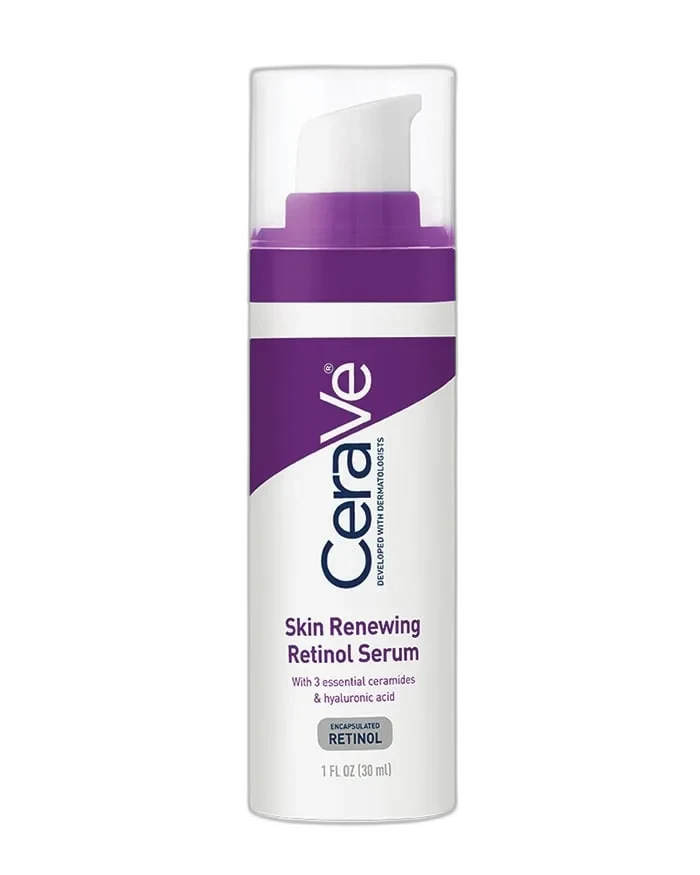
Skin Renewing Retinol Serum
Beginner-Friendly Retinol Pick
 Verified reviewer
Pros & cons.
- +Encapsulated retinol via MVE Technology minimizes irritation while maintaining overnight efficacy
- +Triple-ceramide complex actively repairs barrier integrity while retinol promotes turnover
- +Niacinamide provides complementary brightening and anti-inflammatory benefits without added irritation
- +Exceptionally affordable at under $25 for a clinically-backed retinol serum
- +Lightweight cream-serum texture absorbs quickly without pilling under moisturizer
- +Fragrance-free formulation reduces sensitization risk for most skin types
- +Gentle enough for retinol beginners with minimal adjustment period reported
- −Small 1 oz bottle lasts only 6-8 weeks with nightly use, requiring frequent repurchase
- −Retinol concentration is undisclosed, making it difficult to gauge potency
- −Contains a small amount of alcohol which may concern ingredient-purists
- −Not potent enough for those seeking prescription-strength retinoid results
- −Can occasionally pill when layered over certain water-based toners
The full review.
Most retinol products require a trade-off: accept redness, peeling, and discomfort now for smoother, younger-looking skin later. CeraVe’s Skin Renewing Retinol Serum changes those terms.
The difference lies in the brand’s MVE (MultiVesicular Emulsion) Technology, originally engineered for CeraVe’s moisturizers to provide sustained ceramide delivery over 24 hours. When the brand applied this to retinol in 2019, they used the same controlled-release method for this potent, irritating active. Instead of flooding the skin with free retinol that degrades fast and causes inflammation, the encapsulated form releases gradually overnight. It is like the difference between chugging a double espresso and sipping a cold brew over three hours. The caffeine reaches its target either way, but your body processes it differently.
The formulation logic extends beyond the retinol capsule. This serum uses CeraVe’s signature triple-ceramide foundation — Ceramide NP, AP, and EOP — with cholesterol and phytosphingosine to mimic the skin’s natural lipid ratio. Most retinol products require separate barrier repair via a heavy moisturizer. Here, the barrier support is built into the same vehicle that delivers the active. The retinol accelerates cell turnover while the ceramides replenish the lipids that turnover depletes.
Niacinamide is more than a trend here. It calms inflammation through a different pathway than the ceramides, reduces TEWL, and provides brightening and pore-refining benefits. In a retinol serum, niacinamide acts as a safety net and a force multiplier — it dampens irritation and amplifies the glow.
Hydrolyzed hyaluronic acid completes the active lineup. Its lower molecular weight penetrates deeper than standard HA, delivering moisture to the layers where retinol drives change. This is smart because increased cell turnover can leave newly exposed skin cells thirsty.
On the skin, this serum has a lightweight cream-serum texture between a water serum and a light lotion. It absorbs quickly and sits under a moisturizer without pilling, unlike some retinol serums with heavier encapsulation systems. It is fragrance-free, has no detectable scent beyond a faint neutral note, and causes no immediate tingling. If social media retinol stories intimidate you, the first application will feel almost anticlimactic. That is by design.
During the adjustment period — usually the first one to three weeks — most users report only mild flaking, typically around the nose and chin. The encapsulation reduces the retinol shock that causes aggressive peeling in other products. Standard guidance is to start two to three nights per week and build to nightly use over a month; it works well here.
Results build gradually. Texture improvements often appear first, around weeks four to six — skin feels smoother, makeup applies evenly, and pores appear refined. Fine lines, especially around the eyes and forehead, soften noticeably around the eight-week mark. This is not a prescription tretinoin for deep wrinkles or significant sun damage; it is a gentler tool.
The limitations: the 1 oz bottle is small and lasts about six to eight weeks with nightly use. CeraVe does not disclose the retinol concentration, which frustrates ingredient-conscious consumers, even if the encapsulation technology matters more than the raw percentage. The formula also contains a small amount of alcohol (denat.), which appears low enough on the INCI list to function as a solvent rather than an irritant — but note this if you are truly ingredient-sensitive.
The value is strong. At $24.99, this well-engineered retinol serum with ceramide barrier support, MVE delivery technology, niacinamide, and hyaluronic acid undercuts most competing retinol serums. It offers a more sophisticated delivery system than products costing three or four times as much. CeraVe’s two-decade track record of dermatologist-backed formulation suggests the undisclosed retinol concentration is calibrated for efficacy and tolerability.
This is not the retinol for those seeking maximum-strength resurfacing who tolerate a harsh adjustment period. It is an excellent retinol for the larger group wanting the anti-aging benefits of vitamin A without the skin-care drama — and who want benefits backed by formulation science rather than marketing narratives about percentages.
Formula
Ingredient analysis.
Full INCI list
Aqua/Water/Eau, Glycerin, Caprylic/Capric Triglyceride, Potassium Cetyl Phosphate, Hydrogenated Palm Glycerides, Polysorbate 20, PEG-40 Stearate, Cyclopentasiloxane, Hydroxyethylcellulose, Potassium Phosphate, Ceramide NP, Ceramide AP, Ceramide EOP, Carbomer, Niacinamide, Isoceteth-10, Dimethicone/Vinyl Dimethicone Crosspolymer, Triethanolamine, Cetearyl Alcohol, Behentrimonium Methosulfate, Cichorium Intybus Root Extract, Lecithin, Retinol, Silica, Sodium Lauroyl Lactylate, Cholesterol, Phenoxyethanol, Tocopherol, Alcohol, Hydroxyacetophenone, Citric Acid, Hydrolyzed Hyaluronic Acid, Pentylene Glycol, Xanthan Gum, Phytosphingosine, Butyrospermum Parkii Butter, Ethylhexylglycerin
Skin match.
The science.
The Science
Retinol's anti-aging efficacy is among the most well-documented in dermatology. A landmark review published in Clinical Interventions in Aging (Mukherjee et al., 2006) established that topical retinoids improve fine lines, wrinkles, and photoaging by binding to retinoic acid receptors in keratinocytes, promoting cell turnover and stimulating collagen synthesis in the dermis.
What makes this particular formulation noteworthy from a scientific standpoint is the encapsulation delivery system. A 2020 study in the Journal of Drugs in Dermatology examined encapsulated retinol formulations and found that controlled-release delivery reduced peak irritation scores by approximately 50% compared to free retinol at equivalent concentrations, while maintaining comparable efficacy in improving fine lines and skin texture over a 12-week period. CeraVe's MVE Technology operates on a similar multi-vesicular principle, where concentric lipid layers release active ingredients gradually rather than all at once.
The ceramide component adds a clinically relevant dimension. A 2021 qualitative review by Kono et al. in The Journal of Dermatology analyzed 12 studies on ceramide-containing formulations and confirmed their ability to improve skin barrier function and water retention. In the context of retinol use, this is particularly significant: a 2023 study published in the Journal of Cosmetic Dermatology (Blaak et al.) found that ceramide-containing adjunctive products significantly reduced the incidence and severity of dryness, erythema, and scaling during retinoid therapy for acne.
Niacinamide's role in this formula is supported by extensive research. A widely cited 2005 study in the British Journal of Dermatology demonstrated that 5% niacinamide significantly improved fine lines, wrinkles, hyperpigmented spots, and skin elasticity over 12 weeks. While CeraVe doesn't disclose the niacinamide concentration here, its placement mid-INCI list suggests a meaningful but moderate level.
The combination of retinol with ceramides, niacinamide, and hydrolyzed hyaluronic acid represents an evidence-informed approach to anti-aging that prioritizes barrier health as a prerequisite for retinol tolerability — a strategy increasingly endorsed in dermatological literature.
References
- Retinoids in the treatment of skin aging: an overview of clinical efficacy and safety — Clinical Interventions in Aging (2006)
- Clinical significance of the water retention and barrier function-improving capabilities of ceramide-containing formulations: A qualitative review — The Journal of Dermatology (2021)
- Ceramide-Containing Adjunctive Skin Care for Skin Barrier Restoration During Acne Vulgaris Treatment — Journal of Cosmetic Dermatology (2023)
Dermatologist Perspective
Dermatologists frequently recommend CeraVe's Skin Renewing Retinol Serum as a first-line over-the-counter retinol, particularly for patients who are hesitant about retinoid side effects. Board-certified dermatologists note that the encapsulated delivery system significantly reduces the retinization period — the adjustment phase where skin acclimates to increased cell turnover. The triple-ceramide base is considered a meaningful differentiator by clinicians, as it addresses the most common reason patients abandon retinol: barrier disruption leading to dryness, redness, and flaking. Dermatologists commonly advise starting this product at two to three nights per week, gradually increasing frequency, and always pairing with broad-spectrum sunscreen during the day, as retinol increases photosensitivity.
Where it fits in your routine.
Apply a pea-sized amount to clean, dry skin in the evening after cleansing and toning. Avoid the immediate eye area. Use it two to three nights per week for the first two to three weeks, then increase to nightly use as tolerated. Always follow with a moisturizer to lock in hydration and support the barrier-repair process. In the morning, apply a broad-spectrum SPF 30 or higher sunscreen — retinol increases photosensitivity. If you use other actives like AHAs or vitamin C, alternate nights or use them in the morning to avoid over-exfoliation.
At $24.99 for 1 oz, this serum uses advanced formulation technology at a drugstore price. The MVE encapsulation system, triple ceramides, niacinamide, and hydrolyzed hyaluronic acid match ingredient stacks that prestige brands charge $60-80 for — often without the controlled-release delivery mechanism. The per-ounce cost exceeds CeraVe's simpler products, but this provides exceptional value for a retinol treatment. The small bottle size is the only caveat: nightly use requires a repurchase roughly every two months, costing about $150 annually. This stays well below the annual cost of most retinol serums. CeraVe's history of dermatologist collaboration means this price reflects proven formulation science, not marketing spend.
Retinol beginners seeking an effective, forgiving vitamin A introduction. People with normal, combination, or dry skin can target early fine lines, uneven texture, or dullness without high irritation risk. Budget-conscious shoppers get dermatologist-grade retinol formulation without prestige markups.
People with sensitive or eczema-prone skin who react to even gentle retinoids. Those wanting aggressive anti-aging results like prescription tretinoin should use stronger formulations. Pregnant or breastfeeding individuals must avoid all retinol products.
Product details.
Fragrance-free with minimal raw-ingredient scent
An opaque pump bottle protects the retinol from light degradation. The airless pump dispenses a controlled amount, but some users report the pump sputters near the end. Finish lightweightnon-greasysatin
Most users tolerate this well from the first application without stinging or redness. Some users see mild flaking or dryness during the first 1-2 weeks as skin adjusts to retinol. Use it every other night to minimize the adjustment period. This formula typically causes no purging.
6-8 weeks with nightly facial application
12 months
All Year
The backstory.
CeraVe launched this serum in 2019 to address the gap between prescription retinoids and gentle over-the-counter options. The brand's existing MVE Technology — originally developed for their moisturizers — was adapted to deliver retinol in a sustained-release format, applying the same controlled-delivery philosophy that had already earned CeraVe its clinical reputation.
About CeraVe
Legacy Brand (20+ years)Dermatologists helped develop CeraVe in 2005, and clinicians have recommended it for nearly two decades. Peer-reviewed research backs its formulations, and the brand has National Eczema Association seals of acceptance.
Common myths.
Encapsulated retinol is weaker or less effective than free retinol
Encapsulation is a delivery method, not a dilution. Gradual release improves retinol's efficacy by reducing the degradation that happens when free retinol hits the skin surface and meets air and enzymes. Sustained delivery means more retinol reaches the deeper skin layers where it's needed.
Retinol percentage determines if a product works.
Concentration matters, but the delivery system and supporting ingredients matter equally. A well-encapsulated retinol at an undisclosed concentration can outperform a poorly formulated product with a high percentage that mostly degrades on the skin surface.
FAQ.
What percentage of retinol is in CeraVe Skin Renewing Retinol Serum?
CeraVe does not disclose the retinol concentration in this serum. MVE Technology delivers the encapsulated retinol gradually, so the delivery system matters as much as the percentage. This formula works for beginners and people with normal to combination skin.
Can I use CeraVe Retinol Serum every night?
Use this up to nightly, but start with 2-3 nights per week for the first two weeks. This builds skin tolerance to the retinol. The ceramide-enriched formula buffers irritation, but a gradual introduction gives the best results with the least adjustment discomfort.
Is CeraVe Skin Renewing Retinol Serum good for wrinkles?
Yes — retinol is a well-studied anti-aging ingredient. This serum's encapsulated delivery system sends it to the deeper skin layers where collagen production occurs. Most users see visible improvement in fine lines within 6-8 weeks of consistent use, but deeper wrinkles require longer-term commitment.
Can I use vitamin C with CeraVe Retinol Serum?
Yes, but use them at different times. Apply vitamin C serum in the morning for antioxidant and brightening benefits, and use this retinol serum at night. Using both together increases irritation risk and reduces the stability of both actives.
Is CeraVe Retinol Serum safe during pregnancy?
No — avoid all retinol products, including this one, during pregnancy and breastfeeding. Retinol is a vitamin A form that affects fetal development. Ask your dermatologist for pregnancy-safe alternatives like azelaic acid or niacinamide-only formulas.
What's the difference between CeraVe Skin Renewing and Resurfacing Retinol Serum?
The Skin Renewing Retinol Serum uses encapsulated retinol in a cream-serum texture to target fine lines, wrinkles, and anti-aging. The Resurfacing Retinol Serum uses licorice root extract to brighten post-acne marks and hyperpigmentation. Choose based on your primary skin concern.
Does CeraVe Retinol Serum cause purging?
This formula purges less than stronger retinoids because it uses encapsulated, slow-release delivery. Users sometimes see mild flaking or dryness during the first 1-2 weeks, but breakout-style purging is rare. Persistent breakouts beyond 4-6 weeks mean the product may not work for your skin.
What the community says.
"Gentle enough for retinol beginners"
"No burning or excessive peeling"
"Noticeable texture improvement within weeks"
"Affordable for a retinol serum"
"Lightweight, non-greasy formula"
"Small 1 oz bottle runs out quickly"
"Retinol concentration not disclosed"
"Some users see minimal anti-aging results"
"Can pill under certain moisturizers"